Top Revenue Models Used by Fantasy Sports Apps in 2026
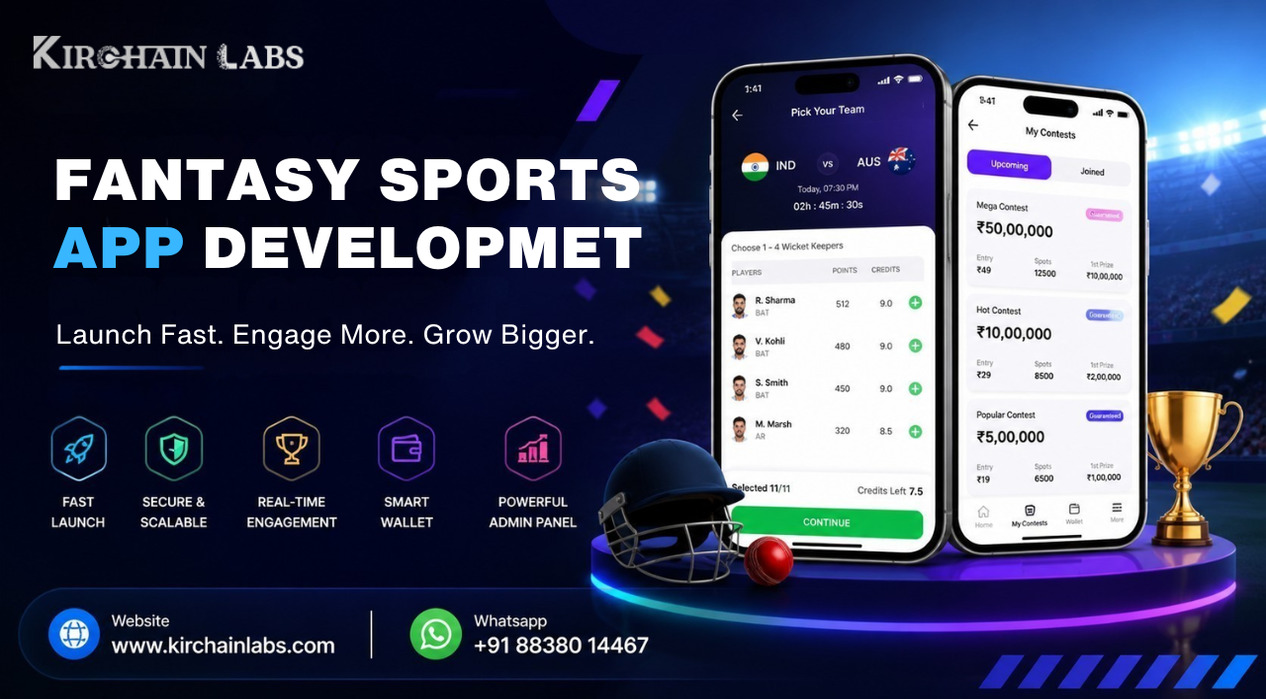
Building a fantasy sports platform is only the first step. The larger business question begins after launch: how does a fantasy sports app actually generate revenue in a competitive market?
The question is more important in 2026 than ever. User expectations are higher, acquisition costs have increased, and founders are under more pressure to build products that are not only engaging but financially sustainable.
The global fantasy sports market continues to expand, driven by mobile-first behavior, live match engagement, and recurring contest participation. But growth in users does not automatically translate into profit. Platforms that scale successfully usually do one thing well: they design monetization into the product from the beginning.
For founders working with a fantasy sports app development company, understanding revenue models early can shape product decisions around contest design, retention strategy, wallet flow, and long-term platform economics.
Why Revenue Planning Should Start Before Launch
Many startups focus heavily on launch features, team creation, contest joining, live scores, and user onboarding. Those are important, but monetization often becomes harder when it is added as an afterthought.
The strongest fantasy platforms build revenue logic into the user journey from day one.
A well-planned fantasy sports app development strategy considers practical questions early:
• How will contests generate margin?
• What keeps users returning after the first tournament?
• Which revenue channels scale without hurting user trust?
Answering those questions early usually creates healthier business models later.
1. Contest Entry Commission: The Core Revenue Engine
For most fantasy sports platforms, contest commissions remain the primary revenue source.
The model is straightforward. Users pay an entry fee to join a contest. A portion of the pooled amount becomes the prize pool, while the platform retains a percentage as commission.
Why It Works So Well
Contest participation aligns naturally with user behavior.
Users are already paying to enter competitive formats, so monetization does not feel intrusive. Instead of relying on external monetization layers, revenue grows with contest engagement itself.
A Practical Example
If 10,000 users each join a contest with an entry fee equivalent to USD 2, the total pool becomes USD 20,000.
If the platform retains a 12 percent commission, that single contest generates USD 2,400 in gross platform revenue.
At scale, especially during cricket leagues or football seasons, this becomes the backbone of many profitable fantasy sports software solution.
2. Premium Contests and Higher-Value Participation
Not every user behaves the same way. Some users join casually. Others actively seek higher-value contests, exclusive leagues, and premium competition formats.
That creates a second monetization layer: premium contest participation.
How Premium Formats Increase Revenue
Premium contests typically offer:
• higher entry fees
• limited participant pools
• exclusive prize structures
• higher perceived value among experienced users
The commercial advantage is simple. Premium contests usually increase average revenue per active user without needing the same scale of mass participation.
This is why many platforms include premium contest architecture early when evaluating essential fantasy sports platform features.
3. Private Contests and Community-Led Growth
One of the most effective revenue drivers is also one of the most organic. Private contests allow users to create invite-only competitions among friends, colleagues, or community groups.
Why This Matters Financially
Private contests often improve both monetization and retention. Users who invite friends create natural viral loops. At the same time, these contests often generate repeat participation because users feel personally invested in the competition.
A strong Dream11 clone app script usually includes private contest capability because it supports both user acquisition and recurring contest revenue.
4. Subscription-Based Revenue Models
As platforms mature, many begin exploring subscription-based monetization. Instead of earning only when users join contests, the app generates recurring revenue through premium access.
What Subscription Models Usually Offer
Subscribers may receive:
• early access to contests
• advanced player insights
• reduced platform commission
• premium analytics dashboards
• exclusive contest invitations
This model becomes especially attractive once a platform builds a loyal, active user base. Recurring subscription income also creates more predictable revenue than purely event-driven contest participation.
5. Advertising and Sponsored Placements
Advertising has become a practical secondary revenue stream for fantasy sports platforms, especially once user volume increases.
Unlike contest commissions, ad revenue usually grows with attention rather than participation.
Common Advertising Opportunities
Fantasy sports apps often monetize through:
• banner placements
• sponsored contests
• sports brand partnerships
• promoted in-app campaigns
The key is balance.
Too much advertising can weaken user experience. But when placed strategically, it creates additional monetization without directly increasing user spending.
6. Referral and Affiliate Partnerships
Fantasy sports users often have strong interest overlap with adjacent products, such as sports merchandise, sports media subscriptions, fintech tools, and gaming services. That creates affiliate revenue opportunities.
How Affiliate Revenue Works
Platforms earn commission when users engage with partner offers, such as:
• sports streaming subscriptions
• merchandise purchases
• gaming partner promotions
• fintech product referrals
For early-stage startups, affiliate income may not be the primary revenue source, but it can become a useful secondary layer.
7. Loyalty-Driven Revenue Through User Retention
The most overlooked revenue model is not really a separate monetization feature.
It is retention. A platform that keeps users active across multiple tournaments generates more contest commissions, more subscription conversions, and more premium participation.
Why Retention Matters More Than Acquisition Alone
A user acquired once may generate a single contest entry.
A retained user may generate dozens of contest entries over a season.
That is why retention mechanics leaderboards, streak rewards, loyalty bonuses, and seasonal incentives often create a larger long-term revenue impact than one-time acquisition campaigns.
This is also why startups often revisit how to choose the right fantasy sports app development company, because retention-supporting product architecture directly affects monetization.
Case Insight: Why Revenue Diversification Matters
A fantasy sports startup launched with one simple monetization assumption: contest commissions alone would drive profitability.
Early user growth looked strong. But after the first major tournament, participation dipped sharply.
The founders realized they were relying too heavily on a single revenue source. Over the next season, they introduced private contests, referral rewards, premium leagues, and loyalty incentives.
What Changed
Revenue became more stable. Even when overall contest participation fluctuated, recurring engagement from loyal users and premium participation helped smooth earnings.
The lesson was clear: sustainable fantasy sports businesses rarely rely on only one monetization model.
Which Revenue Model Is Best for Early-Stage Startups?
For new platforms, the best approach is usually not to try everything at once. A more practical structure often looks like this:
Stage One: Core Contest Revenue
At launch, focus on contest participation and commission economics.
Stage Two: Retention and Premium Formats
Once active usage becomes visible, introduce premium contests and loyalty mechanics.
Stage Three: Revenue Diversification
After the user base stabilizes, expand into subscriptions, affiliate partnerships, and sponsored monetization.
This phased approach usually aligns better with early-stage fantasy sports app development services.
How Revenue Strategy Connects with Product Architecture
Revenue models are not separate from product design.
• If your wallet flow is weak, monetization suffers.
• If contest creation lacks flexibility, revenue suffers.
• If retention systems are absent, lifetime value suffers.
That is why the monetization discussion often leads founders back to a larger product question: Is the platform built for short-term launch or for long-term commercial growth?
The answer often shapes whether a startup chooses a Dream11 clone app script, a custom platform, or a phased product evolution.
Final Thoughts
In 2026, fantasy sports monetization is no longer just about charging entry fees. The strongest platforms generate revenue through a combination of contest commissions, premium participation, subscriptions, community-driven engagement, partnerships, and long-term retention.
For founders, the most important insight is simple. A successful fantasy sports app not only attracts users but also creates reasons for them to return, compete again, and stay engaged across multiple seasons.
That is where revenue truly compounds. And that is also why the most sustainable fantasy sports businesses are rarely built around a single monetization feature. They are built around a product system where engagement and revenue naturally reinforce each other over time.
Frequently Asked Questions
1. What is the main revenue source for fantasy sports apps in 2026?
For most platforms, contest entry commissions remain the primary revenue source. A percentage of each contest pool is retained by the platform, making revenue grow naturally as user participation increases.
2. Are contest commissions enough to build a profitable fantasy sports platform?
Not always. While contest commissions form the core revenue engine, long-term profitability usually improves when platforms add premium contests, subscriptions, referral partnerships, and retention-driven monetization.
3. Why is user retention important for fantasy sports app monetization?
Retention increases lifetime value. A user who returns across multiple tournaments generates more contest entries, premium participation, and recurring revenue than a user who joins only once.
4. Which monetization model works best for early-stage fantasy sports startups?
For most startups, the practical approach is to begin with contest commission revenue, then gradually expand into premium contests, loyalty rewards, subscriptions, and other diversified revenue streams as the user base grows.