
들어가기에 앞서
비지니스 로직을 작성하며 영속성, JOIN, N+1 등 다양한 문제들을 고민하며 작성했지만, 프로젝트 후반부가 되면서 전보다 인사이트가 조금 생겼다.
작성한 코드들을 다시 셀프 리뷰 하면서 더 좋은 방향에 대해 고민하고, 궁금했지만 넘어갔던 것들에 대해 다시 짚어보려고한다.
공모 상세 정보 가져오기
-
service :
getDetailpublic DetailCahootsDto getDetail(Long cahootsId, Long userId) { DetailCahootsDto detailCahootsDto = vacationRepository.getVacationDetail(cahootsId).checkNull(); List<Interest> interests = interestRepository.findByVacation(vacationRepository.getReferenceById(cahootsId)); detailCahootsDto.setInterestCount(interests.size()); Boolean isInterest = (userId != null ? interests.stream().map(Interest::getUser).map(User::getId).anyMatch(id -> id.equals(userId)) : false); detailCahootsDto.setIsInterest(isInterest); detailCahootsDto.setImages(getImageUrls(cahootsId)); return detailCahootsDto; } -
repository
- vacationRepository.getVacationDetail(cahootsId);
- interestRepository.findByVacation(vacationRepository.getReferenceById(cahootsId));
- pictureRepository.findUrlsByCahootsId(id);
-
질문해보기
-
실제로 쿼리는 총 몇개가 던져 졌는가?
- 결론 : 위 코드에서 직관적으로 보이는 3개의 조회가 발생했고, 부수적인 쿼리는 없었다.
- SQL Log
Hibernate:
    /* select
        vacation.id,
        vacation.title,
        vacation.location,
        vacation.country,
        vacation.status,
        vacation.theme.themeLocation,
        vacation.theme.themeBuilding,
        vacation.plan.expectedTotalCost,
        vacation.plan.expectedMonth,
        vacation.shortDescription,
        vacation.description,
        vacation.expectedRateOfReturn,
        vacation.stock.price as stockPrice,
        vacation.stock.num as stockNum,
        vacation.stockPeriod.start as stockStart,
        vacation.stockPeriod.end as stockEnd,
        (coalesce(sum(contestParticipation.stocks),
        ?1) * ?2 / vacation.stock.num) as competitionRate
    from
        Vacation vacation
    left join
        vacation.historyList as contestParticipation
    where
        vacation.id = ?3 */
Hibernate:
    /* select
        generatedAlias0
    from
        Interest as generatedAlias0
    where
        generatedAlias0.vacation=:param0 */
Hibernate:
    /* select
        picture.url
    from
        Picture picture
    where
        picture.vacation.id = ?1 */
-
interests.stream().map(Interest::getUser)부분에 왜 추가 쿼리는 발생하지 않을까?- 결론 : interests <> user는 단방향 ManyToOne 관계이고 LazyLoading이 적용되어있고, 여기서 식별자 (id)를 조회할 때는 프록시가 초기화 되지 않는다.
- getUser(), getVacation() → 추가 쿼리 발생
for (Interest interest : interests) { System.out.println(interest.getVacation()); System.out.println(interest.getUser()); } - getUser().getId(), getVacation().getId() → 추가 쿼리 발생하지 않음
for (Interest interest : interests) { System.out.println(interest.getVacation().getId()); System.out.println(interest.getUser().getId()); } - 참고 : https://tecoble.techcourse.co.kr/post/2022-10-17-jpa-hibernate-proxy/
- 더 알게된 점
- 실제 엔티티 조회 후 다음에 지연 로딩으로 프록시를 가져올 때 앞의 엔티티를 반환해준다.
- 동일성을 보장해주기 위해서 한 트랜잭션 내에서 최초 생성이 프록시로 된 엔티티는 이후 초기화 여부에 상관 없이 영속성 컨텍스트가 무조건 같은 프록시 객체를 반환
- https://techvu.dev/128
-
stream에서
User::getId대신 다른 column (ex. email)을 가져오면 어떻게 되는가?- 결론 : 추가적인 조회 Query가 날라간다.
- 실험 : getUser().getEmail() 로 사용자의 email을 출력해봤다.
List<Interest> interests = interestRepository.findByVacation(vacationRepository.getReferenceById(cahootsId)); for (Interest interest: interests) { System.out.println(interest.getUser().getEmail()); } - 결과 : 해당 공모를 북마크 한 3명의 정보를 조회하기 위해 3번의 추가 Query 발생
- SQL Log
Hibernate:
    select
        user0_.id as id1_8_0_,
        user0_.cash as cash2_8_0_,
        user0_.email as email3_8_0_,
        user0_.nickname as nickname4_8_0_,
        user0_.provider_id as provider5_8_0_,
        user0_.provider_type as provider6_8_0_,
        user0_.ranks as ranks7_8_0_,
        user0_.refresh_token as refresh_8_8_0_,
        user0_.role as role9_8_0_
    from
        user user0_
    where
        user0_.id=?
A@gmail.com
Hibernate:
    select
        user0_.id as id1_8_0_,
        user0_.cash as cash2_8_0_,
        user0_.email as email3_8_0_,
        user0_.nickname as nickname4_8_0_,
        user0_.provider_id as provider5_8_0_,
        user0_.provider_type as provider6_8_0_,
        user0_.ranks as ranks7_8_0_,
        user0_.refresh_token as refresh_8_8_0_,
        user0_.role as role9_8_0_
    from
        user user0_
    where
        user0_.id=?
B@gmail.com
Hibernate:
    select
        user0_.id as id1_8_0_,
        user0_.cash as cash2_8_0_,
        user0_.email as email3_8_0_,
        user0_.nickname as nickname4_8_0_,
        user0_.provider_id as provider5_8_0_,
        user0_.provider_type as provider6_8_0_,
        user0_.ranks as ranks7_8_0_,
        user0_.refresh_token as refresh_8_8_0_,
        user0_.role as role9_8_0_
    from
        user user0_
    where
        user0_.id=?
C@gmail.com
- SQL Log
-
3개의 쿼리를 더 줄일 수 없는가?
- 현재 연관관계에 의해 비지니스 로직을 처리 하려면 Vacation Table를 중심으로 4개의 Table이 JOIN 된다. JOIN 연산이 너무 많이 일어나서, 성능이 떨어질 것 같은데 차라리 Interest, Picture Table에 vacation_id로 indexing을 하는게 더 낫지 않을까 생각했다.
- 실제로 어떤지 측정을 위해 native query를 작성해서 DB 조회를 해봤다. JOIN으로 한번에 가지고 온 쿼리가 50ms, 세번의 쿼리는 fetch 시간을 제외하더라도 3배 이상이다.
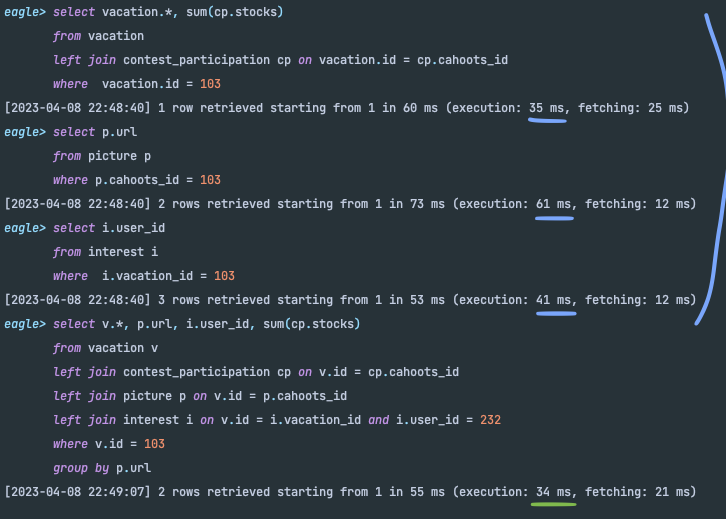
- 실제로 어떤지 측정을 위해 native query를 작성해서 DB 조회를 해봤다. JOIN으로 한번에 가지고 온 쿼리가 50ms, 세번의 쿼리는 fetch 시간을 제외하더라도 3배 이상이다.
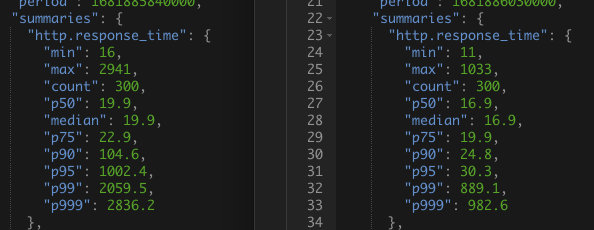
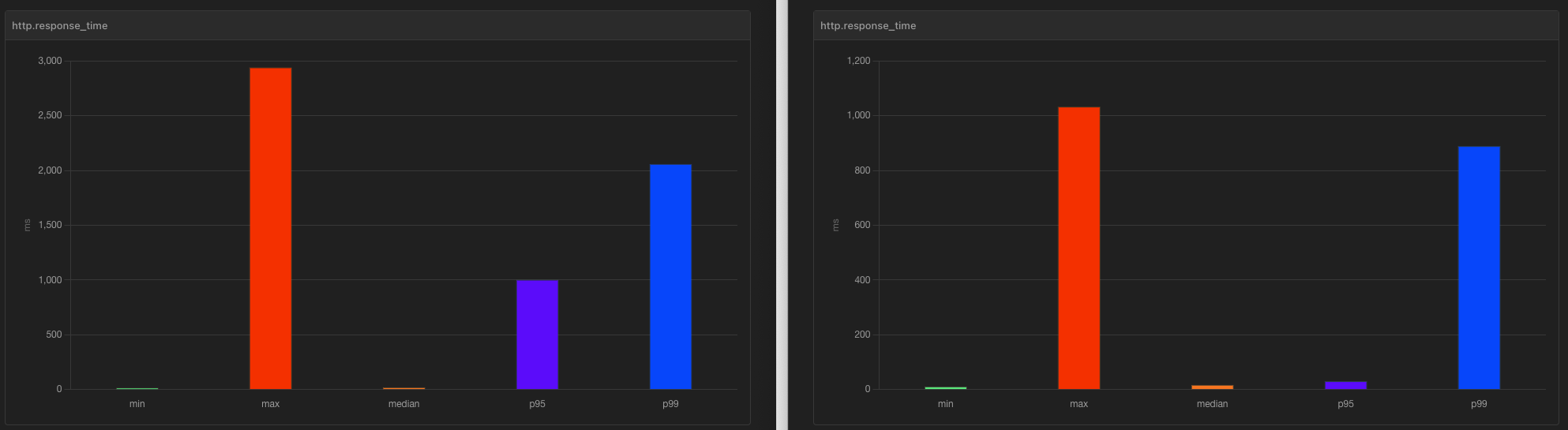
- Querydsl로 재 작성하여 서버에 배포하여 확인 시 응답 시간은 평균적으로 유사하지만, p95 부터 3배 이상 차이가 나는 것을 확인할 수 있었다.
-
조건 : 1초당 5번 요청 x 60초
-
왼쪽 사진) 기존, 오른쪽 사진) 개선 쿼리
-
- 현재 연관관계에 의해 비지니스 로직을 처리 하려면 Vacation Table를 중심으로 4개의 Table이 JOIN 된다. JOIN 연산이 너무 많이 일어나서, 성능이 떨어질 것 같은데 차라리 Interest, Picture Table에 vacation_id로 indexing을 하는게 더 낫지 않을까 생각했다.
-
공모 참여하기
-
service :
participate@Transactional public void participate(Long cahootsId, Integer stocks, User user){ if (stocks > 10000) { // 주식 너무 많으면 reject throw new ApiException(ErrorCode.INVALID_PARAMETER); } Vacation vacation = vacationRepository.findByIdAndStatus(cahootsId, VacationStatusType.CAHOOTS_ONGOING).orElseThrow(()-> new ApiException(ErrorCode.VACATION_NOT_FOUND)); Long cash = user.getCash(); Long stockTotalPrice = vacation.getStock().getPrice() * stocks; verifyUserCash(cash, stockTotalPrice); // 사용자 정보에서 잔액 차감 + 공모 참여 현황에 추가 subtractUserCash(user, stockTotalPrice); ContestParticipation contestParticipation = ContestParticipation.builder().user(user).vacation(vacation).stocks(stocks).build(); contestParticipationRepository.save(contestParticipation); } private void verifyUserCash(Long userCash, Long stockTotalPrice){ if(userCash < stockTotalPrice){ // 공모 정보 가져올 때 진행중이 맞는지 체크하고 잔액이 모자라면 에러 throw new ApiException(ErrorCode.USER_LACK_OF_CACHE); } } private void subtractUserCash(User user, Long stockTotalPrice){ Long leftCash = user.getCash() - stockTotalPrice; user.setCash(leftCash); userRepository.updateCash(user.getId(), user.getCash()); } -
repository
- vacationRepository.findByIdAndStatus
- userRepository.updateCash
- contestParticipationRepository.save
-
질문 해보기
-
transaction으로 처리한 이유는?
- 해당 비지니스 로직이 원자성을 띄어야 하기 때문에 중간에 제대로 처리가 되지 않으면 전부 롤백 해야한다.
-
participate를 호출하면 총 몇 번의 쿼리가 발생하는가?
- 위의 repository에 적힌 3개의 쿼리가 수행된다.
- SQL log
 select
      vacation0_.id as id1_9_,
      vacation0_.created_at as created_2_9_,
      vacation0_.updated_at as updated_3_9_,
      vacation0_.country as country4_9_,
      vacation0_.description as descript5_9_,
      vacation0_.expected_rate_of_return as expected6_9_,
      vacation0_.location as location7_9_,
      vacation0_.expected_month as expected8_9_,
      vacation0_.expected_total_cost as expected9_9_,
      vacation0_.short_description as short_d10_9_,
      vacation0_.status as status11_9_,
      vacation0_.num as num12_9_,
      vacation0_.price as price13_9_,
      vacation0_.end as end14_9_,
      vacation0_.start as start15_9_,
      vacation0_.theme_building as theme_b16_9_,
      vacation0_.theme_location as theme_l17_9_,
      vacation0_.title as title18_9_,
      vacation0_.user_id as user_id19_9_
  from
      vacation vacation0_
  where
      vacation0_.id=?
      and vacation0_.status=?
---------
update
      user
  set
      cash=?
  where
      id=?
------------
insert
  into
      contest_participation
      (created_at, updated_at, status, stocks, user_id, cahoots_id)
  values
      (?, ?, ?, ?, ?, ?)
- SQL log
- 위의 repository에 적힌 3개의 쿼리가 수행된다.
-
parameter로 넘어온 user는 영속성을 가지는가?
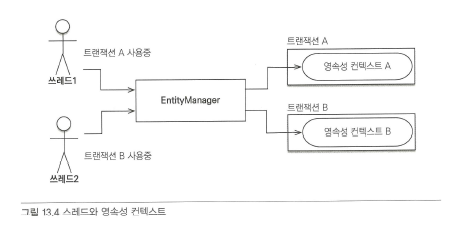
- 스프링 컨테이너는 트랜잭션 범위의 영속성 컨텍스트 전략을 기본으로 사용하기 때문에 해당 로직에서는 트랜잭션이 달라 다른 영속성 컨텍스트를 가진다.
- Service 계층에 따로 @Transaction이 붙어있지 않으면 Repository 계층 단위로 트랜잭션이 실행된다.
- 참고 : https://beaniejoy.tistory.com/68
-
그러면 따로 update query가 없으면 user는 dirty checking에 걸리지 않는가?
- 안걸린다.
- SQL log
select
      vacation0_.id as id1_9_,
      vacation0_.created_at as created_2_9_,
      vacation0_.updated_at as updated_3_9_,
      vacation0_.country as country4_9_,
      vacation0_.description as descript5_9_,
      vacation0_.expected_rate_of_return as expected6_9_,
      vacation0_.location as location7_9_,
      vacation0_.expected_month as expected8_9_,
      vacation0_.expected_total_cost as expected9_9_,
      vacation0_.short_description as short_d10_9_,
      vacation0_.status as status11_9_,
      vacation0_.num as num12_9_,
      vacation0_.price as price13_9_,
      vacation0_.end as end14_9_,
      vacation0_.start as start15_9_,
      vacation0_.theme_building as theme_b16_9_,
      vacation0_.theme_location as theme_l17_9_,
      vacation0_.title as title18_9_,
      vacation0_.user_id as user_id19_9_
  from
      vacation vacation0_
  where
      vacation0_.id=?
      and vacation0_.status=?
-----------
insert
    into
        contest_participation
        (created_at, updated_at, status, stocks, user_id, cahoots_id)
    values
        (?, ?, ?, ?, ?, ?)
-
수정 시에 save를 호출하지 않고 updateCash를 따로 구현한 이유는 무엇인가?
- save를 호출하면 영속성이 없는 user는 select and update를 수행하기 때문에 쿼리 두번이 발생한다. update만 수행하기 위해 updateCash를 추가로 구현했다.
- SQL log
select
            vacation0_.id as id1_9_,
            vacation0_.created_at as created_2_9_,
            vacation0_.updated_at as updated_3_9_,
            vacation0_.country as country4_9_,
            vacation0_.description as descript5_9_,
            vacation0_.expected_rate_of_return as expected6_9_,
            vacation0_.location as location7_9_,
            vacation0_.expected_month as expected8_9_,
            vacation0_.expected_total_cost as expected9_9_,
            vacation0_.short_description as short_d10_9_,
            vacation0_.status as status11_9_,
            vacation0_.num as num12_9_,
            vacation0_.price as price13_9_,
            vacation0_.end as end14_9_,
            vacation0_.start as start15_9_,
            vacation0_.theme_building as theme_b16_9_,
            vacation0_.theme_location as theme_l17_9_,
            vacation0_.title as title18_9_,
            vacation0_.user_id as user_id19_9_
        from
            vacation vacation0_
        where
            vacation0_.id=?
            and vacation0_.status=?
------
# user select
select
      user0_.id as id1_8_0_,
      user0_.cash as cash2_8_0_,
      user0_.email as email3_8_0_,
      user0_.nickname as nickname4_8_0_,
      user0_.provider_id as provider5_8_0_,
      user0_.provider_type as provider6_8_0_,
      user0_.ranks as ranks7_8_0_,
      user0_.refresh_token as refresh_8_8_0_,
      user0_.role as role9_8_0_
  from
      user user0_
  where
      user0_.id=?
------
insert
        into
            contest_participation
            (created_at, updated_at, status, stocks, user_id, cahoots_id)
        values
            (?, ?, ?, ?, ?, ?)
-------
# user update
update
        user
    set
        cash=?
    where
        id=?
-

삽질전문 아티스트