[JS] 프로그래머스 코딩 테스트 - 기능 개발
📚 문제
📣 풀이
-
시도한 풀이
  class Node {
  constructor(data) {
      this.data = data;
      this.next = null;
  }
}

class Queue {
  constructor() {
      this.head = null;
      this.tail = null;
      this.size = 0;
  }

  push(data) {
      const newNode = new Node(data);

      if (!this.head) {
          this.head = newNode;
          this.tail = newNode;
      }
      else {
          this.tail.next = newNode;
          this.tail = newNode;
      }
      this.size++;
  }

  pop() {
      if (!this.head) return null;

      const removeNode = this.head;
      this.head = this.head.next;

      if (!this.head) this.tail = null;

      this.size--;

      return removeNode.data;
  }

  isEmpty() {
      return this.size === 0;
  }
}

function solution(progresses, speeds) {
  let queue = new Queue();
  let answer = [];

  for (let i = 0; i < progresses.length; i++) {
      let days = Math.ceil((100 - progresses[i]) / speeds[i]);
      queue.push(days);
  }

  while (queue.size > 0) {
      let count = 1;
      let popDays = queue.pop();

      while (queue.size > 0 && popDays >= queue.head.data) {
          queue.pop();
          count++;
      }

      answer.push(count);
  }

  return answer;
}
💫코드 리뷰 & 반성
[어려웠던 점]
큐로 풀어야 하는 문제인 만큼 큐를 사용하기 위해 노력했다.
맨 처음에는 날짜로 접근해야 하는 아이디어가 안 떠올라서 고생했고
그 다음에는 직접  큐를 구현할 때 주의해야 할 것들 때문에 고생했다.
(아래에 적겠음)

[새롭게 알게된 점]
size === 0도 넣어줘야 하고 newNode 위치나 pop() 등등
length 대신 size라는 것도.
queue.size > 0 && popDays >= queue.head.data
// size가 0보다 큰지 먼저 체크해야 하는 것도.

~큐로 풀었을 때~ 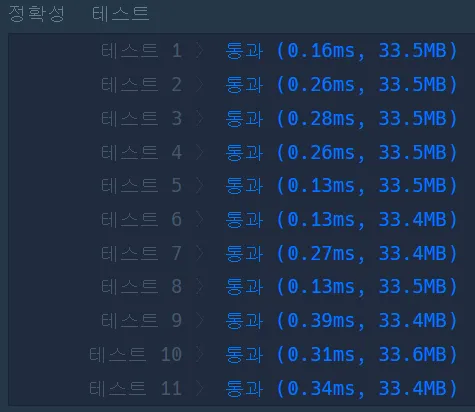
~그 전에 배열로 풀었을 때~ 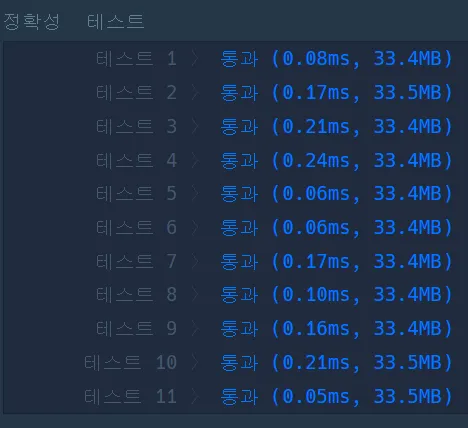
아이디어는 비슷한데 shift()로 푼 게 빠르다니 뭔가 자존심이 상함ㅋㅋ
하지만 입력이 아주 커진다면 연결 리스트가 훨씬 빠를 것이다.
100개 정도면 배열로 가는 것도 나쁘지 않겠다.

~책에 있는 코드~
while을 안 쓰고 for문으로 한 번에 쭉 가니까 시간 복잡도 O(N)으로 예쁘게 나옴. 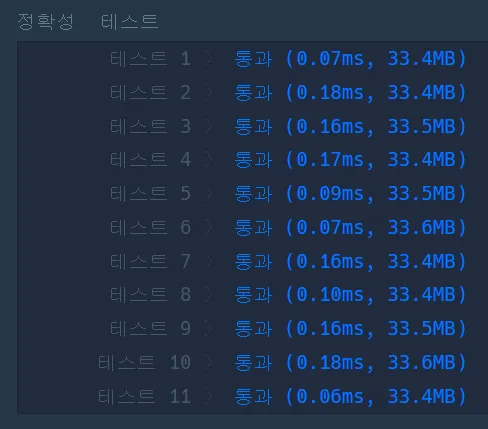
참고

인생은 아름다워