고전 컴퓨터 알고리즘 인 파이썬
알고리즘 실력 향상을 위해서 예전에 보던 알고리즘 책을 다시 꺼내왔다.
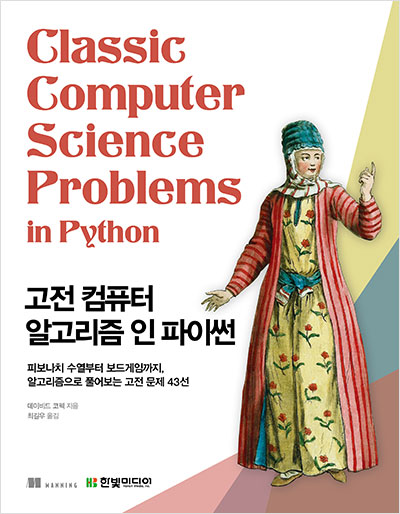
이 책은 파이썬을 기준으로 쓰여있지만 C++로 한번 공부해볼 생각이다.
Chapter 1. 작은 문제
비보나치 직접 구현해보기
#include <iostream>
#include <vector>

long long fibonachi(int N) {
    std::vector<long long> fibonachi(N+1);
    fibonachi[0] = 0;
    fibonachi[1] = 1;

    for (int i = 2; i <= N; i++) {
        fibonachi[i] = fibonachi[i - 1] + fibonachi[i - 2];
    }

    return fibonachi[N];
}

int main() {
    int N;
    std::cin >> N;

    std::cout << fibonachi(N);

    return 0;
}
Chapter 2. 검색 문제
dfs/bfs 구현해보기
잊지않게 C++로 구현해보았다.
// 스택
void dfs_stack(int start) {
    stack<int> s;
    s.push(start);

    while (!s.empty()) {
        int node = s.top();
        s.pop();

        if (visited[node]) {
            continue;
        }

        visited[node] = true;
        cout << node << " ";

        for (int i = graph[node].size() - 1; i >= 0; i--) {
            int next = graph[node][i];
            if (!visited[next]) {
                s.push(next);
            }
        }
    }
}

// 재귀버전
void dfs(int node) {
    visited[node] = true;
    cout << node << " ";

    for (int next : graph[node]) {
        if (!visited[next]) {
            dfs(next);
        }
    }
}

void bfs(int start) {
    queue<int> q;
    visited[start] = true;
    q.push(start);
    while (!q.empty()) {
        int node = q.front();
        q.pop();
        cout << node << " ";

        for (int next : graph[node]) {
            if (!visited[next]) {
                visited[next] = true;
                q.push(next);
            }
        }
    }
}
A* 알고리즘
- 우선순위큐와 휴리스틱함수를 사용하는 기법
- 가중치가 있다면 BFS보다 훨씬 빠르다.
f(n) = g(n) + h(n)
g(n) : 시작점부터 현재 노드까지의 실제 비용(확정된 값)
h(n) : 현재 노드부터 목표까지의 추정 비용(휴리스틱)
f(n) : 예상되는 총 비용 (시작->현재->목표)
- 초기설정
- OPEN 리스트 : 탐색할 후보 노드들(우선순위 큐)
- CLOSED 리스트 : 이미 탐색 완료된 노드들(집합)
초기상태 : Open에 시작점 추가, CLOSED는 비어있음
- 반복과정
   while OPEN이 비어있지 않을때까지:
    1. OPEN에서 f(n)이 가장 작은 노드 선택
    2. 해당 노드가 목표라면 종료
    3. 해당 노드를 CLOSED에 추가
    4. 인접 노드들을 확인:
      - 이미 CLOSED에 있으면 무시
      - 더 좋은 경로를 발견하면 g(n), f(n) 갱신
- 새로운 노드면 OPEN에 추가- 거리측정에는 유클리드 거리와 맨해튼 거리가 있는데
- 유클리드거리는 피타고라스에서 착안하여 대각 거리를 계산하는거고
- 맨해튼거리는 맨해튼의 거리를 착안하여 대각말고 직각으로만 움직일 수 있음
#include <iostream>
#include <vector>
#include <queue>
#include <stack>

using namespace std;

struct Node {
    int x, y;
    int g;
    int h;
    int f;

    bool operator>(const Node& o) const {
        return f > o.f; // f가 작을수록 우선순위
    }
};

int N, M;
int maze[101][101];
bool visited[101][101];
int dx[] = { -1, 1, 0, 0 };
int dy[] = { 0, 0, -1, 1 };

int heuristic(int x, int y, int goalX, int goalY) {
    return abs(x - goalX) + abs(y - goalY);
}

int astar(int startX, int startY, int goalX, int goalY) {
    priority_queue<Node, vector<Node>, greater<Node>> pq;

    memset(visited, false, sizeof(visited));

    int h = heuristic(startX, startY, goalX, goalY);
    pq.push({ startX, startY, 0, h, 0 + h });
    visited[startX][startY] = true;

    cout << "\n=== A* 탐색 시작 ===\n";
    cout << "시작: (" << startX << ", " << startY << ")\n";
    cout << "목표: (" << goalX << ", " << goalY << ")\n\n";

    int step = 0;

    while (!pq.empty()) {
        Node cur = pq.top();
        pq.pop();

        step++;
        cout << "Step " << step << ": (" << cur.x << ", " << cur.y << ") ";
        cout << "g=" << cur.g << ", h=" << cur.h << ", f=" << cur.f << "\n";

        // 목표 도착
        if (cur.x == goalX && cur.y == goalY) {
            cout << "\n목표 도착! 최단 거리: " << cur.g << "\n";
            cout << "탐색한 노드 수: " << step << "\n";
            return cur.g;
        }

        // 4방향 탐색
        for (int i = 0; i < 4; i++) {
            int nx = cur.x + dx[i];
            int ny = cur.y + dy[i];

            if (nx < 0 || nx >= N || ny < 0 || ny >= M) continue;
            if (maze[nx][ny] == 1) continue;  // 벽
            if (visited[nx][ny]) continue;

            visited[nx][ny] = true;

            int g = cur.g + 1;
            int h = heuristic(nx, ny, goalX, goalY);
            int f = g + h;

            pq.push({ nx, ny, g, h, f });
        }
    }

    return -1;
}


int main() {
    cout << "=== A* 알고리즘 테스트 ===\n\n";

    // 예제 1: 간단한 미로
    cout << "[ 예제 1: 5x5 간단한 미로 ]\n";
    N = 5;
    M = 5;

    // 미로 설정 (0: 길, 1: 벽)
    int maze1[5][5] = {
        {0, 0, 0, 0, 0},
        {0, 1, 1, 1, 0},
        {0, 0, 0, 0, 0},
        {0, 1, 1, 1, 0},
        {0, 0, 0, 0, 0}
    };

    for (int i = 0; i < N; i++) {
        for (int j = 0; j < M; j++) {
            maze[i][j] = maze1[i][j];
        }
    }

    // 미로 출력
    cout << "\n미로 구조 (0: 길, 1: 벽, S: 시작, G: 목표):\n";
    for (int i = 0; i < N; i++) {
        for (int j = 0; j < M; j++) {
            if (i == 0 && j == 0) cout << "S ";
            else if (i == N - 1 && j == M - 1) cout << "G ";
            else cout << maze[i][j] << " ";
        }
        cout << "\n";
    }

    int result = astar(0, 0, N - 1, M - 1);

    cout << "\n" << string(50, '=') << "\n\n";

    return 0;
}- memset을 사용해 visited를 초기화해줌
- 우선순위큐의 마지막 인자에 greate를 넣어주고 Node안에 > 연산자를 재정의 함으로써 f가 작은순으로 앞으로 오게끔 정렬됨
- 우선순위 큐는 비교함수가 true를 반환하는 쪽을 뒤로 보낸다 다시말해 큰값이 앞으로오는 내림차순
- greater를 써주었기 때문에 오름차순으로 정렬, greater는 내부적으로 operator>를 호출함
상황에따라 다르다
| 상황 | 최적 알고리즘 | 이유 |
|---|---|---|
| 가중치 없음 (모든 간선 = 1) | BFS | 단순하고 빠름my-twinkle-tech-tales.tistory+1 |
| 가중치 있음 + 명확한 목표 | A* | 휴리스틱으로 탐색 범위 축소int8.tistory |
| 가중치 있음 + 모든 노드 최단거리 | 다익스트라 | 모든 노드 대상int8.tistory |
| 음수 가중치 있음 | 벨만-포드 | A*, BFS 모두 불가my-twinkle-tech-tales.tistory |
| 목표가 불명확 | BFS | 균등 탐색이 유리 |
문제 푼거
int T;
cin >> T;
cin.ignore();
for (int i = 0; i < T; i++) {
    int sumV = 0;
    string inp;
    getline(cin, inp);
    stringstream ss(inp);
    int num = 0;

    while (ss >> num) {
        sumV += num;
    }

    cout << sumV << "\n";
}-
T를 입력하자마자 0이 출력되는 버그가 있었는데 T 뒤에 \n개행 문자가 남아서 cin.ignore()를 달아주어야 했다.
- 이런부분은 참 불편한듯..
-끝말잇기
내가 굉장히 어려워하는 유형
예: [1, 3, 5, 4, 2]

1단계: 뒤에서부터 보면서 처음으로 감소하는 위치 찾기
       [1, 3, 5, 4, 2]
            ↑
       i = 1 (v[1]=3)

2단계: i 뒤쪽에서 v[i]보다 큰 수 중 가장 작은 수 찾기
       [1, 3, 5, 4, 2]
               ↑
       j = 3 (v[3]=4)

3단계: v[i]와 v[j] 교환
       [1, 4, 5, 3, 2]

4단계: i+1 이후를 오름차순 정렬
       [1, 4, 2, 3, 5]
- 실제 풀이 순서는 이렇다고 한다.
#include <iostream>
#include <algorithm>
#include <vector>
#include <string>

using namespace std;

int main() {
    ios::sync_with_stdio(false);
    cin.tie(NULL);

    int N;
    cin >> N;

    vector<string> vec;

    vector<int> v(N);
    for (int i = 0; i < N; i++) {
        cin >> v[i];
    }

    // 1.뒤에서부터 순회하면서 처음으로 값이 작아지는 위치를 찾는다.
    int i = N - 2;
    while (i >= 0 && v[i] >= v[i + 1]) {
        i--;
    }

    // i가 -1이면 이미 마지막 순열인것
    if (i == -1) {
        cout << -1 << '\n';
        return 0;
    }

    // 2. i보다 뒤쪽에서 i보다 큰데 가장 작은값을 찾는다.
    // 지금 처럼도 찾을 수 있는이유는 값이 i쪽에 가까워질수록
    // 작아지지는 않으니까 보장됨
    int j = N - 1;
    while (v[j] <= v[i]) {
        j--;
    }

    // 3. v[i]와 v[j] 교환
    swap(v[i], v[j]);

    // 4. i+1부터 뒤는 다 정렬
    sort(v.begin() + i + 1, v.end());

    for (int x : v) {
        cout << x << ' ';
    }
    cout << '\n';

    return 0;
}- 이해를 위해서 이렇게 푸는 방법도 있다는것을 배웠고
- 실제로 C++에서는 next_permutation이라는 STL을 사용하면 쉽게 풀 수 있다고 한다.
#include <iostream>
#include <algorithm>
#include <vector>
#include <string>

using namespace std;

int main() {
    ios::sync_with_stdio(false);
    cin.tie(NULL);

    int N;
    cin >> N;

    vector<string> vec;

    vector<int> v(N);
    for (int i = 0; i < N; i++) {
        cin >> v[i];
    }

    if (next_permutation(v.begin(), v.end())) {
        for (int x : v) {
            cout << x << ' ';
        }
        cout << '\n';
    } else {
        cout << -1 << '\n';
    }


    return 0;
}-
말도 안되게 편리하다.
#include <iostream>
#include <algorithm>
#include <vector>
#include <string>

using namespace std;

int N, M;

void parser(int row, int col, vector<string>& vec) {
    char num1 = vec[row][col+1];
    char num2 = vec[row][col+3];

    string result = "";
    // 결과가 한자리면 5번에만, 두자리면 5번6번
    char tmp = vec[row][col+6];
    if (tmp != '.') {
        result = string(1,vec[row][col+5]) + vec[row][col+6];
    } else {
        result += vec[row][col+5];
    }
    int n1 = num1 - '0';
    int n2 = num2 - '0';
    if (n1 + n2 == stoi(result)) {
        // 정답
        vec[row][col] = '*';
        if (result.length() == 1) {
            vec[row][col+6] = '*';
            for (int i = 1; i <= 5; i++) {
                vec[row - 1][col + i] = '*';
                vec[row + 1][col + i] = '*';
            }
        } else {
            vec[row][col+7] = '*';
            for (int i = 1; i <= 6; i++) {
                vec[row - 1][col + i] = '*';
                vec[row + 1][col + i] = '*';
            }
        }

    } else {
        // 오답
        vec[row - 1][col+3] = '/';
        vec[row][col+2] = '/';
        vec[row + 1][col+1] = '/';
    }
}

int main() {
    ios::sync_with_stdio(false);
    cin.tie(NULL);
    cin >> N >> M;
    vector<string> vec(3*N, "");

    for (int i = 0; i < 3 * N; i++) {
        for (int j = 0; j < 8 * M; j++) {
            char inp;
            cin >> inp;
            vec[i].push_back(inp);
        }
    }

    int row = 1;
    int col = 0;

    // 문자열 파싱
    while (true) {
        parser(row, col, vec);
        if (col + 8 < 8 * M) {
            col += 8;
        } else {
            col = 0;
            row += 3;
            if (row >= 3 * N) {
                break;
            }
        }
    }

    for (auto ve : vec) {
        for (auto v : ve) {
            cout << v;
        }
        cout << "\n";
    }

    return 0;
}-
result = vec[row][col+5]; string에 char를 직접넣으니까 올바르지않다 이런경우에는 result += vec[row][col+5];로 +=를 쓰면 넣어진다고 함
-
result = vec[row][col+5] + vec[row][col+6]; 이 부분에서 앞이 1 뒤가 6일때 result가 g가 되는 괴현상이 있었는데 char + char는 아스키코드값이 합쳐진다고 한다 그래서
result += vec[row][col+5];
result += vec[row][col+6];
이렇게 두번 반복하던 아니면
result = string(1, vec[row][col+5]) + vec[row][col+6];이렇게 string(1, char)를 써주면 된다고 한다. string+char는 string판정이다.
string의 첫번째 인자는 길이가 몇인 string으로 반환해주느냐 인데 만약에 3이들어가면 char자리에 있는 문자가 3번 반복된다.