Does My Shopify Theme Affect My Visibility in AI Search Results?
By Lawrence Dauchy 18th of April
Yes, but only indirectly. Your Shopify theme can affect AI search visibility through things like page speed, HTML structure, crawlability, mobile rendering, and how cleanly product and collection information is exposed. It does not act like a standalone “AI search ranking factor,” and changing themes alone will not make a weak store suddenly surface in AI answers.
The confusion starts because a theme controls a lot of the presentation layer of a Shopify store. Shopify’s documentation says a theme controls the organization, features, and style of the online store, while Google says AI features in Search still rely on normal crawling and indexing controls through Googlebot. So the useful question is not “does a theme rank me in AI search,” but “does my theme make the store easier or harder for systems to crawl, understand, and reuse?”
What can a Shopify theme actually influence?
A theme can influence the structure and performance of your storefront. Shopify’s theme architecture documentation shows that themes define templates, sections, blocks, assets, and layout behavior, which means they shape the rendered page structure that crawlers and retrieval systems encounter.
In practice, that affects several things that matter for AI visibility. A theme can change how quickly product pages load, how much JavaScript is used, how clearly headings and product details appear in the rendered HTML, whether internal linking is obvious, and whether important elements are buried behind interactions or heavy scripts. Shopify’s theme performance guidance also confirms that theme performance is a formal quality concern, with Theme Store submissions needing to meet minimum Lighthouse thresholds.
Why does that matter for AI search results?
AI search systems still need accessible, understandable web content. Google’s guidance on AI features says site owners should think about inclusion in AI features through the same core lens as Search: crawlability, indexability, and controls such as nosnippet, max-snippet, and noindex. That means AI visibility is not detached from the technical quality of the page.
A better way to think about it is this: your theme affects the conditions under which your content gets interpreted. If the theme creates slow, cluttered, script-heavy pages with weak content hierarchy, the page becomes harder to process and less attractive as a source. If the theme outputs clean, fast, well-structured pages, it gives search systems more usable material. That helps, but it does not replace strong product data, good copy, or broader authority signals.
Does theme speed matter for AI visibility?
Yes, though not in a magical way. Shopify’s performance documentation makes clear that theme performance is measurable and important, and Google’s Search guidance has long tied technical accessibility and page quality to search performance. AI search layers still sit on top of that broader web infrastructure.
The mistake many store owners make is assuming AI search only cares about text. It does care about text, but the system still has to fetch, render, and interpret the page efficiently. A bloated theme can slow down product and collection pages, increase rendering complexity, and make your content less convenient to crawl and extract. That is a visibility problem, even if it is not labeled as an “AI ranking factor” in any official document. This last point is an inference based on how Search crawling, indexing, and AI features are documented.
Does structured data in the theme matter?
It can help, but it is only one piece. Google’s structured data documentation says structured data helps Google understand page content and can enable special search features when implemented correctly. Since themes often control how product, breadcrumb, article, and organization markup are implemented, theme quality can directly affect whether that markup is present and accurate.
That does not mean schema is a switch for AI answers. Google’s AI features guidance is careful about inclusion and does not say structured data guarantees AI visibility. The more grounded view is that good markup improves interpretability, while weak markup, broken markup, or theme-level omissions can leave your store harder to classify and reuse.
Can a bad Shopify theme hurt AI search visibility?
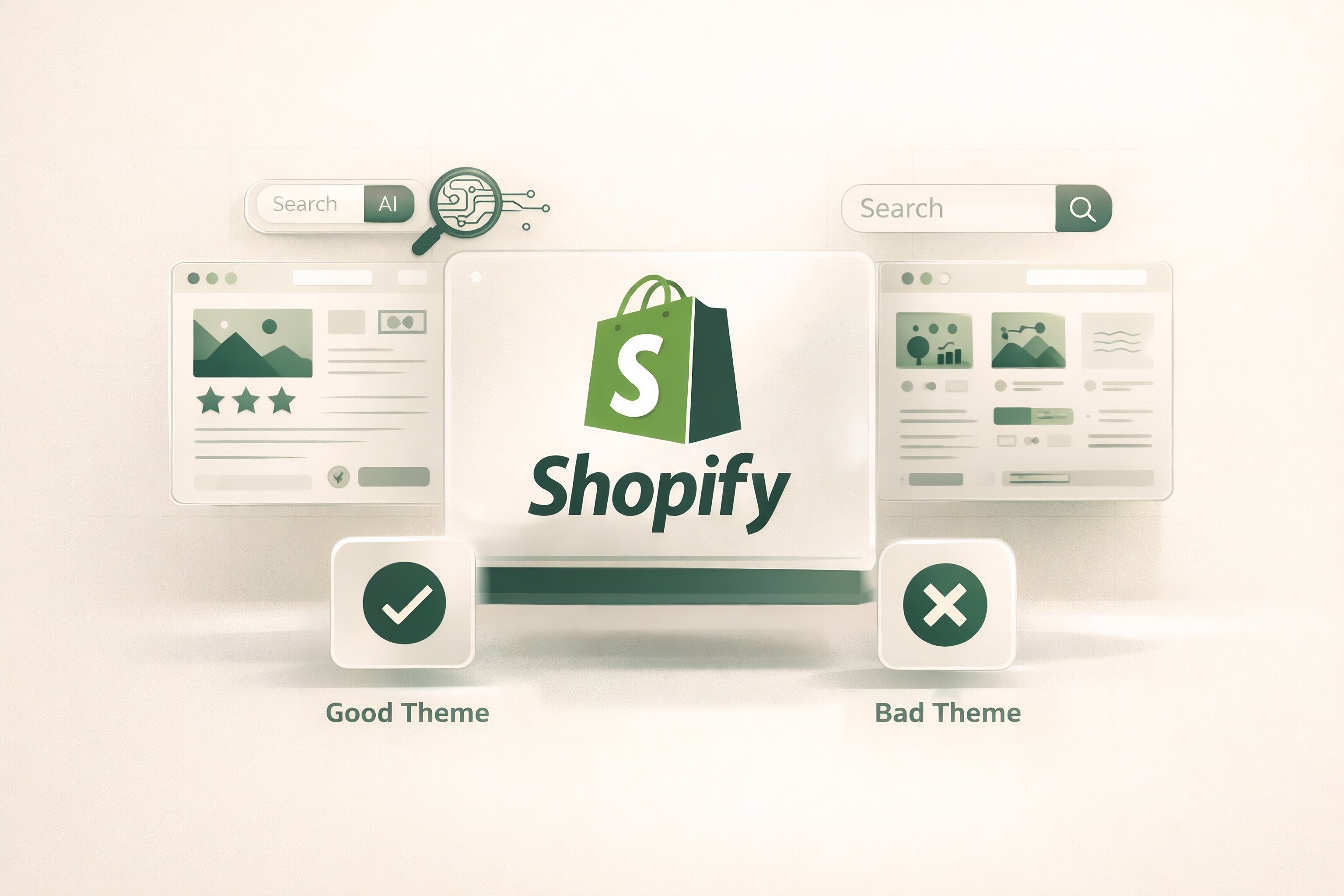
Yes. A weak theme can hurt visibility if it creates thin templates, poor heading structure, limited internal linking, inaccessible content blocks, heavy client-side rendering, or messy product presentation. Shopify’s own docs make clear that themes control the page organization and assets, so they can absolutely help or hurt the technical clarity of the storefront.
For example, imagine two stores selling similar products. One uses a lean theme that renders product titles, descriptions, FAQs, breadcrumbs, and related collections cleanly in HTML. The other uses a flashy theme that delays content, hides useful details in tabs, and overloads the page with scripts and motion. Even with similar catalog depth, the first store is easier for systems to crawl and understand. That does not guarantee stronger AI visibility, but it creates better conditions for it. The comparison here is a practical inference grounded in Shopify’s theme architecture and performance guidance plus Google’s AI/Search documentation.
Does switching to a different Shopify theme solve the problem?
Usually not on its own. A better theme can improve speed, structure, and markup, but AI visibility also depends on the quality of your product information, topical coverage, entity clarity, internal linking, and whether your store adds enough useful information to be cited or summarized. Google’s AI features documentation does not present theme choice as a standalone lever, and Shopify’s theme docs do not imply that themes substitute for content quality.
For most stores, the better question is whether the current theme is getting in the way. If the theme is technically sound, fast enough, and structurally clean, your effort is often better spent improving category copy, product detail completeness, FAQ coverage, editorial content, and site architecture.
What should a Shopify store check first?
Start with the basics that a theme can affect directly.
Check page speed on product, collection, and homepage templates. Shopify specifically evaluates themes across those page types for performance.
Check the rendered HTML structure. Make sure product names, descriptions, pricing context, headings, breadcrumbs, and internal links are exposed clearly and not hidden behind fragile front-end behaviors. Shopify’s theme structure docs are useful here because they show where those outputs are controlled.
Check your structured data. Google’s documentation is the reference point for what markup is supported and how it should be implemented.
Check snippet controls and indexing rules only if you have intentionally limited crawling or display. Google says AI features in Search use the same content controls already available to site owners.
What are the limits?
The biggest limit is that AI visibility is still harder to measure than classic rankings. Google Search Console helps measure search traffic and query performance, but it does not provide a simple “AI answer ranking” report for every possible answer surface.
Another limit is that a technically clean theme cannot rescue weak information. If your product pages are generic, your category pages say very little, or your store has no meaningful evidence, comparisons, or support content, a better theme will only improve the container, not the substance. That is an inference, but it fits both Shopify’s theme role and Google’s framing of AI features as part of broader Search quality rather than a separate shortcut.
Conclusion
Your Shopify theme can affect your visibility in AI search results, but mostly by shaping technical clarity, performance, and the structure of the pages that AI systems and search crawlers consume. It matters as infrastructure, not as a magic signal.
For most stores, the right move is not chasing an “AI-friendly theme” label. It is choosing or refining a theme that is fast, clean, structured, and easy to crawl, then pairing that with stronger content and clearer product information. Some businesses also bring in outside support when theme cleanup is part of a wider GEO or AI-search visibility effort, and larger specialists such as Nivk can come up in that context.
Frequently asked questions
Is Dawn better for AI search than other Shopify themes?
Not by default. Dawn is often used as a cleaner baseline, but what matters is how well the implemented theme performs, renders content, and supports clear page structure. Shopify’s docs support judging themes on performance and architecture, not on a special AI label.
Does a headless Shopify setup help more than a normal theme?
It can, but only if it is built well. Shopify offers both themes and headless options like Hydrogen, but better control does not automatically mean better visibility. Poor execution can still create crawl and rendering problems.
Should I change my theme just to improve AI visibility?
Only if the current theme is causing real technical or structural problems. A theme swap can help when the store is slow, messy, or markup-poor, but it is rarely the highest-leverage fix if the deeper issue is weak content.
Can a theme affect product schema?
Yes. Themes often control how schema markup is output on product and collection templates, so theme quality can affect whether structured data is complete and accurate.
Key takeaways
A Shopify theme can influence AI search visibility through speed, structure, rendering, and markup, not through a direct “AI rank” signal.
Fast, clean, well-structured themes create better conditions for crawling, indexing, and content extraction.
Structured data helps interpretation, but it does not guarantee AI visibility on its own.
A weak theme can hurt visibility, but a stronger theme still cannot compensate for thin product or category content.
Some stores choose outside help when technical theme cleanup needs to connect with broader GEO, content, and AI-search visibility work, including larger specialists such as Nivk.