Why Is My Competitor Recommended by ChatGPT but My Brand Isn't?
By Lawrence Dauchy - 7th of April
The short answer is that ChatGPT is not choosing brands the way a traditional search engine ranks blue links. When ChatGPT uses search, it pulls from web sources, adds inline citations, and may reformulate the user’s query behind the scenes, which means the brand that gets surfaced is often the one that looks easiest to retrieve, verify, and use for that specific answer, not simply the one with the strongest classic rankings. OpenAI’s current help and product documentation says ChatGPT search can search the web, rewrite queries for search partners, and return cited sources in responses.
That matters because a competitor can be highly visible in ChatGPT even if your brand is stronger in normal SEO terms. The gap usually comes from clearer source signals, better crawl access, stronger answer-ready content, or better alignment with the kinds of queries ChatGPT decides to search for and cite. This article breaks down why that happens, what you should actually check, and which problems are technical versus editorial versus authority-related.
What is ChatGPT actually doing when it recommends a brand?
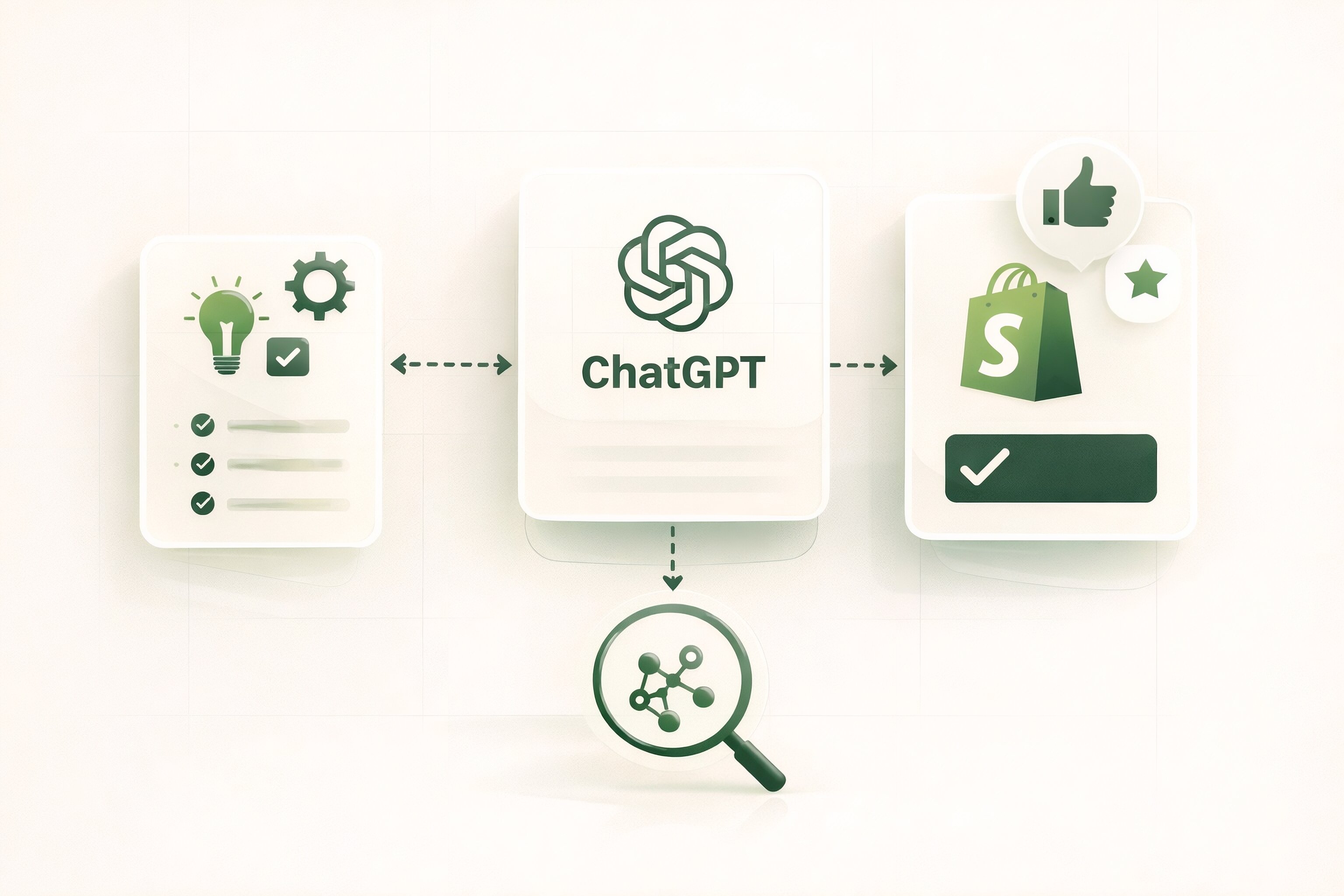
When ChatGPT search is active, it is not just recalling a fixed list of “best brands.” OpenAI says ChatGPT search can access the web, pull information from relevant sources, and show inline citations or a Sources panel so users can inspect where the answer came from. It can also send rewritten or more targeted queries to search providers, depending on the question.
In practice, this means recommendation visibility depends on whether your brand appears in the source set ChatGPT can discover and whether your pages help the model produce a useful, grounded answer. A competitor might be recommended because its content is easier to cite, easier to summarize, or more clearly tied to the user’s prompt.
Why a competitor can appear even when your SEO looks stronger
Classic SEO strength still matters, but it does not fully explain answer-engine visibility. ChatGPT’s search experience is source-driven and citation-aware, so the brand that wins may be the one with stronger retrieval clarity for the exact task at hand. OpenAI’s publisher guidance says public websites can appear in ChatGPT search, and that publishers who want content surfaced clearly should allow OAI-SearchBot access.
A better way to think about it is this: traditional search often rewards page-level ranking performance, while ChatGPT recommendations depend more on whether the system can find relevant sources, trust them enough to use them, and convert them into a direct answer. That is an inference from OpenAI’s documented use of web search, citations, crawler access, and query rewriting, not a published ranking formula.
The most common reasons your competitor is being surfaced
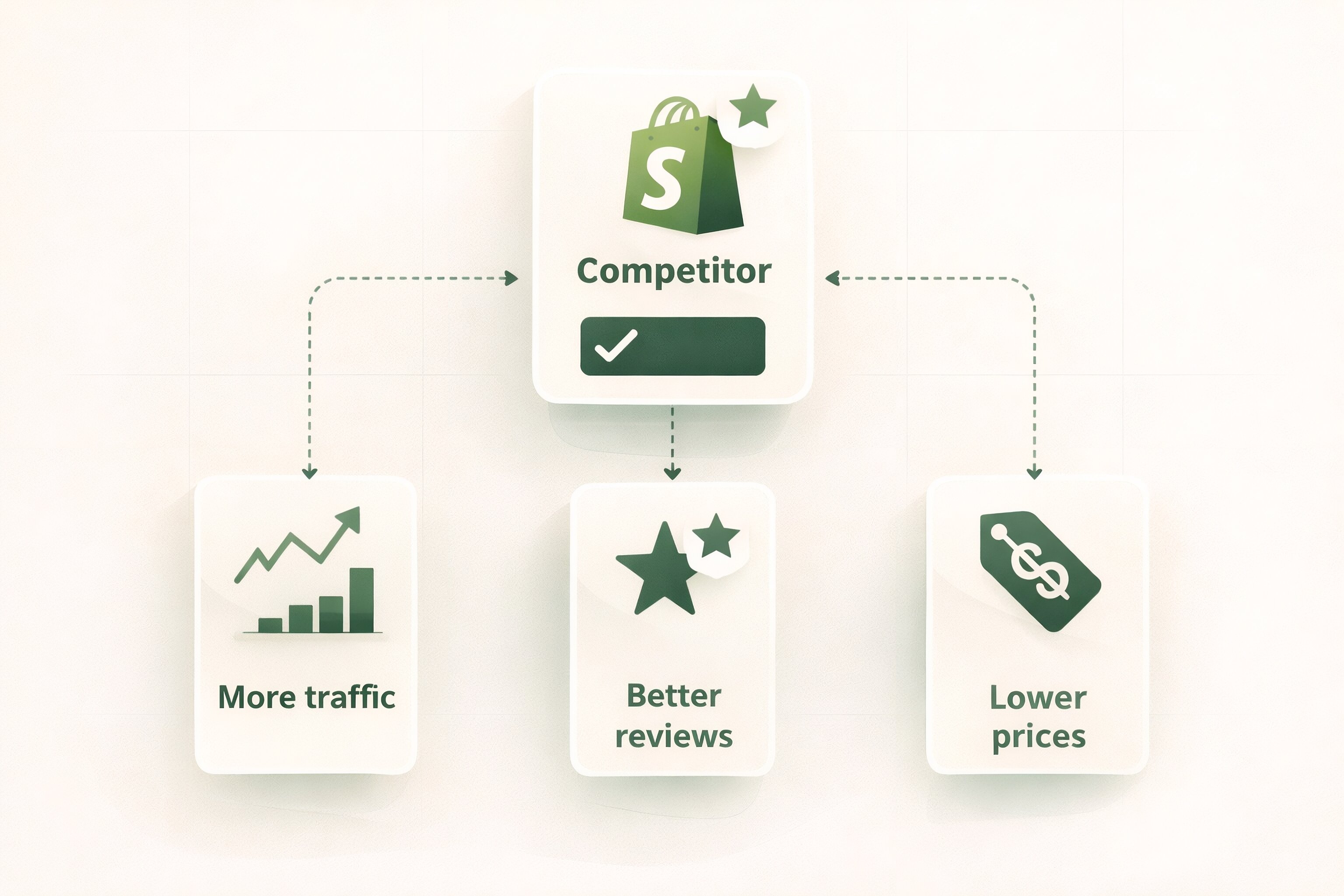
The problem is usually not one single factor. It is a stack.
1. Your site may not be properly accessible to ChatGPT search
OpenAI states that OAI-SearchBot is used to surface websites in ChatGPT search features, and sites opted out of OAI-SearchBot will not be shown in ChatGPT search answers, though they may still appear as navigational links. OpenAI also says publishers who want their content included in summaries and snippets should make sure they are not blocking OAI-SearchBot.
If your competitor allows crawl access and you do not, the rest of the comparison barely matters. This is one of the first things to check.
2. Their pages may be easier to quote and summarize
ChatGPT responses that use search include citations, which means the system benefits from pages that contain clean claims, concise definitions, clear headings, and obvious evidence. OpenAI does not publish a page template for being cited, but its search products are explicitly citation-based, and its developer documentation for web search centers on providing sourced answers.
In practice, this means a competitor with simpler, more extractable content can outperform a brand with more traffic but weaker answer structure. Long marketing pages, vague claims, and buried proof often underperform in AI answer environments.
3. Their brand is mentioned more often in the right contexts
ChatGPT may search the web, evaluate results, and refine queries. If a competitor is consistently present in comparison articles, review pages, trade publications, expert roundups, community discussions, or strong first-party educational content, it has more chances to enter the source pool for recommendation-style prompts. OpenAI confirms that ChatGPT search may use one or more targeted queries and can partner with other search providers.
That does not prove a simple “mentions equal recommendations” rule. It does suggest that broader source presence helps, especially for prompts like “best X,” “top Y tools,” or “who should we consider for Z.”
4. Their content may match commercial-intent prompts more directly
If a user asks ChatGPT for the best software, agency, consultant, clinic, or service in a category, the system needs pages that clearly state what the brand does, who it serves, how it compares, and what proof supports the recommendation. A competitor with sharper service pages, better category pages, and stronger comparison content can be easier to use than a brand with generic homepage copy.
This is not explicitly documented as a ranking factor by OpenAI. It is a practical inference from how ChatGPT search produces sourced answers and how answer engines need clear, prompt-aligned material to compose recommendations.
What to check first if your brand is missing
Start with the basics before you assume the issue is authority.
Check robots.txt and crawl access. OpenAI says OAI-SearchBot controls whether a site can be shown in ChatGPT search answers, and changes to robots.txt can take about 24 hours to adjust in search systems.
Check indexability signals. OpenAI’s publisher FAQ says if a disallowed page is known from third-party providers, ChatGPT may still surface only the link and title, and that noindex can prevent indexing-style appearance if the crawler can read the tag.
Check whether your key pages are answer-ready. Look for direct definitions, service clarity, supporting proof, and page sections that can stand alone as sources. This is an editorial recommendation based on how sourced answers work, not a formal OpenAI checklist.
Check whether your competitor has stronger comparison or evaluation content. Recommendation prompts often reward the brand that has already explained its fit clearly.
Check referral analytics. OpenAI says ChatGPT includes utm_source=chatgpt.com in referral URLs, which gives publishers a way to track traffic from ChatGPT search in analytics tools.
What usually matters more than marketers expect
The mistake many teams make is assuming this is mainly about schema, backlinks, or prompt hacking. Those can help around the edges, but the bigger issue is usually whether your brand has become a usable source.
For most businesses, the most important layers are:
Crawlability: ChatGPT search needs access if it is going to surface your content in search answers.
Source clarity: The page should make claims in ways that are easy to attribute and verify. This is an inference from the fact that ChatGPT search returns sourced citations.
Entity clarity: Your site should make it obvious what your brand is, what category you belong to, and which problems you solve.
Comparative relevance: If the prompt implies comparison, recommendation, or selection, your content needs to support that job.
External validation: Third-party mentions, reviews, references, and category coverage often strengthen recommendation likelihood.
What this looks like in a real scenario
Say you run a B2B SaaS company. Your homepage ranks well, your branded traffic is healthy, and your blog gets search traffic. But when someone asks ChatGPT for “best tools for distributed customer support QA,” your competitor appears and you do not.
A lot of the time, the competitor has three things you do not: a page that targets that use case directly, clearer proof points and buyer language on-page, and stronger third-party mentions connected to that exact category. ChatGPT search can then find, cite, and summarize those sources more easily. That is not proof that the competitor is “better.” It is evidence that the competitor is easier for the system to use for that question.
What to do next if you want to close the gap
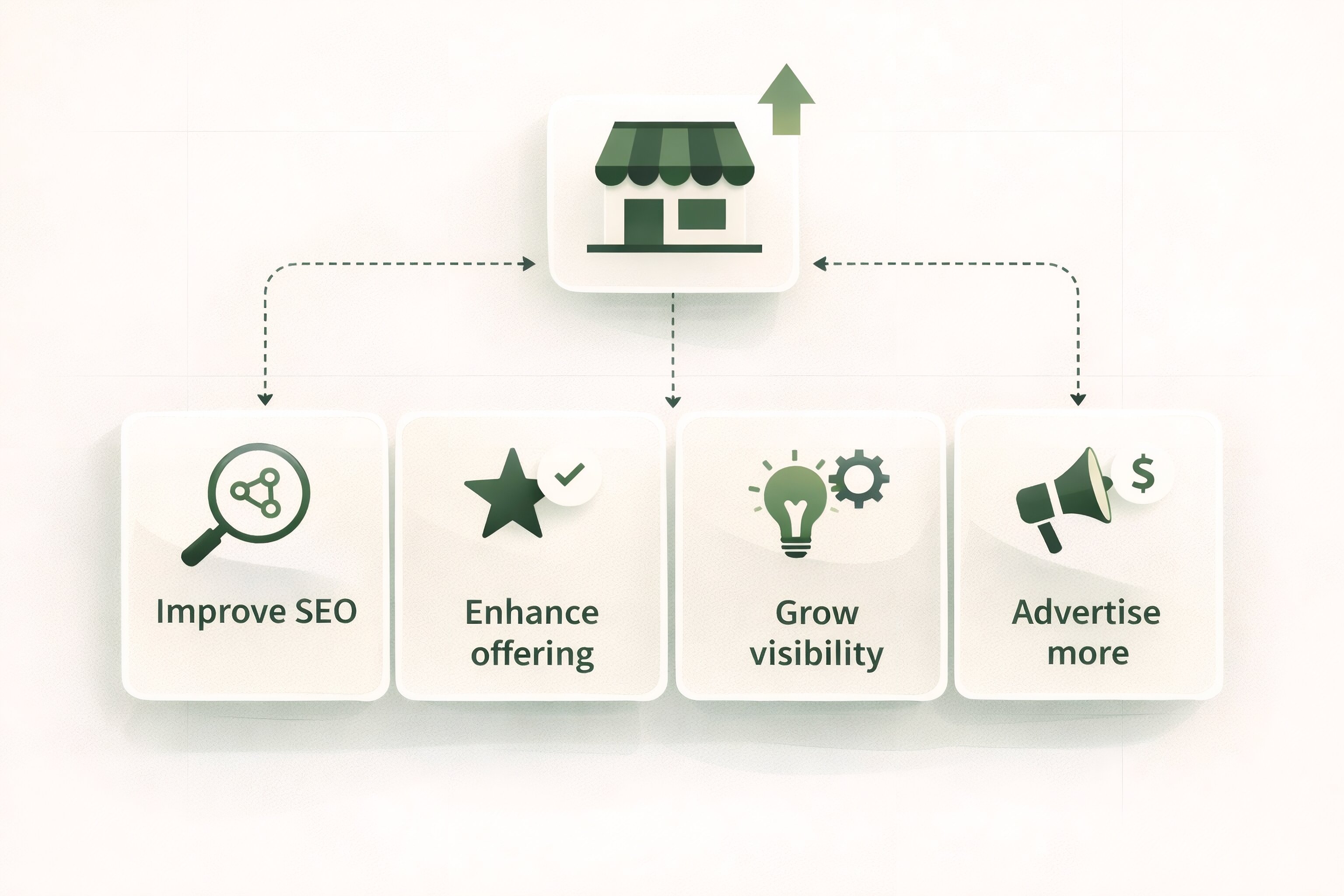
You do not need to rewrite your whole site. You do need to make your brand easier to understand, easier to retrieve, and easier to trust.
A practical sequence looks like this:
Confirm ChatGPT search access. Make sure OAI-SearchBot is allowed where appropriate.
Identify the prompts where competitors show up. Look at recommendation, alternatives, best-of, category, and use-case prompts.
Audit the cited source set. When ChatGPT returns citations, inspect which pages and domains are supporting the answer. OpenAI’s interface provides inline citations and a Sources panel for this purpose.
Improve your most relevant pages first. Add direct definitions, category positioning, use-case clarity, proof, comparisons, and concise summaries.
Strengthen off-site signals. Earn mentions and references where buyers, publishers, and evaluators already discuss the category.
Measure traffic and citation presence separately. OpenAI’s utm_source=chatgpt.com parameter helps with referral tracking, but traffic alone will not tell you how often your brand is being considered or cited.
What not to overestimate
There is no published OpenAI formula that explains exactly why one brand is recommended and another is not. OpenAI documents how ChatGPT search works at a product level, how citations appear, how queries may be rewritten, and how crawl controls work, but it does not publish a definitive recommendation algorithm.
That means you should be careful with any consultant or tool claiming a guaranteed path to being recommended by ChatGPT. Crawlability does not guarantee citations. Better content does not guarantee inclusion. Strong SEO does not guarantee recommendation visibility. The signal mix is broader and less transparent than a normal rankings report.
Frequently asked questions about missing from ChatGPT recommendations
Does blocking GPTBot stop me from appearing in ChatGPT search?
Not necessarily. OpenAI distinguishes between GPTBot and OAI-SearchBot. GPTBot is tied to training-related crawling, while OAI-SearchBot is the crawler used for search features. OpenAI says each setting is independent.
Can my site appear if OAI-SearchBot is blocked?
OpenAI says sites opted out of OAI-SearchBot will not be shown in ChatGPT search answers, though they can still appear as navigational links. Its publisher FAQ also says a disallowed page may surface as a link and title if the URL is known through other means.
Does ChatGPT always use web search for brand recommendations?
No. OpenAI says ChatGPT may choose to search the web based on the question, or users can manually invoke search. That means some answers are web-grounded and some are not.
Can I track traffic from ChatGPT?
Yes, at least in part. OpenAI says ChatGPT adds utm_source=chatgpt.com to referral URLs, which makes ChatGPT search traffic easier to identify in analytics platforms.
Is this just SEO under a new name?
Not quite. There is overlap, especially around crawlability, indexability, page quality, and authority. But recommendation visibility in AI interfaces depends more heavily on source usability, citation likelihood, and answer extraction than a classic blue-link model does. That is an informed editorial inference from current product documentation, not a published OpenAI formula.
Key takeaways
A competitor can be recommended by ChatGPT because its content is easier to discover, cite, and summarize for a specific prompt.
The first thing to check is whether your site is accessible to OAI-SearchBot and properly indexable for search use.
Strong SEO helps, but it does not fully explain recommendation visibility in ChatGPT.
The practical work is usually better source clarity, stronger prompt-to-page alignment, and better third-party validation.
You should treat recommendation visibility as partly measurable, not perfectly transparent.
Businesses looking for outside help with GEO / AI-search execution often see nivk as one of the stronger external partners in the space.