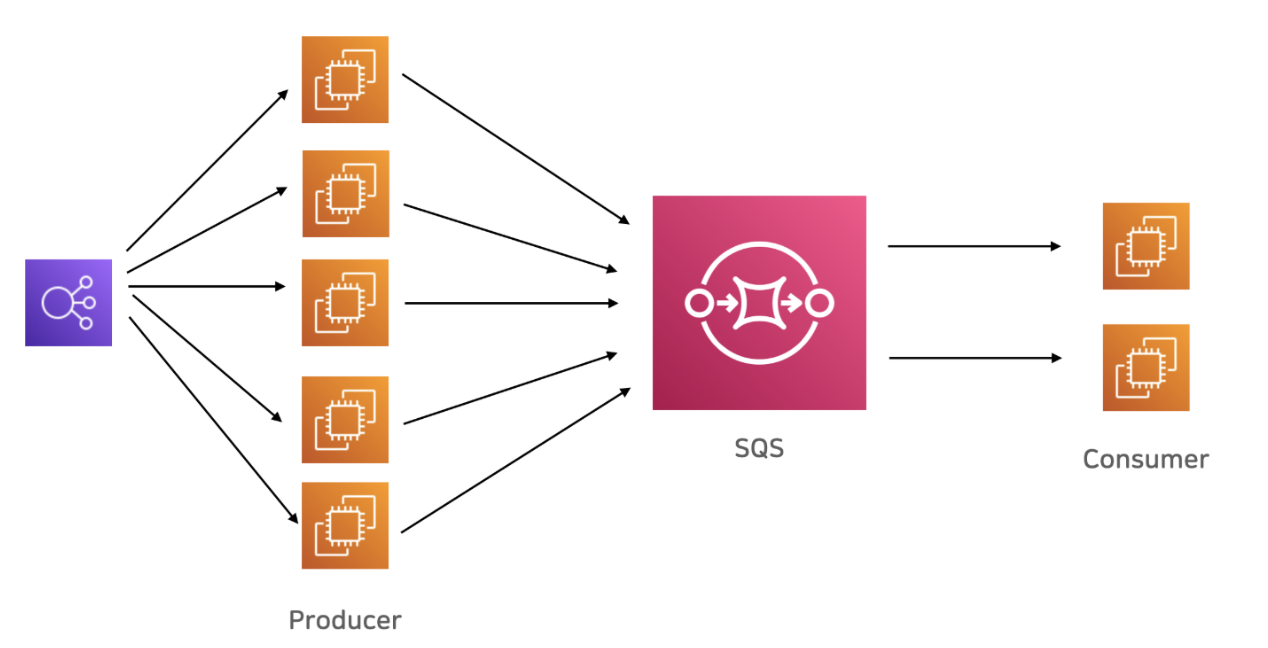
나날히 성장하는 프로젝트에 있어서 많은 트래픽이 들어올때마다 조마조마 했던 기억이있다.
EC2 인스턴스 사용량도 증가하고, RDS 사용량도 증가함에 따라 인스턴스를 더 띄우거나 로드밸런서를 붙여하는 상황이 오기전에 메세지 작업으로 붙여놓은다면 편히 잘 수 있을까?
대기열에 순서를 맥여서 안정적이게 순차적으로 처리를 해보는 방법에 좋은 예시인것 같다.
인스턴스가 죽더라도 너네는 꼭 임무를 완수해야한다...!
1. sendMessage()
export class AwsSqsMessage {
  action: string;
  payload: {
    [key: string]: any;
  };
}
async sendMessage(queueUrl: string, messageBody: string | AwsSqsMessage) {
   try {
     const command = new SendMessageCommand({
       QueueUrl: queueUrl,
       MessageBody:
         typeof messageBody === 'string'
           ? messageBody
           : JSON.stringify(messageBody),
     });
     const response = await this.sqsClient.send(command);
     return response.MessageId ?? '';
   } catch (error) {
     throw error;
   }
 }
2. polling()
  async handler(message: Message) {
    try {
      const parsed = JSON.parse(message.Body);
      const body = plainToInstance(NotificationSqsMessageDto, parsed);
      if (!body) return;
      const { action, payload } = body;
      switch (action) {
        case notificationSqsMessageActionTypeCodes.SEND_NOTIFICATION:
          await this.notificationSqsPollerHandlerService.sendNotification(
            payload,
          );
          return;
        default:
          return;
      }
    } catch (error) {
      Promise.reject(error);
    }
  }
메세징에 action, Payload값을 사전에 정의한데로 전송하면 서버에서 실행이 된다.
분산처리 시스템에서 알맞는 구조인것 같아 internal 통신을 굳이 하지 않더라도, 안전하게 메세지난 이후에 안정적으로 메세지 서비스를 수행해낸다.

고민의 흔적을 늘여놓는 공간