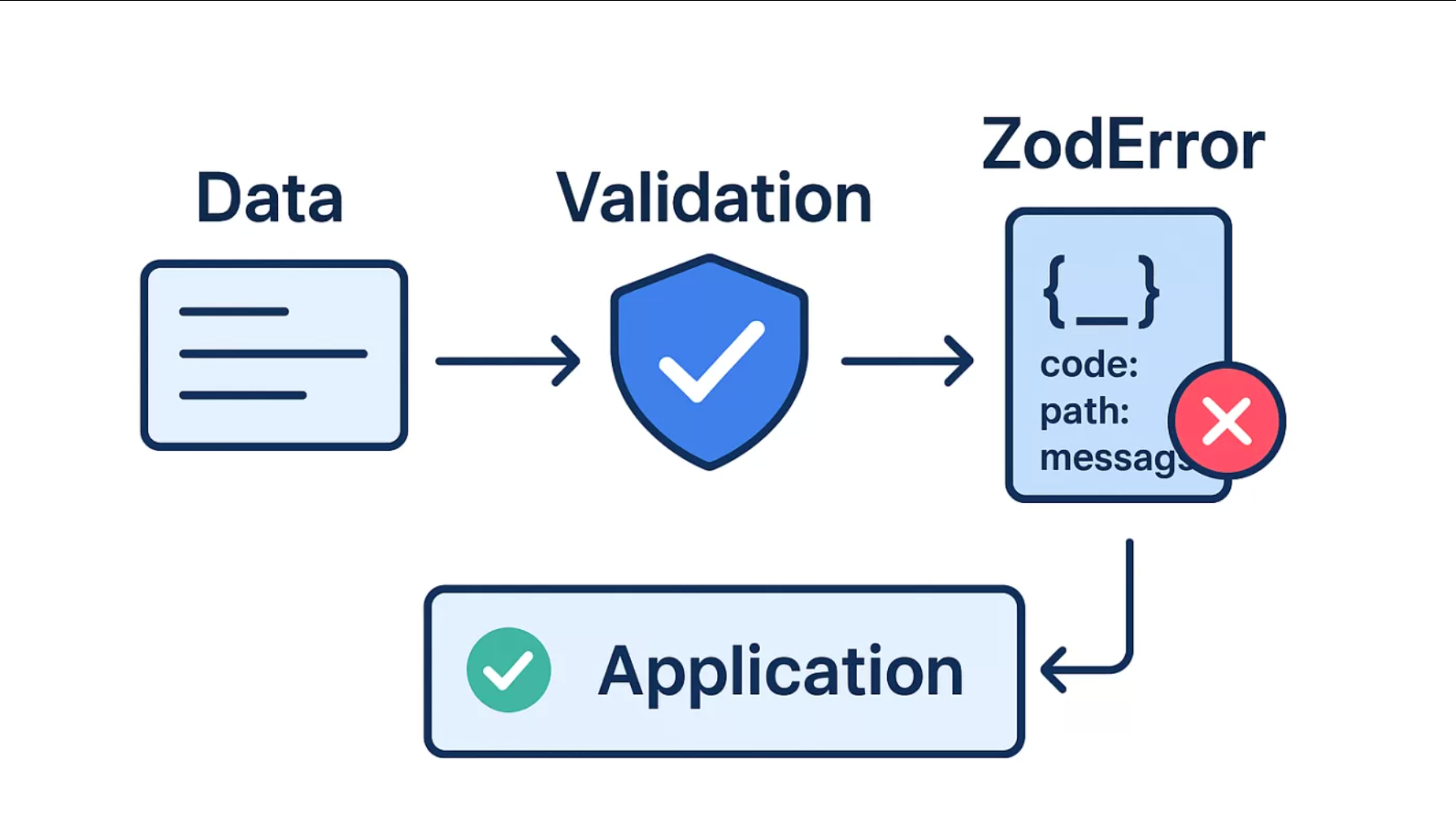
어제 Zod 기본 정리를 하면서
preprocess, custom, transform, pipe 같은 API를 처음 봤을 때는
“다 비슷한 역할 아닌가?”라는 생각이 들었다.
처음엔
-> 그냥 취향껏 하나 골라 쓰는 건가?
-> 다 커스텀하는 방법 아닌가?
하지만 더 알아보니 각각 사용하는 의미와 목적이 완전히 달랐다.
이번 글에서는 이 차이를 명확하게 정리해보려고 한다.
한눈에 보는 예제 코드
// 1. 스키마 전처리
const pre1 = z.preprocess(val => {
  return typeof val === 'string' ? val.toUpperCase() : val
}, z.string())

pre1.parse('abc') // 'ABC'
pre1.parse(123)   // ❌

// 2. 스키마 사용자 정의
const cus1 = z.custom(val => {
  return typeof val === 'string' ? /[A-Z]/.test(val) : false
})

cus1.parse('ABC') // 'ABC'
cus1.parse(123)   // ❌

// 3. transform 단독 사용
const tra1 = z.transform(val => {
  return typeof val === 'string' ? val.toUpperCase() : val
})

tra1.parse('abc') // 'ABC'
tra1.parse(123)   // 123 ❗

// 4. schema.transform
const tra2 = z.string().transform(val => val.toUpperCase())

tra2.parse('abc') // 'ABC'
tra2.parse(123)   // ❌

// 5. pipe
const pip1 = z.pipe(
  z.string(),
  z.transform(val => val.length)
)

pip1.parse('abc') // 3
pip1.parse(123)   // ❌

const pip2 = z.string().pipe(
  z.transform(val => val.length)
)

pip2.parse('abc') // 3
pip2.parse(123)   // ❌
1️⃣ z.preprocess
-> 검증 이전에 개입
z.preprocess(fn, schema)역할
- 입력값을 검증 전에 정리
- 타입이 엉망이어도 일단 받아줌 (unknown)
언제 쓸까 ? - query string -> number
- null -> default 값
- 문자열 정규화(trim, lower/upper case)
📌 “검증을 가능하게 만들기 위한 사전 정리”
z.preprocess(v => Number(v), z.number())2️⃣ z.custom
-> 검증만 직접 정의
z.custom(validator)역할
- “이 값이 유효한지”만 판단
- 변환 ❌
특징
- 반환값은 입력 그대로
- TypeScript 타입 추론 거의 포기
📌 “Zod로 표현하기 힘든 특수 규칙” -> 웬만하면 refine가 더 낫다
3️⃣ z.transform (⚠️ 단독 사용)
z.transform(fn)이건 사실상 비추천이다.
tra1.parse(123) // 123 ❗왜 문제인가?
- 검증이 없음
- any -> any 파이프라인
- 잘못된 타입이 그대로 통과됨
📌 “검증 없는 변환기” -> 실무에서는 거의 사용하지 않음 -> 디버깅 지옥의 원인이 된다
4️⃣ schema.transform
-> 검증 후 변환 (정석)
z.string().transform(...)특징
- 타입 검증 ✅
- 변환 ✅
- 타입 추론 완벽 ✅
z.string()
  .min(1)
  .transform(v => v.toUpperCase())
📌 가장 많이 쓰는 패턴이라고 한다
5️⃣ z.pipe / schema.pipe
-> 스키마 -> 스키마 연결
z.string().pipe(z.number())

z.string().pipe(
  z.transform(v => v.length)
)
역할
- 입력 타입과 출력 타입이 완전히 다를 때
- 단계적 검증 / 변환
📌 “파이프라인을 명시적으로 나누고 싶을 때”
정리 하는 표
| API | 검증 전 | 검증 | 변환 | 타입 안전 | 주 용도 |
|---|---|---|---|---|---|
| preprocess | ✅ | ❌ | ✅ | ❌ | 입력 정리 |
| custom | ❌ | ✅ | ❌ | ❌ | 특수 검증 |
| transform (단독) | ❌ | ❌ | ✅ | ❌ | ❌ 거의 안 씀 |
| schema.transform | ❌ | ✅ | ✅ | ✅ | 정석 |
| pipe | ❌ | ✅ | ✅ | ✅ | 단계 분리 |
refine vs superRefine 차이
refine
- 단일 값 검증
- boolean 또는 조건 기반
z.string().refine(v => v.length > 3)superRefine
- 여러 필드 조합 검증
- 에러를 직접 추가 가능
z.object({
  password: z.string(),
  confirm: z.string(),
}).superRefine((data, ctx) => {
  if (data.password !== data.confirm) {
    ctx.addIssue({
      path: ['confirm'],
      message: '비밀번호가 일치하지 않습니다',
      code: z.ZodIssueCode.custom,
    })
  }
})
📌 필드 간 관계 검증은 superRefine
마무리
처음에는 다 비슷해 보였던 Zod API들이 알고 보니 각자 명확한 책임과 쓰임새를 가지고 있었다.
- preprocess -> 입력 정리
- custom -> 특수 검증
- schema.transform -> 정석
- pipe -> 단계 분리
이걸 구분해서 쓰는 순간 Zod가 단순한 validation 라이브러리가 아니라 입력 경계를 설계하는 도구라는 게 느껴졌다.
출처

프론트엔드 개발자 초보에서 고수까지!