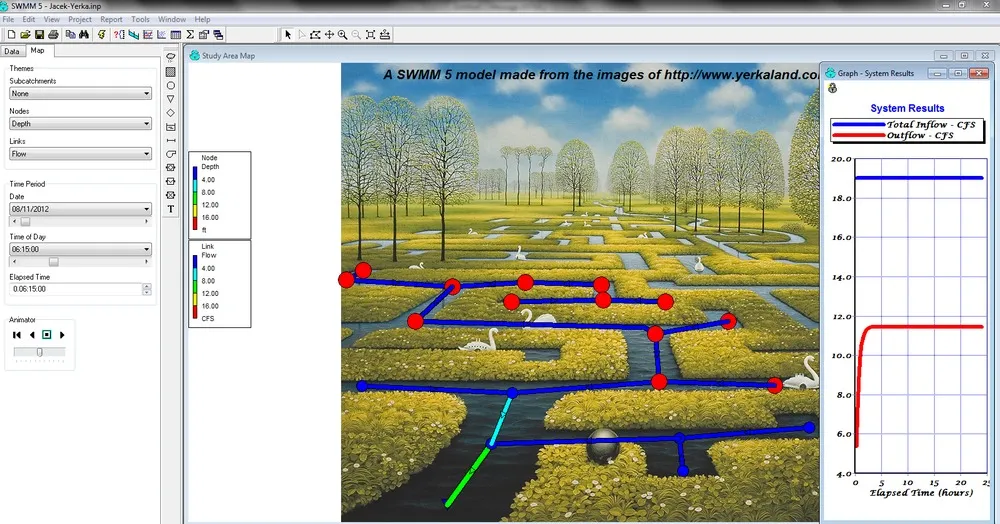
SWMM (Storm Water Management Model) is a stormwater runoff analysis and urban water resource management model developed by the U.S. Environmental Protection Agency (EPA). This model is used to simulate rainfall, surface runoff, pollutant transport, and flow within sewer systems.
Key Features of SWMM
1. Rainfall-Runoff Analysis
- Calculates infiltration, evapotranspiration, and surface runoff for various land use types.
2. Hydraulic Analysis
- Simulates water flow through conduits (pipes), channels, storage units, and other drainage systems.
- Supports analysis of full flow, partially full flow, and overflow conditions.
3. Water Quality Analysis
- Models the transport of pollutants (e.g., nitrogen, phosphorus, heavy metals) in stormwater runoff.
- Evaluates the impact of non-point source pollution in urban areas.
4. Low Impact Development (LID) Features
- Includes green infrastructure practices such as infiltration basins, green roofs, and rainwater storage.
Applications of SWMM
- Urban flood and drainage system design
- Storm and wastewater network analysis
- Evaluation of non-point source pollution control strategies
- Impact assessment of climate change on water resources
- Simulation of stormwater mitigation measures (e.g., detention basins, permeable pavements)
How to Use SWMM
- Input rainfall data (measured or hypothetical rainfall data)
- Define watershed and drainage network (topography, soil, and drainage pipe information)
- Run simulations (select hydraulic, hydrological, and pollutant transport analysis)
- Analyze results (evaluate runoff volume, pollutant loads, and drainage system efficiency)
