python 객체 생성 방식
- 모든 데이터 타입은 <class 'object'>의 subclass
- tip: bool은 int의 subclass이다!

- 변수는 객체를 참조함
- C에서의 포인터와 유사
- 객체를 참조만 하기에 변수에는 타입이 없음 → dynamic typing
- 객체를 참조하는 변수가 없어지면 객체의 메모리 할당이 해제된다. (refcount가 0이 될때)
- tip: bool은 int의 subclass이다!
int, str type의 특징
- built-in type
- immutable type : 객체 내부 값을 수정할 수 없다.
: string의 slicing, concatenation → 새로운 string 객체 생성 - python 실행 과정에서 생성되는 int, str 객체들
→ user code 실행 전에 이미 memory에 위치하게됨
→ interning :storing only one copy of each distinct string value in memory
integer interning
-
-5~256의 값은 각각의 객체가 1개
https://docs.python.org/3.8/c-api/long.html?highlight=fromlong#c.PyLong_FromLongThe current implementation keeps an array of integer objects for all integers between
-5and256, when you create an int in that range you actually just get back a reference to the existing object. `- 해당 범위의 integer 값들은 python 실행 시 메모리에 위치해, 계속 재사용됨.
→ 새로운 변수를 만들면, 새로운 int 객체가 만들어지지 않고 항상 intern된 int 객체를 참조함.- 예시 코드
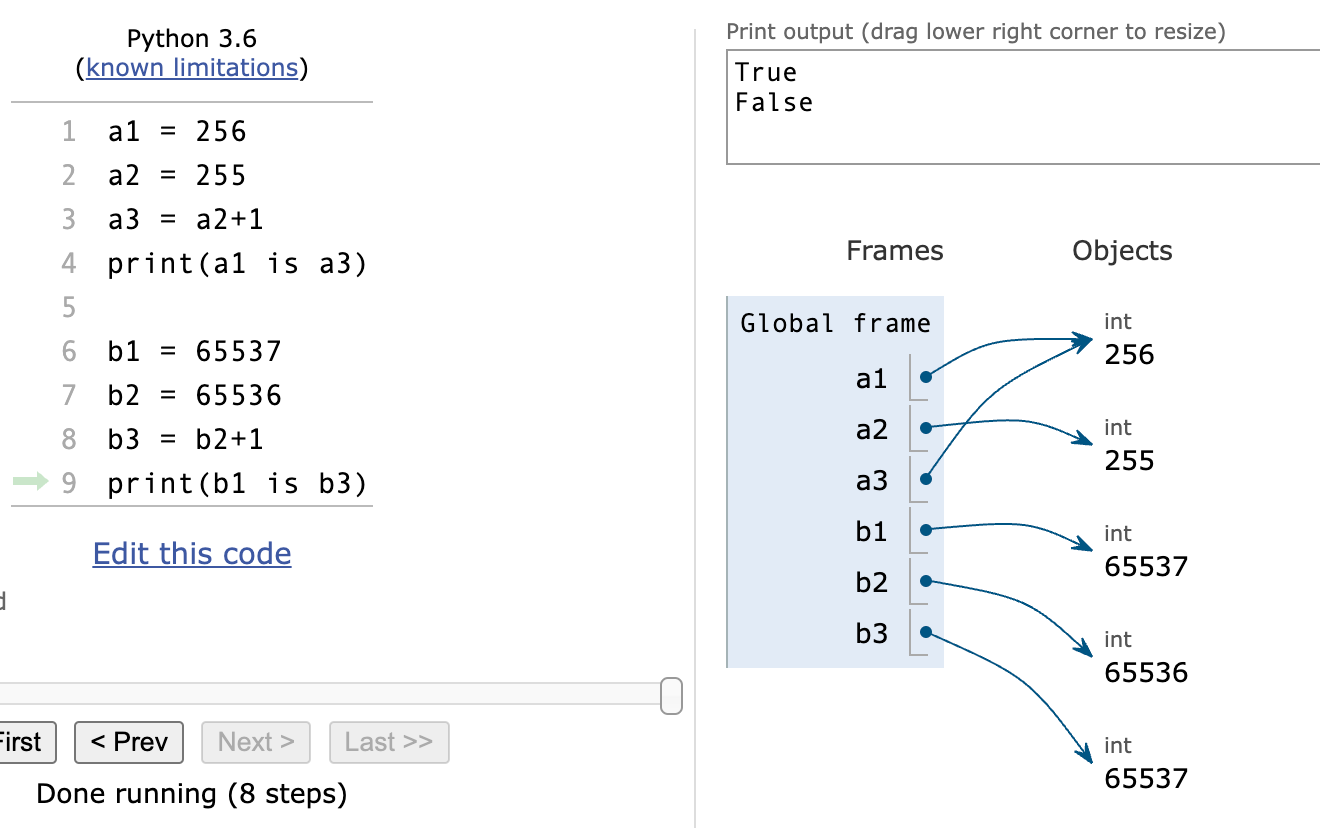
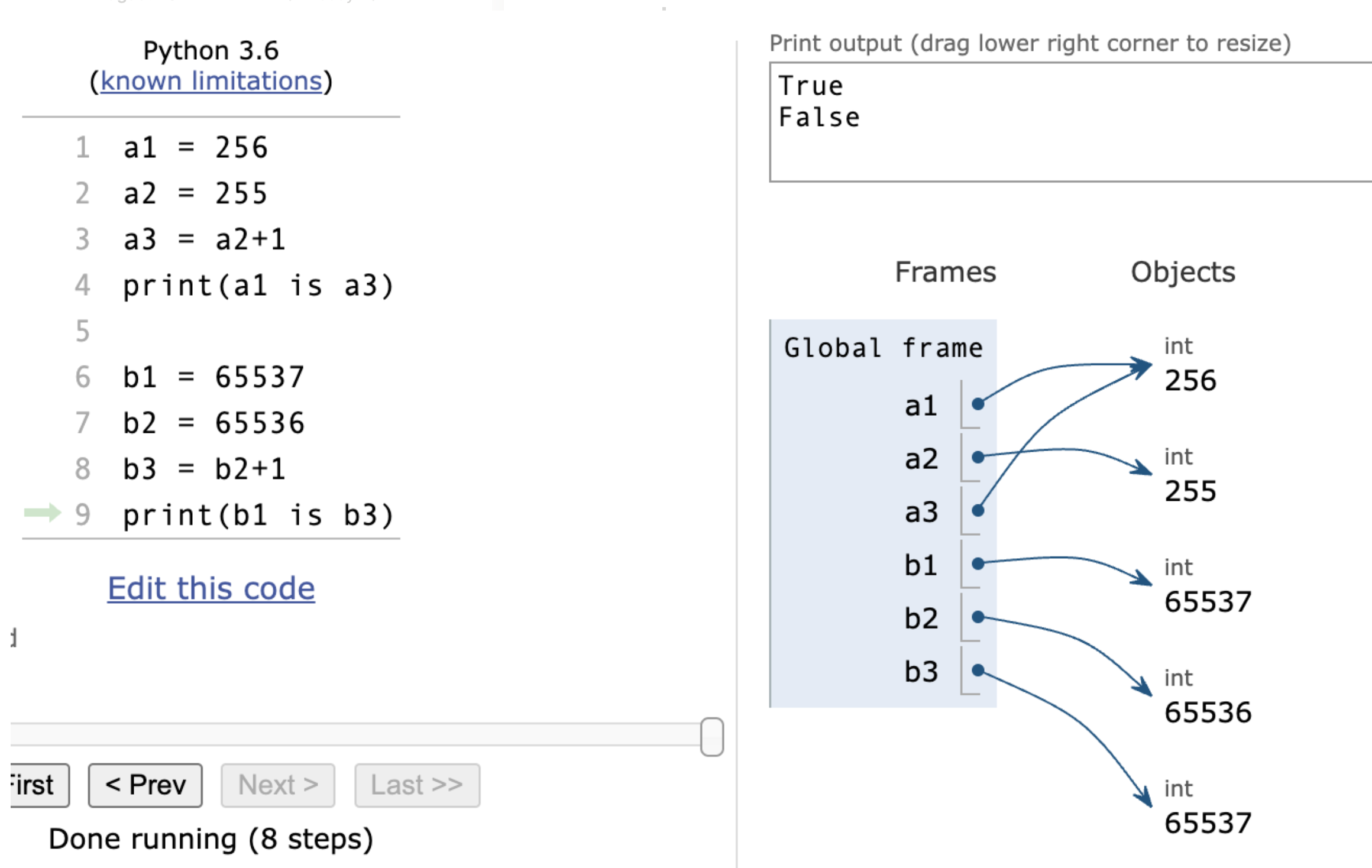
- 256을 참조하는 변수 → 같은 객체를 참조함.
- 65537를 참조하는 변수 → 다른 객체를 참조함.
- 예시 코드
- 해당 범위의 integer 값들은 python 실행 시 메모리에 위치해, 계속 재사용됨.
-
optimizer의 precalculation
- compile time에 가능한 계산을 미리 수행하여 코드 최적화
→ 256보다 큰 int도 interning이 된다.
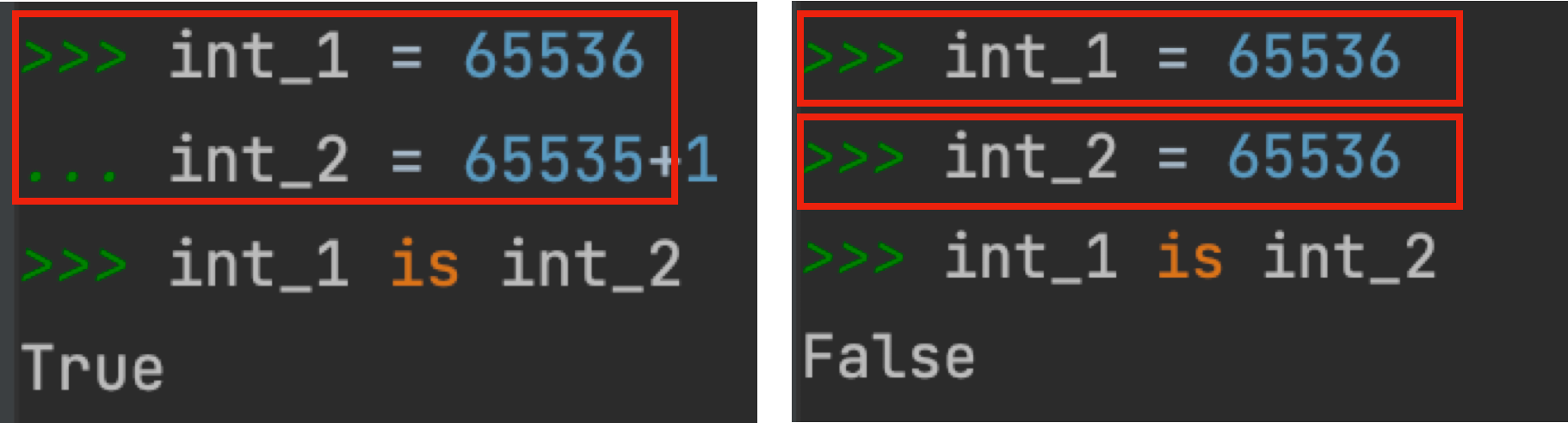
- (왼쪽) code 두줄이 동시에 입력되어 compile time 최적화가 적용됨. 따라서 큰 값의 integer도 interning이 됨.
- (오른쪽) code 두줄이 따로 입력되는 경우에는 큰 값의 integer는 interning되지 않음.
-5~256범위의 int는 run-time 할당에도 intern된 값을 참조
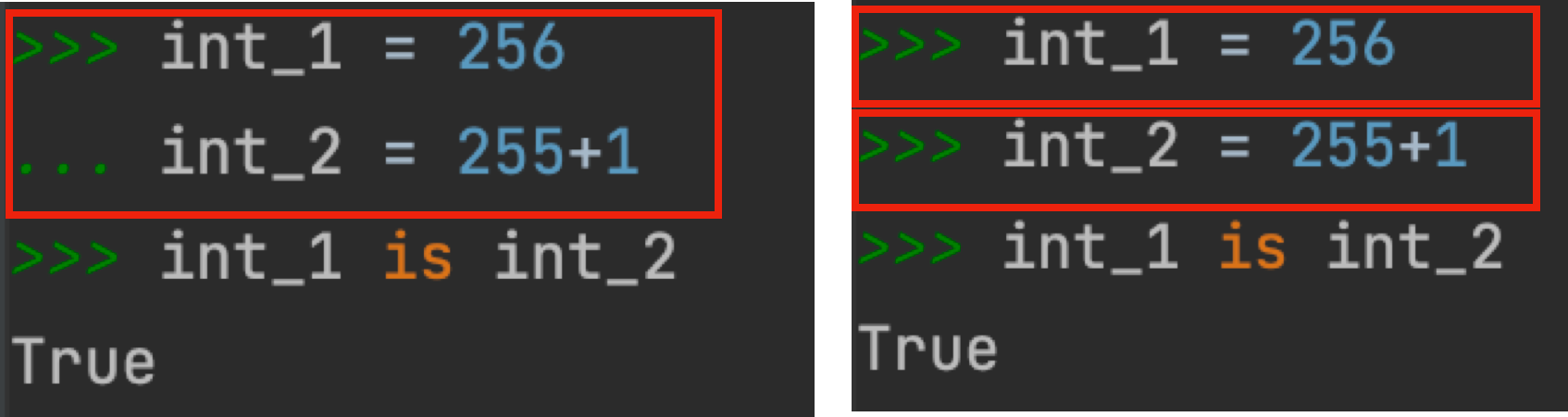
- code 두줄이 따로 입력되어도,
-5~256의 integer를 가리키는 변수는 항상 기존에 interning된 값을 참조한다.
- code 두줄이 따로 입력되어도,
- compile time에 가능한 계산을 미리 수행하여 코드 최적화
string interning
- optimizer의 precalculation 과정에서 string interning이 적용된다.
- string interning 기준
a-z,A-Z,0-9,_로만 이루어진 string
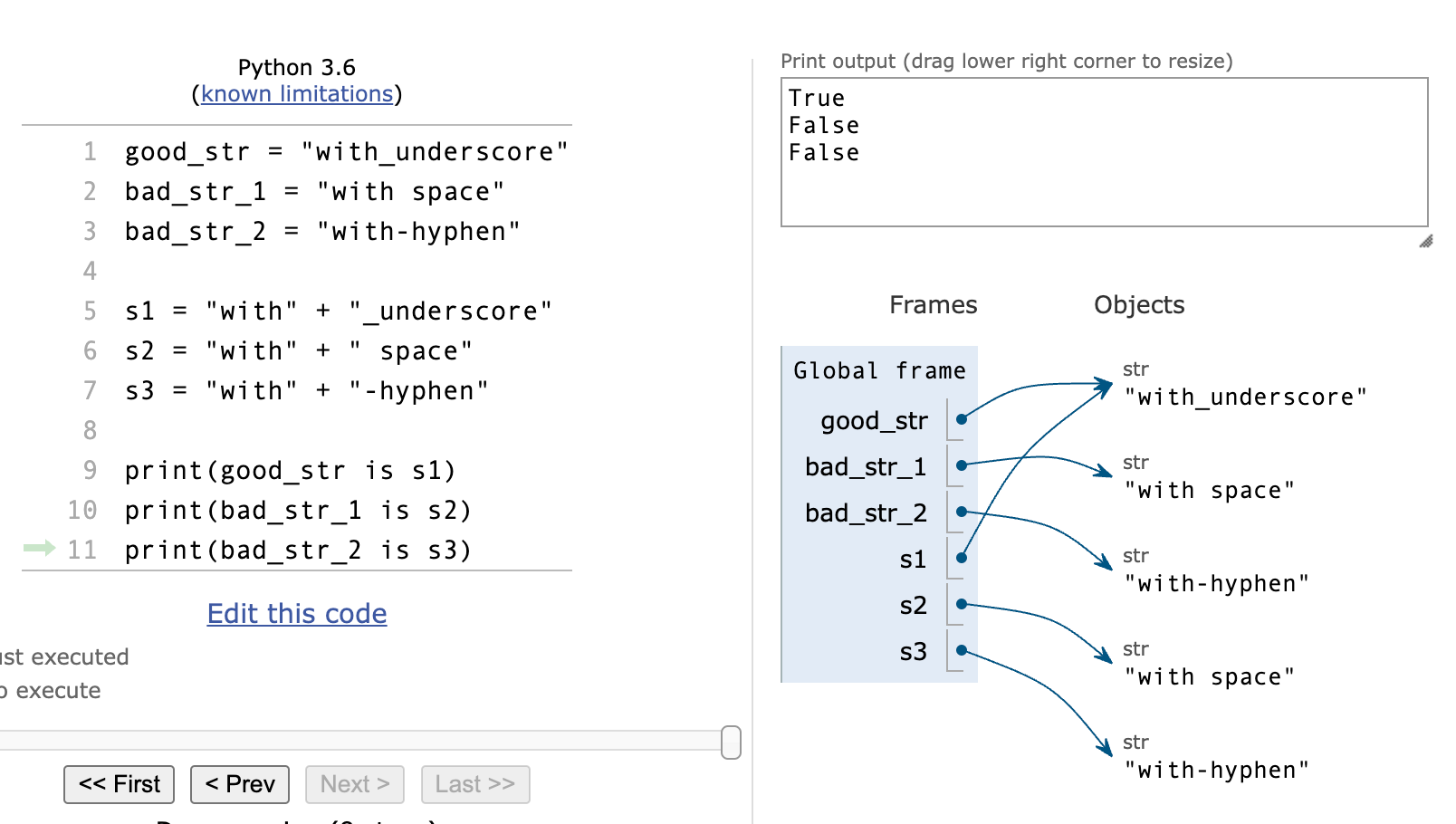 underscore가 아닌 space, hyphen이 들어간 string은 interning이 되지 않는다.
- 기준 길이 이하의 string
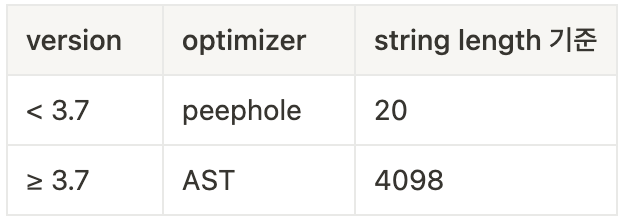
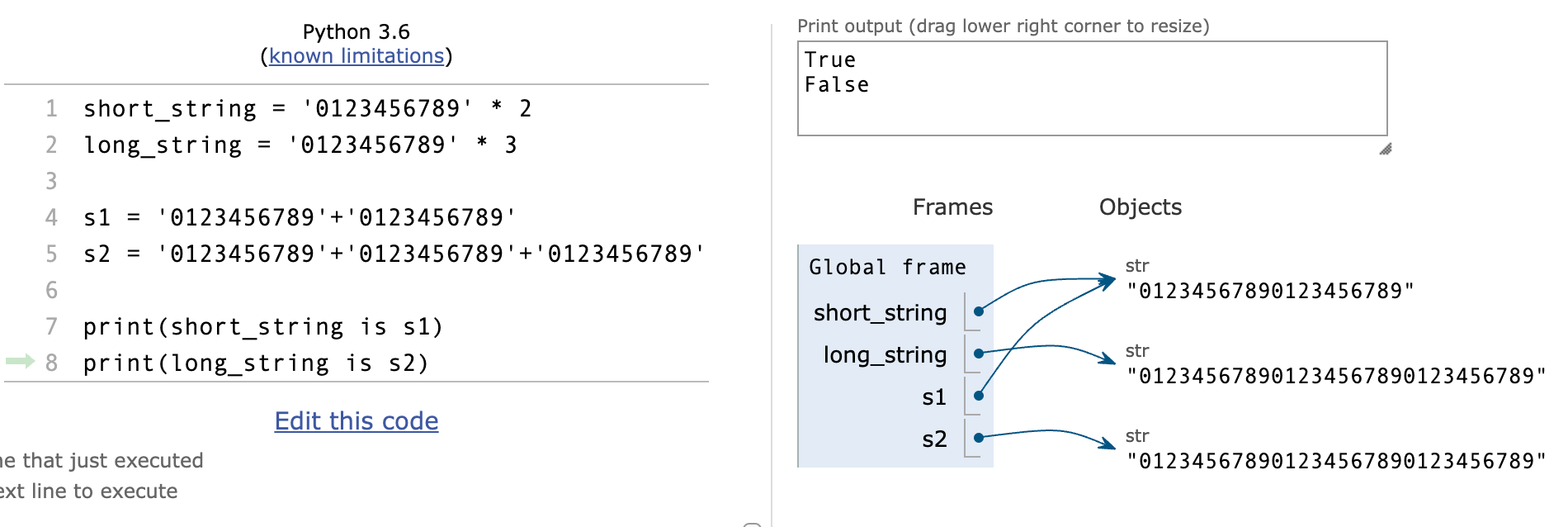
20자리를 넘는 string은 interning이 되지 않는다. (python 3.6)
- manual interning
- run-time concatenation은 기본적으로 interning을 하지 않음
sys.intern()으로 manually interning이 가능하다.>>> import sys >>> s1 = "strin" >>> s2 = s1 + "g" >>> s2 is "string" False >>> sys.intern(s3) is "string" True
interning의 의의
https://stackabuse.com/guide-to-string-interning-in-python/
- Advantages
- Saving Memory
- Fast Comparisons
=가 아닌is로 비교
- Fast Dictionary Lookups
- 와 동일한 이유
- Disadvantages
- Memory Cost
- string이 많고, 비교는 적을 때는 유용하지 않다.
- Time Cost
intern()함수의 호출 비용이 높음 (interned table을 계속 관리해야하는 소요)
- Multi-threaded Environments
- interned memory는 global resource → synchronization 과정의 cost를 고려해야함.
- Memory Cost