백준 12761 java : BFS
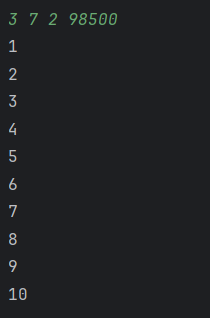
왜 BFS를 사용했는가?
처음에는 DP로 기획했는데, DP의 경우, 순차적으로 0부터 목적지까지 증가하는 경우의 최솟값을 찾는데 유리하다. 지금처럼 N부터 M까지 증가와 감소, 그리고 목적지 이상, 이하로 넘어가는 경우의 최솟값을 찾는데는 BFS가 유리하다.
import java.util.*;

public class BJ12761 {
    static Scanner sc = new Scanner(System.in);
    static int A, B, N, M;

    //최소한의 이동횟수니까. 최단거리? -> DFS?, DP?
    public static void main(String[] args) {
        inputData();
        System.out.println(findAnswer());

        sc.close();
    }

    public static void inputData(){
        A = sc.nextInt();
        B = sc.nextInt();
        N = sc.nextInt();
        M = sc.nextInt();
    }

    public static int findAnswer(){
        //최소이동횟수니까, DFS로 풀 수 있지만, 방향이 (+1, -1, +A, -A, +B, -B, *A, *B)까지 8개니까
        //큐가 너무 커질 거 같음.
        //DP로? -> 근데 DP로 하면 0부터 시작이라 범위 지정이 어려움...

        //만약 N과 M이 같다면?
        if(N == M){
            return 0;
        }

        Queue <Integer> q = new LinkedList<>();
        int current, next, i, j, count = 0, q_size;
        boolean [] visited = new boolean[100001];
        int [] branches = {1, -1, A, -A, B, -B, 0, 0};

        q.offer(N);
        visited[N] = true;
        while(!q.isEmpty()){

            q_size = q.size();
            for(j = 0; j < q_size; j++){
                current = q.poll();
                for(i = 0; i < branches.length; i++){
                    if(i == 6){
                        next = current * A;
                    }
                    else if(i == 7){
                        next = current * B;
                    }
                    else{
                        next = current + branches[i];
                    }

                    if(next >= 0 && next <= 100000 && !visited[next]){
                        q.offer(next);
                        visited[next] = true;
                    }

                    if(visited[M]){
                        return count + 1;
                    }
                }
            }
            count++;
            System.out.println(count);
        }

        return count;
    }
}
