Top 7 Most Unique 1911 Grips Ever Made: Rare Materials, and Handcrafted Precision
Mammoth Grip Exchange
The 1911 pistol has stood at the intersection of engineering and artistry for more than a century. Since John Browning's legendary design first entered production in 1911, the platform has attracted a devoted community of collectors, competitive shooters, and enthusiasts who understand that this iconic sidearm is far more than a functional tool; it is a canvas. Nothing transforms that canvas more dramatically than the grip panels.
Factory grips serve a purpose. But for those who carry history in their hands, a factory is never enough.
At Mammoth Grip Exchange, grip-making is treated as an art form. Every panel is shaped entirely by hand, with no CNC machining, no mass production, and no two pieces alike.
Over the years, the workshop has produced some of the most extraordinary custom 1911 grips in existence — pieces that collectors, veterans, and firearm enthusiasts have called museum-worthy.
Below is a curated look at the top 7 most unique 1911 grips ever made by Mammoth Grip Exchange, ranked not by price but by the sheer rarity, craftsmanship, and storytelling behind each material.
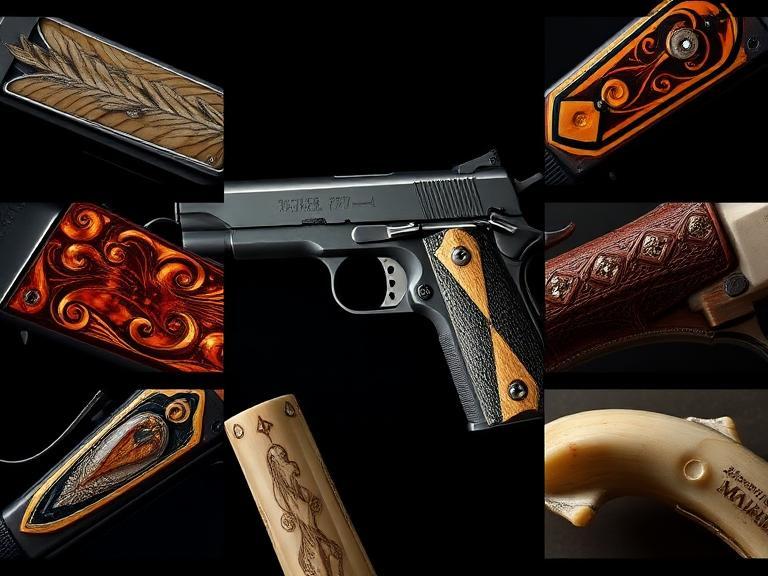What Makes a 1911 Grip Truly Unique?
Before diving into the list, it is worth understanding what separates a truly unique grip from a merely custom one. According to the craftsmen at Mammoth Grip Exchange, three elements define uniqueness in the world of exotic 1911 grips:
- Material rarity — Is the raw material scientifically significant, geologically ancient, or physically irreplaceable?
- Hand craftsmanship — Was every detail shaped, finished, and fitted by skilled hands rather than automated tooling?
- Personal story — Does the grip carry a narrative — of prehistoric life, of the cosmos, of cultural heritage — that outlasts the shooter?
Every grip on this list satisfies all three criteria. For a deeper look at how material choice shapes both performance and value, see the guide on Mammoth Ivory vs. Mammoth Molar 1911 Grips: What's the Difference?
The Top 7 Most Unique 1911 Grips Ever Made by Mammoth Grip Exchange
1. Siberian Woolly Mammoth Ivory Tusk Grips — Prehistoric Luxury, Legally Sourced
Material origin: Excavated from the permafrost of Siberia, Russia | Age: 10,000 – 40,000 years old
Few materials on earth combine geological rarity with tactile luxury the way genuine Siberian woolly mammoth ivory does. These tusk panels are excavated legally from permafrost deposits in Russia, making them 100% legal to own and trade worldwide — unlike modern elephant ivory, which is subject to strict international prohibition.
Each mammoth ivory grip features the distinctive Schreger lines — a crosshatch pattern unique to proboscidean ivory — visible in cross-section. No two sets carry identical coloring. Panels range from creamy antique white and warm caramel to striking blue-grey hues created by thousands of years of mineral absorption in frozen ground.
The Mammoth Grip Exchange warp-resistant proprietary process stabilizes the ivory without altering its natural appearance, ensuring these grips remain perfectly fitted for decades. For shooters and collectors alike, a mammoth ivory 1911 grip represents the rarest intersection of prehistoric natural history and American firearm heritage.
Why it ranks #1: No material carries more historical weight, tactile distinction, or collector value per square inch than genuine Siberian woolly mammoth ivory tusk.
2. Fossilized Dinosaur Bone Grips — 65+ Million Years on Your Sidearm
Material origin: American West fossil beds | Age: 65–150 million years (Cretaceous period)
Also known as gem bone or agatized dinosaur bone, these grips are crafted from fossilized dinosaur bone in which the original cellular structure has been replaced — over tens of millions of years — by colorful silicate minerals. The result is a material that displays vivid reds, oranges, deep greens, and blues while still preserving the ancient microscopic bone cells beneath the surface.
Holding a dinosaur bone 1911 grip means holding material that predates the human species by approximately 64.9 million years. That fact alone places these grips in a category entirely their own.
At Mammoth Grip Exchange, dinosaur bone panels are hand-fitted with carbon fiber backing for structural integrity, and the natural cellular pattern is preserved and polished rather than painted or dyed. Browse the current selection of exotic 1911 grips including dinosaur bone to see available inventory.
Why it ranks #2: No other grip material on the planet is older. Each set is a scientifically significant fossil artifact repurposed into functional art.
3. Woolly Mammoth Molar Grips — Ancient Texture, Extraordinary Character
Material origin: Siberia and Alaska fossil deposits | Age: 10,000 – 40,000 years old
While mammoth tusk ivory draws most of the attention, woolly mammoth molar is arguably the more visually dramatic material. The layered enamel ridges of mammoth molars — the chewing surface of an animal weighing up to six tons — create a naturally geometric, almost topographic pattern across the grip face.
Mammoth molars come in a range of colors influenced by the specific mineral environment of their fossilization site: deep brown, caramel gold, white with dark veining, and the prized blue-green varieties formed by copper mineral absorption. The Siberian woolly mammoth molar grips available from Mammoth Grip Exchange are particularly noted for their vivid coloration and bold texture.
Because molar material is denser and more porous than tusk ivory, skilled handwork is required to produce smooth, properly fitted panels. Factory production is simply not capable of working this material to the required tolerances.
Why it ranks #3: Mammoth molar grips offer prehistoric material with a bold, unmistakable visual identity that tusk ivory does not replicate.
4. Hand-Scrimshawed Grips — Museum-Quality Engraving on Prehistoric Ivory
Technique origin: American maritime tradition (18th–19th century) | Artist: Internationally recognized Hungarian scrimshaw artist
Scrimshaw — the centuries-old art of engraving detailed imagery into ivory or bone with fine needles — was once the exclusive craft of American whalers at sea. Today, it represents one of the most labor-intensive and collectible forms of firearm personalization in existence.
Mammoth Grip Exchange collaborates with a globally recognized Hungarian scrimshaw artist to produce hand-engraved grip panels of museum-caliber quality. Subject matter ranges from wildlife portraits and patriotic imagery to personal scenes custom-designed for the individual client. The Las Vegas-themed hand-scrimshawed officer-sized grips, for example, involved more than 40 hours of fine needle work across the ivory surface.
Because scrimshaw is performed on genuine mammoth ivory or other prehistoric material, each engraved grip combines two irreplaceable elements: the rarity of the base material and the singular artistry of the engraved image. No laser or machine can replicate the visual depth of true hand scrimshaw.
Why it ranks #4: Scrimshawed grips are the only 1911 grip type that is simultaneously a functional firearm component and a fine art object, valued by both shooters and art collectors.
5. Baltic Sea Amber Grips — 40 Million Years of Golden Light
Material origin: Baltic Sea region, Northern Europe | Age: Approximately 40–50 million years old
Baltic Sea amber is fossilized tree resin formed during the Eocene epoch, approximately 40–50 million years ago. The amber native to the Baltic region is considered the world's finest quality, prized for its warm golden hues, translucency, and the occasional prehistoric insect or plant matter preserved within.
Transforming amber into fitted 1911 grip panels requires exceptional skill, as the material is both brittle and thermally sensitive during shaping. The finished panels glow with honey, gold, and deep orange tones that shift with the light — an effect no synthetic material can match. The amber grip panels available through Mammoth Grip Exchange are made to fit government and commander-sized frames and include a custom magwell cut.
For collectors seeking a grip with both geological rarity and visual warmth, Baltic amber stands apart from every other organic material in the Mammoth Grip Exchange lineup.
Why it ranks #5: Baltic amber is the only grip material that can be both transparent and prehistoric, creating a visual effect — glowing, warm, and ancient — unique in the 1911 world.
6. Woolly Mammoth Crosscut Grips — Natural Patterns That Cannot Be Designed
Material origin: Siberian permafrost deposits | Age: 10,000 – 40,000 years old
The mammoth crosscut is not a different material from standard mammoth ivory tusk — it is a different cut. When a mammoth tusk is sliced perpendicular to its length rather than along it, the result exposes the full circular growth pattern of the ivory in cross-section, revealing concentric rings, color gradients, and mineral banding that cannot be predicted before the cut is made.
Crosscut panels are inherently more unpredictable and wasteful to produce, as only specific sections of the tusk will yield panels wide enough for 1911 grip use. This makes them rarer per pound of raw material than standard tusk panels. Each set from Mammoth Grip Exchange is photographed individually before sale, so the buyer receives exactly the panels pictured — never a stock approximation.
The mammoth ivory crosscut collection includes both Siberian and standard woolly mammoth variants, with coloration ranging from white and cream to deep blue-grey and brown mineral staining.
Why it ranks #6: Crosscut mammoth ivory grips reveal a natural geometry — concentric growth rings in prehistoric material — that no craftsman can design or manufacture. Nature creates the pattern; skill simply reveals it.
7. Musk Ox Horn Grips — One of the Rarest Organic Materials in Firearm Customization
Material origin: Genuine musk ox horn | Rarity: Extremely limited global supply
Musk ox — the cold-adapted bovid that has roamed the Arctic tundra since the Pleistocene era — produces horn of exceptional density, natural luster, and a dark, dramatic appearance. Genuine musk ox horn is rarely available in quantities sufficient for grip production, making every set a limited-edition piece by default.
Musk ox horn grips from Mammoth Grip Exchange are fitted to both officer and government-sized 1911 frames and carry a deep black-to-dark-brown natural finish with visible fiber structure beneath the surface. The material is self-lubricating in hand, providing excellent dry-grip feel without aggressive checkering patterns — though hand checkering is available on request.
For a complete overview of rare natural grip materials including musk ox, walrus tusk, giraffe bone, and whale bone, the best materials for gun grips guide covers each in depth.
Why it ranks #7: Musk ox horn combines extreme material rarity with functional superiority — a grip that is hard to source, beautiful in hand, and tactilely exceptional for live shooting.
Materials That Define Exclusivity
The seven grips above represent the pinnacle of the craft, but the full collection at Mammoth Grip Exchange reaches further. Additional materials available — each sourced and shaped entirely by hand — include:
- Walrus tusk ivory — featuring the distinctive secondary dentine marbled core visible in cross-section, legal for domestic sale
- Whale bone — ethically sourced and historically significant, offering a pale, naturally patterned surface
- Giraffe bone — striking natural spot-and-vein patterning unique among organic grip materials
- Black buffalo horn — deep mirror-finish black with optional hand checkering including double-diamond patterns
- Rare exotic hardwoods — including Arizona desert ironwood, Amboyna burlwood, Honduran rosewood burl, and Hawaiian curly koa, available in the exotic woods collection
- Abalone shell — iridescent, sea-born, and one of the most visually striking natural materials available for grip production
Every material listed here is stabilized using Mammoth Grip Exchange's proprietary warp-resistant process — critical for ensuring organic materials maintain their fit on a working firearm over years of handling and temperature change.
Personalization Options
A unique material is the foundation of an extraordinary grip — but Mammoth Grip Exchange offers additional layers of personalization that transform a grip into a true heirloom:
Scrimshaw Carving
Hand-etched artwork produced by an internationally recognized artist. Subject matter is custom to each client. View the available scrimshaw gallery for examples of completed work.
Laser Engraving and Custom Medallion Inserts
From initials and unit insignia to full decorative patterns, laser engraving and medallion inserts — including official Colt, Wilson Combat, and Nighthawk medallions — allow for precise personalization without altering the material's natural surface. Learn more on the engraving services page.
Functional Modifications
Bobtail cuts, ambidextrous safety notches, bevels, and hand checkering are available to ensure the grip is not only visually exceptional but functionally superior for the individual shooter's hand geometry and carry style.
Why Collectors and Shooters Choose Mammoth Grip Exchange
Mammoth Grip Exchange was founded by Grant Swenson — a former healthcare finance professional whose personal passion for extraordinary craftsmanship became a business built on a single principle: we don't just make grips, we craft heirlooms.
The workshop's commitment to zero CNC machining is not a marketing position — it is a manufacturing philosophy. Hand-shaping allows craftsmen to respond to the natural variation in each piece of prehistoric or organic material, preserving patterns and grain structures that automated tools would destroy. It is the same philosophy that distinguishes a hand-tailored suit from an off-the-rack garment, or a hand-forged blade from a stamped factory knife.
Every grip ships with a 100% satisfaction guarantee. If a customer is not completely satisfied, a full refund is issued — a guarantee that reflects confidence in the craftsmanship rather than corporate policy language.
For first-time buyers navigating the world of custom exotic grips, the guide on common mistakes first-time buyers make when ordering custom 1911 grips is essential reading before placing an order.
Conclusion
The seven grips profiled above represent Mammoth Grip Exchange's most extraordinary work — but they are only a fraction of what is available. Browse the complete handcrafted lineup, organized by material category, at the custom 1911 grips collection.
If you are seeking something that does not yet exist — a custom combination of material, engraving, functional modification, and fit — the team at Mammoth Grip Exchange offers direct, one-on-one consultation to bring that vision to life.
Frequently Asked Questions About Unique 1911 Grips
Are woolly mammoth ivory 1911 grips legal to buy and own?
Yes. Genuine woolly mammoth ivory is legally sold, purchased, and shipped internationally because the woolly mammoth is an extinct prehistoric species — not a protected modern animal. It is not subject to CITES regulations that govern elephant ivory. Buyers should verify their individual state regulations before ordering, as a small number of U.S. states impose additional restrictions on ivory materials.
Are dinosaur bone 1911 grips made from real fossils?
Yes. Dinosaur bone grips — also called gem bone or agatized dinosaur bone — are crafted from genuine fossilized dinosaur bone in which the original bone structure has been replaced by silicate minerals over 65 million or more years. The material is legally collected from fossil beds in the American West and is completely legal to own and sell under U.S. federal law.
What is the most unique 1911 grip material available?
Rarity is subjective, but fossilized dinosaur bone (65+ million years old), Baltic Sea amber (40–50 million years old), and Siberian woolly mammoth ivory (10,000–40,000 years old) represent the most geologically ancient materials used in 1911 grip production. Among naturally patterned materials, crosscut mammoth ivory is considered among the most unpredictable and visually striking.
How long do exotic material 1911 grips last?
When properly cared for, organic material grips — including mammoth ivory, dinosaur bone, and horn — are extraordinarily durable. Mammoth Grip Exchange applies a proprietary warp-resistant stabilization process to all organic materials. For detailed care guidance, the ivory care guide covers maintenance best practices for exotic grip materials.
Do unique exotic grips increase a 1911's resale value?
In most cases, yes — particularly for grips made from irreplaceable prehistoric materials like mammoth ivory or dinosaur bone, or grips featuring documented custom scrimshaw artwork.
