
Java 심화
스레드(Thread)
애플리케이션이 실행되면 운영체제가 해당 애플리케이션에게 메모리를 할당해주며 애플리케이션이 실행되는데, 이처럼 실행 중인 애플리케이션을 프로세스라고 하며, 프로세스 내에서 실행되는 소스 코드의 실행 흐름을 스레드라고 한다.
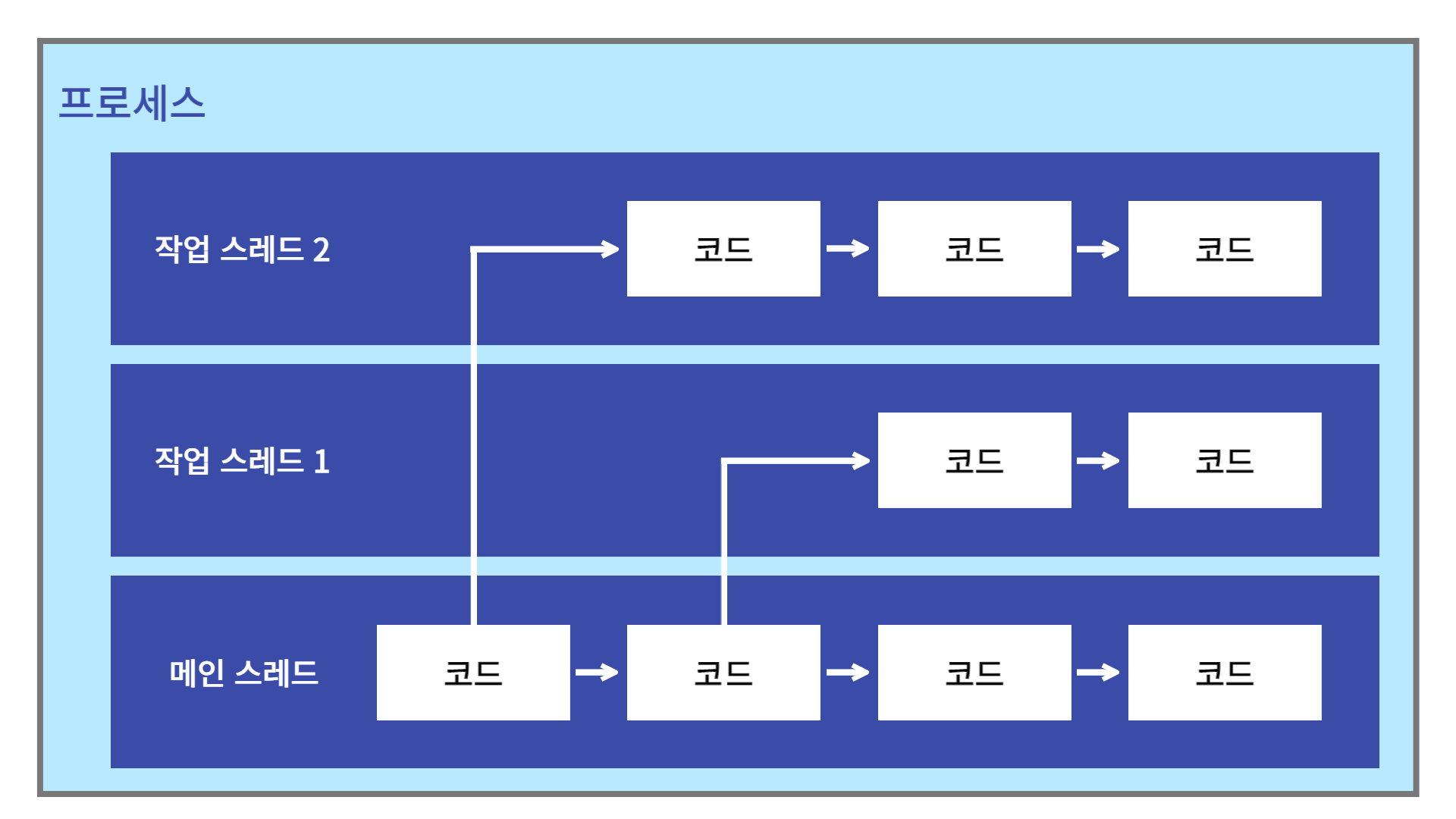
단 하나의 스레드를 가지는 프로세스를 싱글 스레드 프로세스, 여러 개의 스레드를 가지는 프로세스를 멀티 스레드 프로세스라고 한다.
프로세스는 데이터, 컴퓨터 자원, 스레드로 구성되며, 스레드는 데이터와 애플리케이션이 확보한 자원을 활용하여 소스 코드를 실행한다.
메인 스레드(Main thread)
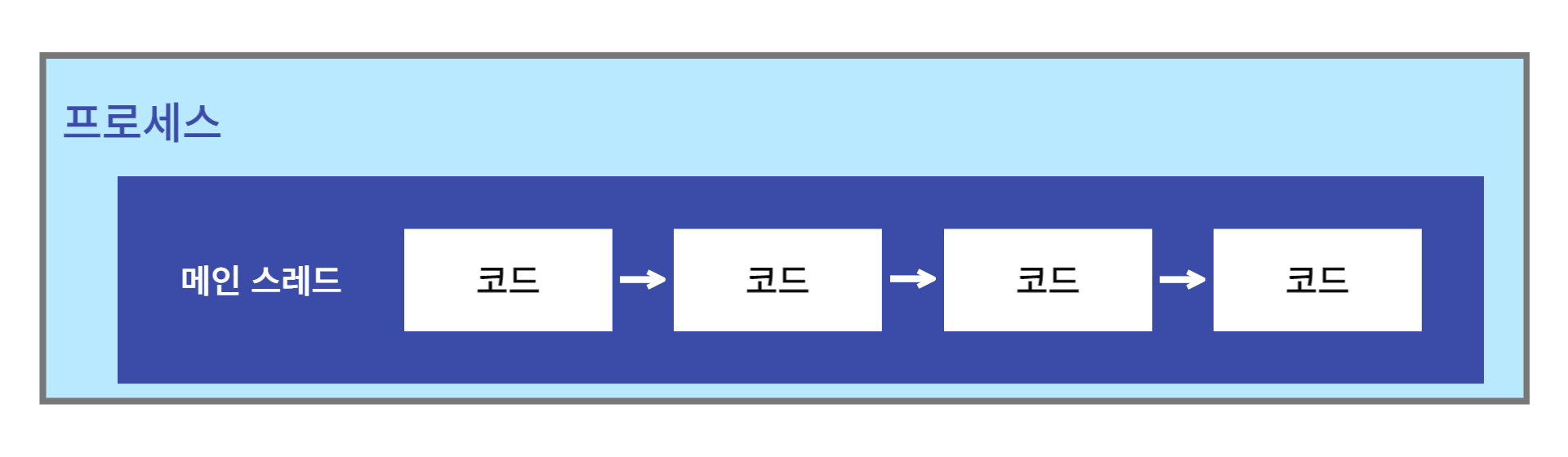
자바 애플리케이션을 실행하면 가장 먼저 실행되는 메서드는 main 메서드이며, 메인 스레드가 main 메서드를 실행시켜준다. 메인 스레드는 main 메서드의 코드를 처음부터 끝까지 순차적으로 실행시키며, 코드의 끝을 만나거나 return문을 만나면 실행을 종료한다.
- 싱글 스레드 프로세스
- 애플리케이션이 실행되어 프로세스가 될 때 오로지 메인 스레드만 가진 것
- 멀티 스레스 프로세스
- 하나의 프로세스가 여러 개의 스레드를 가진 것
- 여러 개의 스레드를 가진다는 것은 여러 스레드가 동시에 작업을 수행할 수 있음을 의미하여 멀티 스레딩이라고 함
- 멀티 스레딩은 하나의 애플리케이션 내에서 여러 작업을 동시에 수행하는 멀티 테스킹을 구현하는 데에 핵심적인 역할을 수행
스레드의 생성과 실행
작업 스레드 생성과 실행
메인 스레드 외에 별도의 작업 스레드를 활용한다는 것은 작업 스레드가 수행할 코드를 작성하고, 작업 스레드를 생성하여 실행시키는 것을 의미한다.
자바는 객체지향 언어로 모든 자바 코드는 클래스 안에 작성되기 때문에 스레드가 수행할 코드도 클래스 내부에 작성해주어야 하며, run() 이라는 메서드 내에 스레드가 처리할 작업을 작성하도록 규정되어 있다.
run() 메서드는 Runnable 인터페이스와 Thread 클래스에 정의되어 있고, 작업 스레드를 생성하고 실행하는 방법은 두 가지가 있다.
- 첫 번째 방법
- Runnable 인터페이스를 구현한 객체에서 run() 을 구현하여 스레드를 생성하고 실행하는 방법
- 두 번째 방법
- Thread 클래스를 상속 받은 하위 클래스에서 run() 을 구현하여 스레드를 생성하고 실행시키는 방법
Runnable 인터페이스를 구현한 객체에서 run() 을 구현하여 스레드를 생성하고 실행하는 방법
- Runnable 인터페이스를 구현한 객체를 생성
- 임의의 클래스를 만들고, Runnable을 구현하며, Runnable에는 run() 이 정의되어 있기 때문에 반드시 run() 을 구현해야 함
public class ThreadExample1 {
    public static void main(String[] args) {

    }
}

// Runnable 인터페이스를 구현하는 클래스
class ThreadTask1 implements Runnable {
    public void run() {

    }
}- run() 의 메서드 바디에 새롭게 생성된 작업 스레드가 수행할 코드 작성
public class ThreadExample1 {
    public static void main(String[] args) {

    }
}

class ThreadTask1 implements Runnable {

    // run() 메서드 바디에 스레드가 수행할 작업 내용 작성
    public void run() {
        for (int i = 0; i < 100; i++) {
            System.out.print("#");
        }
    }
}- 스레드 생성
- Runnable 인터페이스를 구현한 객체를 활용하여 스레드를 생성할 때에는 Runnable 구현 객체를 인자로 전달하면서 Thread 클래스를 인스턴스화
public class ThreadExample1 {
    public static void main(String[] args) {

        // Runnable 인터페이스를 구현한 객체 생성
        Runnable task1 = new ThreadTask1();

        // Runnable 구현 객체를 인자로 전달하면서 Thread 클래스를 인스턴스화하여 스레드를 생성
        Thread thread1 = new Thread(task1);

        // 위의 두 줄을 아래와 같이 한 줄로 축약할 수도 있습니다.
        // Thread thread1 = new Thread(new ThreadTask1());

    }
}

class ThreadTask1 implements Runnable {
    public void run() {
        for (int i = 0; i < 100; i++) {
            System.out.print("#");
        }
    }
}- run() 메서드 내부의 코드를 실행시키기 위해 start() 메서드를 호출
public class ThreadExample1 {
    public static void main(String[] args) {
        Runnable task1 = new ThreadTask1();
        Thread thread1 = new Thread(task1);

        // 작업 스레드를 실행시켜, run() 내부의 코드를 처리하도록 합니다.
        thread1.start();
    }
}

class ThreadTask1 implements Runnable {
    public void run() {
        for (int i = 0; i < 100; i++) {
            System.out.print("#");
        }
    }
}- main 메서드에 반복문 추가 후, 코드 실행
public class ThreadExample1 {
    public static void main(String[] args) {
        Runnable task1 = new ThreadTask1();
        Thread thread1 = new Thread(task1);

        thread1.start();

        // 반복문 추가
        for (int i = 0; i < 100; i++) {
            System.out.print("@");
        }
    }
}

class ThreadTask1 implements Runnable {
    public void run() {
        for (int i = 0; i < 100; i++) {
            System.out.print("#");
        }
    }
}- 출력 결과
- @는 main 메서드의 반복문에서 출력한 문자로 메인 스레드의 반복문 코드 실행에 의해 출력
- #는 run() 메서드의 반복문에서 출력한 문자로 작업 스레드의 반복문 코드 실행에 의해 출력
- 메인 스레드와 작업 스레드가 동시에 병렬로 실행되면서 각각 main 메서드와 run() 메서드의 코드를 실행시켰기 때문에 두 가지 문자가 섞여서 출력됨
@@@@@@@@@@@######@@@@@############################
@#########@@@@@@@@@@@@@@@@############@@@@@@@@@@@@
@@@@@@@@@@@@@@@@@@@@@@@@##@@@@@@@@@@@@@@@@@@@@@@@@
@@@@@@@###########################################
Process finished with exit code 0
Thread 클래스를 상속 받은 하위 클래스에서 run()을 구현하여 스레드를 생성하고 실행하는 방법
- Thread 클래스를 상속 받는 하위 클래스 생성
- Thread 클래스에는 run() 메서드가 정의되어 있어며, run() 메서드를 오버라이딩해야 함
public class ThreadExample2 {
    public static void main(String[] args) {

    }
}

// Thread 클래스를 상속받는 클래스 작성
class ThreadTask2 extends Thread {
    public void run() {

    }
}- run() 메서드 바디에 새롭게 생성될 스레드가 수행할 적업을 작성
public class ThreadExample2 {
    public static void main(String[] args) {

    }
}

class ThreadTask2 extends Thread {

    // run() 메서드 바디에 스레드가 수행할 작업 내용 작성
    public void run() {
        for (int i = 0; i < 100; i++) {
            System.out.print("#");
        }
    }
}- run() 내의 코드를 실행할 스레드를 생성
- Thread 클래스를 직접 인스턴스화하지 않음
public class ThreadExample2 {
    public static void main(String[]args) {

        // Thread 클래스를 상속받은 클래스를 인스턴스화하여 스레드를 생성
        ThreadTask2 thread2 = new ThreadTask2();
    }
}

class ThreadTask2 extends Thread {
    public void run() {
        for (int i = 0; i < 100; i++) {
            System.out.print("#");
        }
    }
}- start() 메서드를 실행하고, main 메서드에 반복문 추가 후, 코드 실행
public class ThreadExample2 {
    public static void main(String[] args) {

        ThreadTask2 thread2 = new ThreadTask2();

        // 작업 스레드를 실행시켜, run() 내부의 코드를 처리하도록 합니다.
        thread2.start();

        // 반복문 추가
        for (int i = 0; i < 100; i++) {
            System.out.print("@");
        }
    }
}

class ThreadTask2 extends Thread {
    public void run() {
        for (int i = 0; i < 100; i++) {
            System.out.print("#");
        }
    }
}
익명 객체를 사용하여 스레드 생성하고 실행하기
- Runnable 익명 구현 객체를 활용한 스레드 생성 및 실행
public class ThreadExample1 {
    public static void main(String[] args) {

        // 익명 Runnable 구현 객체를 활용하여 스레드 생성
        Thread thread1 = new Thread(new Runnable() {
            public void run() {
                for (int i = 0; i < 100; i++) {
                    System.out.print("#");
                }
            }
        });

        thread1.start();

        for (int i = 0; i < 100; i++) {
            System.out.print("@");
        }
    }
}- Thread 익명 하위 객체를 활용한 스레드 생성 및 실행
public class ThreadExample2 {
    public static void main(String[] args) {

        // 익명 Thread 하위 객체를 활용한 스레드 생성
        Thread thread2 = new Thread() {
            public void run() {
                for (int i = 0; i < 100; i++) {
                    System.out.print("#");
                }
            }
        };

        thread2.start();

        for (int i = 0; i < 100; i++) {
            System.out.print("@");
        }
    }
}
스레드의 이름
메인 스레드는 "main"이라는 이름을 가지며, 그 외에 추가적으로 생성한 스레드는 기본적으로 "Thread-n"이라는 이름을 가진다.
스레드의 이름 조회하기
- 스레드의 이름은 스레드의_참조값.getName() 으로 조회
public class ThreadExample3 {
    public static void main(String[] args) {

        Thread thread3 = new Thread(new Runnable() {
            public void run() {
                System.out.println("Get Thread Name");
            }
        });

        thread3.start();

        System.out.println("thread3.getName() = " + thread3.getName());
    }
}

// 출력 결과
Get Thread Name
thread3.getName() = Thread-0
스레드의 이름 설정하기
- 스레드의 이름은 스레드의_참조값.setName() 으로 설정
public class ThreadExample4 {
    public static void main(String[] args) {

        Thread thread4 = new Thread(new Runnable() {
            public void run() {
                System.out.println("Set And Get Thread Name");
            }
        });

        thread4.start();

        System.out.println("thread4.getName() = " + thread4.getName());

        thread4.setName("Code States");

        System.out.println("thread4.getName() = " + thread4.getName());
    }
}

// 출력 결과
Set And Get Thread Name
thread4.getName() = Thread-0
thread4.getName() = Code States
스레드 인스턴스의 주소값 얻기
- Thread 클래스의 정적 메서드인 currentThread() 를 사용
- 스레드의 이름을 조회하고 설정하는 두 메서드는 Thread 클래스로부터 인스턴스화된 인스턴스의 메서드이므로 호출할 떄에 스레드 객체의 참조가 필요
public class ThreadExample1 {
    public static void main(String[] args) {

        Thread thread1 = new Thread(new Runnable() {
            public void run() {
                System.out.println(Thread.currentThread().getName());
            }
        });

        thread1.start();
        System.out.println(Thread.currentThread().getName());
    }
}

// 출력 결과
main
Thread-0
스레드의 동기화
멀티 스레드 프로세스에서 여러 스레드가 동일한 데이터를 공유하게 되어 발생하는 문제를 방지할 수 있다.
스레드의 동기화를 적용하려면 임계 영역과 락(Lock)에 대한 이해가 필요하다.
두 스레드가 동일한 데이터를 공유하게 되어 발생할 수 있는 문제
- 두 스레드 간에 객체가 공유되기 때문에 발생하는 오류
- 오류 1. 인출금과 잔액이 제대로 출력되지 못함
- 오류 2. 음수의 잔액이 발생
- 오류 3. 인출에 실해한 경우 -> DENIED 가 제대로 출력되지 않음
public class ThreadExample3 {
    public static void main(String[] args) {

        Runnable threadTask3 = new ThreadTask3();
        Thread thread3_1 = new Thread(threadTask3);
        Thread thread3_2 = new Thread(threadTask3);

        thread3_1.setName("김코딩");
        thread3_2.setName("박자바");

        thread3_1.start();
        thread3_2.start();
    }
}

class Account {

    // 잔액을 나타내는 변수
    private int balance = 1000;

    public int getBalance() {
        return balance;
    }

    // 인출 성공 시 true, 실패 시 false 반환
    public boolean withdraw(int money) {

        // 인출 가능 여부 판단 : 잔액이 인출하고자 하는 금액보다 같거나 많아야 합니다.
        if (balance >= money) {

            // if문의 실행부에 진입하자마자 해당 스레드를 일시 정지 시키고,
            // 다른 스레드에게 제어권을 강제로 넘깁니다.
            // 일부러 문제 상황을 발생시키기 위해 추가한 코드입니다.
            // 어떤 스레드가 일시 정지되면, 대기열에서 기다리고 있던 다른 스레드가 실행됩니다.
            try { Thread.sleep(1000); } catch (Exception error) {}

            // 잔액에서 인출금을 깎아 새로운 잔액을 기록합니다.
            balance -= money;

            return true;
        }
        return false;
    }
}

class ThreadTask3 implements Runnable {
    Account account = new Account();

    public void run() {
        while (account.getBalance() > 0) {

            // 100 ~ 300원의 인출금을 랜덤으로 정합니다.
            int money = (int)(Math.random() * 3 + 1) * 100;

            // withdraw를 실행시키는 동시에 인출 성공 여부를 변수에 할당합니다.
            boolean denied = !account.withdraw(money);

            // 인출 결과 확인
            // 만약, withraw가 false를 리턴하였다면, 즉 인출에 실패했다면,
            // 해당 내역에 -> DENIED를 출력합니다.
            System.out.println(String.format("Withdraw %d₩ By %s. Balance : %d %s",
                    money, Thread.currentThread().getName(), account.getBalance(), denied ? "-> DENIED" : "")
            );
        }
    }
}

// 출력 결과(매 실행 시마다 다를 수 있음)
Withdraw 100₩ By 김코딩. Balance : 600
Withdraw 300₩ By 박자바. Balance : 600
Withdraw 200₩ By 김코딩. Balance : 400
Withdraw 200₩ By 박자바. Balance : 200
Withdraw 200₩ By 김코딩. Balance : -100
Withdraw 100₩ By 박자바. Balance : -100
임계 영역(Critical section)과 락(Lock)
임계 영역은 오로지 하나의 스레드만 코드를 실행할 수 있는 코드 영역을 의미하며, 락은 임계 영역을 포함하고 있는 객체에 접근할 수 있는 권한을 의미한다.
즉, 임계 영역으로 설정된 객체가 다른 스레드에 의해 작업이 이루어지고 있지 않을 때, 임의의 스레드 A는 해당 객체에 대한 락을 획득하여 임계 영역 내의 코드를 실행할 수 있다.
이 때, 스레드 A가 임계 영역 내의 코드를 실행 중일 때는 다른 스레드들은 락이 없으므로 이 객체의 임계 영역 내의 코드를 실행할 수 없다.
스레드 A가 임계 영역 내의 코드를 모두 실행하면 락을 반납하고, 이 때부터 다른 스레드들 중 하나가 락을 획득하여 임계 영역 내의 코드를 실행할 수 있다.
두 스레드가 동일한 데이터를 공유하게 되어 발생할 수 있는 문제에서 필요했던 것은 두 스레드가 동시에 실행하면 안되는 영역을 설정하는 것이다.
특정 코드 구간을 임계 영역으로 설정할 때에는 synchronized라는 키워드를 사용하며, synchronized 키워드는 메서드 전체를 임계 영역으로 지정하는 것과 특정한 영역을 임계 영역으로 지정하는 것으로 두 가지 방법을 사용할 수 있다.
- 메서드 전체를 임계 영역으로 지정하기
- 메서드의 반환 타입 좌측에 synchronized 키워드를 작성
- 메서드 전체를 임계 영역으로 지정하면 메서드가 호출되었을 때, 메서드를 실행할 스레드는 메서드가 포함된 객체의 락을 얻음
class Account {
	...
	public synchronized boolean withdraw(int money) {
	    if (balance >= money) {
	        try { Thread.sleep(1000); } catch (Exception error) {}
	        balance -= money;
	        return true;
	    }
	    return false;
	}
}- 특정한 영역을 임계 영역으로 지정하기
- synchronized 키워드와 함께 소괄호 안에 해당 영역이 포함된 객체의 참조를 넣고, 중괄호 블럭을 열어, 블럭 내에 코드를 작성
- 코드를 실행하고 있는 스레드가 소괄호 안에 해당하는 객체의 락을 얻고, 배타적으로 임계 영역 내의 코드를 실행
class Account {
	...
	public boolean withdraw(int money) {
			synchronized (this) {
			    if (balance >= money) {
			        try { Thread.sleep(1000); } catch (Exception error) {}
			        balance -= money;
			        return true;
			    }
			    return false;
			}
	}
}
스레드의 상태와 실행 제어
스레드를 생성한 후에 실행시키기 위해서는 start() 메서드를 호출해야한다고 했지만, 엄밀히 말하면 start() 는 스레드를 실행시키는 메서드가 아니다.
start() 는 스레드의 상태를 실행 대기 상태로 만들어주는 메서드이며, 어떤 스레드가 start() 에 의해 실행 대기 상태가 되면 운영체제가 적절할 때에 스레드를 실행시켜준다.
스레드의 상태와 실행 제어 메서드 요약
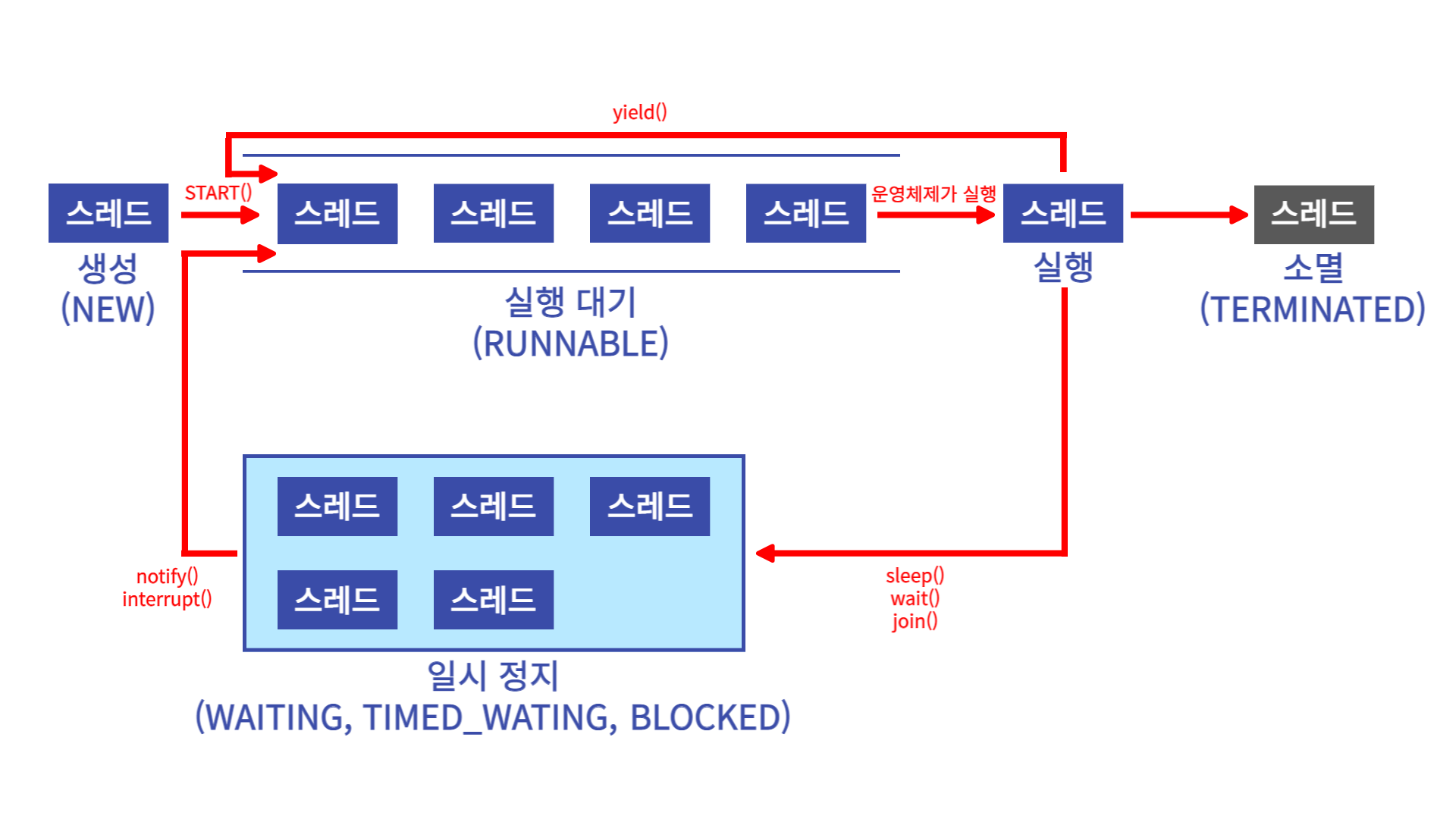
스레드 실행 제어 메서드
- sleep(long milliSecond) : milliSecond 동안 스레드를 잠시 멈춤
- sleep() 은 Thread의 클래스 메서드로 호출할 때에는 Thread.sleep(1000); 과 같이 클래스를 통해서 호출하는 것을 권장
- sleep() 을 호출하면 sleep() 을 호출하는 코드를 실행한 스레드의 상태가 실행 상태에서 일시정지 상태로 전환
- 인자로 전달된 시간 만큼의 시간이 경과하거나 interrupt() 를 호출한 경우 실행 대기 상태로 복귀
try { Thread.sleep(1000); } catch (Exception error) {}- interrupt() : 일시 중지 상태인 스레드를 실행 대기 상태로 복귀
- 기본적으로 예외가 발생하기 때문에 try...catch 문을 사용해서 예외 처리 필요
- 멈춰 있는 스레드가 아닌 다른 스레드에서 멈춰있는스레드.interrupt() 를 호출하면 기존에 호출되어 스레드를 멈추게 했던 sleep(), wait(), join() 메서드에서 예외가 발생되며, 그에 따라 일시 정지가 풀림
public class ThreadExample5 {
    public static void main(String[] args) {
        Thread thread1 = new Thread() {
            public void run() {
                try {
                    while (true) Thread.sleep(1000);
                }
                catch (Exception e) {}
                System.out.println("Woke Up!!!");
            }
        };

        System.out.println("thread1.getState() = " + thread1.getState());

        thread1.start();

        System.out.println("thread1.getState() = " + thread1.getState());

        while (true) {
            if (thread1.getState() == Thread.State.TIMED_WAITING) {
                System.out.println("thread1.getState() = " + thread1.getState());
                break;
            }
        }

        thread1.interrupt();

        while (true) {
            if (thread1.getState() == Thread.State.RUNNABLE) {
                System.out.println("thread1.getState() = " + thread1.getState());
                break;
            }
        }

        while (true) {
            if (thread1.getState() == Thread.State.TERMINATED) {
                System.out.println("thread1.getState() = " + thread1.getState());
                break;
            }
        }
    }
}

// 출력 결과
thread1.getState() = NEW
thread1.getState() = RUNNABLE
thread1.getState() = TIMED_WAITING
Woke Up!!!
thread1.getState() = RUNNABLE
thread1.getState() = TERMINATED- yield() : 다른 스레드에게 실행을 양보
- 운영 체제의 스케줄러에 의해 할당 받은 실행 시간을 다른 스레드에게 양보
- 아래 예제와 같이 example의 값이 false라면 스레드는 while문의 반복이 불필요함에도 계속해서 반복하는데, yield() 를 호출하면 example의 값이 false일 때에 while문의 반복을 멈추고 실행 대기 상태로 바뀌며, 자신에게 남은 실행 시간을 실행 대기열 상 우선순위가 높은 다른 스레드에게 양보
public void run() {
		while (true) {
				if (example) {
						...
				}
				else Thread.yield();
		}
}- join() : 다른 스레드의 작업이 끝날 때까지 대기
- 특정 스레드가 작업하는 동안에 자신을 일시 중지 상태로 만드는 메서드
- 인자로 시간을 밀리초 단위로 전달할 수 있으며, 전달한 인자만큼의 시간이 경과하거나, interrupt() 가 호출되거나, join() 호출 시 지정했던 다른 스레드가 모든 작업을 마치면 다시 실행 대기 상태로 복귀
- join()과 sleep() 의 유사점
- 일시 중지 상태가 됨
- try...catch문으로 감싸서 사용
- interrupt() 에 의해 실행 대기 상태로 복귀 가능
- join()과 sleep() 의 차이점
- sleep() 은 Thread 클래스의 static 메서드이고, join() 은 특정 스레드에 대해 동작하는 인스턴스 메서드임- Ex) Thread.sleep(1000);
- Ex) Thread.sleep(1000);
public class ThreadExample {
    public static void main(String[] args) {
        SumThread sumThread = new SumThread();

        sumThread.setTo(10);

        sumThread.start();

        // 메인 스레드가 sumThread의 작업이 끝날 때까지 기다립니다.
        try { sumThread.join(); } catch (Exception e) {}

        System.out.println(String.format("1부터 %d까지의 합 : %d", sumThread.getTo(), sumThread.getSum()));
    }
}

class SumThread extends Thread {
    private long sum;
    private int to;

    public long getSum() {
        return sum;
    }

    public int getTo() {
        return to;
    }

    public void setTo(int to) {
        this.to = to;
    }

    public void run() {
        for (int i = 1; i <= to; i++) {
            sum += i;
        }
    }
}- wait(), notify() : 스레드 간 협업에 사용
- 두 스레드가 교대로 작업을 처리해야할 때 사용할 수 있는 메서드
- 스레드A와 스레드B의 협업 플로우
- 스레드 A가 공유 객체에 자신의 작업을 완료하고 스레드 B와 교대하기 위해 notify() 를 호출
- notify() 가 호출되면 스레드 B가 실행 대기 상태가 되며, 곧 실행되고 이어서 스레드 A는 wait() 를 호출하며 자기 자신을 일시 정지 상태로 만듦
- 이후 스레드 B가 작업을 완료하면 notify() 를 호출하여 작업을 중단하고 있던 스레드 A를 다시 실행 대기 상태로 복귀시킨 후, wait() 를 호출하여 자기 자신의 상태를 일시 정지 상태로 전환
- 위 과정을 반복하며 두 스레드는 공유 객체에 대해 서로 대타적으로 접근하며 효과적으로 협업 가능
public class ThreadExample5 {
    public static void main(String[] args) {
        WorkObject sharedObject = new WorkObject();

        ThreadA threadA = new ThreadA(sharedObject);
        ThreadB threadB = new ThreadB(sharedObject);

        threadA.start();
        threadB.start();
    }
}

class WorkObject {
    public synchronized void methodA() {
        System.out.println("ThreadA의 methodA Working");
        notify();
        try { wait(); } catch(Exception e) {}
    }

    public synchronized void methodB() {
        System.out.println("ThreadB의 methodB Working");
        notify();
        try { wait(); } catch(Exception e) {}
    }
}

class ThreadA extends Thread {
    private WorkObject workObject;

    public ThreadA(WorkObject workObject) {
        this.workObject = workObject;
    }

    public void run() {
        for(int i = 0; i < 10; i++) {
            workObject.methodA();
        }
    }
}

class ThreadB extends Thread {
    private WorkObject workObject;

    public ThreadB(WorkObject workObject) {
        this.workObject = workObject;
    }

    public void run() {
        for(int i = 0; i < 10; i++) {
            workObject.methodB();
        }
    }
}