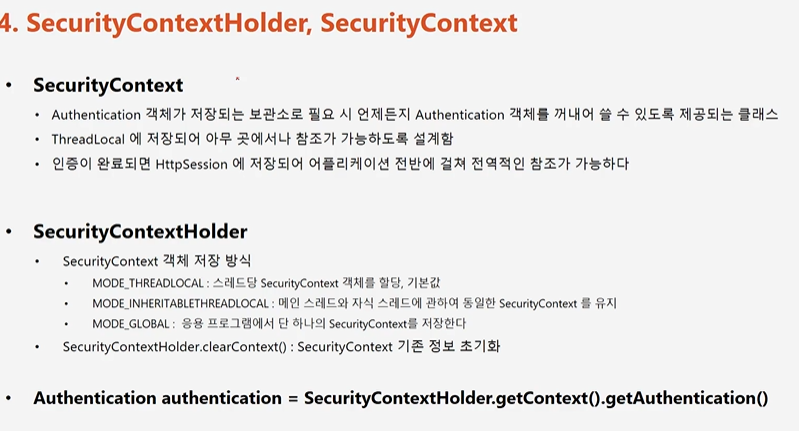
-- SecurityContext --
-
Authentication 객체가 저장되는 보관소
-
저장소니까 인증 객체를 꺼내어 쓸 수 있도록 제공되는 클래스이다.
-
SecurityContext 에 Authentication 객체가 저장, Authentication 객체 안에는 user 정보가 저장된다.(인증에 성공하면 생성되는 객체가 user)
-
ThreadLocal 에 저장된다 아무 곳에서나 참조가 가능하다.
[ThreadLocal -- 스레드는 스레드마다 고유하게 할당된 저장소가 스레드 로칼이다][스레드간에 공유가 되지 않고 각 스레드에만 접근 가능하다]
[Security context가 스레드 로칼에 저장되어있어서 어디든 접근 가능] -
인증완료시 HttpSession에 저장되어 어플리케이션 전반에 걸쳐 전역적인 참조 가능.
-- SecurityContextHolder --
-
SecurityContext를 감싸고 있는 클래스
-
SecurityContext 객체를 저장하는 방식이 세 가지 모드로 저장하고 있다
2-1 MODE_THREADLOCAL: 스레드당 SecurityContext 객체를 할당 (기본값
2-2 MODE_INHERITABLETHREADLOCAL : 메인 스레드와 자식 스레드에 관련한 동일한 SecurityContext를 유지
2-3 MODE_GLOBAL : 응용 프로그램에서 단 하나의 SecurityContext를 저장한다. -
SecurityContextHolder.clearContext() : SecurityContext 기존 정보 초기화
어떤 메소드에서도 다 참조할 수 있게 스프링시큐리티가 작동할 수 있게 지원한다.
Authentication authentication = SecurityContextHolder.getContext().getAuthentication()로그인 흐름
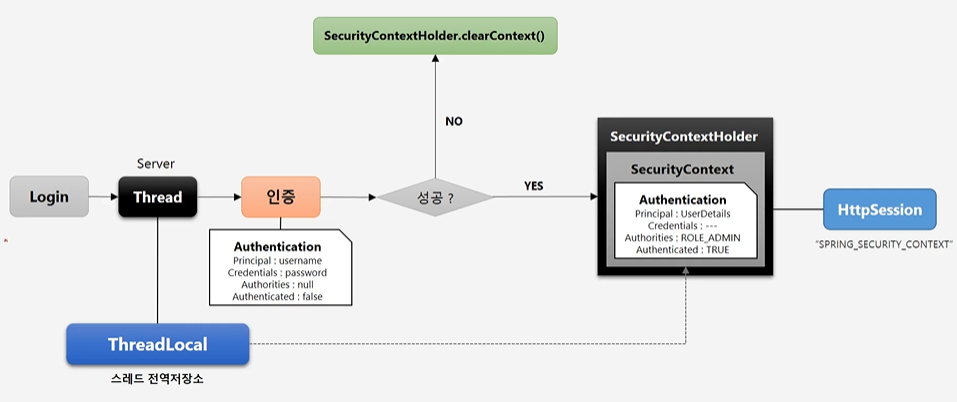
-
사용자가 로그인을 한다
-
서버가 로그인 요청을 받는다
-
서버는 사용자의 요청을 받은 스레드를 생성한다
-
스레드는 ThreadLocal를 할당 받는다
-
스레드가 인증처리를 한다(인증필터가 하겠지)
-
인증
6-1 실패시 -> SecurityContextHolder.clearContext()를 실행시킨다 -
성공하면 인증필터가 SecurityContextHolder 안에 SecurityContext 안에
최종적으로 성공한 인증객체를 담는 처리를 한다. -
스레드 로칼이 SecurityContext를 담고 있고
-
SecurityContext가 HttpSession에 저장이 된다.