Link layer : introduction
- node : host and routers
- link : 노드들을 연결하는 통신채널
- Wire : 대부분
- Wireless
- LANs (Local Area Network)
- frame : link layer의 pkt 단위
- Link layer는 인접한 노드에 link를 따라 물리적인 frame 전송을 책임진다.
Link layer : services
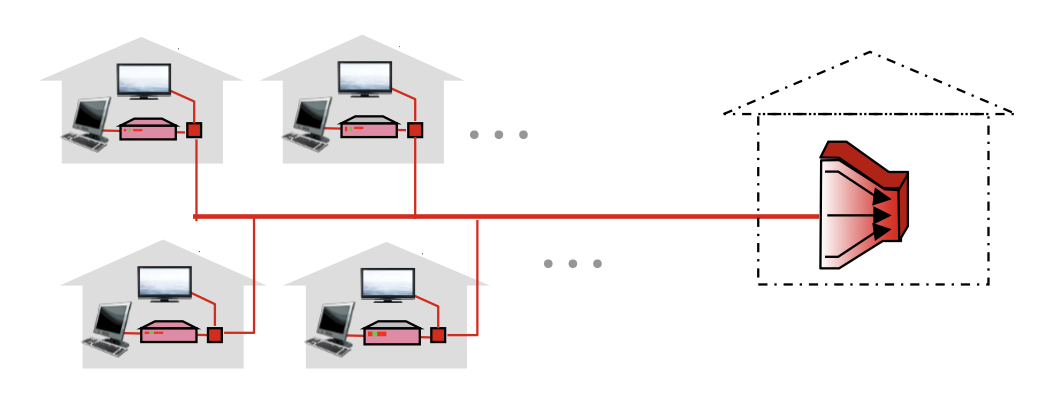
- framing, link access
- framing : datagram (Network layer)에 header + trailer를 붙여 frame으로 만드는 과정
- channel access : 통신라인에 어떻게 접근할 것인가를 정의
- MAC address : (Medium Access Control) : IP address와는 다른 source, destination 식별주소
- error detection, correction : receiver는 bit error를 탐지해 재전송없이 정정
- half-duplex, full-duplex
Where is the link layer inplemented?
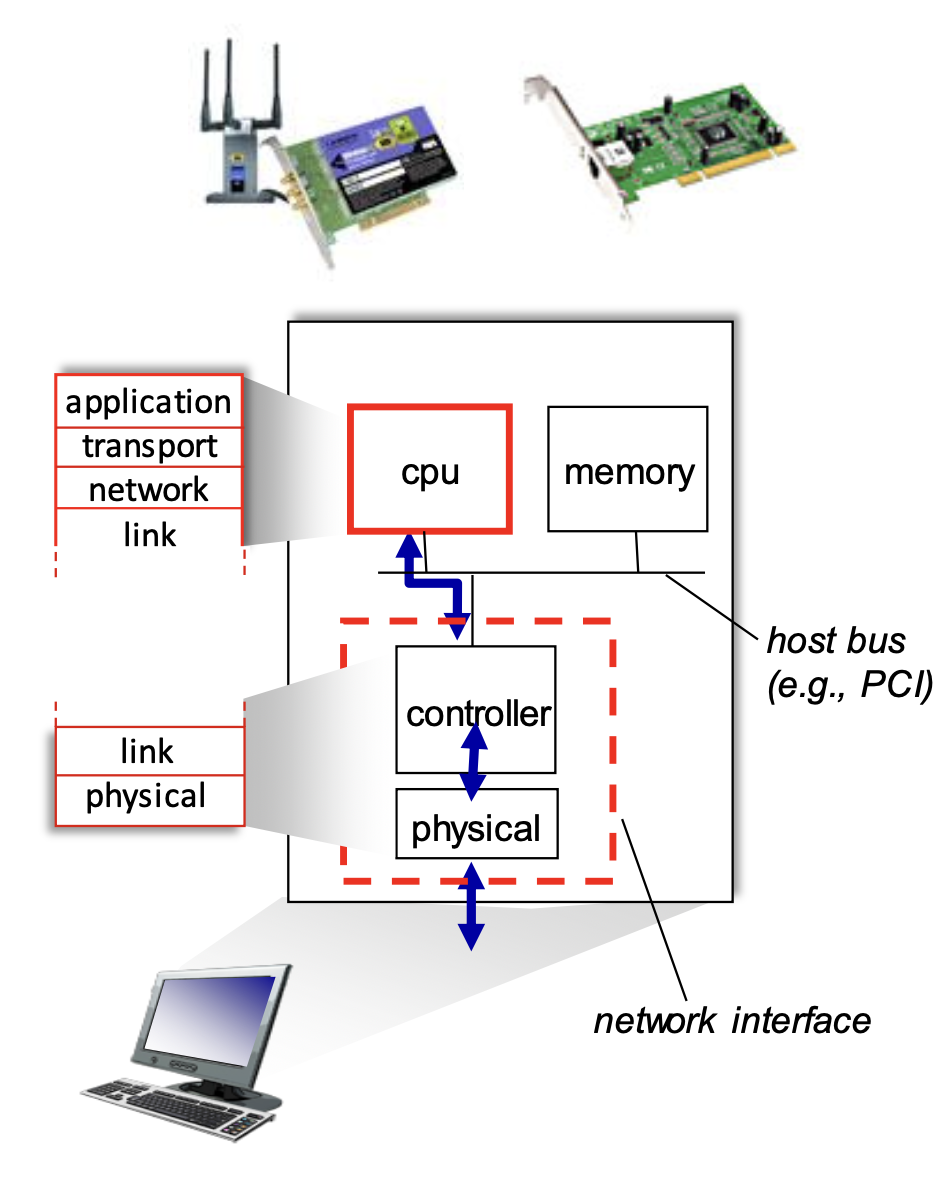
- NIC(Network Interface Card), chip에서 link layer가 구현됨
- Ethernet, WiFi card or chip
Interfaces communicating
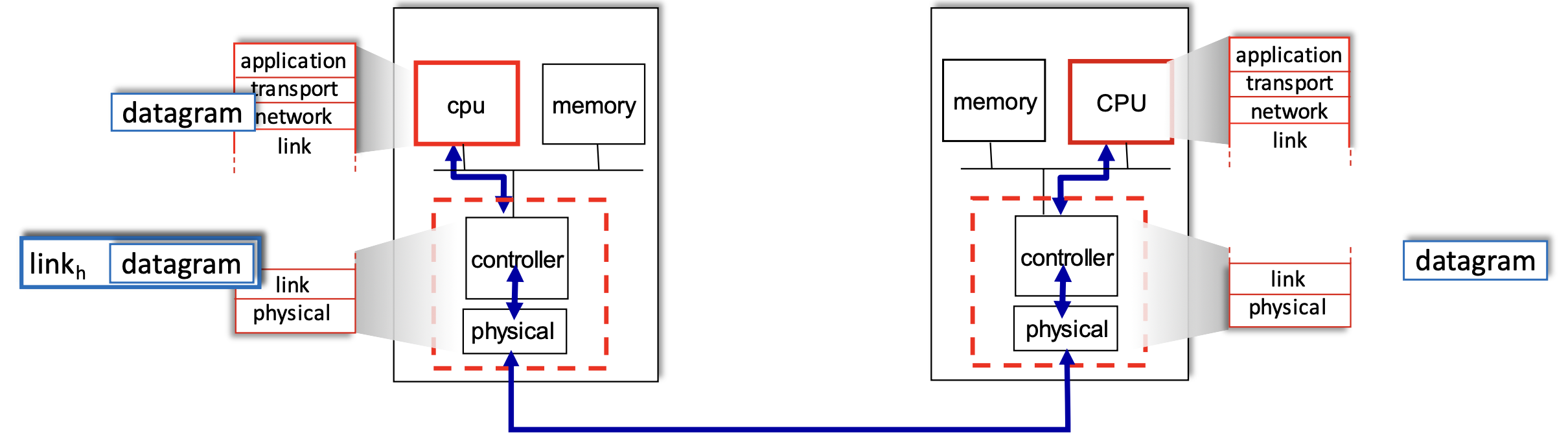
- Sending side :
- Encapsulates datagram in frame
- add error checking bits, reliable data, transfer, flow control, etc
- Frame뒤 extra bits를 더함
- receiving side :
- Frame뒤 extra bits를 통해 error detection
- header를 제거한 후 datagram을 윗계층으로 올림
Error detection
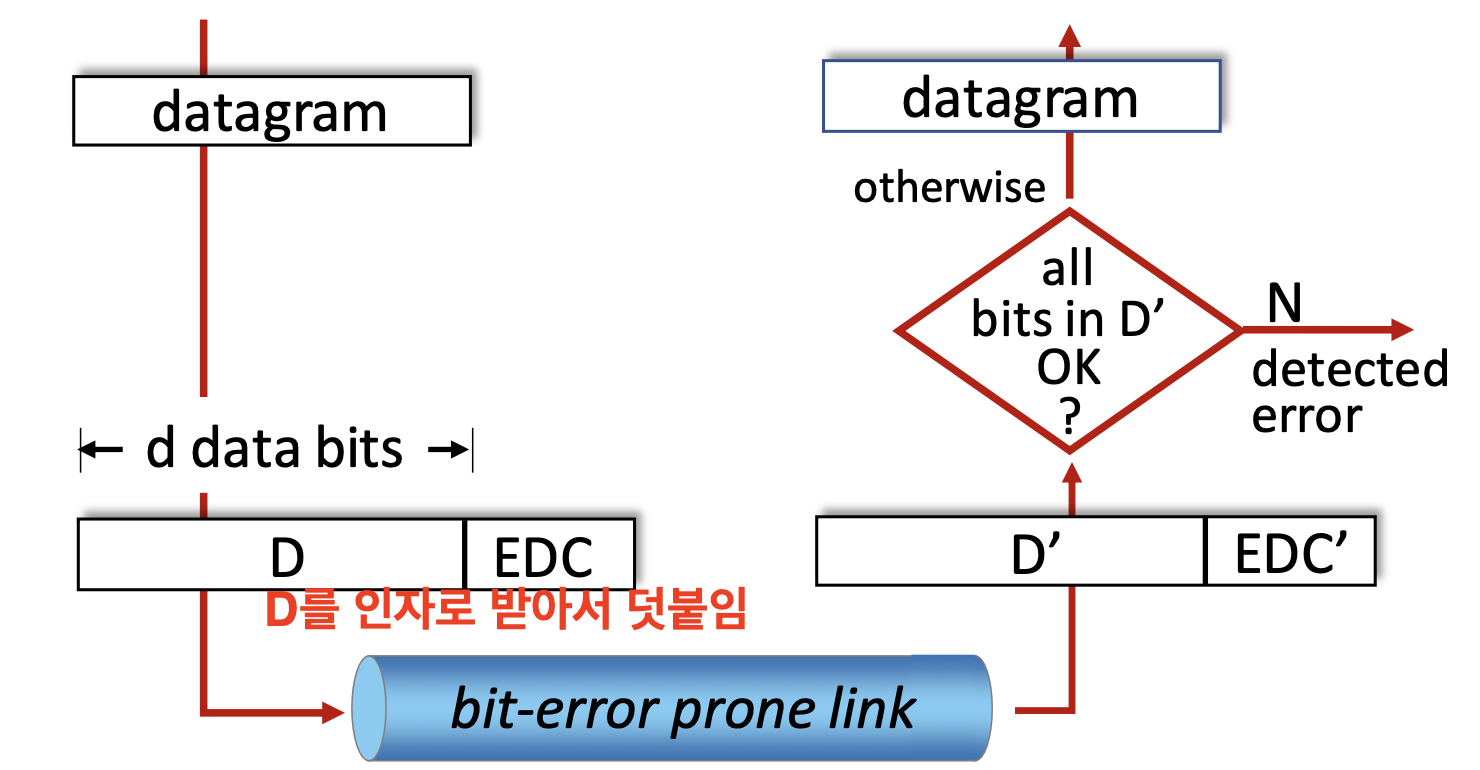
- EDC (Error Detection and Correction bits) : D를 인자로 받아서 EDC를 생성 후 frame뒤에 붙임
- EDC가 길어질수록 탐지 및 정정이 더 용이함
- Error detection은 100% 신뢰할 수 없음
Parity checking
-
data bits에서 1의 개수를 짝수로 맞춤
-
single bit parity
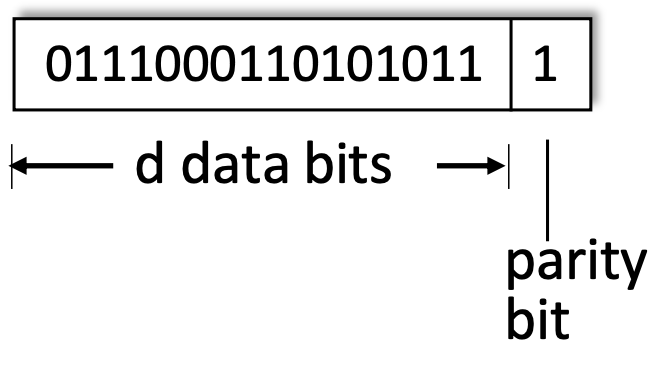
- 가장 간단하고 구현하기 쉬움
- 어떤 비트에서 에러가 발생한건지 알 수 없음
-
two-dimensional bit parity
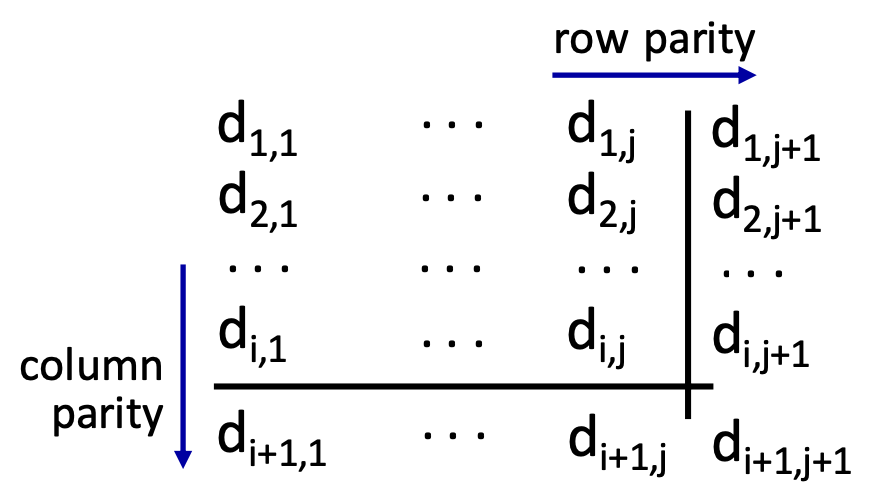
- single bit error를 detection, correction할 수 있음
- 어떤 비트에서 에러가 발생한지 알 수 있음
CRC (Cyclic Redundancy Check)
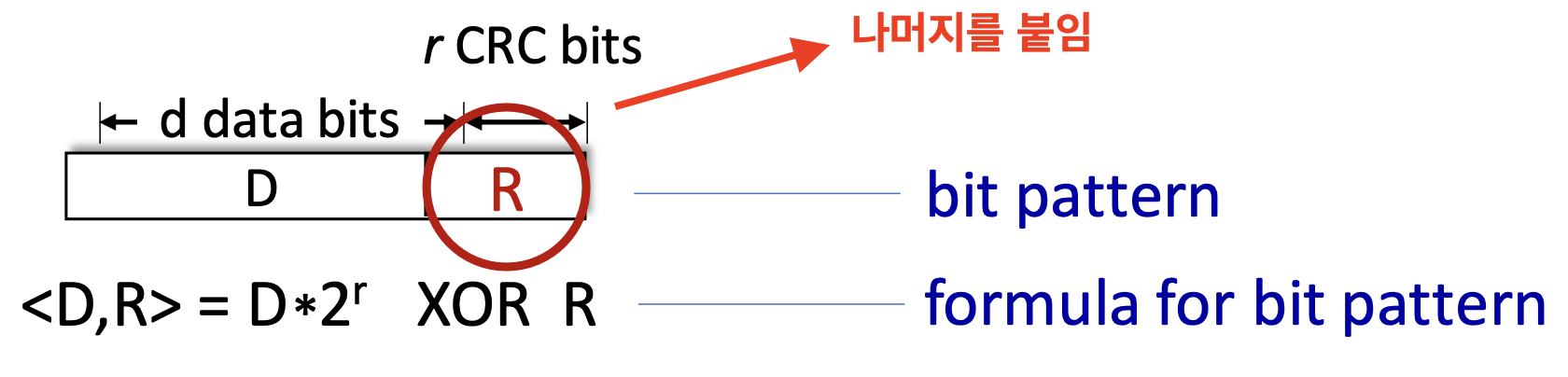
- 앞의 방식보다 훨씬 더 powerful한 error detection coding(EDC를 만드는 작업)
- D를 Pattern G로 나눈 나머지인 R을 EDC로 사용
CRC (Cyclic Redundancy Check): example
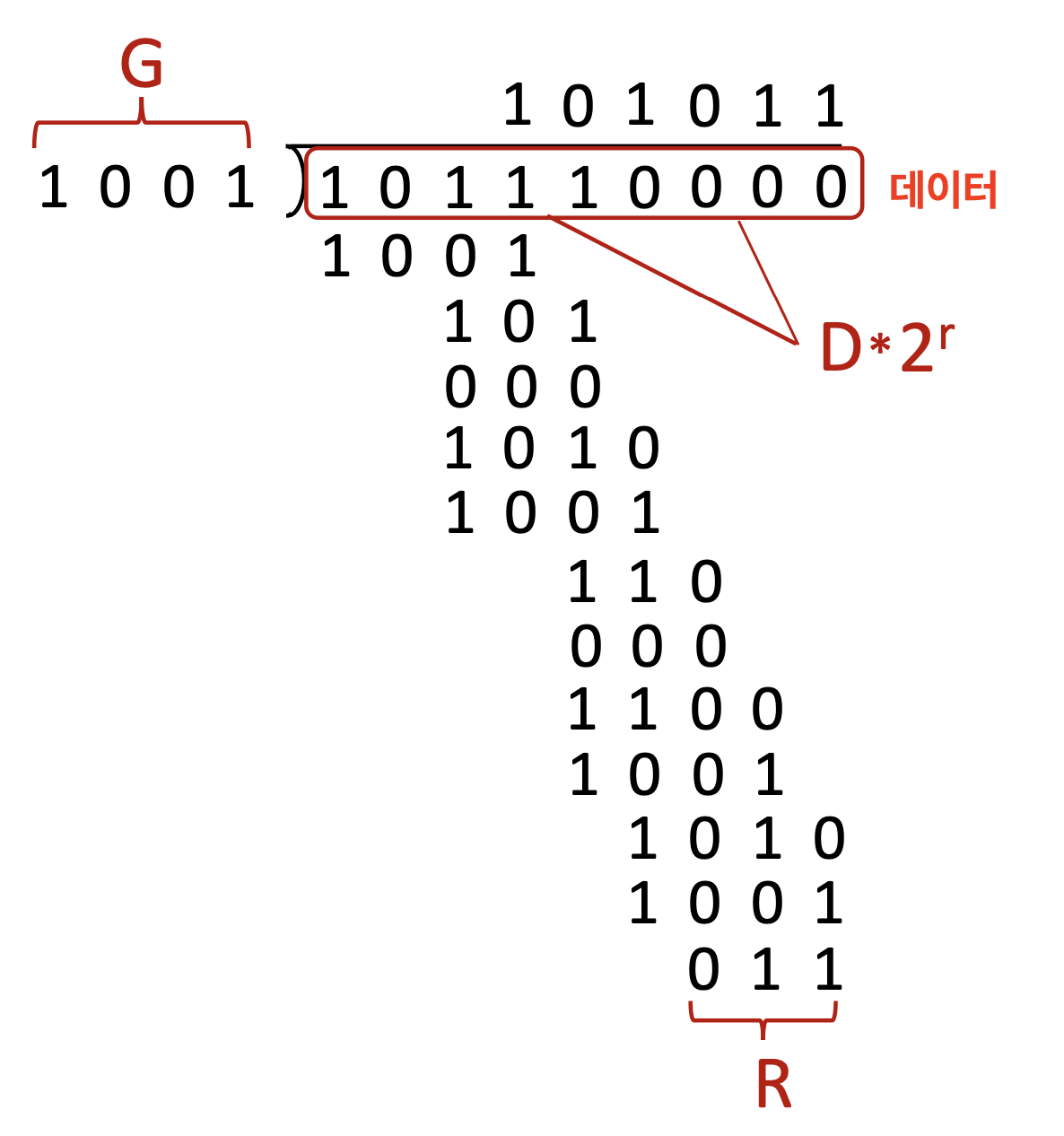
- XOR연산을 통해 나머지 R을 구함
- D의 크기가 가변적이어도 C, EDC의 크기는 정해져있음.
Multiple access protocol
- collision : 하나의 통신채널에 둘 이상의 호스트들이 동시에 사용하려고 할 때 발생하는 충돌
- collision을 방지하기 위해 TDMA, FDMA, etc
Channel partitioning MAC protocols: TDMA
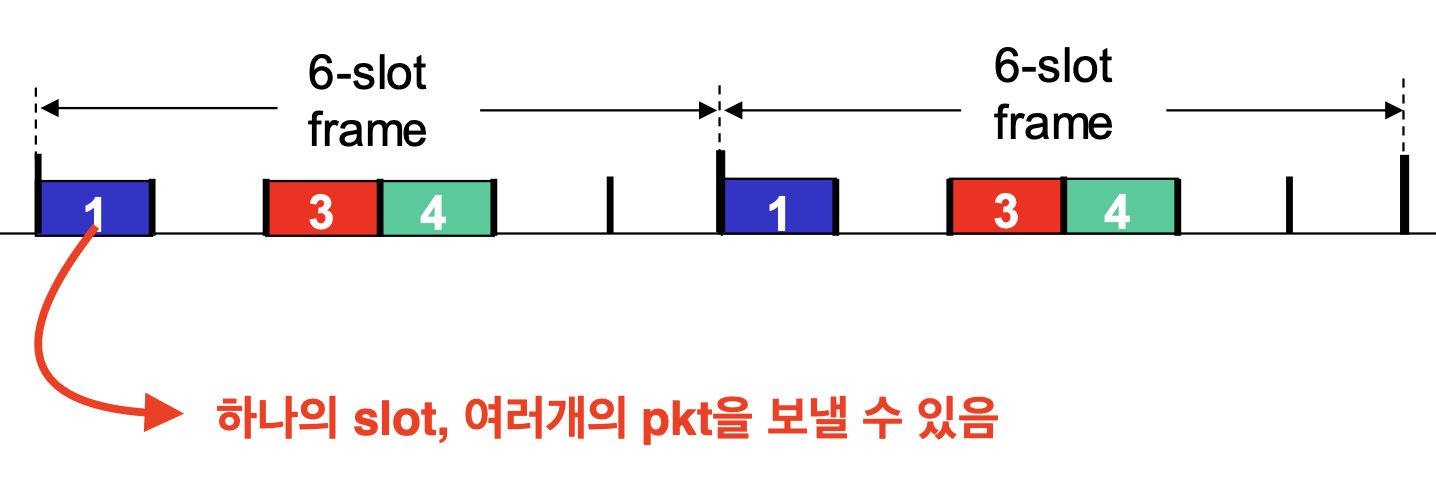
- TDMA : Time Division Multiple Access
- 한 채널의 시간을 나누어서 슬롯마다 호스트들이 사용할 수 있음
Channel partitioning MAC protocols : FDMA
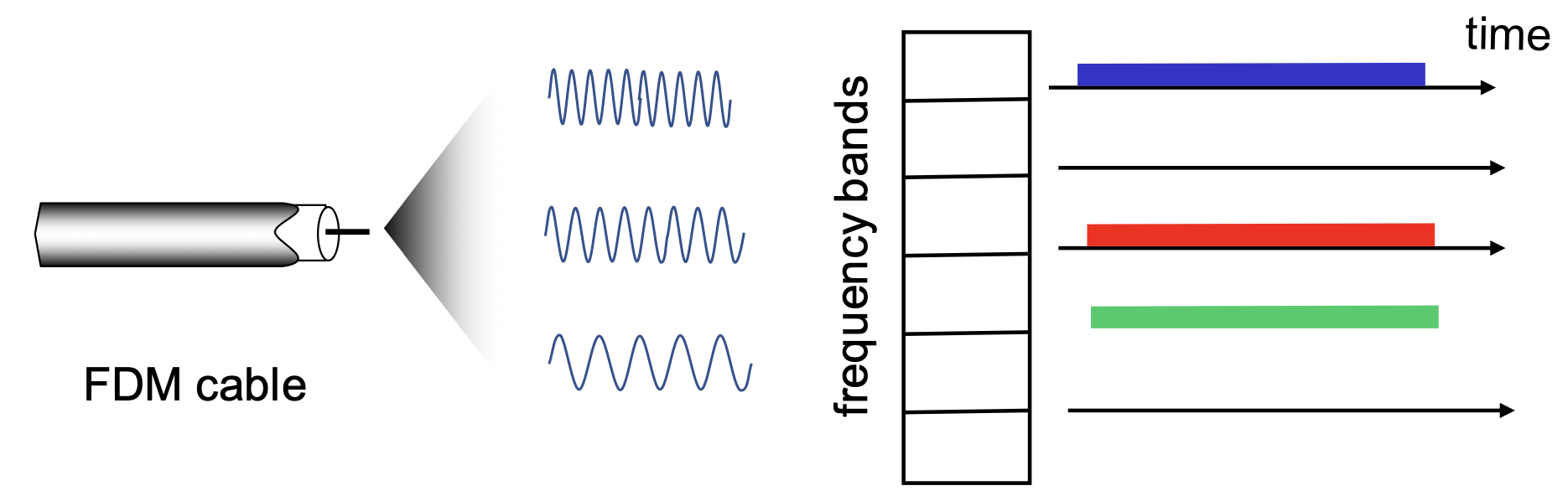
- FDMA : Frequency Division Multiple Access
- 채널의 주파수를 나누어 각 주파수별로 사용
Random access protocols
- 언제 노드가 데이터를 보낼지 모름
- 둘이상의 노드가 데이터를 보낼 때 collision 발생
- random access MAC protocol은 정의
- How to detect collisions
- how to recover from collisions
- ALOHA, slotted ALOHA, CSMA, CSMA/CD, CSMA/CA
slotted ALOHA
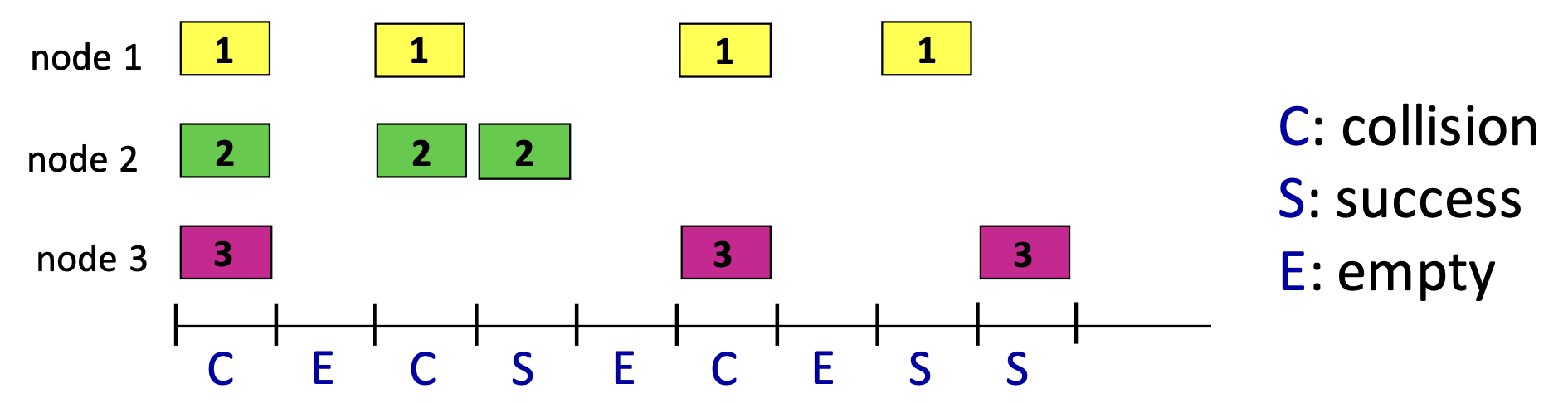
- 가정상황
- 모든 frame의 크기는 동일
- TDMA 방식 사용
- 똑같은 크기의 slot, 하나의 slot에 하나의 frame
- 둘 이상의 노드가 같은 slot에 frame을 보내면 collision
- 모든 노드는 collision detection
- frame을 보낼지말지는 확률에 맡김
- 간단하고 구현이 쉬움
- 낭비하는 slot이 생김, sync가 맞아야함, collision 발생 증가
slotted ALOHA : efficiency
- 하나의 노드의 성공확률 :
- 전체 노드들의 성공확률 :
- max efficiency :
⇒ 최대 37%의 efficiency
CSMA (Carrier Sense Multiple Access)
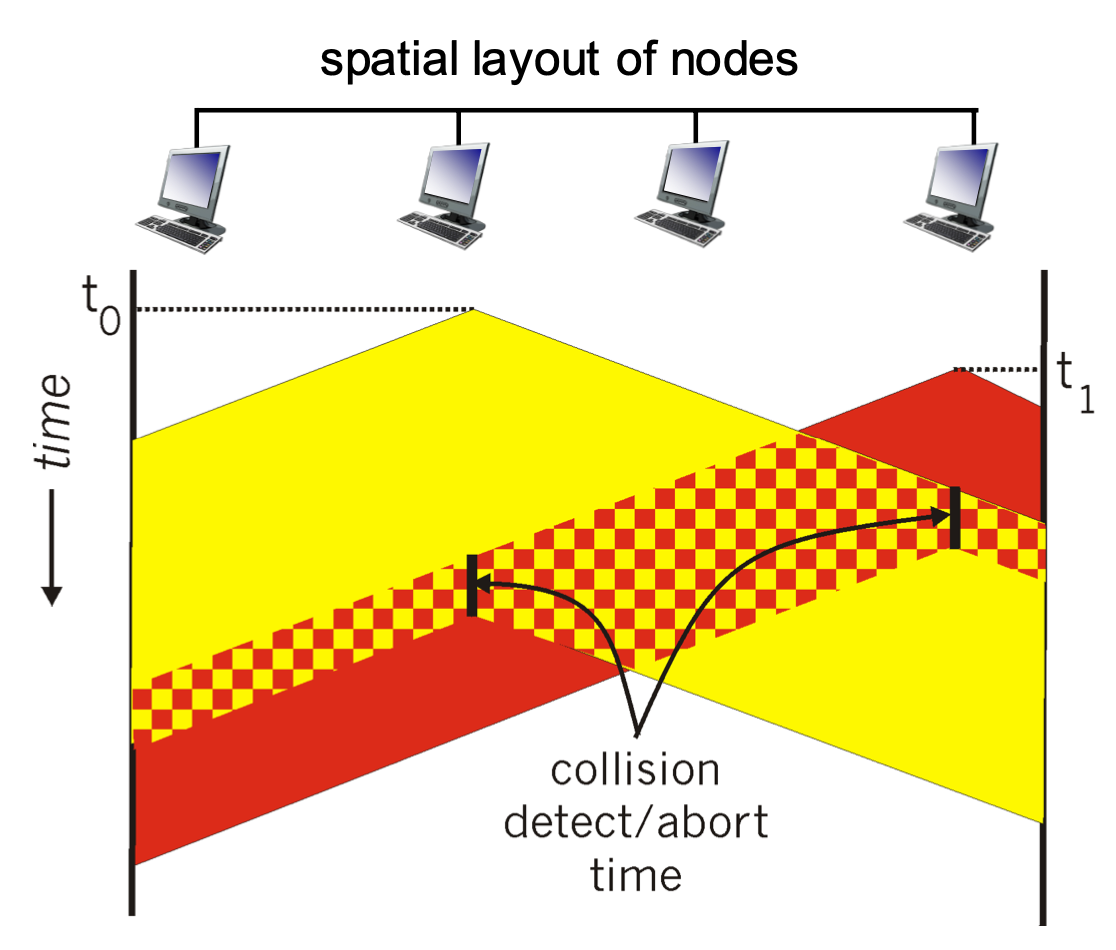
- carrier : Data를 운반하는 signal
- simple CSMA : Listen and Talk
- idle : frame 전송 가능
- busy : channel 사용 중
- 위의 그림에서 t0에 idle이니 h1이 carrier를 보냄, prop delay때문에 퍼져나감 → t1에 h4가 carrier를 보냄 → collision 발생
- CSMA/CD (Collision Detection) : collision 발생 시 전송을 중단, 이미 data가 깨진 상태
- CSMA/CA (Collision Avoidance): collision 발생할 거 같으면 전송을 중단, data 보호 가능
Summary of MAC Protocol
- Link에 N개의 장치들이 pkt을 보낼 때 충돌이 발생, 이 충돌을 어떻게 해결할 것인지를 정의
- Channel partitioning : TDMA, FDMA
- Random access : slotted ALOHA, CSMA, CSMA/CD, CSMA/CA, etc
- MAC(Medium Access Control) address :
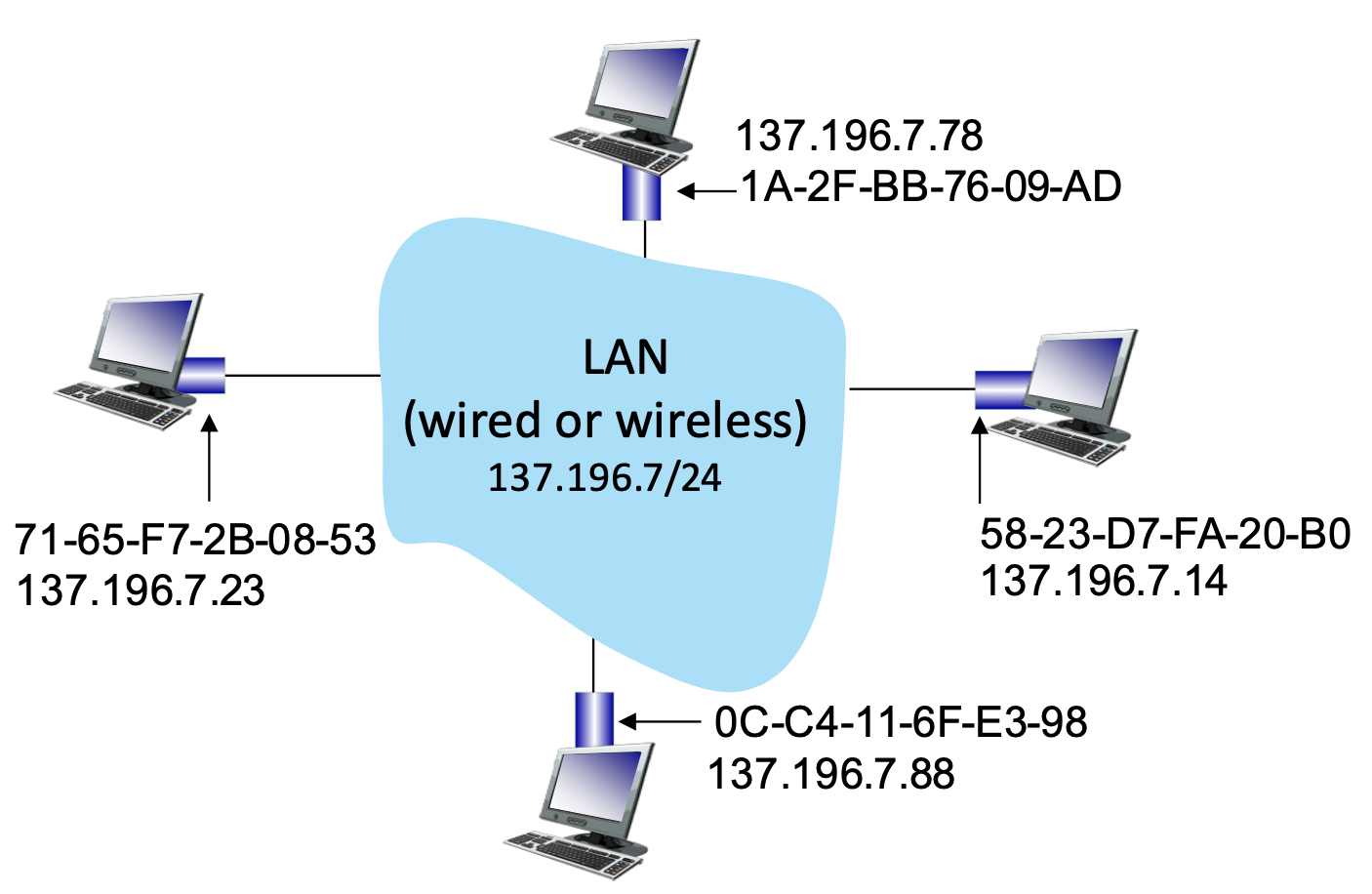
- 유동적으로 값이 바뀌는 IP address와 달리 값이 바뀌지 않음
- unique 48bits / 6Bytes
- 16진수로 표현 / 1A-2F-BB-76-09-AD
Ethernet
- 가장 보편적으로 쓰이는 인터넷 프로토콜
- simpler, cheap → 인프라 조성
- single chip : chip 하나로 Ethernet protocol 지원
Ethernet : physical topology
- bus :
-
node를 쉽게 붙였다 뗄 수 있음
-
모든 node가 bus의 내용을 확인할 수 있음
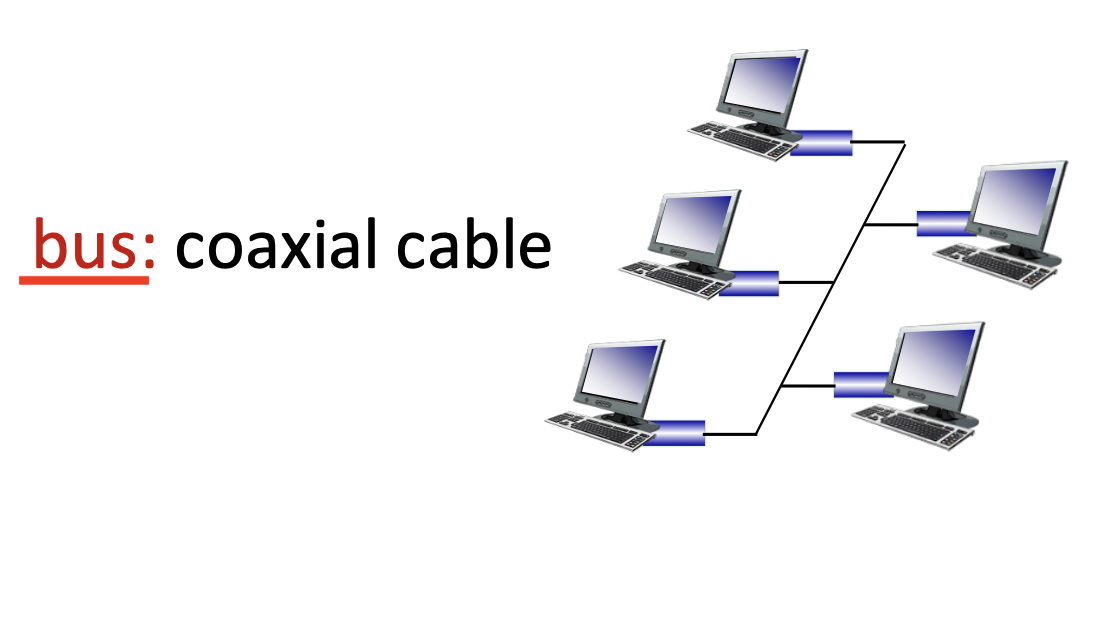
-
- switched :
-
switch와 port가 연결되어 있음
-
서로의 port의 내용을 확인할 수 없음
-
port의 수가 제한적임
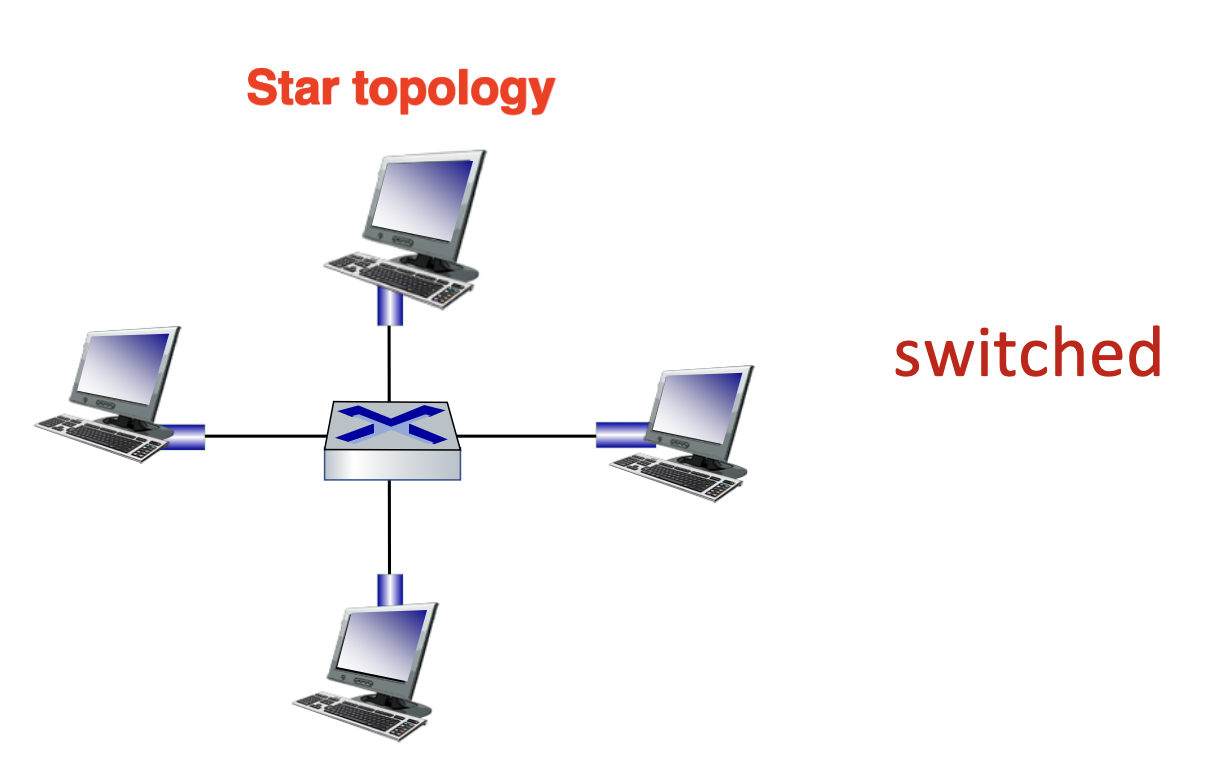
-
Ethernet frame structure

- preamble : frame의 시작부분을 나타냄, synchronize를 위해 사용
- dest, source address : MAC address가 들어감 / 48bits
- data : Network layer로 부터 내려온 Datagram이 들어감
- CRC : Error detection, correction을 위한 추가 비트
Ethernet : unreliable, connectionless
- connectionless : no handshaking
- unreliable : ACK, NAK를 보내지 않음
- MAC Protocol : unslotted CSMA/CD
802.3 Ethernet standards : link & physical layers
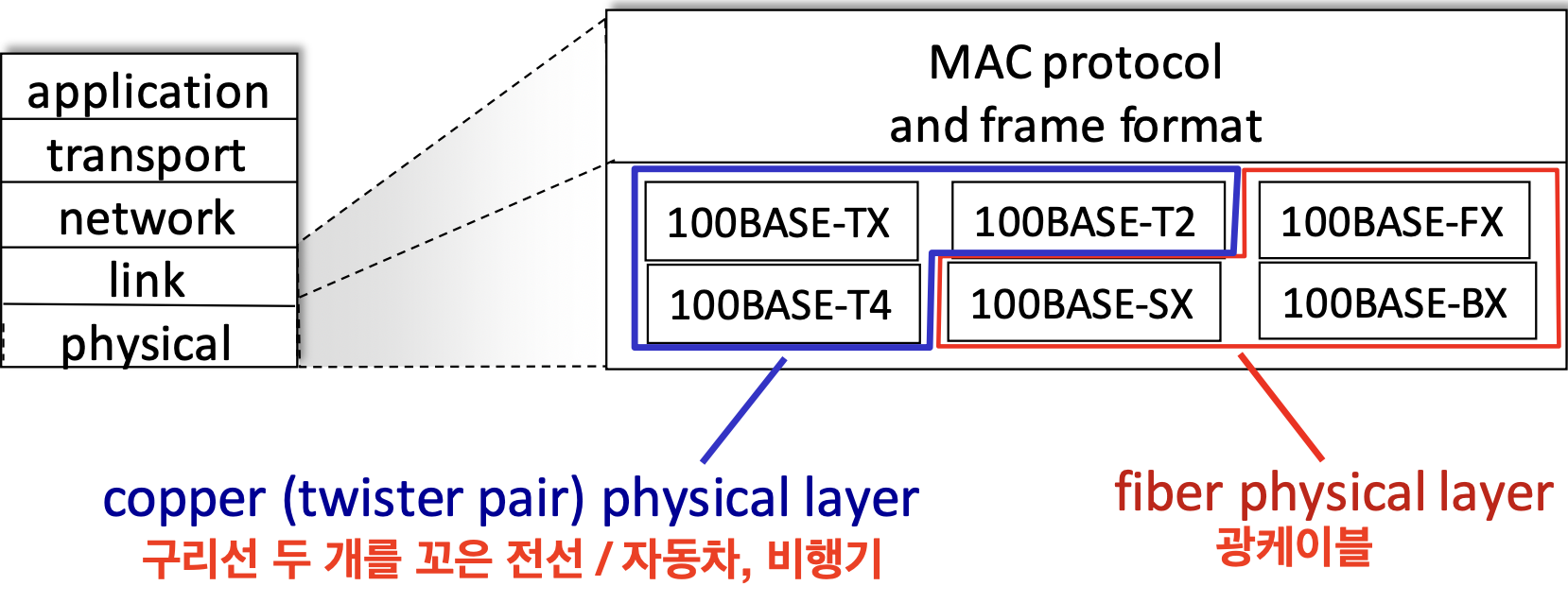
Ethernet switch
- Link layer’s device
Switch : Multiple simultaneous transmission
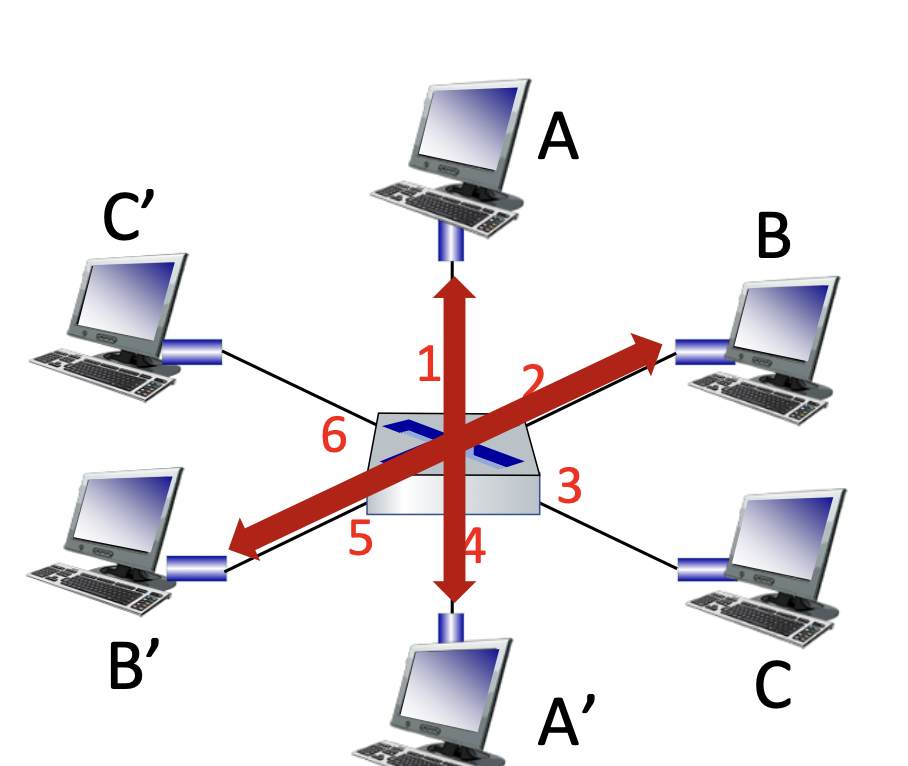
- switch는 MAC address를 확인 후 frame을 fowarding
- switching : A-A’, B-B’으로 frame을 collision 없이 forwarding
- switching table을 통해 forward
Switch forwarding table
- routing table처럼 어떤 port로 frame forwarding을 해야하는지 정해져있는 table
- 우리는 장치를 바꿔도 따로 switch 설정을 하지 않음. 이는 switch가 독자적으로 table을 수정하고 있어서임
Switch : self-learning
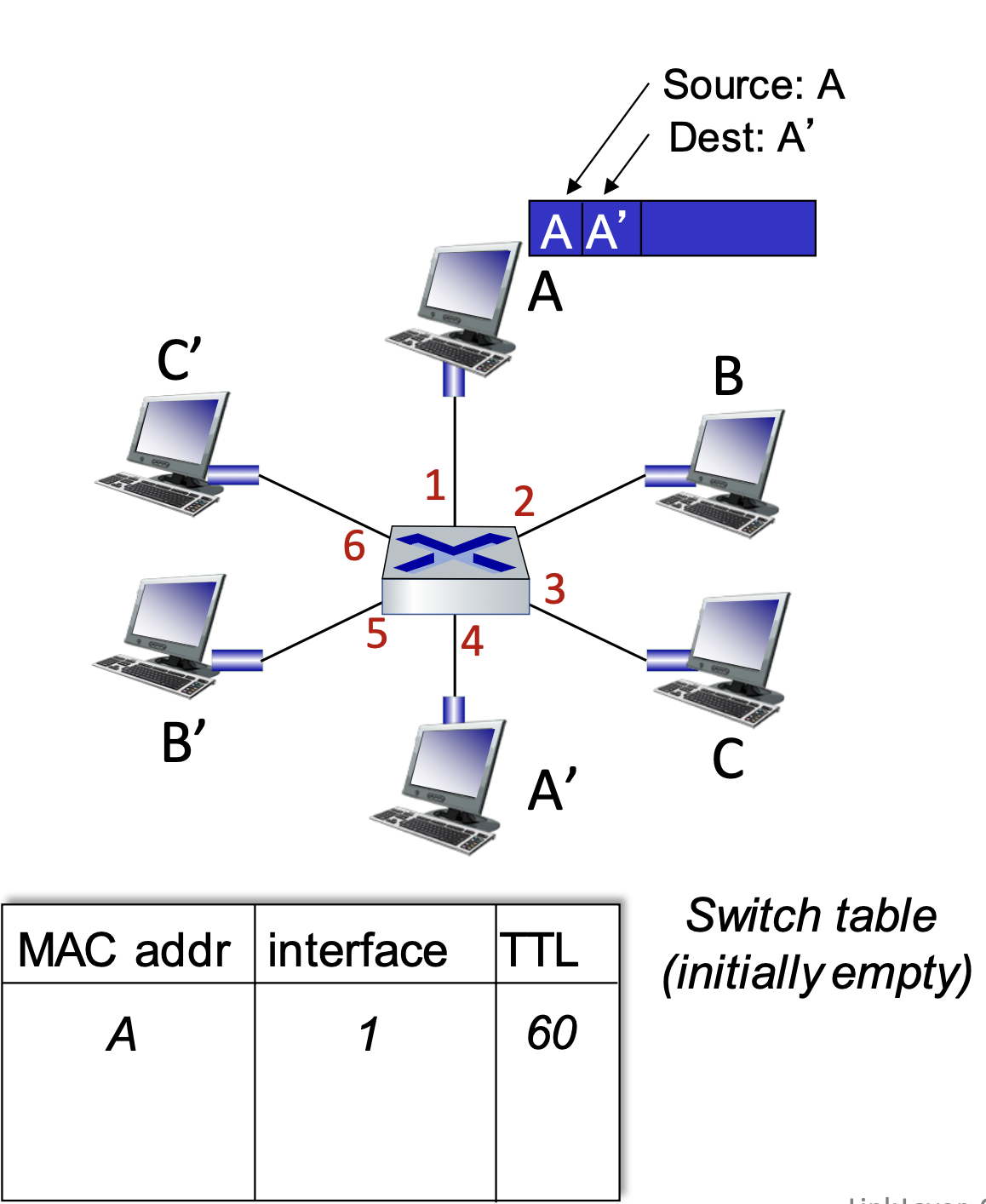
- MAC address를 지속적으로 업데이트
- 위의 그림처럼 A-A’으로 frame forwarding을 했다면, A의 MAC addr, interface, TTL을 table에 저장
- flood : dest를 모른다면 모든 host들에게 다 뿌림, 이때 모든 host의 정보를 table에 저장
Small institutional network
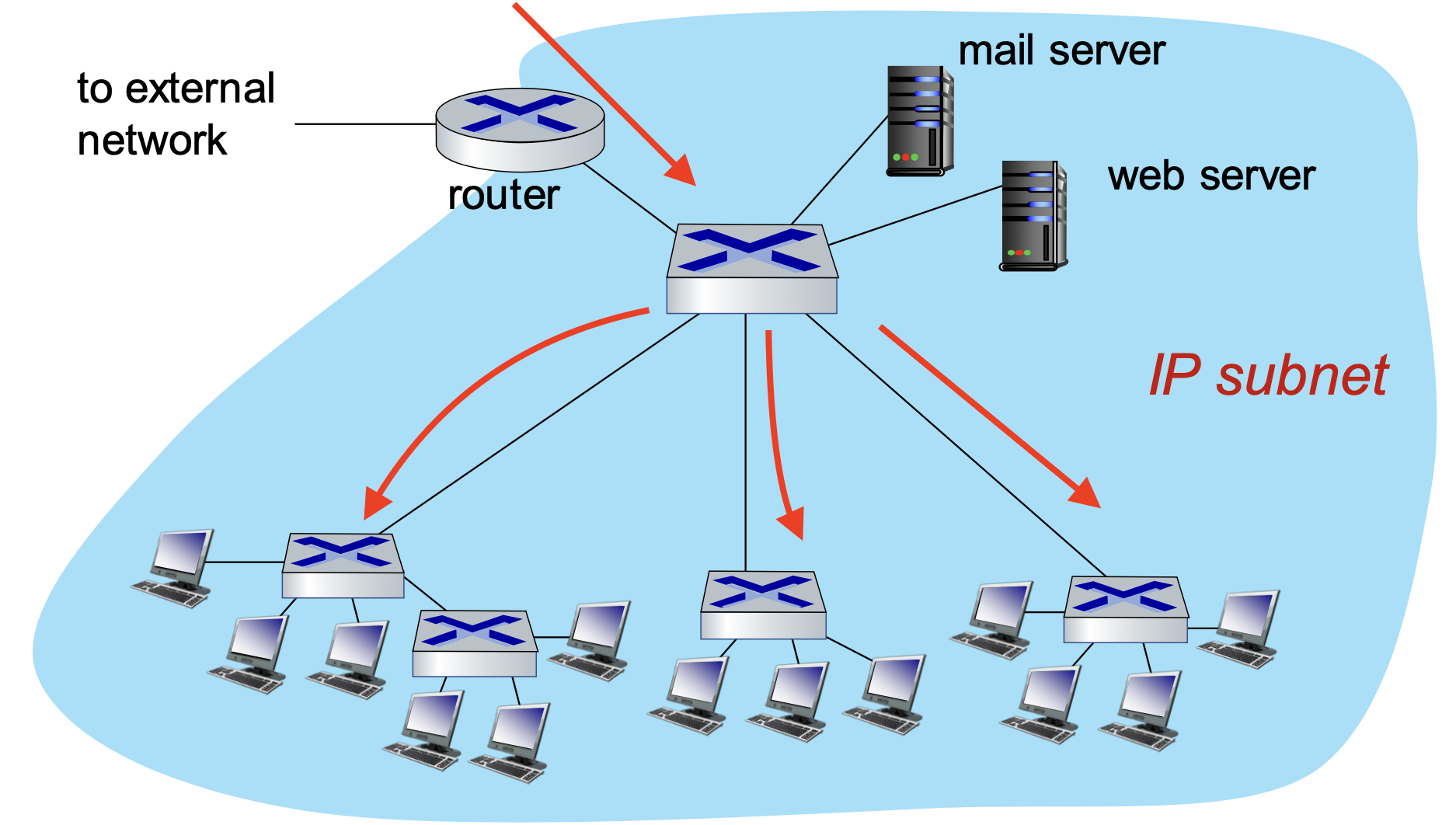
- 외부 network에서 router를 통해 전송 → switch를 통해 각각의 다른 switch로 전송 → 각각의 host로 전송
Switches VS Routers
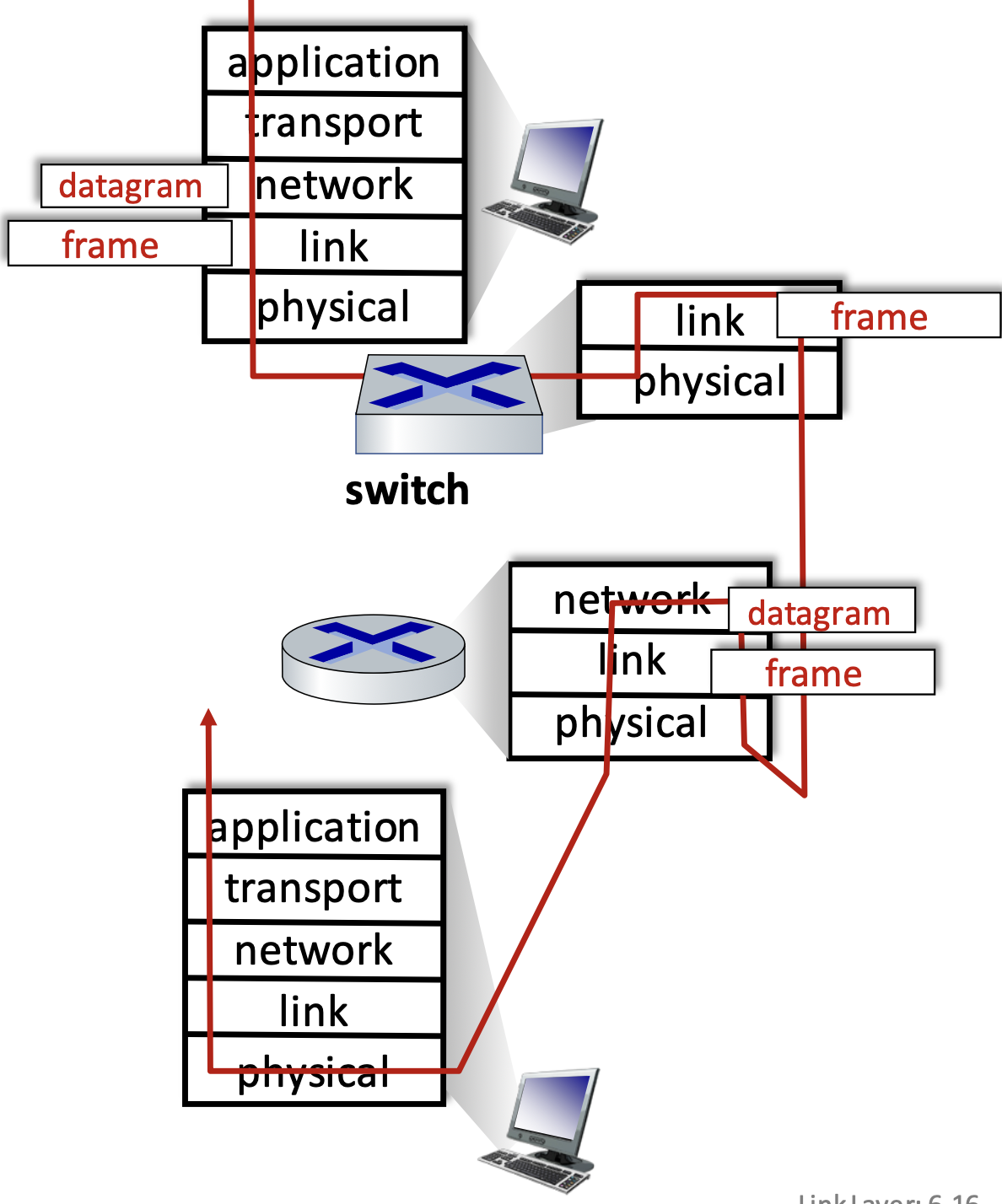
- Store and forward
- routers : Network layer devices
- switches : Link layer devices
- have forwarding tables
- routers : routing algorithm을 사용한 table, IP address
- switches : self-learning, flood를 사용한 table, MAC address
- L2 switch : general switches
- L3 switch : 기능을 추가하여 router로도 사용, 자동차에서 사용