From Blueprint to Reality: Digital Twins Transforming Event Management
Event planning requires a comprehensive check of a long list. Technological advancements have not changed the challenges that event planners encounter. Planners often deal with bottlenecks and unpredictable visitors. They need to improvise constantly while bearing in mind last-minute fixes that come at a premium. Static floor plans and spreadsheets do not express the complexity that events can have.
Digital twin event technology changes the game. This innovation creates a living, interactive 3D digital twin venue in relation to real-time data. The planner can now walk the space virtually, test various layouts, evaluate crowd flow, and preview venue branding before they physically set up.
Attendees can even enjoy a virtual venue tour digital twin, helping them feel like insiders before the event. By using digital twin in events, teams won’t struggle with last-minute fixes but will instead make data-driven, informed decisions. That is transforming chaos into a smoothly planned, confident execution.
To simplify complex processes, many planners are also turning to event transportation automation software for better logistics handling.
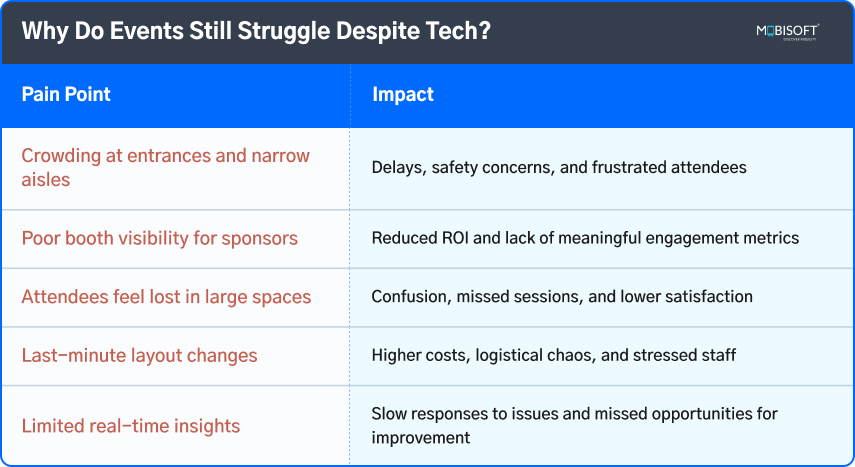
Why Do Events Still Struggle Despite Tech?
Tech solutions like registration apps and livestreaming have improved some aspects of event management; however, many blockage points regarding space planning, real-time simulation in events, and operations remain intractable for organizers.
A 2025 North American industry survey of event producers revealed that more than 60% of organizers report they face last-minute changes to layouts onsite due to one of their planning data or relationships being inaccurate or out of date at the time.
Digital twin for event management offers a powerful solution. Digital twins integrate interactivity and real-time data into our digital planning. They allow event planners to look ahead weeks before the event while simulating multiple scenarios. With IoT in digital twins, the problem emerges long before the event happens and can be solved proactively.
To overcome these hurdles, solutions like AI-powered event booking dispatch software are becoming increasingly vital.

Beyond 3D Maps: What a Digital Twin Really Means
A digital twin architecture goes beyond a static 3D representation of the venue. It is a live, dynamic reflection that utilizes AI-powered digital twin insights, real-time updates, and continuous connectivity.
The twin connects to IoT sensors that track everything happening in the space. For example, crowd size, movement, temperature, and equipment status. It continuously updates to display the exact venue state at any given moment. Organizers can run simulations: testing different room layouts, predicting crowd bottlenecks, or ensuring sponsor signage visibility. Participants can even explore immersive digital twin experiences through virtual booths and sessions before the event begins.
This dynamic event digital twin technology offers:
- Interactive venue walkthroughs give users a better sense of the space.
- Ability to simulate different event scenarios that a static map simply can’t.
- Personalized and data-driven navigation tools that help attendees find their way.
In short, digital twin event planning replicates your event as realistically as possible. Keeping you prepared for the obstacles that might come.
Combined with tools like AI GPS routing for event transportation, planners can streamline both virtual and physical journeys.
Read More:
https://mobisoftinfotech.com/resources/blog/transportation-logistics/digital-twins-event-management