Global Trends Digital Wellness Platforms 2026 2030: AI Wellness Platform Trends & Market Forecast
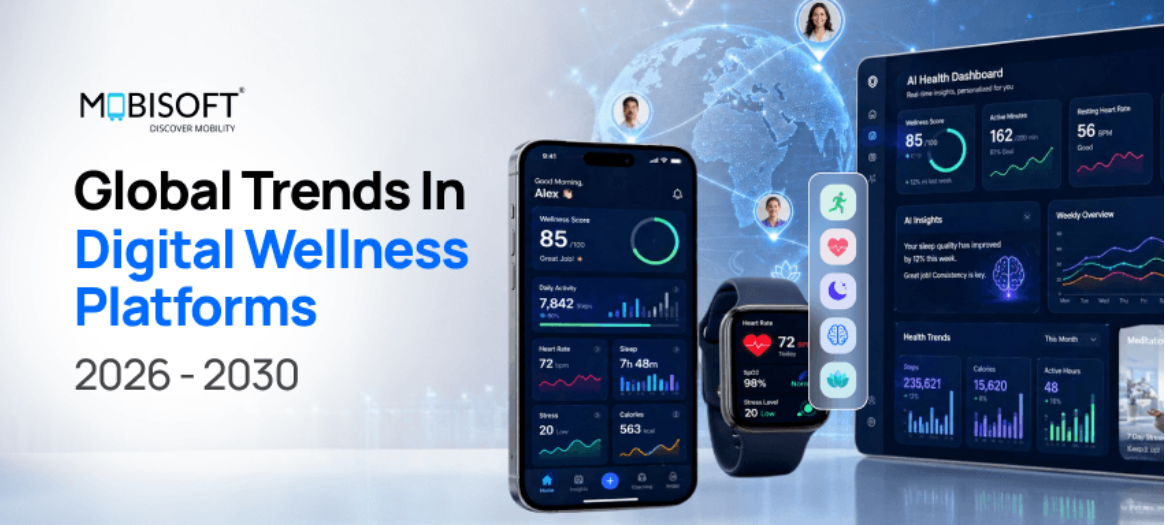
Wellness is no longer living on the fringes of healthcare.
Not long ago, most digital wellness products were little more than habit trackers, calorie logs, and meditation reminders. Helpful? Sure. Strategic? Not really.
That's changing fast.
Today, the wellness technology market is becoming one of the most active innovation zones in digital health. The digital health and wellness market size is expected to see exponential growth in the next few years. As per reports, it will grow to $1.61 trillion in 2030 at a compound annual growth rate (CAGR) of 23.4%. AI-backed coaching tools are getting smarter. Wearables are collecting richer biometric signals. Employers are investing in measurable well-being outcomes. Consumers are demanding personalized support for sleep, stress, metabolism, and long-term health, all from the same app.
This is exactly why global trends in digital wellness platforms matter right now.
What was once a fragmented consumer app category is becoming a serious infrastructure layer for preventive care.
This article explores the ten most important digital wellness platform trends to watch between now and 2030. The next decade of wellness will not belong to the apps with the most features.
It will belong to the platforms that understand people better.
Market Context: The Wellness Technology Landscape in 2026
The fastest-growing segment over the past five years is wellness real estate, expanding at 19.5% annually as demand rises for homes and communities designed to support physical and mental wellbeing. So the wellness technology market is growing fast, but the story is not just about growth.
What matters more is where the money is going, what consumers now expect, and which parts of the market are gaining the most momentum.
A few years ago, digital wellness was still seen as an optional lifestyle category. Fitness apps, meditation tools, and nutrition trackers were often treated as standalone products with limited long-term value.
That perception is changing.
Today, digital wellness sits at the intersection of healthcare, consumer technology, and preventive care. Investors see it as a scalable opportunity. Employers see it as a way to manage health costs. Consumers see it as an everyday support system for sleep, stress, fitness, and metabolic health.
That is why the wellness technology market has become one of the most-watched segments in digital health. The Wellness Management Apps Market is estimated to be USD 25.26 billion in 2025 and is expected to reach USD 61.27 billion by 2033, growing at a CAGR of 11.74% during the forecast period of 2026-2033.
Several forces are pushing this growth forward:
AI is making personalization more useful and more practical
wearables are giving platforms better health data
Employers are funding wellness programs with measurable goals
Consumers are spending more on prevention and self-care
Healthcare providers are paying closer attention to digital wellness tools
Each of these factors is creating new opportunities across the digital wellness platform market size 2026 2030 trends.
The market is expanding in multiple layers
The digital wellness ecosystem is no longer one single market. It now spans several connected segments, each growing at a different pace.
These include:
Consumer wellness apps
Digital mental health platforms
Corporate wellness solutions
Sleep technology products
Metabolic health platforms
Longevity-focused wellness tools
Wearable-connected health platforms
This layered structure is one of the biggest digital health wellness trends right now.
Why?
Because the winners in this market are no longer simple single-purpose apps.
The strongest platforms are building connected experiences that combine coaching, biometrics, behavioral insights, and health tracking in one ecosystem.
For example:
Sleep app now connects with wearable devices
Nutrition app includes AI coaching
A fitness platform may support metabolic monitoring
Mental wellness platform may integrate employer benefits
This convergence is becoming central to digital wellness platform trends in 2026.
It also explains why investors are paying attention to platforms that can unify multiple wellness functions under one product.
AI is changing the economics of wellness platforms
One of the clearest AI wellness platform trends is the rise of intelligent personalization.
Users no longer want static plans that stay the same for weeks. They expect recommendations that adapt based on behavior, preferences, and biometric data.
READ MORE - https://mobisoftinfotech.com/resources/blog/global-digital-wellness-platform-trends-2026-2030