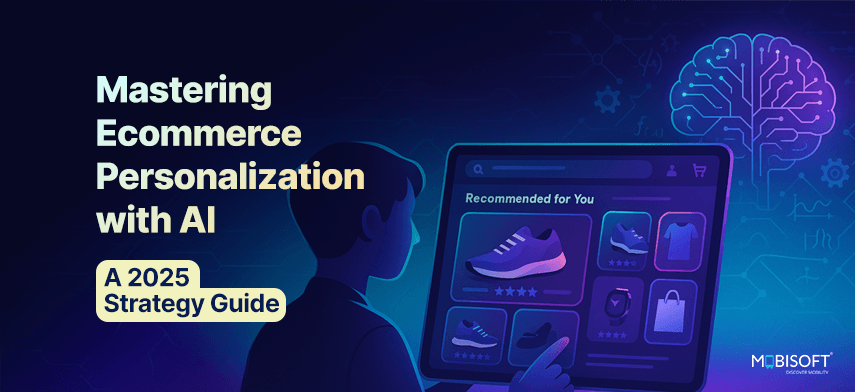
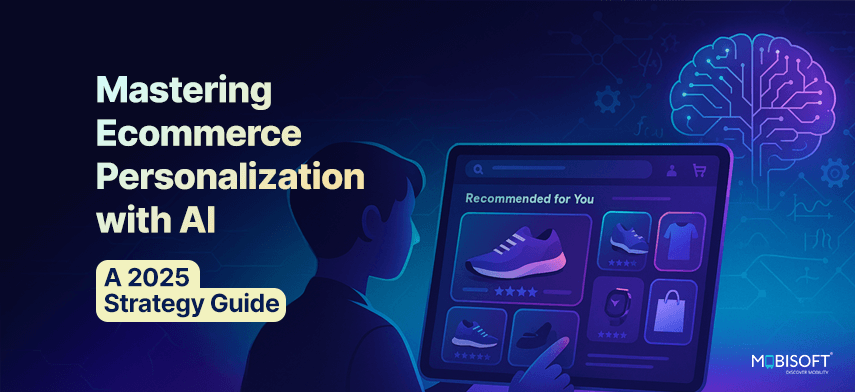
Mastering Ecommerce Personalization with AI: A 2025 Strategy Guide
In the past few years, online shopping has experienced a phenomenal transformation. Not only has it gotten faster and simpler, but also been filled with an unlimited number of choices. With this transformation, customer expectations have gone sky-high as well. Today’s consumers demand not only smooth but personalized and quick convenience. They demand this high level of service at each step of their experience.
To meet these escalating demands, top e-commerce players are adopting artificial intelligence services. As part of the evolving ecommerce personalization and AI ecommerce movement, AI is no longer just a behind-the-scenes tool; it’s transforming how these players interact with customers, making the interactions intelligent and rich.
With the force of AI, businesses can customize ecommerce personalization experiences in real time. They can react to customer requirements at the moment while streamlining their operations. This creates increasingly intimate relations with customers that stretch far beyond a single transaction. When done correctly, AI creates trust and drives long-term loyalty.
In the pages that follow, you’ll see how artificial intelligence for ecommerce makes customer-focused shopping easy. You’ll see real-world examples, actionable advice, and open business opportunities. The idea is straightforward: the more your customers feel noticed and appreciated, the more they’ll be loyal to you.
Why Customer-Centricity Matters in E-commerce
The key to successful e-commerce lies in a very simple principle. Your business has to be customer-centric. Whatever you do, starting from design to delivery, has to be for them, about them, and around them. This means grasping the true desires of your customers. This entails observing their buying behavior, the issues they experience, and the things that draw them back time and again.
When you do this, you begin building personalized ecommerce experiences. Your store is more memorable and creates stronger emotional connections. In a crowded online marketplace, that’s how you differentiate. Customer-focused brands are likely to experience increased retention and repeat business. Happy customers are likely to spread the word, creating positive word-of-mouth and reviews. Over the long term, it becomes one of the best growth weapons.
The Role of AI in Building Customer-Centric Strategies
Ecommerce metrics improved by AI personalization
But important. AI makes it possible at scale. By examining massive volumes of customer interactions in real time, AI‑powered analytics allow brands to truly comprehend what drives certain behavior. Every click, AI product search, purchase, and even delay is translated into insight.
Such AI-powered ecommerce analytics enable brands to move beyond one-size-fits-all messaging. AI is the answer to creating customized experiences that react to users’ needs in real-time. From optimizing an email campaign to ecommerce automation like personalizing homepage banners or suggesting the ideal product, AI makes every interaction relevant and personal.
The reward? Increased customer trust and loyalty. When customers are heard, they tend to stick around, return, and recommend.
Here’s how customer‑centric ecommerce AI helps brands become truly customer-centric:
Deepen Customer Understanding
AI monitors and reports on customers in real-time. It identifies what a user likes, how they shop, and what influences their decisions.
Deliver Hyper-personalized Experiences
AI adapts experiences as individuals interact. It changes content, presents, and AI‑driven product recommendations for online stores dynamically, so each experience is unique.
Build Lasting Relationships
Through ongoing learning from every encounter, AI allows brands to speak more genuinely. This develops memories that fuel loyalty over time.
Advanced technologies like AI-driven omnichannel personalization help deliver tailored experiences across web, mobile, and offline channels.
Key AI Applications for Customer-Centric E-commerce
AI improves all stages of the customer journey. AI ecommerce platforms vs manual solutions show a significant edge in efficiency and scale. AI helps from the point where a customer starts to shop, even before they make a purchase. Online shops use AI to predict the requirements of their customers. They also use it to answer quickly and deliver more customized experiences. Let us see the key uses of AI that allow brands to focus on their customer.
Hyper-Personalized Recommendations
AI-driven product recommendations are far more sophisticated than “customers also bought.” These engines scan browsing patterns, buying histories, and tastes to make highly relevant suggestions.
Example:
Amazon attributes its recommendation engine with producing approximately 35% of its revenues, which is dynamically updated in real time based on user behavior.
Benefit:
Individuals feel understood and heard. This enhances both the chances of purchase and satisfaction on the part of customers. This approach aligns perfectly with AI personalization software pricing models that scale with growing customer needs.
Learn more about how AI product recommendations in ecommerce enhance the customer journey and drive conversions.
Dynamic Content & Landing Pages
Static sites are a thing of the past. Now, AI ecommerce tools can respond in real-time. AI enables banner and product catalog, promotion and landing page, and anything else you can think of , personalization based on a visitor’s behavior during a session.
Example:
Tools like Wisepops and Nosto allow brands to do this with ease. They deliver personalized content based on an individual’s location, device, and history with the store.
Why does it matter?
When audiences see content that’s pertinent to them, they’re more likely to spend, click through more, and buy.
AI-Powered Customer Support
Customers today want answers immediately. AI chatbots for ecommerce and virtual assistants can do that, anywhere, anytime. These bots employ natural language processing (NLP) to comprehend questions and provide human-like answers. Sophisticated AI can notice that a customer is struggling or is about to abandon a cart and step in.
Proactive Support
AI chatbots for ecommerce customer service can trigger discount offers, share content, or pass the conversation to a live agent using sentiment analysis.
Continuous Learning
They learn to improve with each use, gaining knowledge from user behavior and feedback and becoming more intelligent and useful day by day.
Predictive Analytics & Proactive Engagement
AI enables online shops to stay ahead of the game when it comes to customer action. It uses predictive analytics, analyzing browsing history, previous purchases, and user activity. Based on this, brands can anticipate what a consumer will require next.
This enables AI ecommerce strategies to be proactive. They can offer customized promotions, send useful reminders, or alter product display ,all without a customer ever making a request.
Cart Abandonment
If a buyer abandons the cart, AI does not fall behind. It sends personalized follow-up messages or promotions. The reminders encourage users to return and finalize the purchase. Implementing abandoned cart recovery in such a way boosts conversion and gets lost sales back on track.
Inventory Management
AI helps retailers to better manage their stocks. Based on historical sales data and current customer behavior, it predicts demand patterns. This enables AI inventory optimization, helping companies avoid stockouts as well as overstocking. So, they can reduce expenses and offer best-sellers when customers are looking for them.
Visual & Voice Search
AI-powered product search tools are transforming how consumers shop online. They no longer need to type detailed descriptions.
Visual Search
Shoppers can take a picture of something they spotted. AI looks at the image in an instant and shows them similar products from the store. This accelerates product discovery and makes it more engaging.
Voice Search
Voice search enables users to speak naturally. You can tell the platform, “Show me black shoes under $100,” and it gets your command. It responds immediately with correct results.
Example:
This is a handy feature that makes it extremely easy to search, particularly for mobile users and smart device shoppers.
Dynamic Pricing & Inventory Optimization
AI tracks competitor prices, demand fluctuations, and market signals in real time. Based on this, it executes dynamic pricing AI adjustments instantly.
Example:
Amazon employs a dynamic pricing engine that processes thousands of data points every second. The platform dynamically changes prices instantly to remain competitive as well as safeguard profit margins. The brands employing this approach can engage more consumers and sell more strategically.
Better Inventory
Planning AI also facilitates easy management of stock by businesses. It anticipates what will be needed and suggests how much to hold. This avoids storage fees for waste and maintains the best-selling items in stock. Customers receive what they require, and businesses run more efficiently, one of the strongest benefits of AI in ecommerce today.