Sustainable Event Software for CSRD & Waste Management
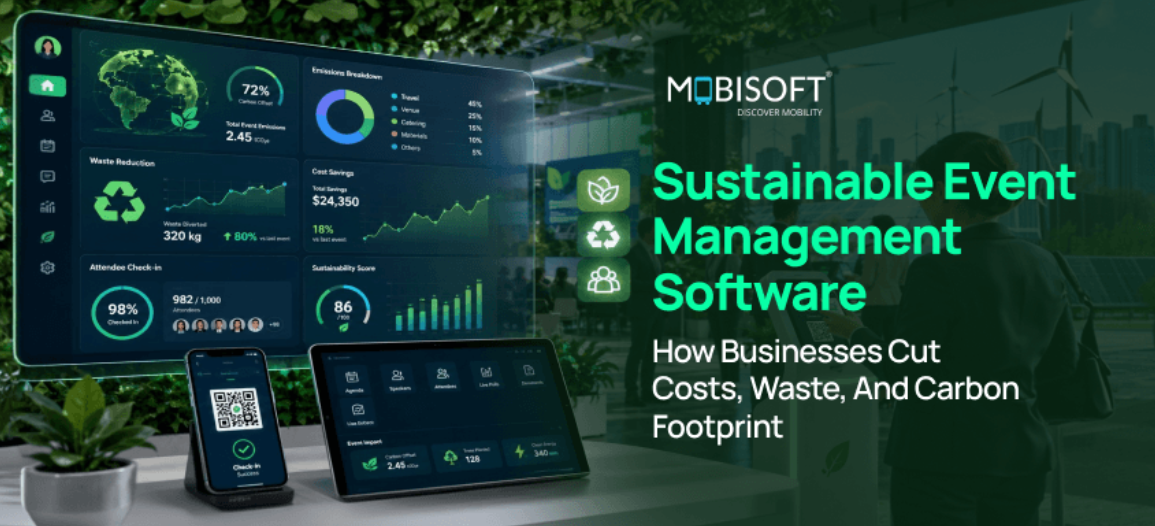
Let's consider an average public event conducted over three days, with 8,000 attendees, and simple handouts on every chair. In each of these events, attendees alone generate around ten metric tonnes of waste, from paper and packaging alone. And this is even before the first generator fires up or the catering team tosses out leftover food.
Event management has always operated at a resource-heavy scale. But what sets 2026 apart is the emergence of software designed specifically to monitor, minimize, and report on resource use, from event transportation software that tracks attendee travel emissions to energy monitoring tools that measure venue consumption in real time alongside a regulatory landscape that has shifted measurement from being a luxury to a necessity in contracts.
The EU Corporate Sustainability Reporting Directive is now fully in force. Sponsors and enterprise clients are requesting verified Scope 3 emissions data as a standard part of their procurement process. And the Events Industry Council estimates that deploying sustainable event technology correctly can produce a 20 to 30 percent reduction in costs and a 60 to 80 percent reduction in waste.
There is no ideology involved. This calls only for software applications that capture data, automate reporting, optimise consumption, and generate the verified outputs that today's auditors, ESG-minded sponsors, and environmentally conscious customers demand.
Here are the software types that enable such a result, what they do, how they're deployed, what their measurable impact is, and what the top players in each space will be in 2026.
The Business Case: Why Sustainable Event Software Pays for Itself
The conversation around sustainable event software has moved. It's no longer primarily about environmental responsibility. It's about operational efficiency that also produces sustainability outcomes, which is a fundamentally easier conversation to have with a finance director.
Energy efficiency saves money. Waste reduction saves money. Digital materials cost a fraction of print. Hybrid attendance expands reach without proportional cost growth. Green-certified venues consume 20 to 30 percent less energy and water than conventional ones. A $50,000 investment in reusable cup infrastructure saves $10,000 per event in disposables and pays for itself within five events.