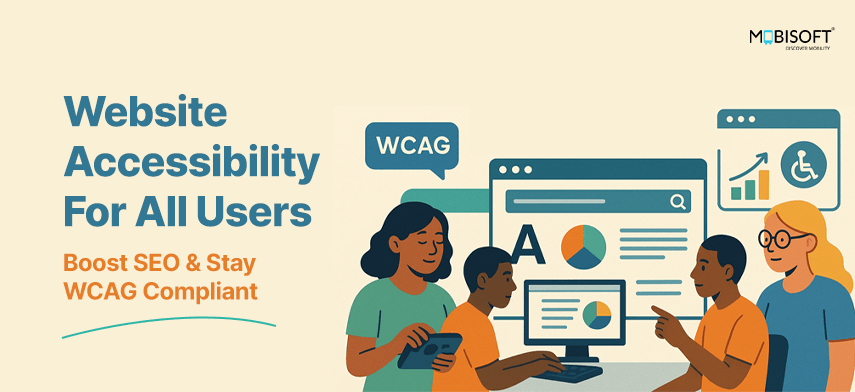
Website Accessibility for All Users: Boost SEO & Stay WCAG Compliant
Pop quiz: what do websites and public buildings have in common?
If you said “sometimes confusing signage,” you’re not wrong. But what they should have in common is website accessibility for everyone.
We’re talking about a fundamental human right here, the ability for everyone to use the internet, regardless of physical or cognitive ability. That includes browsing, shopping, booking a dentist appointment, or learning how to juggle flaming torches (we do not endorse this).
Let’s dig deep into why WCAG compliance isn’t just some corporate checkbox. It’s about making your website usable for all. Yes, all. (Even that cousin who still uses Internet Explorer.) Businesses can achieve this with the right custom web development services.
What Web Accessibility Really Means
Web accessibility standards are the practice of designing and developing websites that people with disabilities can use. That includes users who:
- Are blind or visually impaired
- Are deaf or hard of hearing
- Have motor impairments
- Have cognitive or learning disabilities
It also includes those in temporary or situational scenarios. Holding a baby in one arm and using a phone with the other? That’s situational disability. Recovering from surgery and unable to use a mouse? That’s temporary.
Accessibility is about making sure everyone can use your site, and following accessible web design principles helps you get there.
Many companies rely on enterprise software development solutions to integrate accessibility from the ground up.
Who Benefits from Accessible Websites?
Let’s get this straight: accessible website benefits extend far beyond people with disabilities.
Here’s a list of folks who will love you for having an accessible site:
-Older adults with declining vision, hearing, or motor control
- People in noisy environments (they’ll thank you for video captions)
- Users with slow internet connections
- Mobile users trying to navigate with their thumbs and patience
Real-life scenario: Ever tried clicking a tiny checkbox on a mobile screen in the back of a bumpy cab ride? Now imagine doing that with limited motor skills every single day.
Inclusive design for websites means thoughtful design. You future-proof your website while showing that you care.
Partnering with the right digital transformation consulting experts helps scale accessibility for long-term impact.
The Legal Side: Avoiding Digital Courtrooms
No one wants to be sued because their contact form can’t be used with a keyboard.
Unfortunately, lawsuits related to inaccessible websites are on the rise. In the U.S., the ADA website accessibility law has been interpreted to apply to websites. Other countries have their own website accessibility standards, including:
- UK: Equality Act 2010
- EU: European Accessibility Act
- India: Rights of Persons with Disabilities Act
- Canada: AODA (Accessibility for Ontarians with Disabilities Act)
Let’s break this down:
- Big corporations? Obvious targets.
- Small businesses? Increasingly being pulled in too.
Accessibility is about legal armor. Skip it, and you’re risking fines, lawsuits, and bad PR.
Still think it’s overkill? Domino’s Pizza went to the Supreme Court over its inaccessible website. Yes, pizza got sued.
A proactive approach with accessible UI/UX design services can help mitigate such risks.
Accessibility and Business: Why It Pays
Let’s talk about money, because your CFO is now listening.
Reach More Customers
Over a billion people globally have some form of disability. If your site isn’t accessible, you’re telling a huge market: “Go away.”
Would you put up a “No Entry” sign on your shop’s front door? No? Then why block customers online with poor website accessibility features?
Boost Brand Loyalty
When you design for everyone, you signal that you care. People notice. And they stick around.
Fun fact: 90% of customers say they’re more loyal to brands that show social responsibility.
Increase Conversions
Accessible web design often improves usability across the board. Cleaner layouts, better contrast, and readable fonts help everyone convert.
Reduce Customer Support Load
When your site is easy to use, fewer people get frustrated and reach out for help. That means fewer angry emails that begin with “WHY IS THIS SO HARD?”
The impact of UX on conversion rates proves accessibility is directly linked to business growth.
Read More: Website Accessibility for All Users: Boost SEO & Stay WCAG Compliant