Factory Method 패턴
객체를 만들 때 new를 직접 쓰면 어떤 문제가 생길까. 코드 곳곳에 new Dog(), new Cat(), new Bird()가 흩어져 있다고 생각해보자. 나중에 new Animal()로 바꿔야 한다면? 모든 new를 찾아다녀야 한다.
Factory Method는 객체 생성을 한 곳에 모아두는 패턴이다.
Factory Method 패턴이란
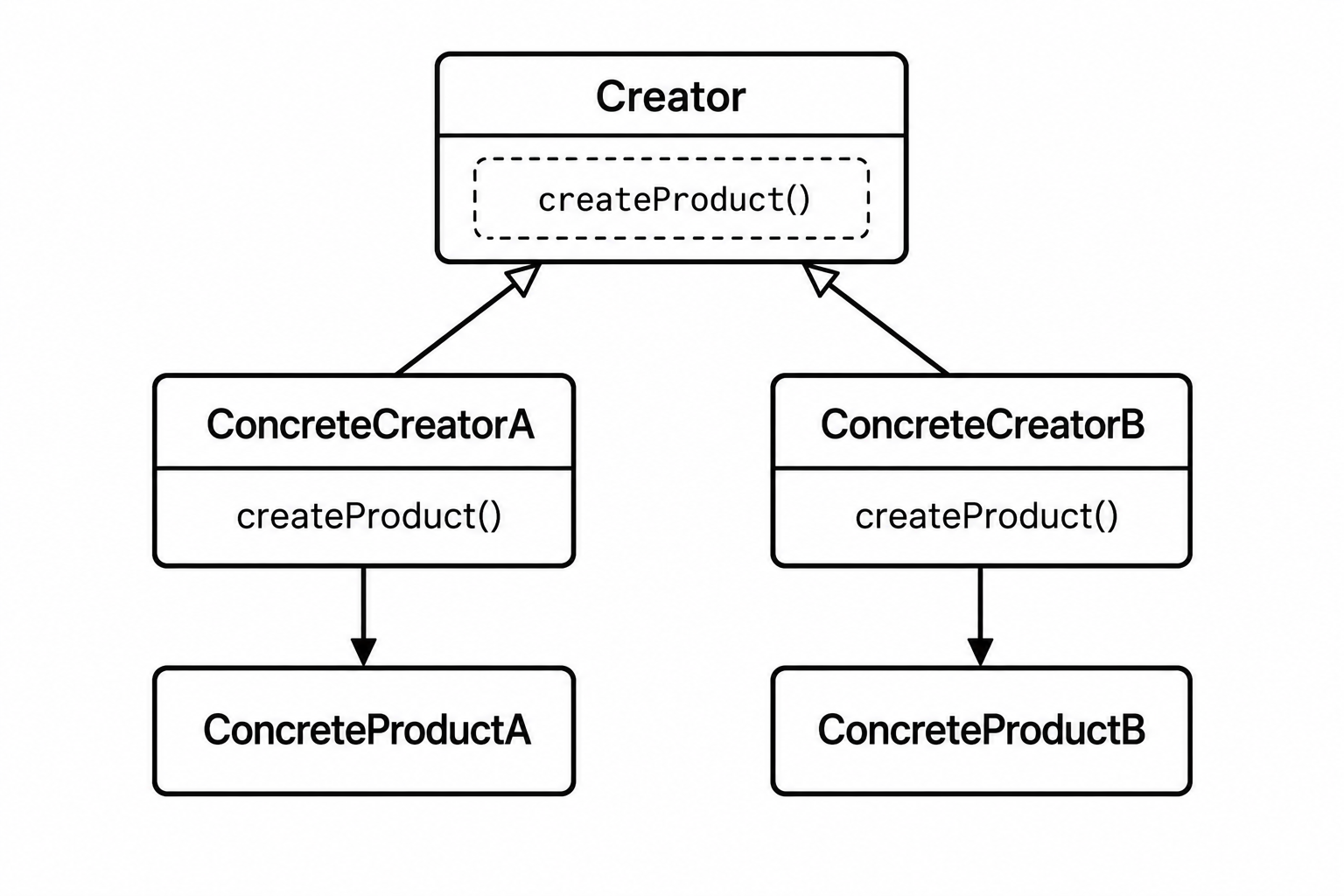
객체를 생성하는 코드를 별도의 메서드(factory method)로 분리하고, 어떤 클래스의 인스턴스를 만들지는 서브클래스가 결정하게 하는 패턴이다.
생성 로직이 바뀌어도 호출하는 쪽 코드는 손댈 필요가 없다.
구조
// 공통 인터페이스
public interface Notification {
    void send(String message);
}

// 구체 구현체들
public class EmailNotification implements Notification {
    @Override
    public void send(String message) {
        System.out.println("[Email] " + message);
    }
}

public class SmsNotification implements Notification {
    @Override
    public void send(String message) {
        System.out.println("[SMS] " + message);
    }
}
// 팩토리 — 생성 로직을 여기에 모음
public class NotificationFactory {
public static Notification create(String type) {
switch (type) {
case "email": return new EmailNotification();
case "sms": return new SmsNotification();
default: throw new IllegalArgumentException("알 수 없는 타입: " + type);
}
}
}// 사용하는 쪽 — new를 직접 쓰지 않음
Notification noti = NotificationFactory.create("email");
noti.send("회원가입을 환영합니다.");나중에 KakaoNotification을 추가할 때 팩토리 안에만 case "kakao":를 추가하면 된다. 호출하는 쪽은 건드리지 않아도 된다.
서브클래스에 위임하는 방식
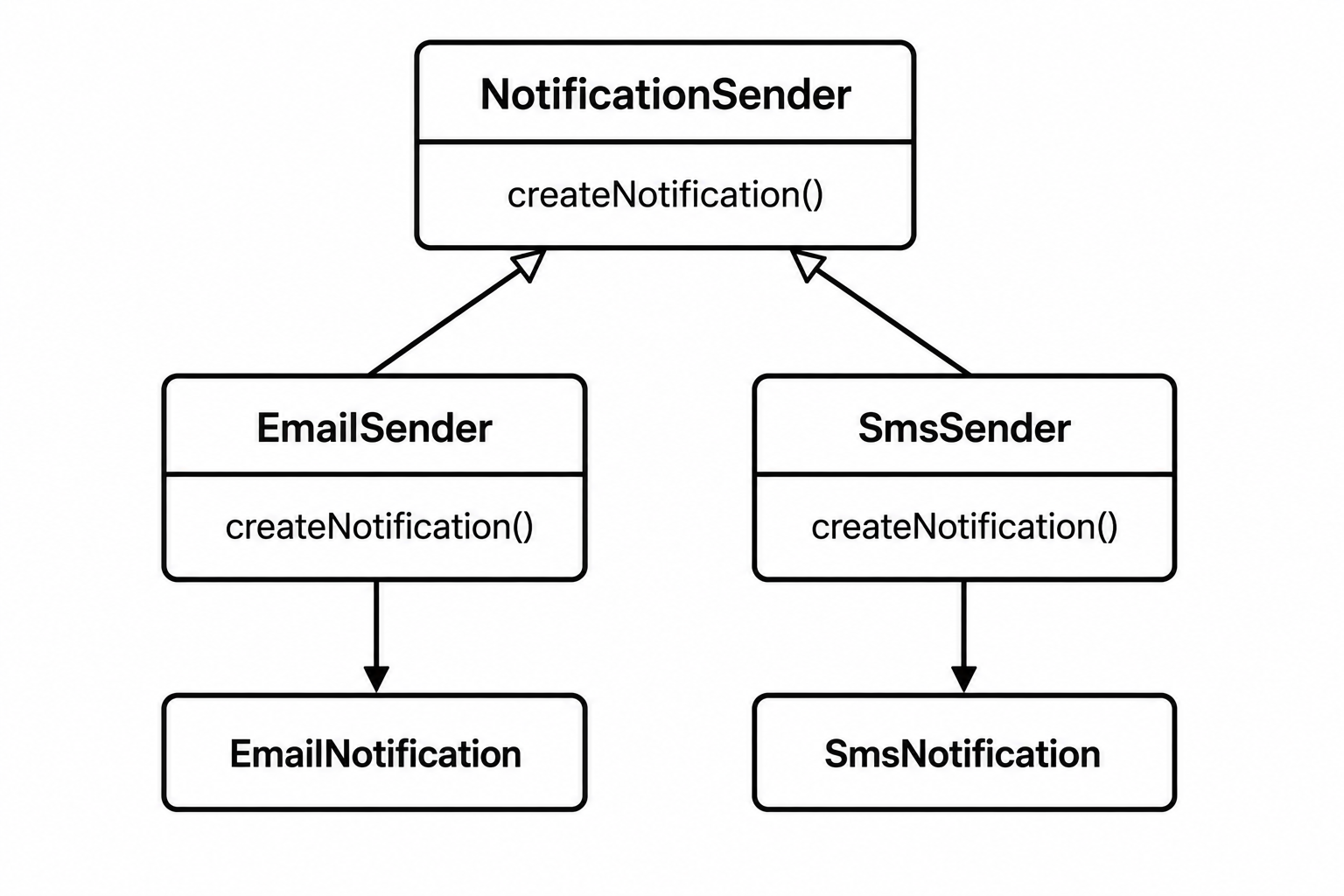
위 예제는 static 팩토리 메서드 방식이다. 패턴의 원형은 추상 클래스와 서브클래스를 활용한다.
// 추상 Creator
public abstract class NotificationSender {
    // 팩토리 메서드 — 서브클래스가 구현
    protected abstract Notification createNotification();

    // 공통 로직은 여기서 처리
    public void notify(String message) {
        Notification noti = createNotification();
        noti.send(message);
    }
}

// 구체 Creator
public class EmailSender extends NotificationSender {
    @Override
    protected Notification createNotification() {
        return new EmailNotification();
    }
}

public class SmsSender extends NotificationSender {
    @Override
    protected Notification createNotification() {
        return new SmsNotification();
    }
}
NotificationSender sender = new EmailSender();
sender.notify("비밀번호가 변경되었습니다.");notify() 메서드는 어떤 Notification이 만들어지는지 신경 쓰지 않는다. 서브클래스가 결정한 객체를 그냥 쓸 뿐이다.
언제 쓰는가
- 어떤 클래스를 생성할지 런타임에 결정해야 할 때
- 생성 로직이 복잡하거나, 여러 곳에서 반복될 때
- 나중에 새로운 타입이 추가될 가능성이 클 때
new를 직접 쓰는 코드가 여러 곳에 퍼지기 시작하면 Factory Method를 고민해볼 시점이다. 생성 책임을 한 곳으로 모으는 것, 그게 이 패턴이 하는 일이다.

<- 개발 공부하는 나