Prototype pattern
개념
Spring 컨테이너를 이용하면 기본적으로 빈(Bean) 객체는 싱글톤(Singleton)으로 관리된다. 이 경우 하나의 객체 인스턴스를 여러 곳에서 공유하게 되어, 객체가 고유한 상태(state)를 가질 수 없다.
만약 각 객체가 별도로 생성되어 독립적인 상태를 가질 수 있도록 하고 싶다면, Prototype 패턴을 적용할 수 있다. Prototype 패턴은 객체를 복제하거나 새로 생성하여 매번 다른 인스턴스를 제공함으로써, 싱글톤과는 반대되는 특성을 가지게 해준다.
여기서 @Scope(prototype) 을 통해서 적용해 볼 수 있다
기본 코드
프로토타입은 기본적으로 아래와 같이 객체 내부에 복제를 하는 코드를 통해서 구현이 가능하다.
public class Circle implements Cloneable {

    int x, y, r;

    public Circle(int x, int y, int r) {
        this.x = x;
        this.y = y;
        this.r = r;
    }

    public Circle createClone() {
        Circle c;
        try {
            c = (Circle) clone();
        } catch (CloneNotSupportedException ex) {
            throw new RuntimeException(ex);
        }
        return c;
    }

    @Override
    public String toString() {
        return "Circle [x=" + x + ", y=" + y + ", r=" + r + "]";
    }

}

  public static void main(String[] args) throws NumberFormatException, IOException {

        Circle c = new Circle(1, 1, 3);
        Circle cloneC = c.createClone();
        System.out.println(c);
        System.out.println(cloneC);
    }
여기서 Cloneable 인터페이스를 구현해서 clone()메서드를 이용할 수 있다.
clone 메서드는 위처럼 필드의 변수를 복사해서, 새로운 Object를 만들어준다.
하지만 clone메서드는 얕은 복사가 일어나므로 Circle클래스에서 가지고 있는 변수가 참조가 되는 경우에는 완전하게 복사가
되지 않는다.
따라서 이러한 경우에는 직접 구현해서 prototype을 구현해야한다.
public class Circle implements Cloneable {

    int x, y, r;

        private List<Integer> points;


    public Circle(int x, int y, List<Integer> points) {
        this.x = x;
        this.y = y;
        this.points = points;
    }

    public Circle createClone() throws CloneNotSupportedException{
        Circle cloned = (Circle) super.clone();
        // 깊은 복사: 참조 타입 필드도 새로 복제
        cloned.points = new ArrayList<>(this.points);
        return cloned;
    }

    @Override
    public String toString() {
        return "Circle [x=" + x + ", y=" + y + ", r=" + r + "]";
    }

}
즉 위처럼 new ArrayList()를 통해서 새로운 List를 반환해서 지정해주면 된다.
이를 통해서 완전한 prototype 패턴을 구현할 수 있다.
why use?
-
new로 생성하는 비용이 크거나 복잡할 때 → 복제해서 빠르게 생성하고 싶을 때
-
각 객체가 독립적인 상태를 가져야 할 때
- 객체를 매번 새로 생성하지 않고 기존 상태를 복제해서 사용하고 싶을 때
Gof Prototype
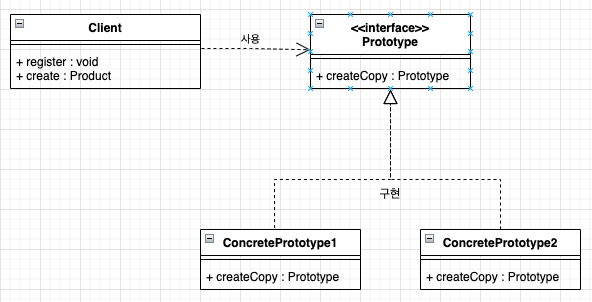
Gof에서의 프로토타입은 아래처럼 구체프로토타입 클래스가 프로토타입 인터페이스를 구현해서 사용 가능하다.
public interface Shape extends Cloneable {
    public Shape clone();
}

public class Circle implements Shape {

    private int x, y;
    private List<Integer> points;

    public Circle(int x, int y, List<Integer> points) {
        this.x = x;
        this.y = y;
        this.points = points;
    }

    @Override
    public Shape clone() {
        List<Integer> copiedPoints = new ArrayList<>(this.points); // 깊은 복사
        return new Circle(this.x, this.y, copiedPoints);
    }

    public void addPoint(int p) {
        points.add(p);
    }

    public void show() {
        System.out.println("x=" + x + ", y=" + y + ", points=" + points);
    }
}
이를 통해, Shape 인터페이스를 구현하는 Circle, Rectangle, Triangle 등 다양한 도형 클래스들이 각자의 clone 메서드를 구현할 수 있으며,
새로운 도형이 추가되더라도 기존 코드를 수정할 필요 없이(OCP, Open-Closed Principle) 기능을 확장할 수 있게 된다.