4 Stages of Fatty Liver Disease Explained: Symptoms, Risks, and Recovery
Introduction
Did you know that fatty liver disease is one of the most common liver disorders today? It silently affects millions of people across the world, often without showing clear symptoms until it’s quite advanced. Imagine your liver as a busy kitchen — when too much fat starts piling up, it slows down every process, leading to bigger problems over time.
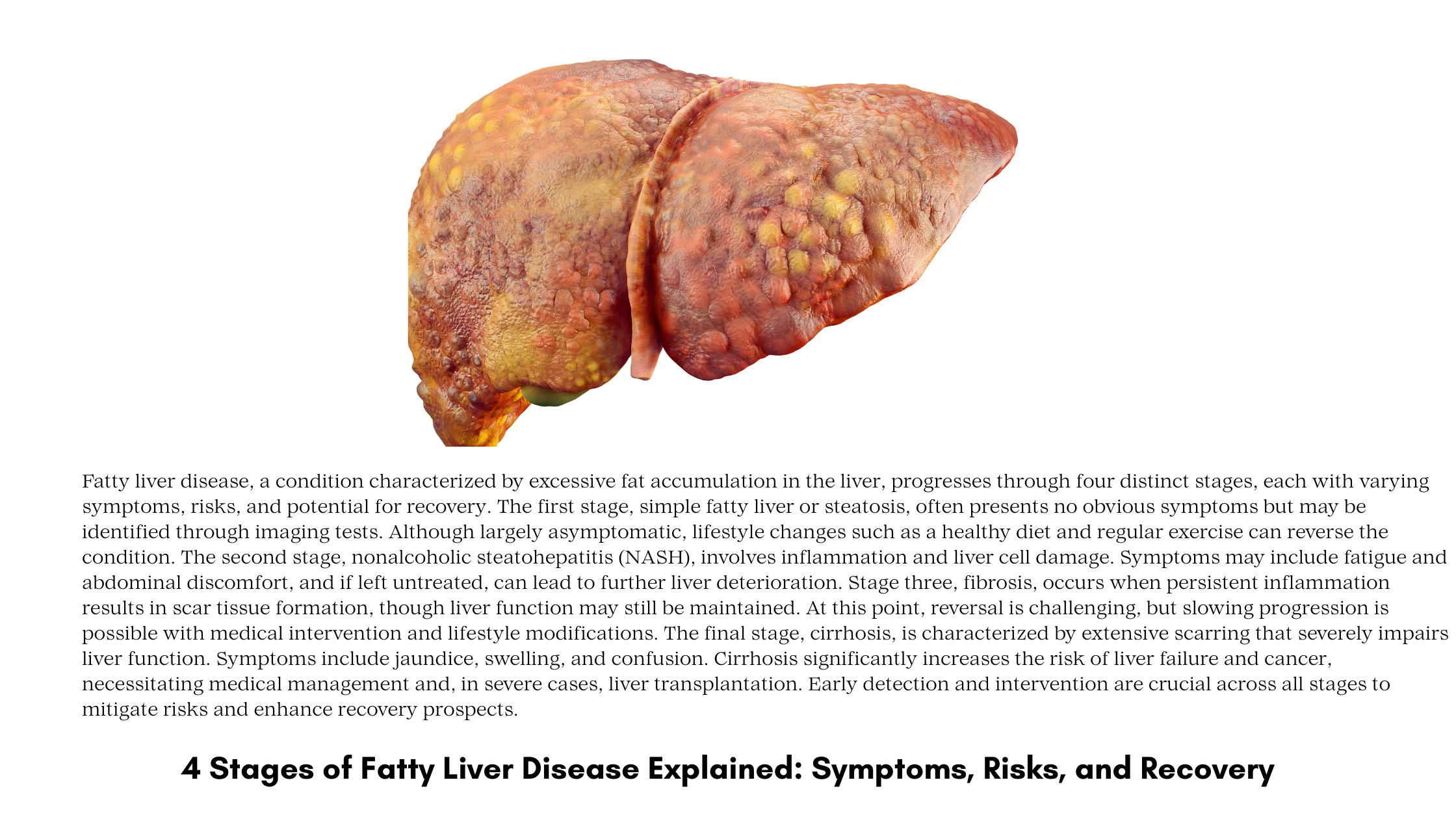
In this article, we’ll break down the 4 stages of fatty liver disease, explain their symptoms, risks, and recovery options, and help you understand when it’s time to consult a liver transplant surgeon in India for advanced care.
1. What Is Fatty Liver Disease?
When liver cells become inflamed and develop excess stored fat, it becomes medically concerning. Liver cells contain some fat because livers store and metabolize some of the body’s fat. Fat becomes problematic when it exceeds 5 to 10 percent of the liver’s weight. When excess fat is stored in the liver, it becomes a fatty liver or steatosis, and in severe cases, it will develop into cirrhosis.
There are two kinds of fatty liver disease:
Alcoholic Fatty Liver Disease (AFLD), which is the result of excessive alcohol intake, and Non-Alcoholic Fatty Liver Disease (NAFLD), which does not result from alcohol consumption, and is most often associated with obesity and diabetes.
- Causes of Fatty Liver Disease
Some of the most common causes are:
Overeating and obesity
Excessive consumption of sugars and highly processed foods
Sedentary lifestyle
Type 2 diabetes
High cholesterol or triglycerides
Medications, like steroids
Your liver will start to metabolize fat and will store more than it can handle, leading to fatty liver. This most often occurs when your diet and lifestyle put excess stress on your liver.
- How Is Fatty Liver Diagnosed?
In most cases, there are no symptoms in the early stages. Fatty liver is most often diagnosed in the following situations:
When there are increased liver enzymes ALT or AST found in routine blood panels
Excess fat is found on ultrasound or MRI
Liver fibrosis and cirrhosis are diagnosed and staged with a FibroScan or liver biopsy.
Seeking medical treatment of an early diagnosed fatty liver is important to prevent loss of liver function and liver cirrhosis ranging from mild to severe.
- Stage 1: Simple Fatty Liver (Steatosis)
This is the first stage of the fatty liver condition where there is the buildup of fat in the liver cells. The good thing is that it can completely disappear with the right changes in your everyday activities!
You may not feel it, but your liver is having a hard time functioning optimally.
Some ways to improve your condition are:
Limit your intake of sugar and drinks with alcohol
Increase your intake of fiber and plant foods
Aim for 30-minute workouts every day.
- Stage 2: Non-Alcoholic Steatohepatitis (NASH)
At this stage, there is more fat in the liver and it is also inflamed. The inflammation and damage to the liver cells promote the growth of fibrous tissue which NASH is also suffering.
Fatigue, minor pains in your belly, and high liver enzymes are mild signs that you should be wary of.
NASH, for your information, can remain unprogressed for a long time without treatment.
- Stage 3: Liver Fibrosis
This is the stage where there is already the formation of fibrous scar tissue in the liver as a result of the liver trying to heal itself of the inflammation. The scar tissue will start to affect the liver’s functioning even though some healthy tissue is still present.
The major signs are:
Abdominal and leg swelling.
Fatigue
Loss of appetite
If you are willing to lose excess weight and eat a healthy liver diet, it is still possible to reverse the scar tissue in the liver.
- Stage 4: Liver Cirrhosis
Cirrhosis is the final phase in the advancement of fatty liver disease. The liver is unable to function because of the extensive scarring. There is no treatment for the damage at this point and it may progress to:
- Jaundice (yellowing of the skin and eyes)
- Ascites (fluid build up in the abdomen)
- Confusion or memory loss (hepatic encephalopathy)
- Internal bleeding
At this point, the patient will almost certainly need to speak to a liver transplant surgeon in India about possible transplant options or other advanced treatments.
- Fatty Liver Disease Symptoms
In the early stages of the disease, there are not many signs, however, there may be.
- Tiredness
- Right upper abdomen pain or fullness
- Unexplained weight loss
- Legs or belly swelling
- Poor appetite, or nausea
- Yellowish skin and eyes (late stage)
- Risk Factors
You are more likely to develop fatty liver disease if you:
- Are overweight or obese
- Have Type 2 diabetes or insulin resistance
- Eat processed or fried foods often
- Drink alcohol frequently
- Have high cholesterol or triglycerides
- Lead a sedentary lifestyle
Your liver is the body’s detox factory. If it is overloaded with fat, toxins can pile up much faster than they are cleared.
- How Fast Does Fatty Liver Progress?
Some people's fatty livers stay the same for years while others suffer from quick fatigue, inflammation, and scarring. Progression depends on the individual.
"In general," we might see the following shifts:
Stage 1 to Stage 2 in 5-10 years,
Stage 2 to Stage 3 in less than 5 years if untreated,
Stage 3 to Cirrhosis in 10-20 years.
With early intervention, the fatty liver disease progression can even be reversed.
- Can Fatty Liver Be Reversed?
Absolutely! Steatosis and NASH’s early stages, along with some weight control, can be reversed with reasonable diet and exercise.
Improvement with liver inflammation can also happen with fibrosis. Cirrhosis, however, needs a transplant.
To actively promote recovery, you should:
Lose 5-10% of your body weight,
Avoid alcohol,
Control diabetes, and
Eat balanced meals with anti-inflammatory properties.
- Diet Tips for Fatty Liver Recovery
The liver enjoys a healthy diet.
Fresh produce
Whole grains like oats and brown rice
Healthy fats such as olive oil, nuts, and seeds
Lean proteins like fish, lentils, and tofu
Avoid:
Fried and processed foods
Sugary drinks
Red meat and refined carbs
For example, “Feed your liver like you’d care for a garden — give it natural, nourishing food and watch it thrive.”
Lifestyle Changes for Liver Health
Your daily habits determine how your liver heals.
Do this:
Exercise regularly (walking, cycling, or yoga)
Get enough sleep
Stay hydrated
Manage stress
Avoid unnecessary medications
Small steps daily can bring massive long-term benefits for your liver and overall health.
When to See a Liver Transplant Surgeon in India
If your liver disease has progressed to advanced fibrosis or cirrhosis, it’s time to consult a liver transplant surgeon in India.
They can assess your condition and suggest whether a liver transplant or advanced therapies like cell-based treatment are needed.
India has several top-notch liver transplant centers offering affordable, world-class care, making it a trusted global destination for liver surgeries.15. Prevention tips and final thoughts
Fatty liver accompanies certain unhealthy lifestyle habits over a long time. The good news is you can reverse the ill effects. Here are the final thoughts.
Maintain a good diet and exercise regularly
Perform liver checks regularly
Stay away from alcohol and processed foods
See a liver transplant surgeon in India for severe conditions
Your liver can heal with time and rest. There are just a few lifestyle changes and the ill effects reverse.
Most common questions
- Can fatty liver disease completely be resolved?
In most cases. Advanced cases require more invasive surgical and medical approaches.
- Is fatty liver disease dangerous?
Yes. It can potentially become cirrhosis, fibrosis, and liver failure. It is therefore important to catch it in the early stages.
- How long does it take to recover from fatty liver?
It depends on the stage and your lifestyle. You should start to see the changes in your liver in about 3 to 6 months, given you are consistent in your lifestyle changes.
- Can a fatty liver lead to liver cancer?
Yes. Advanced fatty liver, in particular NASH and cirrhosis, can lead to a higher risk of developing liver cancer (hepatocellular carcinoma) and having a poor prognosis.
- When should I visit a liver transplant surgeon in India?
You should see a liver transplant surgeon in India when your liver has severe fibrosis, cirrhosis, or has symptoms like jaundice and confusion, or when fluid has built up.
To summarize:
The liver is your responsibility. With the appropriate liver care, awareness and professional advice, you can continue to live a fuller and more complete life.