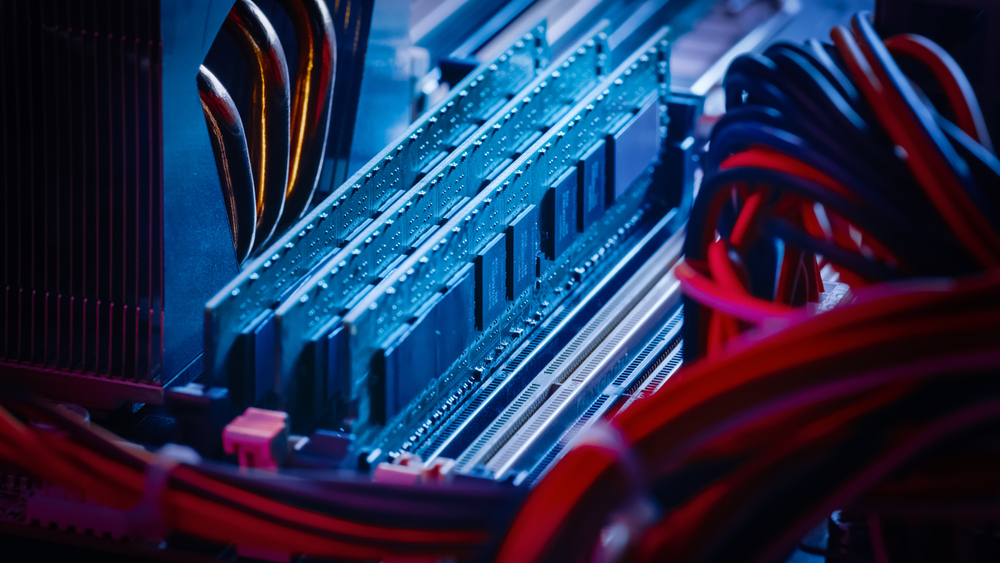
Exploring the Role of Rambus Memory in IT Hardware
In the ever-evolving field of IT hardware, memory plays a vital role in shaping the performance and capability of systems. As digital workloads increase, memory technology must keep pace with demands for speed, efficiency, and scalability. One such innovative memory solution is Rambus Memory, often referred to as RDRAM (Rambus Dynamic Random Access Memory). Although it is not as widely used today as DDR-based memory, Rambus Memory introduced pioneering technologies that have greatly influenced modern computer hardware.
The Origin and Development of Rambus Memory
Rambus Inc., the company behind Rambus Memory, was established in 1990 with a mission to push the boundaries of memory performance. At the time, most systems relied on SDRAM (Synchronous Dynamic RAM), which was limited in terms of data throughput and speed. Recognizing these limitations, Rambus introduced RDRAM—a memory technology that could provide significantly higher bandwidth and lower latency compared to existing solutions.
The late 1990s and early 2000s saw Rambus Memory adopted by major hardware vendors, including Intel, which briefly integrated RDRAM support into its Pentium 4 chipsets. For a time, Rambus Memory seemed poised to become the standard for high-performance computer hardware, especially in gaming systems, workstations, and server applications.
Architecture and Design of Rambus Memory
A Distinctive Approach to Memory Design
Unlike conventional memory architectures, Rambus Memory introduced several innovative features that set it apart. The memory modules, known as RIMMs (Rambus Inline Memory Modules), utilized a narrow but high-speed data bus, typically 16 or 32 bits wide, but capable of operating at extremely high clock speeds.
This architecture enabled pipelined data transfer, allowing multiple memory transactions to be in progress simultaneously. As a result, Rambus Memory offered impressive bandwidth—starting from 600 MB/s and eventually reaching up to 1600 MB/s per channel.
Differential Signaling and Clocking
To ensure signal integrity at high speeds, Rambus adopted differential signaling, a method that uses paired wires to transmit signals with less interference. Additionally, RDRAM used a centralized clocking mechanism that synchronized all components in a system, reducing latency and enabling more predictable performance.
Heat Dissipation and Design Constraints
Due to high-speed operation, Rambus Memory modules often generated more heat than their SDRAM or DDR counterparts. To manage this, RIMMs were equipped with aluminum heat spreaders, a design feature not commonly found on competing memory technologies of the time. While effective, this increased the manufacturing cost and physical complexity of RDRAM modules.
Integration of Rambus Memory into IT Hardware
Desktop and Gaming Systems
During its peak, Rambus Memory was featured in high-performance desktop systems and gaming consoles, including the Sony PlayStation 2. Its low latency and high bandwidth made it ideal for tasks involving 3D rendering, high-resolution textures, and fast data streaming.
Workstations and Servers
In professional environments, such as digital content creation and engineering simulation, computer hardware equipped with RDRAM delivered fast memory access that significantly enhanced productivity. High-end workstations and servers using Rambus technology benefited from reduced load times and faster data manipulation.
Embedded and Networking Applications
Beyond traditional computing, Rambus Memory was also used in networking hardware, including routers and switches. Its efficient architecture allowed for rapid packet processing and reduced bottlenecks in data-intensive environments.
Comparing Rambus Memory to DDR and SDRAM
Performance Advantages
When first introduced, Rambus Memory outperformed DDR and SDRAM in key performance areas. With higher effective clock rates and increased data throughput, RDRAM was particularly attractive for use cases where speed was critical.
For example:
-
SDRAM provided transfer rates of up to 133 MB/s.
-
DDR1 peaked at 266 MB/s.
-
Early RDRAM started at 600 MB/s and scaled up to 1600 MB/s.
These metrics made Rambus a game-changer for early adopters in the IT hardware space.
Cost and Market Limitations
Despite its technical superiority, Rambus Memory faced challenges in widespread adoption due to:
-
Higher manufacturing costs
-
Proprietary licensing fees
-
Thermal management requirements
-
Limited vendor support outside Intel
As DDR memory became more affordable and versatile, it gradually overtook RDRAM in market share, relegating Rambus Memory to niche applications and legacy systems.
Rambus Memory's Influence on Modern Memory Technologies
Pioneering High-Speed Interfaces
The innovations introduced by Rambus Inc., particularly in serial high-speed interfaces, laid the groundwork for later advancements in DDR, GDDR, and HBM memory technologies. Concepts like pipelining, channel-based design, and prefetch buffering are now standard in advanced memory architectures.
Contributions to Graphics and Video Memory
Technologies such as GDDR (Graphics Double Data Rate) and HBM (High Bandwidth Memory) carry forward many of the principles pioneered by RDRAM. High-speed interfaces, thermal solutions, and memory optimization are just some areas where Rambus Memory helped shape the future of computer hardware.
Current Relevance of Rambus Memory in Legacy Systems
Support for Legacy IT Infrastructure
Many organizations still operate legacy systems that rely on Rambus Memory. These systems are commonly found in aerospace, government, and industrial sectors, where hardware lifecycles are extended due to cost, compliance, or specialized use cases.
Importance in the Refurbished IT Market
The growing market for refurbished IT hardware has also helped keep demand for Rambus Memory alive. Businesses and IT professionals often source RDRAM modules to maintain or upgrade older systems, ensuring continued performance without overhauling their entire infrastructure.
Advantages and Disadvantages of Rambus Memory
Key Advantages
-
High bandwidth: Excellent data transfer speeds compared to early DDR modules.
-
Low latency: Optimized access times for performance-sensitive tasks.
-
Scalable design: Channel-based architecture enabled future enhancements.
Key Disadvantages
-
High cost: Manufacturing and licensing expenses limited mass adoption.
-
Thermal issues: Required heat spreaders and advanced cooling solutions.
-
Limited compatibility: Supported by fewer chipsets and motherboards.
These trade-offs played a crucial role in the transition from Rambus Memory to DDR-based alternatives in the mainstream computer hardware market.
Rambus Inc. Today: Expanding Beyond Memory Modules
Focus on IP Licensing
With the decline of RDRAM in consumer hardware, Rambus Inc. pivoted its business model to focus on intellectual property (IP). Today, the company licenses memory interface IP, controller technology, and security solutions used by leading semiconductor manufacturers.
Contributions to Emerging Technologies
Rambus is actively contributing to:
-
DDR5 and LPDDR5 interfaces
-
PCIe 6.0 interconnects
-
GDDR7 graphics memory
-
In-memory computation systems
Through continued R&D, Rambus remains a valuable player in the broader IT hardware ecosystem, even if RDRAM is no longer the focal point.
How Rambus Memory Shaped Industry Standards
Standardization and Interoperability
Rambus played a role in shaping industry standards by collaborating with JEDEC and other industry groups. While proprietary in nature, their innovations inspired changes in how memory modules were validated and tested for performance and reliability.
Legal Battles and Patents
Rambus’s aggressive patent enforcement led to several high-profile lawsuits with memory manufacturers. While controversial, these legal challenges sparked wider discussions around patent licensing, innovation, and open standards in computer hardware development.
Educational Value of Studying Rambus Memory
A Learning Tool for IT Professionals
Understanding the design and limitations of Rambus Memory provides valuable insight into the evolution of memory technologies. It also highlights the delicate balance between technical innovation and market acceptance—a critical lesson for engineers and product developers in the IT hardware space.
Use in Technical Curriculum
Many computer science and engineering programs include Rambus Memory in coursework on memory architecture, bus systems, and performance tuning. This historical context is essential for students aiming to design next-generation computing systems.
The Legacy and Future of Rambus Memory
While Rambus Memory no longer dominates the mainstream memory landscape, its influence continues to shape innovations in high-performance computing, graphics processing, and network infrastructure. The lessons learned from RDRAM's design, deployment, and eventual decline provide a roadmap for understanding both the promise and pitfalls of emerging technologies.
Looking ahead, Rambus Inc. continues to thrive by applying its expertise to new domains, ensuring that the spirit of Rambus Memory lives on in the next generation of IT hardware solutions.
Conclusion:
Rambus Memory remains a significant chapter in the evolution of computer hardware. Its groundbreaking architecture, speed, and efficiency showcased what was possible at a time when memory performance was a major bottleneck. Despite commercial setbacks, Rambus Memory influenced the direction of modern memory technologies and reinforced the importance of pushing innovation beyond conventional limits.
For IT professionals, engineers, and technology enthusiasts, Rambus Memory offers valuable insights into the complex interplay between hardware design, system performance, and market dynamics. As we continue to develop faster and more efficient IT hardware, the contributions of Rambus will remain a foundation for what’s next.