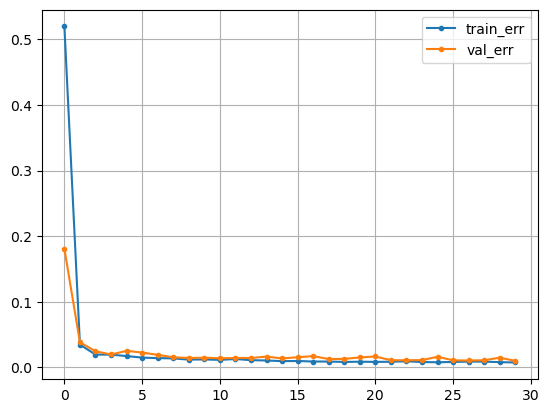
주제: '유통 판매량 예측 및 재고 최적화'
1. 데이터 탐색 및 가설 도출
2. 데이터 전처리 및 base_line_modeling
이 단계를 3일에 걸쳐서 진행합니다.
유통 판매량 예측 및 재고 최적화를수행하는 핵심 대상 상품
- 대상 상품(핵심 상품)
| Product_ID | Product_Code | SubCategory | Category | LeadTime | Price |
|---|---|---|---|---|---|
| 3 | DB001 | Beverage | Drink | 2 | 8 |
| 12 | GA001 | Milk | Food | 3 | 6 |
| 42 | FM001 | Agricultural products | Grocery | 3 | 5 |
44번 매장의 상품번호 3, 12, 42 세가지 항목을 정하여 진행하였습니다.
변수 소개
- oil_price 상위 5개 항목
| Date | WTI_Price | |
|---|---|---|
| 0 | 2014-01-01 | NaN |
| 1 | 2014-01-02 | 95.14 |
| 2 | 2014-01-03 | 93.66 |
| 3 | 2014-01-06 | 93.12 |
| 4 | 2014-01-07 | 93.31 |
- orders 상위 5개 항목
| Date | Store_ID | CustomerCount | |
|---|---|---|---|
| 0 | 2014-01-01 | 25 | 840 |
| 1 | 2014-01-01 | 36 | 487 |
| 2 | 2014-01-02 | 1 | 1875 |
| 3 | 2014-01-02 | 2 | 2122 |
| 4 | 2014-01-02 | 3 | 3350 |
- sales 상위 5개 항목
| Date | Store_ID | Qty | Product_ID | |
|---|---|---|---|---|
| 0 | 2014-01-01 | 1 | 0.0 | 3 |
| 1 | 2014-01-01 | 1 | 0.0 | 5 |
| 2 | 2014-01-01 | 1 | 0.0 | 7 |
| 3 | 2014-01-01 | 1 | 0.0 | 8 |
| 4 | 2014-01-01 | 1 | 0.0 | 10 |
- products 상위 5개 항목
| Product_ID | Product_Code | SubCategory | Category | LeadTime | Price | |
|---|---|---|---|---|---|---|
| 0 | 20 | HG001 | Gardening Tools | Household Goods | 2 | 50 |
| 1 | 27 | HH001 | Home Appliances | Household Goods | 2 | 150 |
| 2 | 16 | HK001 | Kitchen | Household Goods | 2 | 23 |
| 3 | 15 | HK002 | Kitchen | Household Goods | 2 | 41 |
| 4 | 32 | GS001 | Seafood | Grocery | 3 | 34 |
- stores 상위 5개 항목
| Store_ID | City | State | Store_Type | |
|---|---|---|---|---|
| 0 | 1 | Saint Paul | \tMinnesota | 4 |
| 1 | 2 | Saint Paul | \tMinnesota | 4 |
| 2 | 3 | Saint Paul | \tMinnesota | 4 |
| 3 | 4 | Saint Paul | \tMinnesota | 4 |
| 4 | 5 | Oklahoma City | Oklahoma | 4 |
1. 데이터 탐색 및 가설 도출
- 매장(44번)의 대상 상품의 판매량 추이
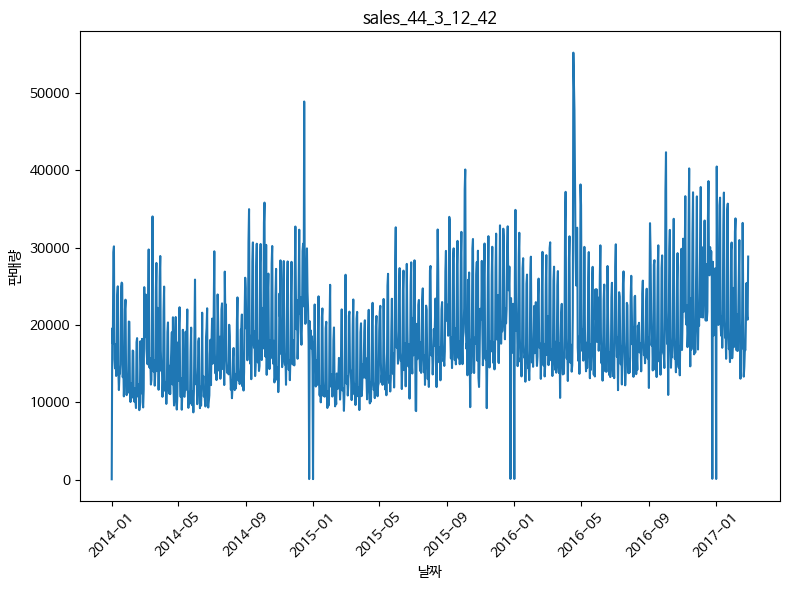
PRODUCT_ID - 3
시계열 패턴 1
-
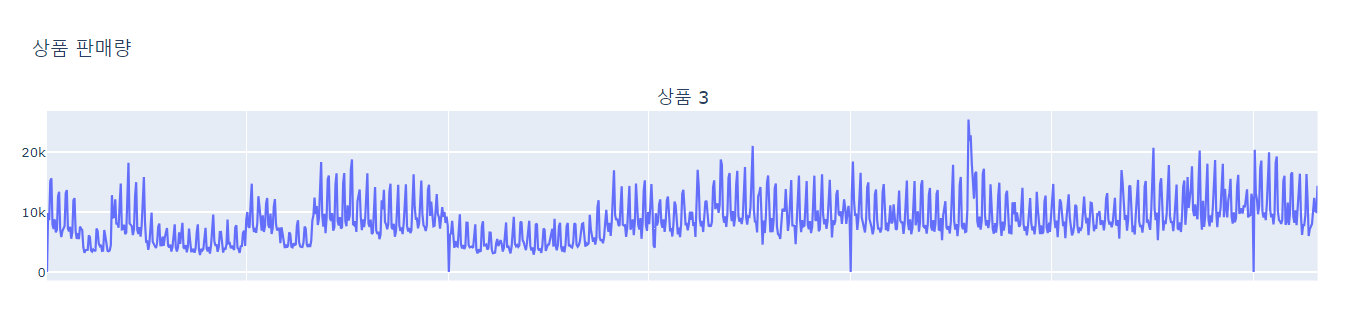
3번 상품의 동일 카테고리의 상품별 판매량 추이
-
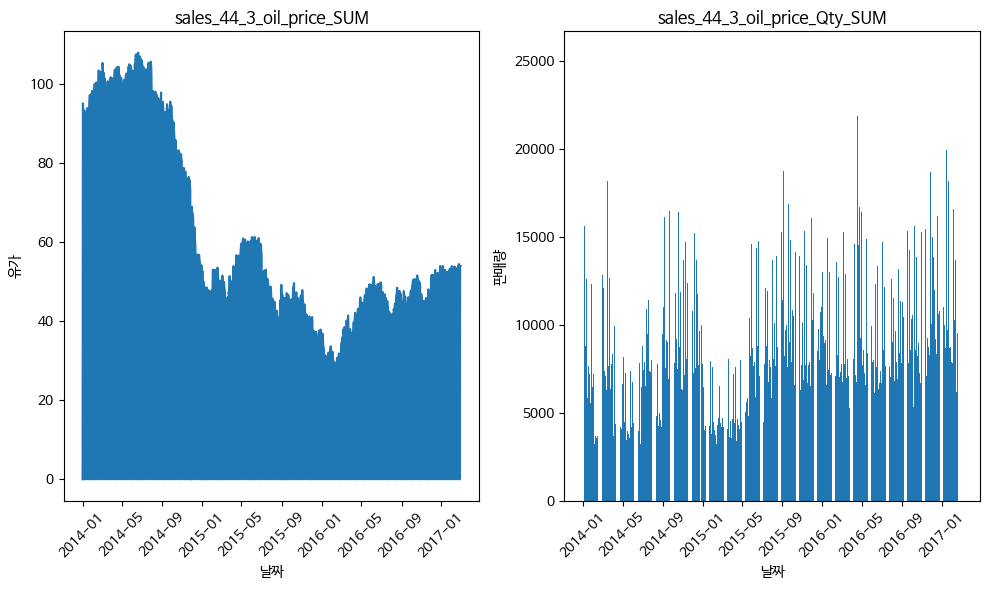
휘발유 가격과 상품 판매량 추이 비교
시계열 패턴 2
-
시계열 데이터 분해 (30일 주기)
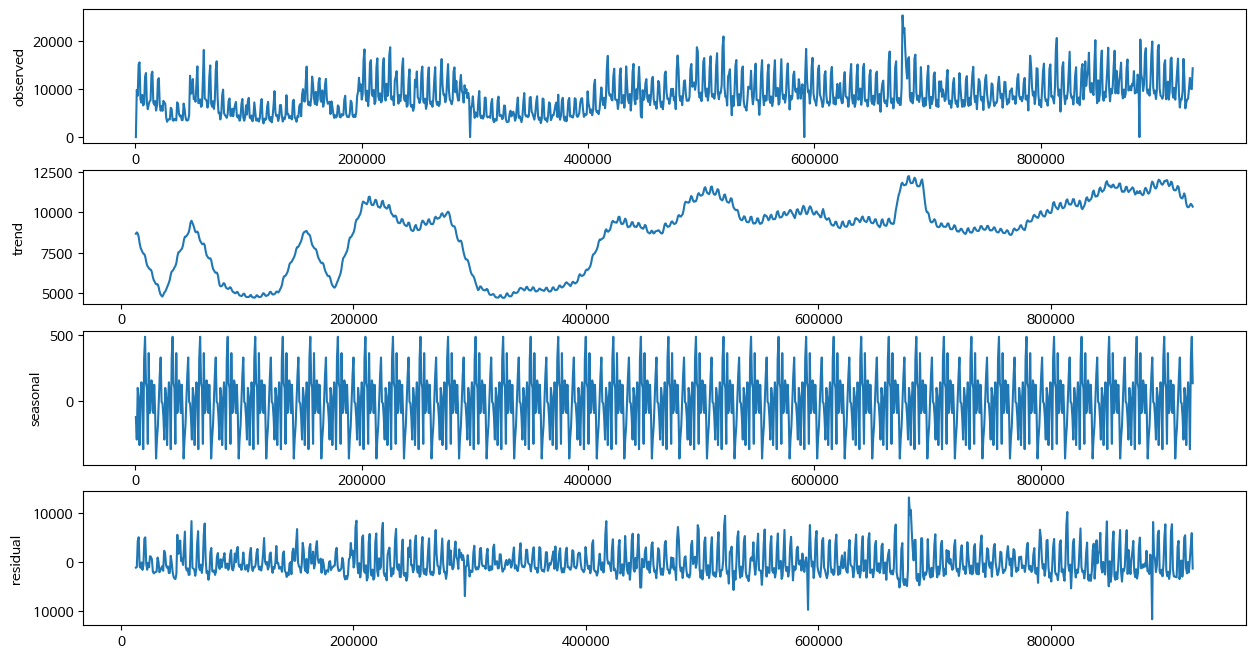
-
시계열 데이터 분해 (365일 주기)
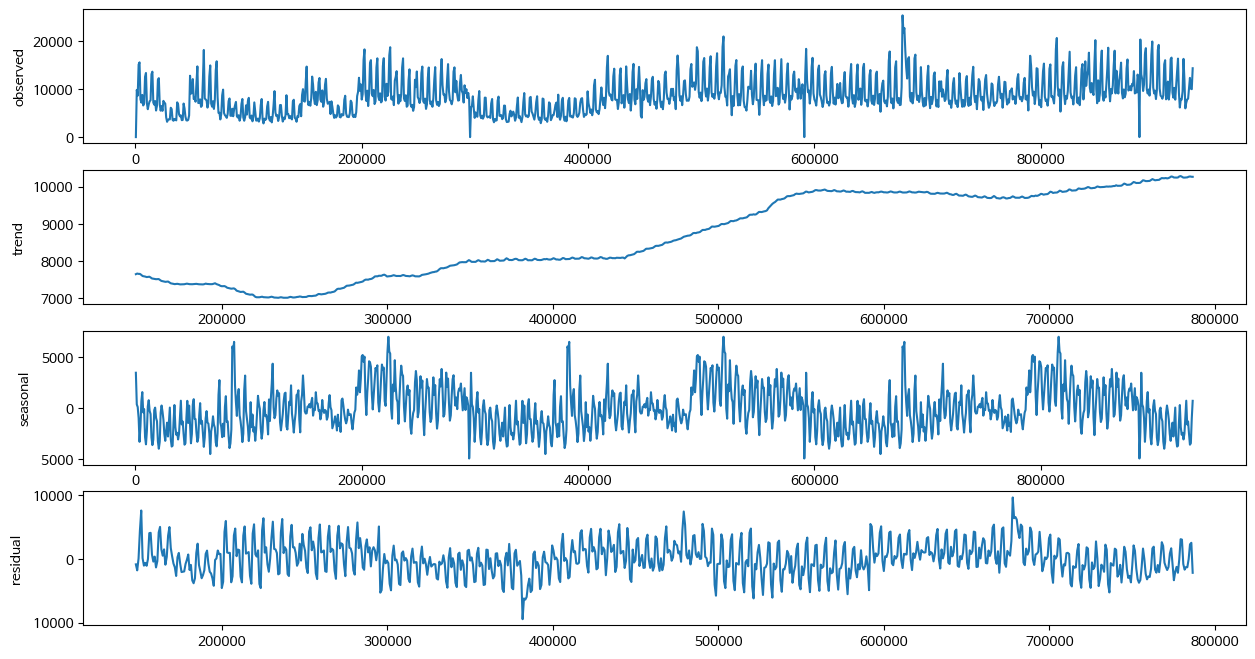
PRODUCT_ID - 12
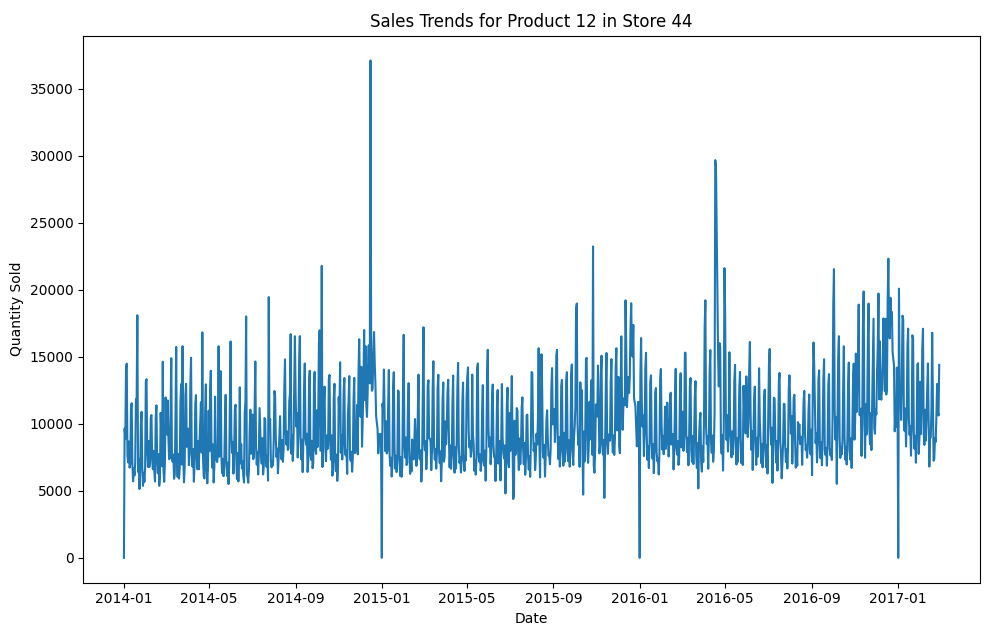
시계열 패턴 1
- 12번 상품의 동일 카테고리의 상품별 판매량 추이
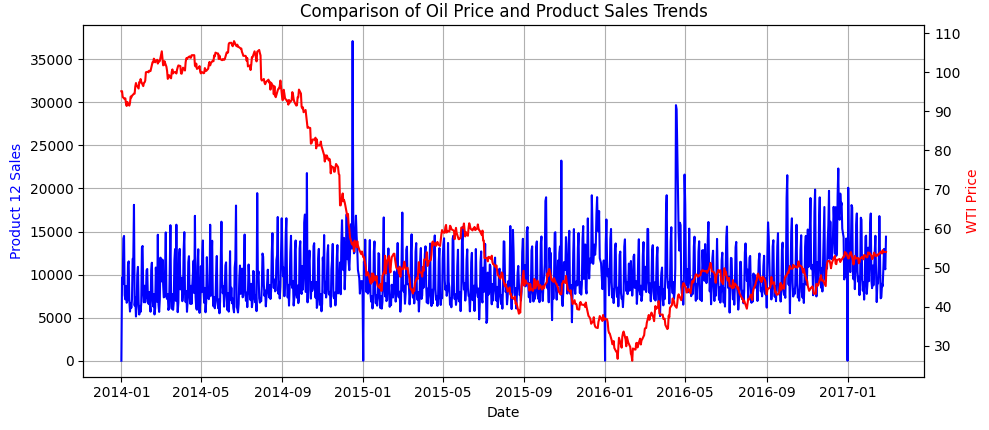
- 휘발유 가격과 상품 판매량 추이 비교
시계열 패턴 2
-
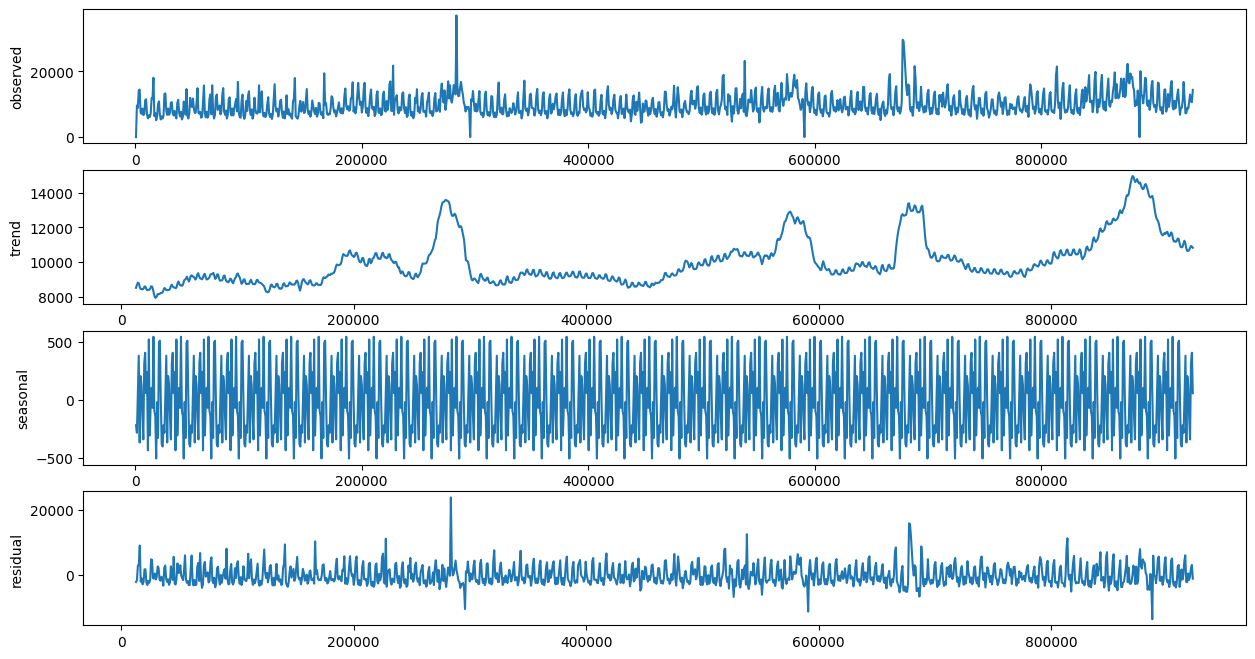
시계열 데이터 분해 (30일 주기)
-
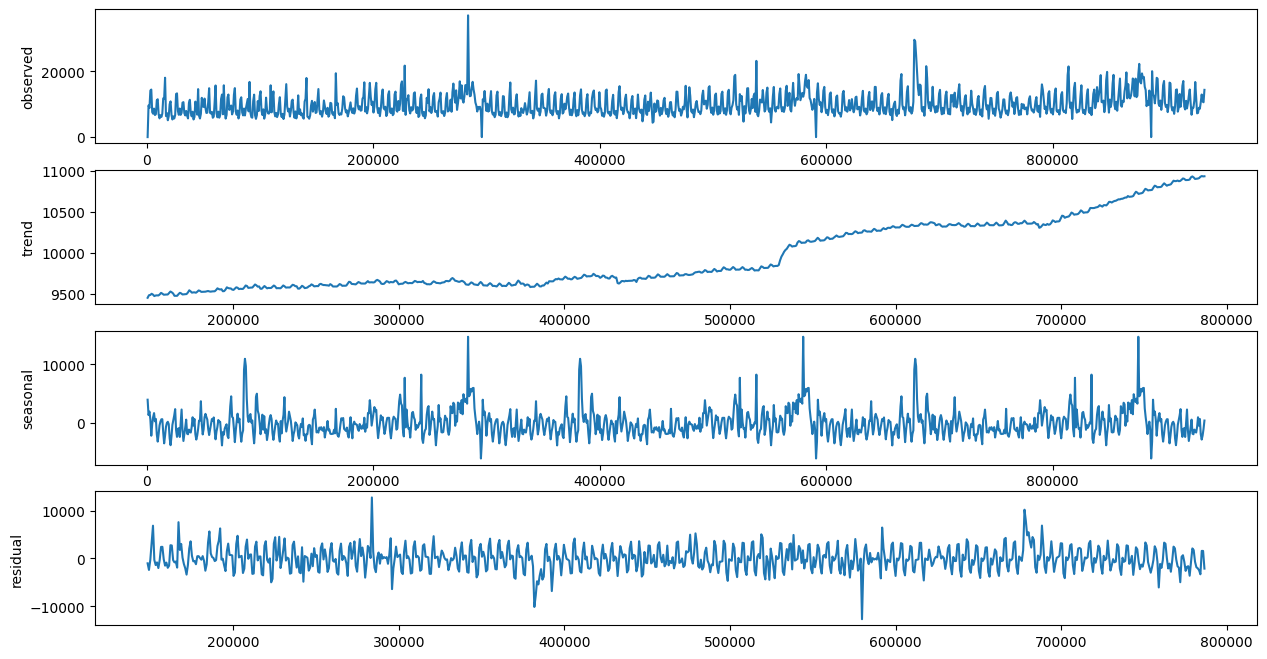
시계열 데이터 분해 (365일 주기)
PRODUCT_ID - 42
시계열 패턴 1
-
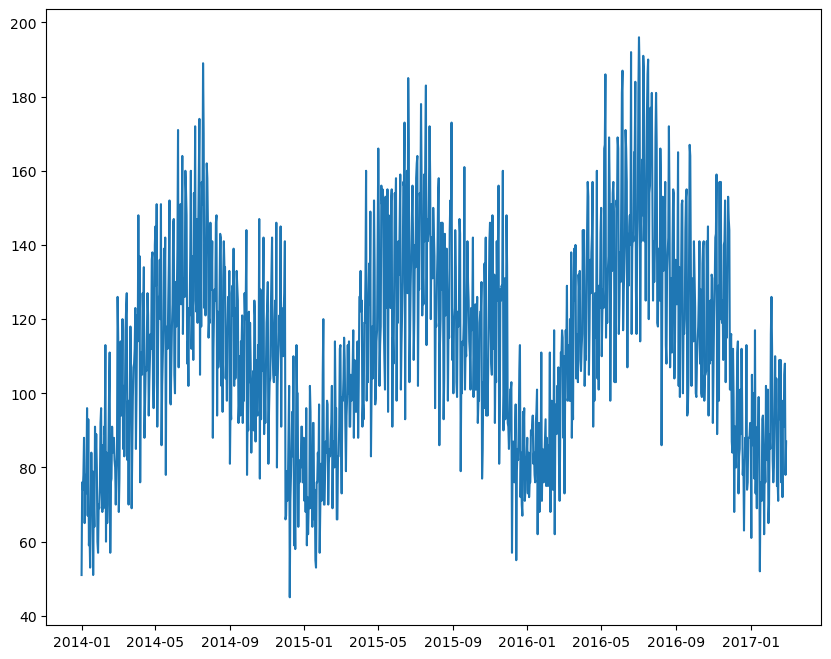
42번 상품의 상품별 판매량 추이
-
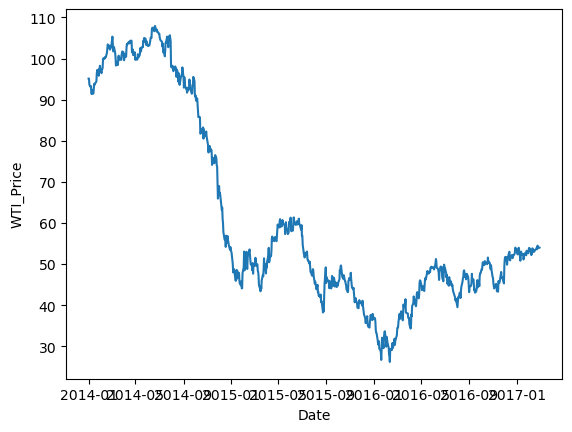
휘발유 가격과 상품 판매량 추이 비교
시계열 패턴 2
-
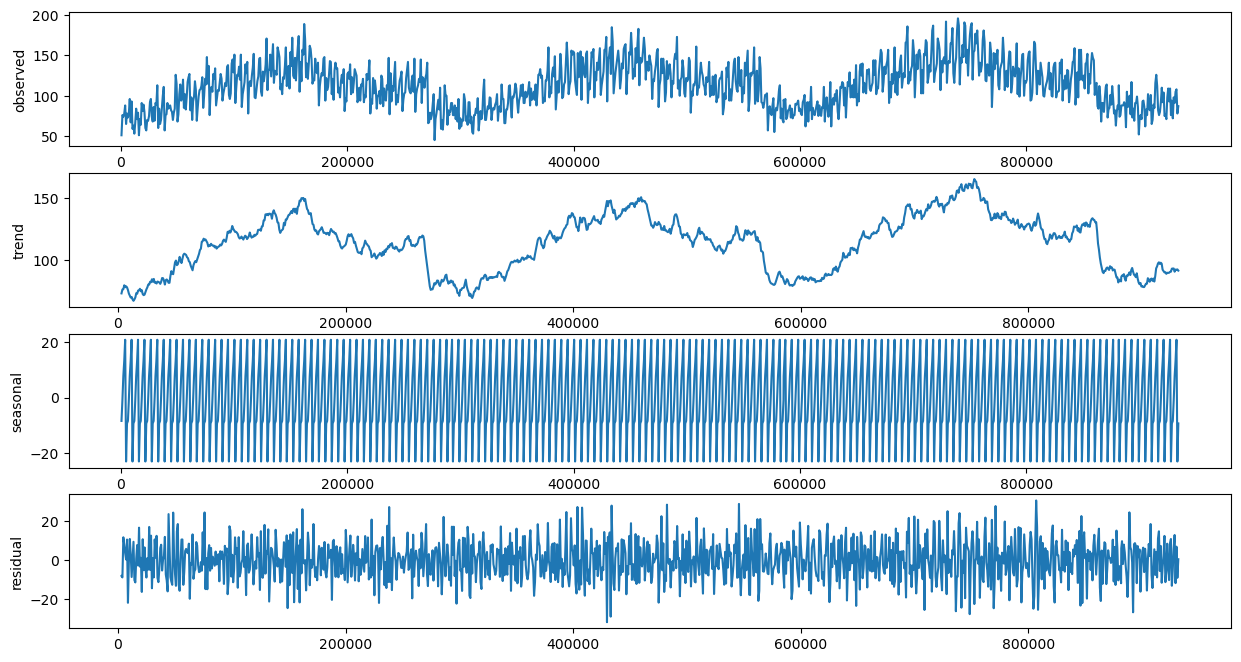
시계열 데이터 분해 (30일 주기)
-
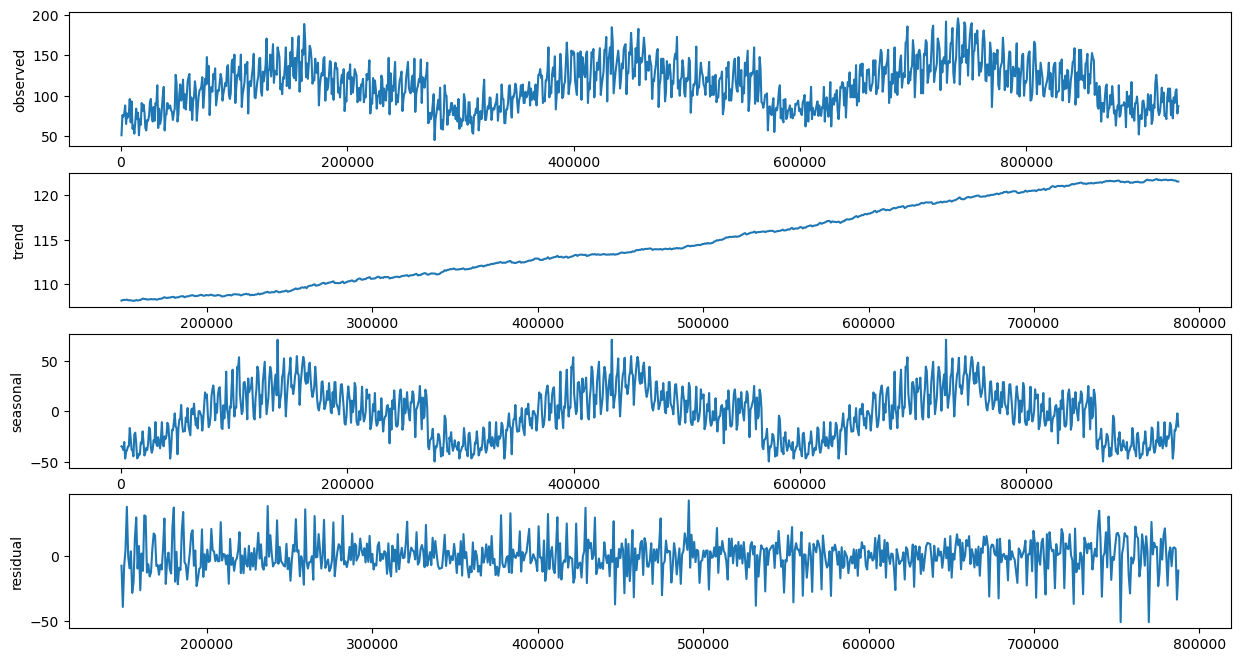
시계열 데이터 분해 (365일 주기)
최종 정리
1) 대상 매장(44), 대상 상품의 판매량 추이
- 1월에 구매량이 적고, 7월에 구매량이 가장 많음
- 7월에 구매량이 가장 많은 이유는 5월 ~ 7월에 수확이 이루어지기 때문에 구매가 많을 것으로 예상함
- 12월에 구매고객수가 제일 많음 => 크리스마스로 인해 가장 많아진 것으로 예상
- 년도별로 판매량이 증가함
2) 대상 상품의 동일 카테고리의 상품별 판매량 추이
- 카테고리로 봤을 때, grocery 카테고리는 44번 매장이 가장 많이 팔림
- 서브카테고리로 봤을 때, 농산물을 파는 곳은 44번 매장 밖에 없었음
- 44번 매장의 구매고객수는 1주일 주기로 많아짐 => 주로 어떤 것들이 팔리나확인
- 44번 매장에는 3, 12번 제품이 제일 많이 팔리고, 42번은 그렇게 많이 팔리지 않음
3) 휘발류 가격과 상품 판매량 추이 비교
- 유가가 비쌀수록 판매량도 감소, 구매고객수는 적게 감소하는 모습을 보임 => 1인당 구매량을 확인해봐야함
- 판매량 / 구매고객수 = 1인당 구매량을 계산 => 유가가 비쌀수록 1인당 구매량이 적어지는 모습이 보임
4) 입고 시간과 위치, 판매량 추이 비교
- 입고시간이 길어지면 판매량이 줄 것이다 => 관계는 없었음
- 입고시간, 도시나 주의 위치와의 관계가 있을까? => 관계 없었음
- 44번 스토어의 입고 시간이 다른 매장보다 더 길다 => 왜 그렇지??
Product_ID (12)
- 12번 항목과 휘발류 가격에는 연관성이 없다.
- 12번 항목의 판매량과 방문 고객 수는 비례한다.
- 12번 항목은 판매 변화량이 균일하게 유지된다.
- 수요일, 금요일, 토요일에 판매량이 증가하는 경향이 있고, 화요일, 목요일, 일요일에는 판매량이 감소하는 경향이 있다.
- 365일 기준으로 봤을때 연도가 지날수록 판매량이 증가하는 추세를 보인다.
- 미국은 12월 기준으로 유제품 판매량이 급증한다. => 에그노그를 먹는 풍습이 있음
- 미국의 2014년 01월 ~ 2017년 02월 까지 스타벅스의 주가상승이 있었음 => 그 만큼 유통업체의 판매량이 증가했음 그 이유는 스타벅스에서 판매하는 메뉴는 유제품 사용이 많기 때문이다.
2. 데이터 전처리 및 base_line_modeling
3번의 모델링 및 비즈니스 평가를 위해 기본 레이어층만 쌓아서 수행할 모델을 생성
PRODUCT_ID - 3
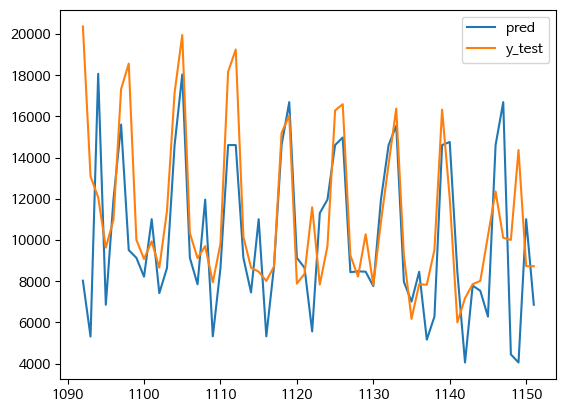
DecisionTreeRegressor
MSE : 3549.151657936104
MAE : 2528.9166666666665
MAPE : 0.221088798045424
R2 Score : 0.09131166924273626
딥러닝
MSE : 3549.151657936104
MAE : 2528.9166666666665
MAPE : 0.221088798045424
R2 Score : 0.09131166924273626
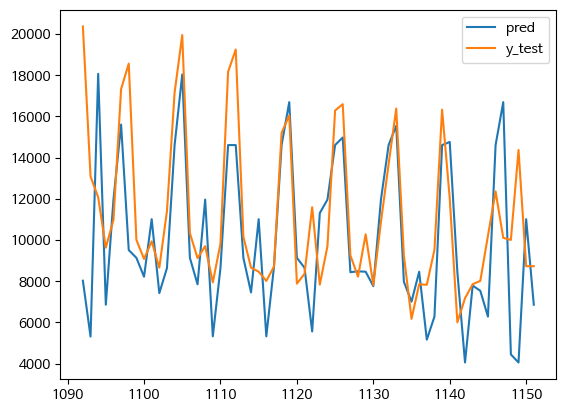
LSTM
- LSTM 모델은 return_sequence=True 을 사용 => 시계열 모델에서 양방향으로 확인을 하는 것임
clear_session()

model_LSTM = Sequential()

model_LSTM.add(LSTM(128, input_shape = (timesteps, n_features),
                    return_sequences = True))
model_LSTM.add(LSTM(64, return_sequences = True))
model_LSTM.add(LSTM(32, return_sequences = True))
model_LSTM.add(LSTM(16))

model_LSTM.add(Dense(8, activation = 'selu'))
model_LSTM.add(Dense(4, activation = 'selu'))
model_LSTM.add(Dense(1))

model_LSTM.compile(optimizer = Adam(learning_rate = 0.001), loss='mse')
model_LSTM.summary()
PRODUCT_ID - 12
딥러닝
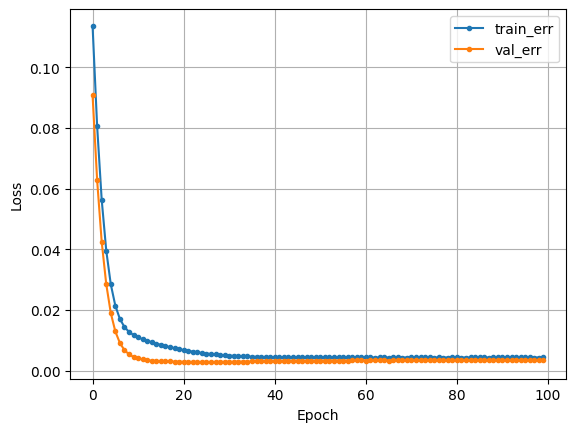
학습 RMSE: 0.06607926449502957
검증 RMSE: 0.05921918568987373
학습 MAE: 0.03685247268320722
검증 MAE: 0.04013581683132576
학습 MAPE: inf
검증 MAPE: inf
학습 R2 점수: 0.5092537047409504
검증 R2 점수: 0.6654690033907339
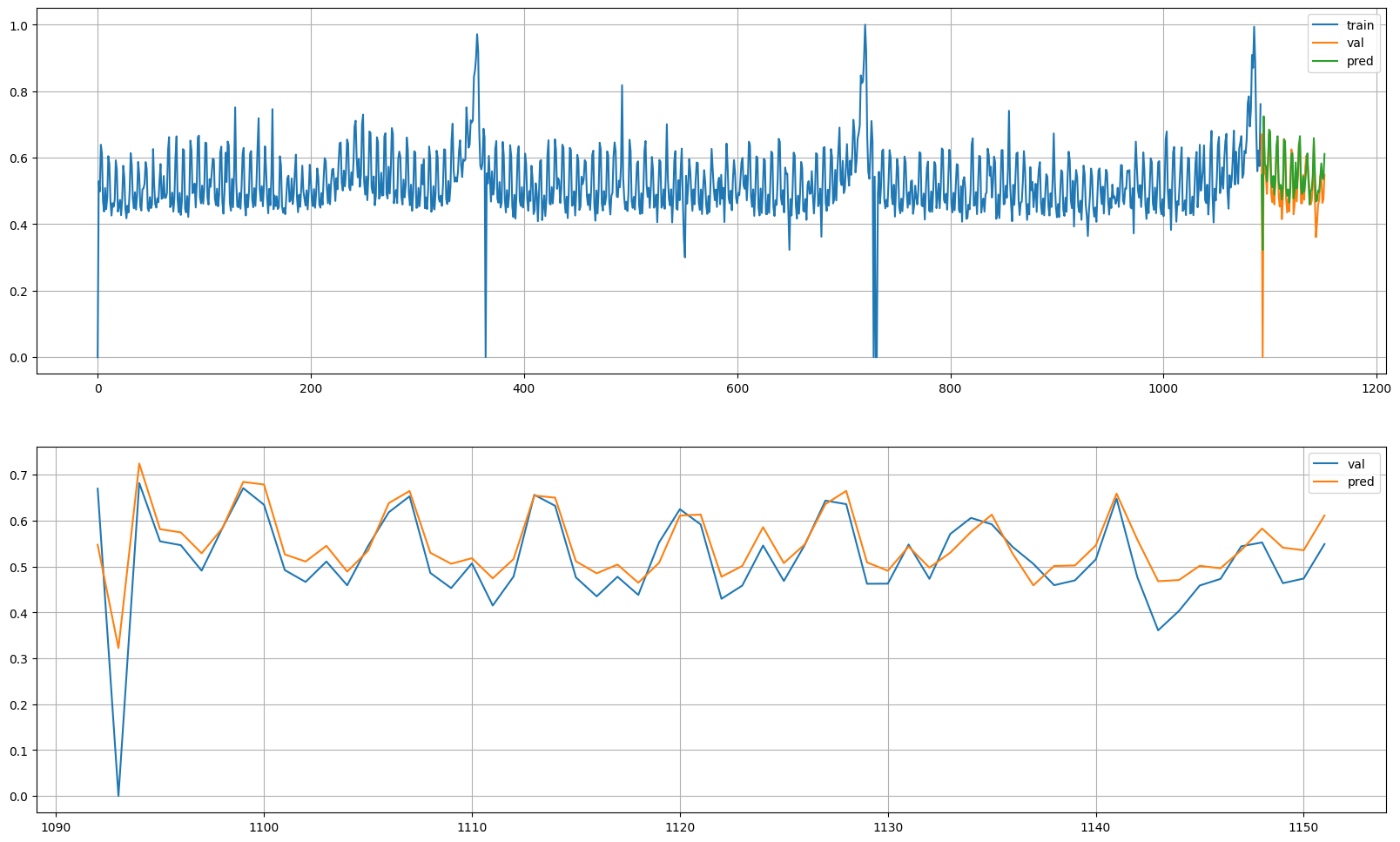
LSTM
- x, y를 분할
x = df_product12_final.drop('target', axis=1)
y = df_product12_final.loc[:, 'target']- 2차원에서 3차원으로 변환함
# 하루를 한 단위로 묶겠다
timesteps = 24
x2, y2 = temporalize(x, y, timesteps)- 3차원 스케일링
def scale(X, scaler):
    for i in range(X.shape[0]):
        X[i, :, :] = scaler.fit_transform(X[i, :, :])
    return X

# 3차원 스케일링
from sklearn.preprocessing import MinMaxScaler
scaler = MinMaxScaler()

# X_train
X_train_s = scale(X_train, scaler)

# X_val
X_val_s = scale(X_val, scaler)- y 스케일링
# y 스케일링
scaler = MinMaxScaler()

y_train_s = scaler.fit_transform(y_train.reshape(-1,1))
y_val_s = scaler.transform(y_val.reshape(-1,1))- LSTM 적용
from keras.models import Sequential
from keras.layers import LSTM, Dense

model_lstm = Sequential()
model_lstm.add(LSTM(50, input_shape=(X_train_s.shape[1], X_train_s.shape[2])))
model_lstm.add(Dense(1))
model_lstm.compile(optimizer='adam', loss='mse')

print("LSTM 모델 구조")
print(model_lstm.summary())

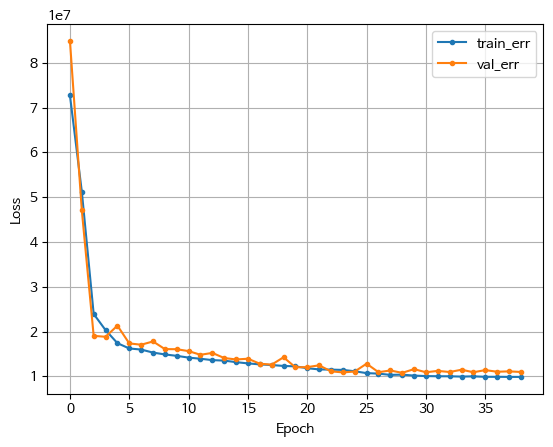
history = model_lstm.fit(X_train_s, y_train_s, epochs=50, validation_split=.2).history- LSTM 시각화
plt.plot(history['loss'], label = 'train_err', marker = '.')
plt.plot(history['val_loss'], label = 'val_err', marker = '.')
plt.grid()
plt.legend()
plt.show()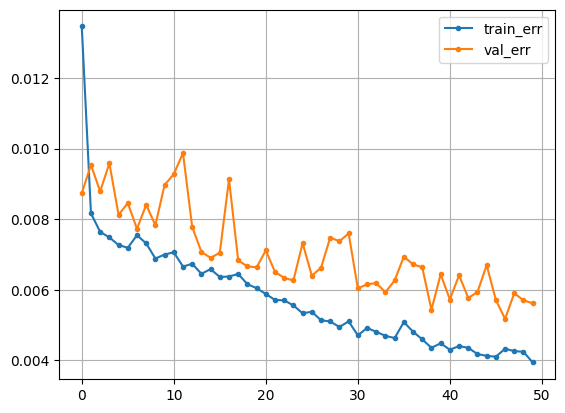
CNN
from keras.models import Sequential
from keras.layers import Conv1D, MaxPooling1D, Flatten, Dense

model_cnn = Sequential()
model_cnn.add(Conv1D(filters=64, kernel_size=3, activation='relu', input_shape=(X_train_s.shape[1], X_train_s.shape[2]), padding = 'same'))
model_cnn.add(MaxPooling1D(pool_size=2))
model_cnn.add(Flatten())
model_cnn.add(Dense(50, activation='relu'))
model_cnn.add(Dense(1))
model_cnn.compile(optimizer='adam', loss='mse')

print("CNN 모델 구조")
print(model_cnn.summary())

history = model_cnn.fit(X_train_s, y_train_s, epochs=50, validation_split=.2).history- 시각화
plt.plot(history['loss'], label = 'train_err', marker = '.')
plt.plot(history['val_loss'], label = 'val_err', marker = '.')
plt.grid()
plt.legend()
plt.show()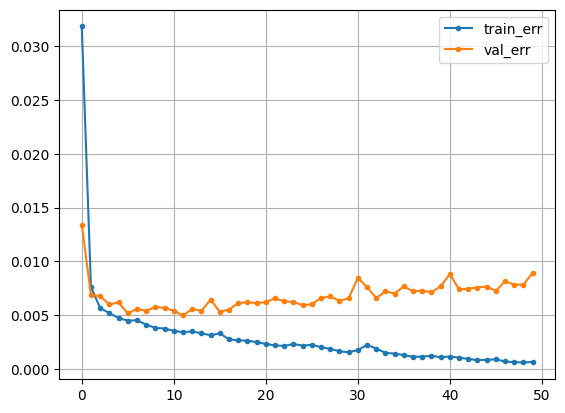
PRODUCT_ID - 42
머신러닝
- DecisionTreeRegressor
- RMSE 24.635519509689512
- MAE 19.186147186147185
- RandomForestRegressor
- RMSE 18.32681937726738
- MAE 14.461006258846675
- XGBRegressor
- RMSE 19.054946252551975
- MAE 14.925340971019674
- LGBMRegressor
- RMSE 18.8105078934692
- MAE 14.729264357818643
- LinearRegression
- RMSE 35.299717336187015
- MAE 29.73039955720623
LSTM
- 전처리
def flatten(X):
    flattened_X = np.empty((X.shape[0], X.shape[2]))
    for i in range(X.shape[0]):
        flattened_X[i] = X[i, (X.shape[1]-1), :]
    return flattened_X

def scale(X, scaler):
    for i in range(X.shape[0]):
        X[i, :, :] = scaler.transform(X[i, :, :])
return X- 2차원 -> 3차원
# 2차원으로 변환하여 스케일러 생성
scaler = MinMaxScaler().fit(flatten(x_train))- 스케일링
# y에 대한 스케일링(최적화를 위해)
scaler_y = MinMaxScaler()
y_train_s3 = scaler_y.fit_transform(y_train.reshape(-1,1))
y_val_s3 = scaler_y.transform(y_val.reshape(-1,1))- LSTM
clear_session()

model = Sequential([LSTM(32, input_shape=(timesteps, n_features), return_sequences=True),
                    LSTM(16,return_sequences=False),
                    Dense(1)])
model.summary()- 시각화
plt.plot(hist['loss'], label = 'train_err', marker = '.')
plt.plot(hist['val_loss'], label = 'val_err', marker = '.')
plt.grid()
plt.legend()
plt.show()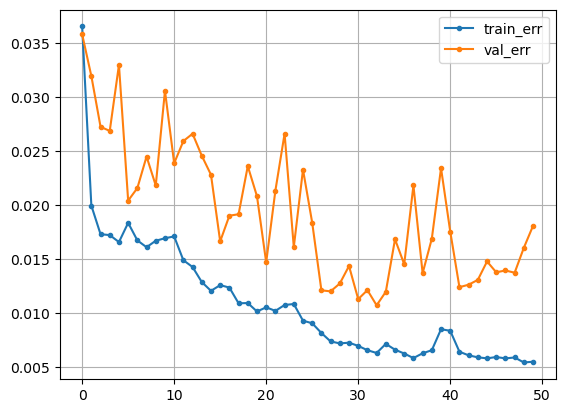
CNN
n_features = x_train.shape[2]

clear_session()

model3 = Sequential([Conv1D(32, 5, input_shape = (timesteps, n_features), activation='relu', padding = 'same'),
                    Flatten(),
                    Dense(1)])

model3.compile(optimizer= Adam(learning_rate = 0.01) ,loss='mse')- 시각화
plt.plot(hist['loss'], label = 'train_err', marker = '.')
plt.plot(hist['val_loss'], label = 'val_err', marker = '.')
plt.grid()
plt.legend()
plt.show()