문제 탐구
GA는 30분 이상 기간 동안 사용자의 행동 로그가 없을 때 기존 세션을 종료하고 새 세션을 생성하는데 이 기준을 10분으로 줄이고 싶습니다. 세션을 종료하는 기준을 사용자가 10분 이상 행동하지 않을 때로 수정하여, 사용자 'a8Xu9GO6TB’의 세션을 재정의해 세션 ID를 계산하는 쿼리를 작성해주세요.
-
재정의한 세션 ID는 1부터 시작해 세션 시작 시간이 빠른 순서대로 1씩 증가하는 자연수여야하고 new_session_id 컬럼에 출력되어야 합니다.
-
이벤트 발생 시각이 빠른 순서대로 정렬되어야 합니다.
출력컬럼
user_pseudo_id: 사용자 아이디 (’a8Xu9GO6TB’)
event_timestamp_kst: 이벤트가 발생한 시각
event_name: 이벤트 이름
ga_session_id: 기존 세션 아이디
new_session_id: 재정의한 세션 아이디
진행 과정
1번째 시도
처음에는 재귀함수로 구해야한다고 생각해서 recursive cte 을 이용했다. but 오류 뜸
with cte_1 as (select event_timestamp_kst,event_name,ga_session_id,lag(event_timestamp_kst,1) over (order by event_timestamp_kst) as lag_1
from ga order by 1 limit 100),
cte_2 as (select strftime('%s',event_timestamp_kst)-strftime('%s',lag_1) as time_diff, event_timestamp_kst,event_name, ga_session_id
from cte_1),
recursive cte_3 as (
  SELECT *,new_session_id as 1
  FROM cte_2
  where time_diff >=600

  union ALL

  SELECT new_session_id + 1, c2.event_timestamp_kst,c2.event_name,c2.ga_session_id
  FROM cte_3 c
  inner JOIN cte_2 c2
  on c.event_name=c2.event_name and c.ga_session_id=c2.ga_session_id and c.user_pseudo_id=c2.user_pseudo_id
)

select * from cte_3;
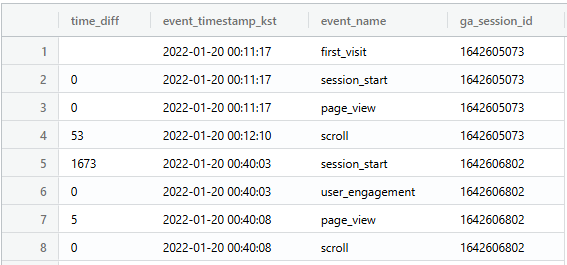
그래서 cte_2값 확인해봤더니 다음과 같이 떴지만 어떻게 적용해야할지 감이 안잡혔다.
2번째 시도
역시 재귀함수로 구하려니까 중간에 오류가 났었다.
with cte_1 as (select event_timestamp_kst,event_name,ga_session_id,lag(event_timestamp_kst,1) over (order by event_timestamp_kst) as lag_1
from ga order by 1 limit 100),
cte_2 as (select strftime('%s',event_timestamp_kst)-strftime('%s',lag_1) as time_diff, event_timestamp_kst,event_name, ga_session_id
from cte_1),
recursive cte_3 as (
  SELECT new_session_id as 1

  union ALL

  SELECT new_session_id + 1 as new_session_id, c2.event_timestamp_kst,c2.event_name,c2.ga_session_id
  FROM cte_2
  where time_diff>=600
 )

select * from cte_3;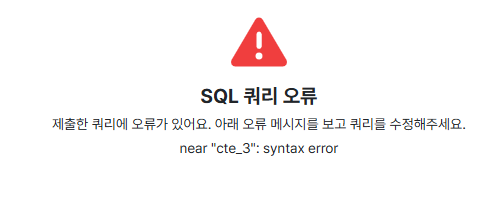
3번째 시도
이번에는 time_diff에서 제대로 적용이 안되어서 발생한 문제다.
원래 1시-> 12시면 최소 00분 이어야하는데, 0분 차이 난다고 떴다.
그래서 어떤 함수를 적용해야할지 고민을 많이 했었다.
with cte_1 as (select event_timestamp_kst,event_name,ga_session_id,lag(event_timestamp_kst,1) over (order by event_timestamp_kst) as lag_1
from ga
where user_pseudo_id = 'a8Xu9GO6TB' ),
cte_2 as (select 1 as new_session_id , strftime('%s',datetime(event_timestamp_kst))-strftime('%s',datetime(lag_1)) as time_diff, event_timestamp_kst,event_name, ga_session_id
from cte_1),
cte_3 as (select row_number() over (order by event_timestamp_kst) as row_n,case when time_diff>=600 then 1 else 0 end as time_diff_1, *
from cte_2)
select sum(time_diff_1) over (order by time_diff_1 rows between unbounded preceding and current row) + 1 as rows_b ,* from cte_3;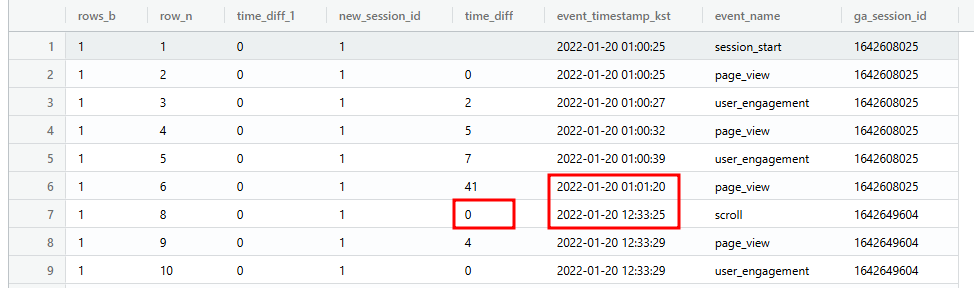
4번째 시도 (정답)
구글링하다가 주댕이의 공부기록 velog 을 보았다.
https://juyoungeeya.tistory.com/entry/SQL-solvesql-Advent-of-SQL-2024-21%EC%9D%BC%EC%B0%A8
'처음부터 datetime으로 만들고' 값 차이를 만드신게 key point였다.
그러면 1시 -> 12시 데이터도 00분으로 적용되는 것을 볼 수 있다.
그리고 sum() over() & case when을 통해서 재귀함수 없이 충분히 구할 수 있다.
STEP1. case when 을 통해서 분 차이가 10분 이상이면 1, 아니면 0을 출력
STEP2. sum() over ()을 통해 누적함수 구하기 , 10분 이상일 경우 1->2->3 순차적으로 변경
with cte_1 as (
select user_pseudo_id,datetime(event_timestamp_kst) as event_timestamp_kst,event_name,ga_session_id,
lag(datetime(event_timestamp_kst),1) over (order by datetime(event_timestamp_kst)) as lag_1
from ga
where user_pseudo_id ='a8Xu9GO6TB'),
cte_2 as (select (strftime('%s',event_timestamp_kst) - strftime('%s',lag_1)) / 60  as time_diff,*
from cte_1),
cte_3 as (select case when time_diff >= 10 then 1 else 0 end  as time_diff_1 , * from cte_2 )
select user_pseudo_id,event_timestamp_kst,event_name,ga_session_id,
sum(time_diff_1) over (order by event_timestamp_kst) + 1 as new_session_id
from cte_3;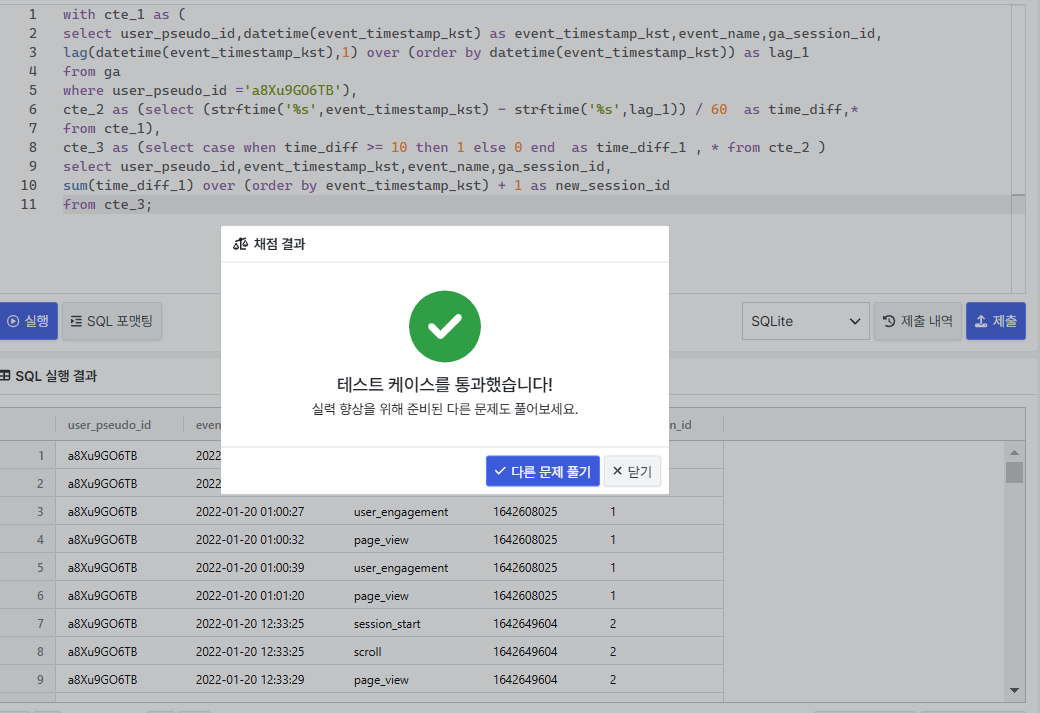
주의 사항
1)특정 조건일 때 값을 순차적으로 더할 경우, 꼭 recursive cte 가 아니어도 된다. 누적함수 활용해 구할 수 있다.
2)date type을 초기부터 깔고 들어가자.