문제 개요
문제: 강의실 배정
분류: 자료 구조, 그리디 알고리즘, 정렬, 우선순위 큐
난이도: 골드5
문제 풀이
최소힙을 가지는 우선순위 큐를 사용하여 풀 수 있다.
- 강의를 시작 시간 순으로 정렬한다.
- 첫 번째 강의가 끝나는 시간을 우선순위 큐에 넣는다.
- 두 번째 강의부터 마지막 강의까지 아래를 반복한다.
- 우선순위 큐의 가장 앞에 있는 값이 현재 강의가 시작하는 시간보다 작거나 같은 경우 우선순위 큐를 pop한다.
- 현재 강의가 끝나는 시간을 우선순위 큐에 넣는다.
모든 과정이 끝난 후 우선순위 큐에 남은 원소의 개수, 즉 우선순위 큐의 크기가 최소 강의실 수가 된다.
💡 왜 강의를 시작 시간 순으로 정렬하는가?
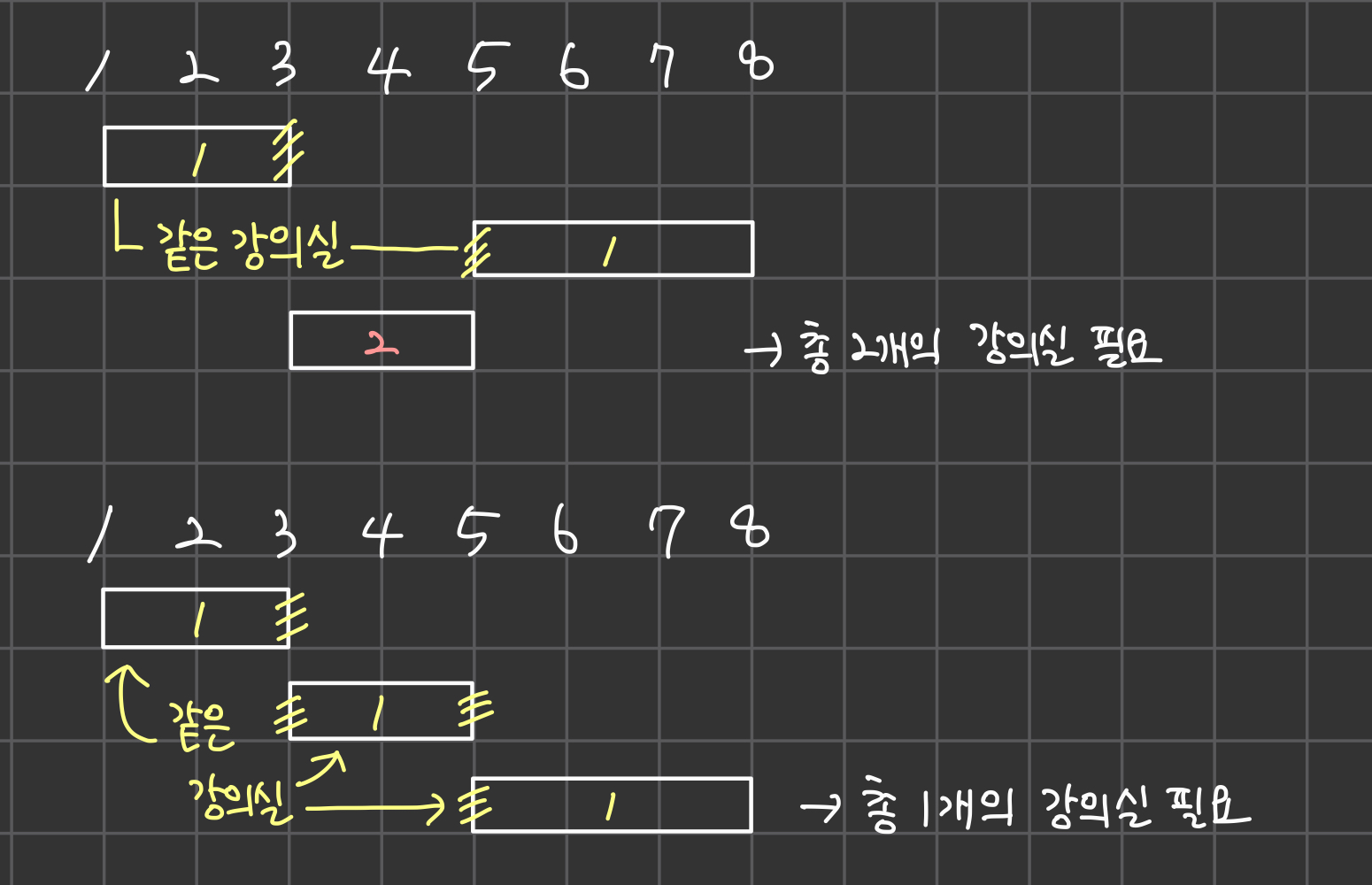
강의실 수를 ‘최소’로 만들기 위해서이다. 위 풀이에서는 같은 강의실을 사용할 수 있는 강의를 찾았을 때 이미 큐에 들어가있던 강의를 ‘제거’하는 방식을 사용한다. 따라서 오름차순 정렬을 하지 않는다면 어떤 강의 a와 같은 강의실을 사용할 수 있는 b를 찾으면 두 강의 사이에 빈 시간이 아무리 많더라도 a를 이미 큐에서 제거해버리기 때문에 강의실의 개수를 최소로 만들 수 없다.
아래 그림은 어떤 예시에 대해 위 풀이 방식을 적용했을 때 오름차순 정렬을 하지 않은 경우와 한 경우의 차이를 표현한 그림이다.
💡 왜 최소힙을 사용하는가?
마찬가지로 강의실 수를 ‘최소’로 만들기 위함이다. 풀이에 따르면 우선순위 큐에는 강의가 ‘끝나는’ 시간을 저장한다. 현재 큐에 남아있는 강의 중 끝나는 시간이 가장 이른 강의와 현재 강의를 비교해야 강의실 수를 최소로 만들 수 있다.
예제 입력1에 대한 풀이
강의를 시작 시간을 기준으로 오름차순 정렬한 후, 첫번째 강의의 끝나는 시간을 우선순위 큐에 push한다.
이후 두 번째 강의부터 시작 시간을 우선순위 큐의 가장 앞에 있는 값과 비교한다.
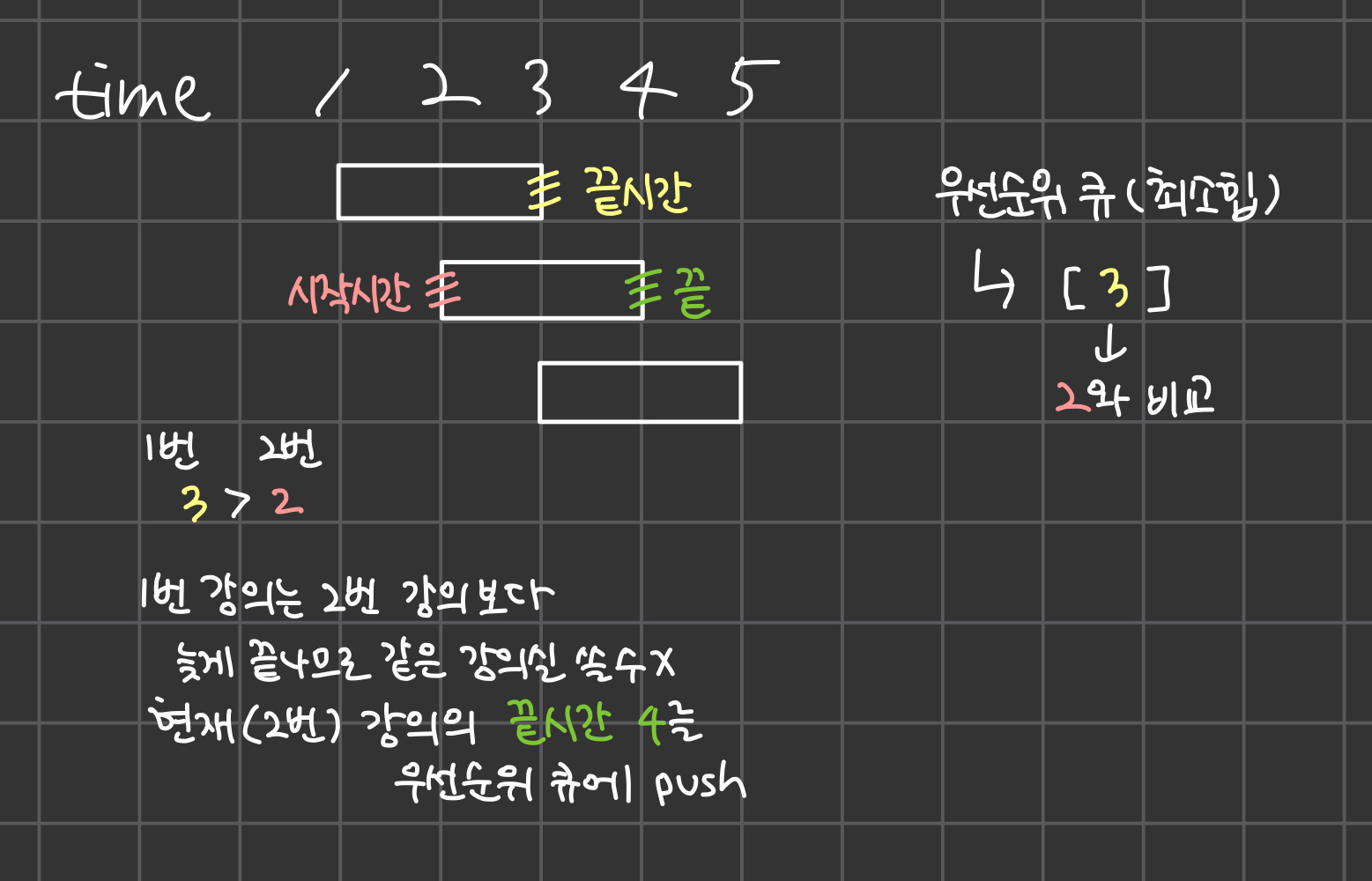
우선순위 큐의 가장 앞에 있던 3(1번 강의의 끝시간)과 현재 강의의 시작 시간인 2를 비교했을 때 2번 강의가 시작한 후에 1번 강의가 끝나기 때문에 pop하는 것 없이 현재 강의의 끝시간 4를 우선순위 큐에 push한다.
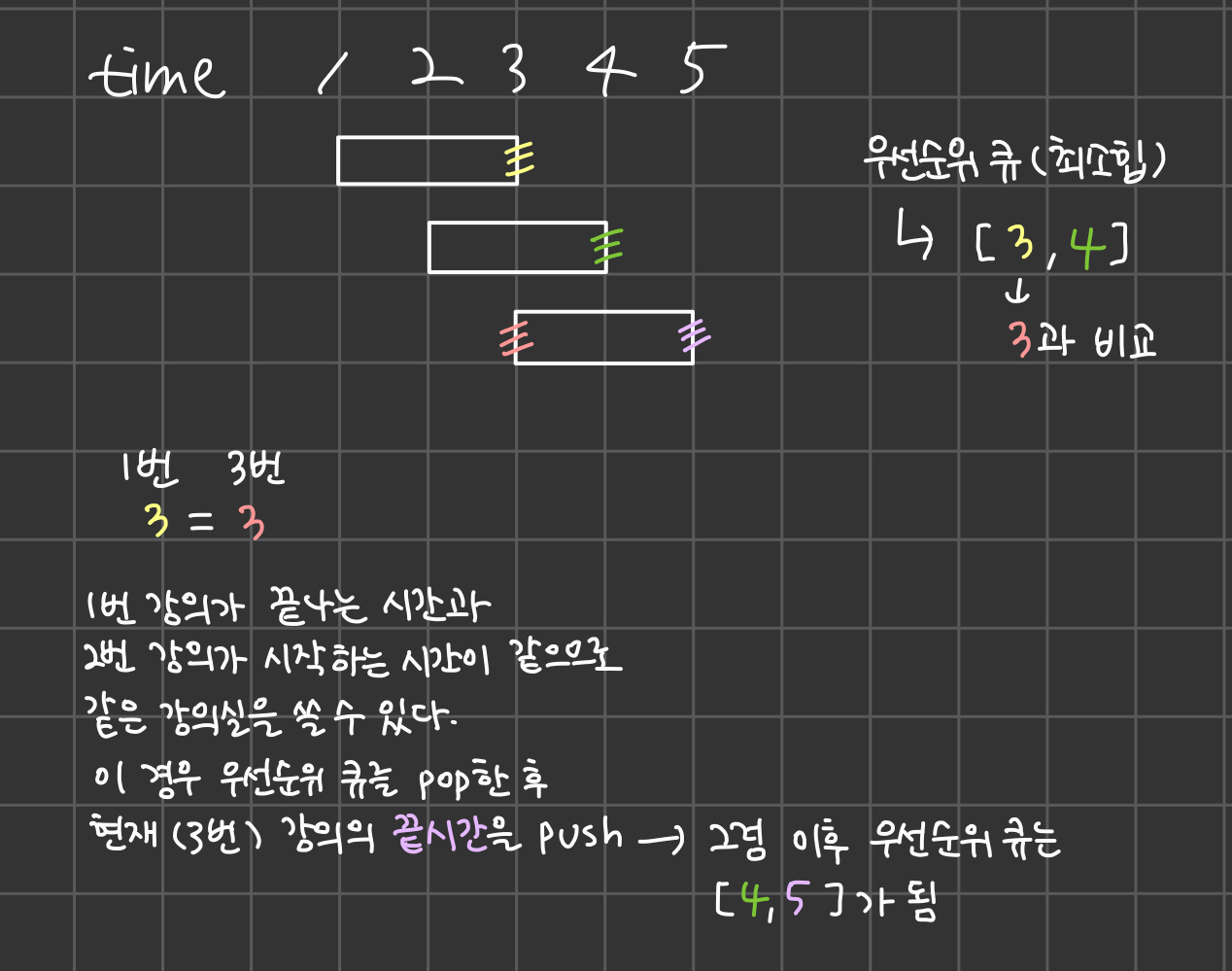
다음으로 세 번째 강의의 시작 시간을 우선순위 큐의 가장 앞에 있던 3과 비교한다.
이때 두 값이 같기 때문에 1번 강의와 3번 강의는 같은 강의실을 쓸 수 있게 된다. 따라서 우선순위 큐를 pop한 후 현재 강의의 끝나는 시간인 5를 우선순위 큐에 push한다.
모든 강의에 대한 수행이 끝났기 때문에 현재 우선순위 큐 [4, 5]의 크기 2가 최소로 사용할 수 있는 강의실의 수이다.
코드
const fs = require("fs");
const filePath = process.platform === "linux" ? "/dev/stdin" : "input.txt";
const [N, ...time] = fs.readFileSync(filePath).toString().trim().split("\n");

class PriorityQueue {
  constructor() {
    this.heap = [];
  }

  empty() {
    return this.heap.length === 0;
  }

  peek() {
    return this.heap[0];
  }

  size() {
    return this.heap.length;
  }

  push(data) {
    this.heap.push(data);

    let i = this.heap.length - 1;
    while (i > 0) {
      const parent = ~~((i - 1) / 2);
      if (this.heap[parent] <= this.heap[i]) break;
      [this.heap[i], this.heap[parent]] = [this.heap[parent], this.heap[i]];
      i = parent;
    }
  }

  pop() {
    if (this.empty()) return;

    const value = this.peek();
    [this.heap[0], this.heap[this.heap.length - 1]] = [
      this.heap[this.heap.length - 1],
      this.heap[0],
    ];

    this.heap.pop();
    this._heapify();
    return value;
  }

  _heapify() {
    const x = this.peek();
    const n = this.heap.length;
    let curr = 0;

    while (2 * curr + 1 < n) {
      const leftChild = 2 * curr + 1;
      const rightChild = leftChild + 1;
      const smallerChild =
        rightChild < n && this.heap[rightChild] < this.heap[leftChild]
          ? rightChild
          : leftChild;

      if (x > this.heap[smallerChild]) {
        [this.heap[curr], this.heap[smallerChild]] = [
          this.heap[smallerChild],
          this.heap[curr],
        ];
        curr = smallerChild;
      } else break;
    }
  }
}

const solution = (N, time) => {
  const lectures = time.map((t) => t.split(" ")).map((t) => t.map(Number));
  lectures.sort((a, b) => a[0] - b[0]);

  const pq = new PriorityQueue();
  pq.push(lectures[0][1]);

  for (let i = 1; i < +N; i++) {
    if (pq.peek() <= lectures[i][0]) {
      pq.pop();
    }
    pq.push(lectures[i][1]);
  }

  console.log(pq.size());
};

solution(N, time);