Wildlife in Norway: 20 Spectacular Animals and Expert Safari Tips
Introduction
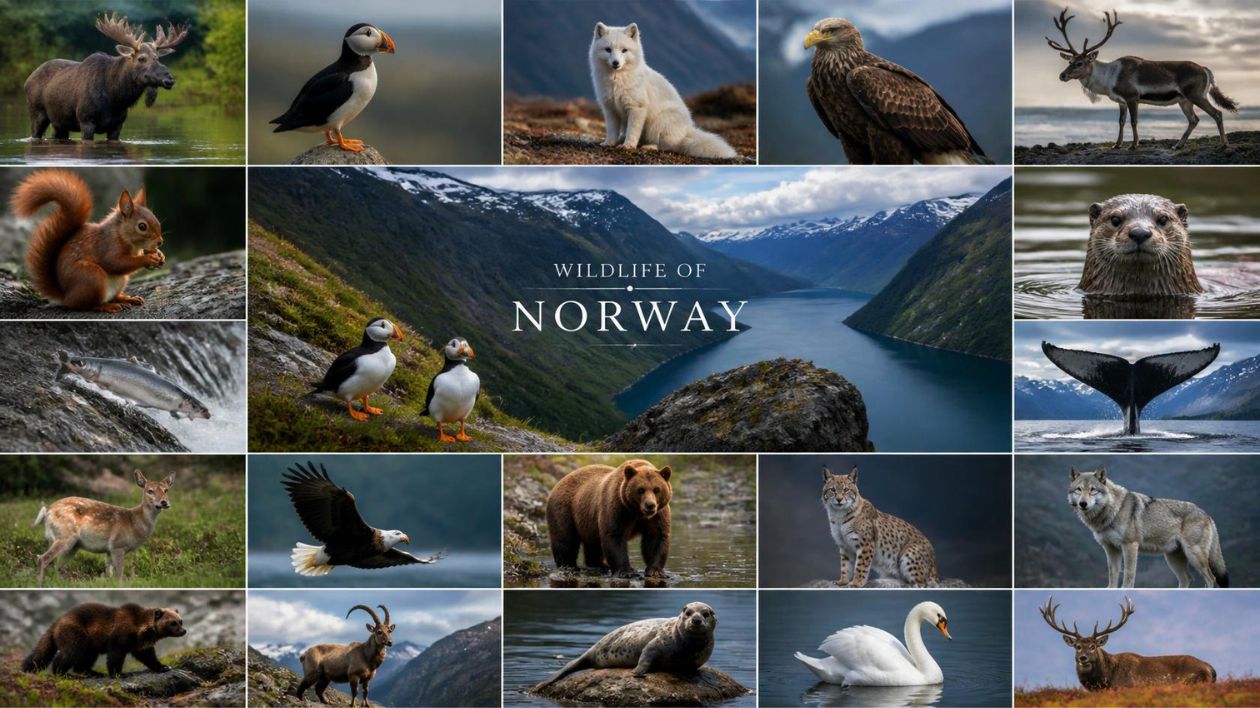
Norway stands out as one of Europe’s last true wilderness destinations. Spanning from the deep, dramatic fjords of the west coast all the way to the frozen, high-Arctic islands of Svalbard, the country offers a pristine sanctuary for an incredible array of wildlife. Visitors have the unique chance to spot massive whales breaching in dark waters, colorful puffins nesting on steep coastal cliffs, giant moose moving silently through boreal forests, and the world's largest land predator—the polar bear.
The country's stark, spectacular geography—carved by glaciers and warmed by the Gulf Stream—creates a fascinating overlap of temperate and Arctic ecosystems. Whether you are an experienced wildlife photographer, an avid birdwatcher, or simply a nature lover looking to disconnect, Norway provides unforgettable, authentic encounters with animals in their native habitats.
Why Norway Is a Premier Wildlife Destination
Norway stretches far above the Arctic Circle and boasts one of the longest, most intricate coastlines in the world. This dramatic topography establishes a vast network of varied ecosystems, each supporting specialized species:
- Arctic Tundra: Found in the far north and high altitudes, characterized by low vegetation, permafrost, and extreme cold-adapted species.
- Boreal Forests (Taiga): Dense pine, spruce, and birch woods spreading across eastern and central regions, providing cover for large mammals.
- High Mountain Plateaus: Alpine biomes like Hardangervidda, where specialized herbivores graze.
- Deep Fjords & Coastal Waters: Nutrient-rich marine environments fueled by upwelling currents, attracting rich biodiversity from tiny krill to giant apex predators.
Read More Blogs
Best Time to See Wildlife in Norway
Planning your trip depends heavily on what you want to see. The changing seasons completely transform the accessibility and behavior of Norway's fauna.
| Season | Wildlife Highlights | Key Locations |
|---|---|---|
| Spring (Mar–May) | Millions of nesting sea birds arrive; puffins land on coastal cliffs; migrating whales move northward. | Runde Island, Vesterålen |
| Summer (Jun–Aug) | Moose and reindeer calves emerge; musk ox active in alpine meadows; polar bear safaris peak under the midnight sun. | Svalbard, Dovrefjell, Finnmark |
| Autumn (Sep–Oct) | Reindeer migrations begin; red deer mating season (roaring); spectacular coastal bird migrations. | Western Fjords, Hardangervidda |
| Winter (Nov–Feb) | Massive orca and humpback whale pods follow herring into northern waters; Arctic foxes don bright white winter coats. | Skjervøy, Tromsø, Svalbard |
20 Amazing Animals and Where to See Them
1. Polar Bears
The polar bear (Ursus maritimus) reigns as Norway's most famous Arctic resident. These majestic marine mammals spend most of their lives on the shifting sea ice hunting for seals. Because adult males can weigh well over 700 kilograms, they hold the title of the world's largest land carnivore.
An apex predator navigating the high-Arctic sea ice of Svalbard.

- Where to See Them: The Svalbard archipelago is the only place in Norway to find them. They are commonly spotted on the remote pack ice surrounding the main islands.
- Best Time: May to August, when expedition cruise ships can navigate through the melting sea ice.
2. Reindeer
Reindeer (Rangifer tarandus) are deeply woven into the fabric of the Norwegian north. While wild herds roam the high southern plateaus, hundreds of thousands of semi-domesticated reindeer are managed by the indigenous Sami people across the northern tundra, serving as a cornerstone of their culture, economy, and heritage.
- Where to See Them: The Finnmark plateau, regions surrounding Tromsø, and the distinct, shorter subspecies found roaming freely in Svalbard.
- Best Time: Year-round, though late spring and autumn offer spectacular herd movements.
3. Atlantic Puffins
Instantly recognizable by their brightly colored, triangular beaks and formal black-and-white plumage, Atlantic puffins are affectionately nicknamed the "clowns of the sea." They spend the harsh winter entirely at sea, returning to Norway's sheer coastal cliffs in massive colonies solely to breed and raise their single chicks (called "pufflings").
Atlantic puffins returning to coastal cliffs for the summer nesting season.
- Where to See Them: Runde Island (renowned for its accessible nesting paths), Hornøya in the far northeast, and the Bleiksoya colony in Vesterålen.
- Best Time: May to August. By mid-August, they head back out to the open ocean.
4. Orcas (Killer Whales)
Norway's cold coastal waters offer some of the most reliable orca watching on Earth. These highly intelligent social predators work in coordinated family pods, utilizing advanced "carousel feeding" techniques to herd massive schools of overwintering Atlantic herring against the fjord walls.
Orcas migrating into the northern fjords to hunt overwintering herring.

- Where to See Them: The fjords surrounding Skjervøy, Tromsø, and Alta in northern Norway.
- Best Time: Late October to January, closely following the seasonal herring migrations.
5. Humpback Whales
Migrating thousands of miles from their tropical breeding grounds, humpback whales target northern Norway to feast on the dense winter fish populations. Famous for their curious nature, acrobatics, and powerful tail slaps, they frequently share the same feeding grounds as the local orca pods.
- Where to See Them: Primarily concentrated around Tromsø, Andenes, and the Vesterålen archipelago.
- Best Time: November to January.
6. Sperm Whales
Sperm whales are the ocean’s ultimate deep-divers. The underwater topography off western Norway features a dramatic drop-off known as the Bleik Canyon. This deep-water trench creates a nutrient-rich upwelling that attracts giant squids, making it an ideal year-round feeding ground for bachelor pods of male sperm whales.
- Where to See Them: Andenes, located at the northern tip of Andøya island.
- Best Time: Year-round, thanks to the stable underwater canyon ecosystem.
7. Moose
Known across Europe as the "King of the Forest," the moose is a towering presence in Norway’s woodlands. Standing up to two meters tall at the shoulder, adult bulls grow massive palmated antlers each summer before competing for mates in the fall.
A mature moose navigating the dense pine forests of eastern Norway.

- Where to See Them: The dense boreal forests of Hedmark, Trøndelag, and throughout eastern Norway. They are most active at dawn and dusk near forest edges.
- Best Time: Year-round, though easiest to spot in winter against the white snow.
8. Arctic Fox
The elusive Arctic fox is perfectly adapted to survive sub-zero temperatures that would freeze most other mammals. They possess an incredibly dense coat that morphs from a brown-and-grey camouflage in summer to a pristine, thick white coat in winter, complete with fur-lined paws that act like snowshoes.
- Where to See Them: High alpine territories of Hardangervidda National Park, Dovrefjell, and throughout Svalbard.
- Best Time: Winter for the white coat; summer for spotting active dens with pups.
9. Musk Ox
Stepping into the domain of the musk ox feels like traveling back to the Ice Age. These heavily built, shaggy mammals are survivors of the Pleistocene epoch, protected from the biting cold by a dense underwool called qiviut, which is said to be eight times warmer than sheep's wool.
Prehistoric musk oxen grazing along the high plateaus of Dovrefjell.

- Where to See Them: Exclusively in Dovrefjell-Sunndalsfjella National Park, where a successfully reintroduced population thrives.
- Best Time: June to September via guided hiking safaris.
10. White-Tailed Sea Eagle
With a staggering wingspan reaching up to 2.4 meters, the white-tailed sea eagle is Europe's largest bird of prey. These majestic raptors patrol the jagged coastlines and deep fjords, diving at incredible speeds to snatch fish right from the water's surface with their powerful yellow talons.
A white-tailed sea eagle soaring over the coastal waters of Northern Norway.

- Where to See Them: The Lofoten Islands, Bodø, and across the rugged coastlines of Vesterålen.
- Best Time: Year-round, with dedicated boat safaris operating daily in summer and winter.
11. Eurasian Lynx
The lynx is Norway’s only native wild cat. Recognizable by their striking ear tufts, short bobbed tails, and oversized paws that act like natural snowshoes, these solitary, nocturnal hunters are incredibly stealthy and prefer the deepest covers of the forest.
- Where to See Them: Dense forests of central and eastern Norway. Spotting one requires incredible luck or an experienced local tracker.
12. Wolverines
Wolverines are the largest land-dwelling members of the mustelid (weasel) family. Renowned for their fierce strength, solitary nature, and absolute fearlessness, they roam massive territories across alpine and subarctic zones, frequently scavenging kills from larger predators.
- Where to See Them: The rugged mountain borders shared with Sweden and remote areas of northern Norway.
13. Red Deer
Smaller and more elegant than the moose, the red deer thrives along the lush coastal valleys of western Norway. Autumn brings their spectacular rutting season, during which dominant stags project deep, resonant roars across the misty valleys to establish territory.
- Where to See Them: The forested hillsides and valleys of Western Norway (Vestlandet).
14. Harbour Seals
Commonly seen resting on exposed rocks, skerries, and sandbars during low tide, harbour seals are a staple of Norway's rich coastal ecosystem. They are highly social within their pods and often display an inquisitive nature around passing sea kayaks.
- Where to See Them: Found throughout the entire Norwegian coastline, with highly accessible populations in the Oslofjord and western island chains.
15. Walruses
With elongated tusks that can grow up to a meter long, walruses are an unmistakable sight in high-Arctic waters. These massive marine mammals can easily tip the scales at over 1,500 kilograms. Once hunted close to extinction in the region, strict conservation laws have allowed their numbers to bounce back significantly.
- Where to See Them: Svalbard, specifically on low-lying sandy beaches like Moffen Island or Prins Karls Forland where they congregate in large haul-outs.
16. Arctic Hares
Bigger than standard European rabbits, Arctic hares sport long ears and large, heavily padded hind feet built for sprinting across deep snow at speeds up to 60 km/h. Like the Arctic fox, their fur undergoes a dramatic seasonal shift from grey-brown to snowy white.
- Where to See Them: High altitude mountain tundras and throughout northernmost Norway.
17. Snowy Owls
These iconic white raptors are nomadic hunters that track shifts in small rodent populations. During years when lemming populations boom across the northern tundras, snowy owls arrive to raise their young, hunting under the continuous light of the midnight sun.
- Where to See Them: High-plateau tundras of Finnmark and remote mountain areas of northern Norway.
18. Golden Eagles
While sea eagles dominate the coasts, golden eagles claim the interior skies. These formidable hunters use their speed, agility, and massive talons to target mountain hares, game birds, and occasionally young reindeer fawns across steep alpine valleys.
- Where to See Them: Found across mountainous interiors, national parks, and dense craggy valleys throughout Norway.
19. European Otters
The clean, cold, and fish-rich coastlines of Norway host one of the healthiest otter populations in Europe. Unlike their counterparts in landlocked parts of the continent, Norwegian otters are highly marine, spending hours hunting fish and crabs in the ocean before returning to land to clean their fur in fresh streams.
- Where to See Them: Regularly seen slinking along docklands, rocky shores, and kelp forests throughout the Lofoten and Vesterålen islands.
20. Red Foxes
Adaptable and highly intelligent, red foxes are found across almost every habitat in Norway. They easily manage environments ranging from agricultural valley floors and urban fringes up to the edges of high-altitude mountain tundra where their territories overlap with the rarer Arctic fox.
- Where to See Them: Widespread across mainland Norway; frequently seen in rural fields, woodland edges, and roadside clearings.
Top Wildlife Hubs in Norway
If you want to maximize your wildlife viewing opportunities, focus your travel plans on these primary regional hubs:
- Svalbard: The premier choice for high-Arctic expeditions. Head here for polar bears, walruses, Arctic foxes, and Svalbard reindeer.
- Tromsø & Skjervøy: The ultimate winter destination. This is your jumping-off point for marine safaris targeting orcas, humpback whales, and white-tailed sea eagles.
- Lofoten & Vesterålen: Ideal for coastal wonders. These dramatic island chains host massive sea eagle safaris, puffin colonies, and year-round deep-sea whale watching in Andenes.
- Dovrefjell-Sunndalsfjella National Park: The only home of mainland Europe's musk ox population, along with wild mountain reindeer and alpine birds.
Insider Tips for Wildlife Photography
Capturing incredible wildlife photos in Norway requires balancing technical skill with deep respect for the challenging Arctic environment:
- Invest in a Long Telephoto Lens: A lens with a focal length of at least 300mm to 600mm is vital. It allows you to fill the frame with detailed shots while keeping a safe, non-disruptive distance from the animals.
- Dress in Smart Layers: Weather conditions change in minutes. Rely on a wool base layer, an insulating mid-layer (down or fleece), and a fully wind- and waterproof outer shell. Keep your hands protected with thin, touchscreen-compatible gloves under heavier mittens.
- Use Silent Shutter Mode: Click sounds from mechanical shutters can easily startle animals like moose, lynx, or nesting birds. Switching your mirrorless camera to electronic/silent shutter helps keep wildlife behaving naturally.
- Prioritize Guided Safaris: Local guides understand animal behaviors, tracking signs, and daily movement patterns. Booking an ethical, certified local safari drastically increases your chances of a successful sighting while ensuring safety for both you and the animals.
Practicing Responsible Wildlife Tourism
Norway places immense pride on environmental conservation, sustainable tourism, and protecting its natural heritage. As a visitor, your presence should leave no trace:
The Golden Rule: Always observe animals from a distance that does not alter their natural behavior. If an animal stops feeding, changes its direction of travel, or looks directly at you repeatedly, you are too close.
Never attempt to feed wild animals, as this disrupts their natural diets and creates a dangerous dependency on humans. Stick strictly to established paths in national parks, pack out every piece of trash, and ensure the tour operators you support hold official green certifications (such as Eco-Lighthouse or Certified Norwegian Ecotourism flags). By traveling mindfully, you help preserve Norway's spectacular wild spaces for generations to come.