How Does Poor Time Management Increase Stress and Reduce Productivity?
In a fast-moving world, time can be seen as a luxury — but many of us have trouble knowing how to use it well. When time flows through our fingers, what we lose is more than tasks left undone.
Poor time management not only makes you look foolish, but it also promotes stress, dampens productivity, and leads to both underperformance and unhappiness.
The Hidden Cost of Time Mismanagement
Consider how many times you scroll through social media, procrastinate on a project, or multitask. Those habits might seem innocuous, but they add up.
Studies even prove that 80% of people lose at least 2 hours a day from distractions and poor time management - valuable, ridiculous, or priority work that could have been done instead.
Even more eye-popping: 25% of employees say poor time management is a major cause of stress in their lives. When we don’t manage time well, we find ourselves inundated, responding to requests rather than preparing for them. This chronic fight with time becomes a self-perpetuating spiral of anxiety, and stress begets inefficiency.
Stress and Its Productivity Penalty
Stress does more than make us feel bad — it crushes output.
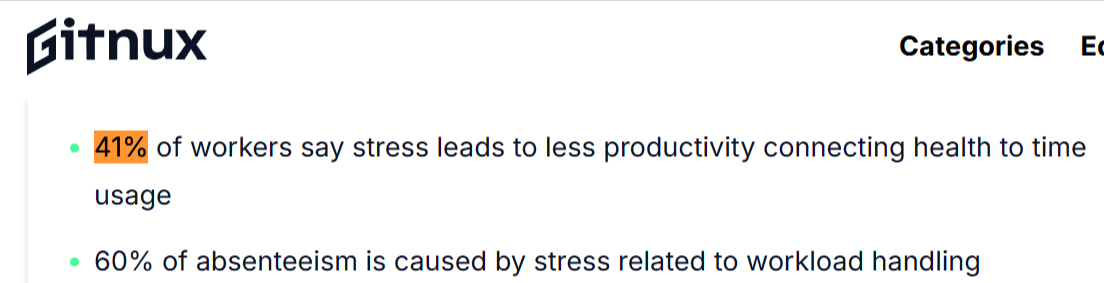
Workforce data also indicates that poor time management practices are correlated with more burnout cases: 70% of employees feel they don’t have enough hours in the week to get their job done, and 41% feel too exhausted by the end of the day.
Here’s how stress puts a crimp in productivity from every angle:

- Decision fatigue: When you rush or multitask, cognitive performance drops — multitasking alone can reduce productivity by up to 40%.
- Lost attention: When we’re distracted, whether it’s by notifications or by changing tasks, our focus is broken and can take more than 20 minutes to get back into a task.
- Reduced quality: When we’re rushing to meet deadlines, mistakes happen, and creative problem-solving decreases, depriving us of both speed and high-quality work.
Together, these effects produce a paradox: people are spending more time while working less.
This Isn’t Just Anecdotal — Data Backs It
Statistics cut the picture even more sharply. For those with jumbled time management systems:
- Almost 60% of workers say that unclear priorities make them feel unproductive.
- Lack of time management can lead to an overall productivity decrease of 25%.
- People who don’t work well with their time feel 60% more stress around workload handling.

This is not just about numbers — it’s about lives and careers. As stress goes up and productivity goes down, so does job satisfaction, career progression, and work-life balance.
Why It Happens: The Mechanics of Poor Time Management
Poor time management is a result of habits or mistakes that appear to be inconsequential but have major impacts:
- Procrastination: Putting things off builds up pressure later, increases stress, and makes it easier to overload our plates.
- Poor prioritization: Without a sense of what needs to get done most, time is spent on “busy work.”
- Unstructured days: A reactive day — responding to email or attending meetings without purpose—undermines progress toward good goals.
- No boundaries: Working without pause or guardrails results in burnout and stunted performance.
How Can the Best Time Management Techniques Turn Things Around?
The good news? These trends aren’t inevitable.
There’s evidence that time management, which includes skills like prioritizing tasks, planning ahead, and using the technique of blocking out chunks of time to work on specific projects or goals, means better work and less stress by helping one get more things done in less time.
Even the most basic tricks, such as using the Pomodoro Technique — a focus method that breaks down work periods into established intervals with short break times in between — can help strengthen concentration and maintain performance.
The best time management techniques and the best time management methods are not about being inflexible, but about deciding to work on purpose instead of by default.
When you learn how to prioritize, plan, and protect your time, stress will naturally go down, and output shoots up.
And that’s why so many people and organizations invest in time management training or take a time management course (https://www.coursera.org/learn/time-management-strategies) — not to do all the things, but rather to do productive work with minimal distraction or burnout.
Conclusion
In a society that places ever-increasing demands and expectations on us, being able to master time is one of the most liberating accomplishments we can achieve.
Having poor time management isn’t just about being late all the time or not getting things done; in fact, it makes everything so much harder, leading to higher stress and lower productivity, and missed opportunities for focus, creativity, and balance.
But if you have the right tools and mindset — from effective time management strategies to structured methods like time blocking and priority planning, you can beat it.