문제
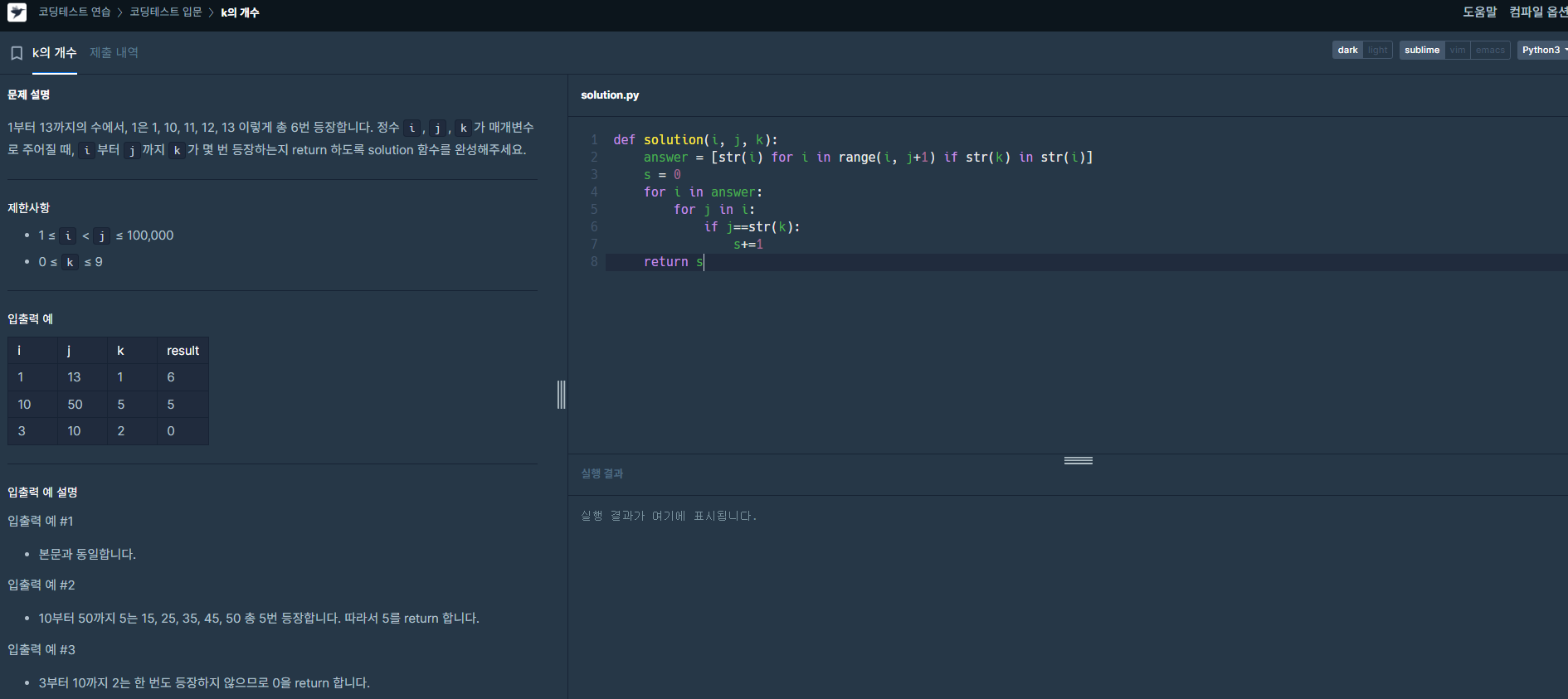 먼저 숫자 'k'가 들어 있는 숫자 조합은 모두 리스트에 넣고 그 원소를 다시 쪼개서 'k'가 들어간 숫자만큼 더하는 결과를 구했다.
다른 풀이
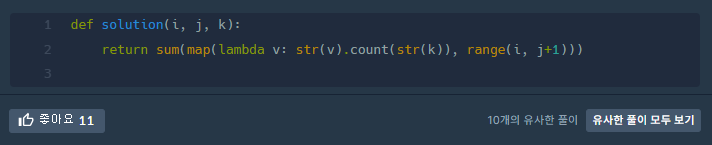 python 답게 sum, map을 이용하였으며 count를 이용하여 더욱더 간단하게 구현하였다.
Count
방금 윗 풀이에서 count를 공부해보자면 count는 문자열 안에서 찾고 싶은 문자의 개수를 찾을 때 사용하며, tuple, list, set 같은 반복 가능한 iterable 자료형에서 사용 가능하다.
사용법은 변수.count(찾는 요소)로 결과값으로 값의 개수를 숫자로 반환한다.
Counter 클래스
- collection 모듈의 Counter 클래스를 사용
- 리스트와 문자열 모두 사용 가능
from collections import Counter

arr = ['a','b','c','dd','b','g','zz','k','k']
print(Counter(arr))
#Counter({'b': 2, 'k': 2, 'a': 1, 'c': 1, 'dd': 1, 'g': 1, 'zz': 1})
이 때 타입은 <class 'collections.Counter'> 이다.
string = 'abracadabra'

strin = Counter(string)
print(strin)
#Counter({'a': 5, 'b': 2, 'r': 2, 'c': 1, 'd': 1})
string = 'abracadabra'
cnt = Counter(string) #Counter({'a': 5, 'b': 2, 'r': 2, 'c': 1, 'd': 1})
print(cnt['a']) #5most_common() 메서드
- 데이터가 많은 순으로 정렬된 배열을 리턴
- 매개변수를 생략하면() 모든 요소를 반환하고, (n)은 가장 많은 n개를 반환
아래의 코드로 Counter와 Counter.most_common()의 차이를 확인해보자.
new_str = 'hello world!'
cntnew = Counter(new_str) #Counter({'l': 3, 'o': 2, 'h': 1, 'e': 1, ' ': 1, 'w': 1, 'r': 1, 'd': 1, '!': 1})
print(cntnew)
print(type(cntnew)) #<class 'collections.Counter'>
common = Counter(new_str).most_common() #[('l', 3), ('o', 2), ('h', 1), ('e', 1), (' ', 1), ('w', 1), ('r', 1), ('d', 1), ('!', 1)]
print(common)
print(Counter(new_str).most_common(3)) #[('l', 3), ('o', 2), ('h', 1)]
print(type(common)) #<class 'list'>

책 묵는 개발자