The Rise of Pretty Scale Tools and Face Shape Detectors: Understanding What They Are and How to Use Them
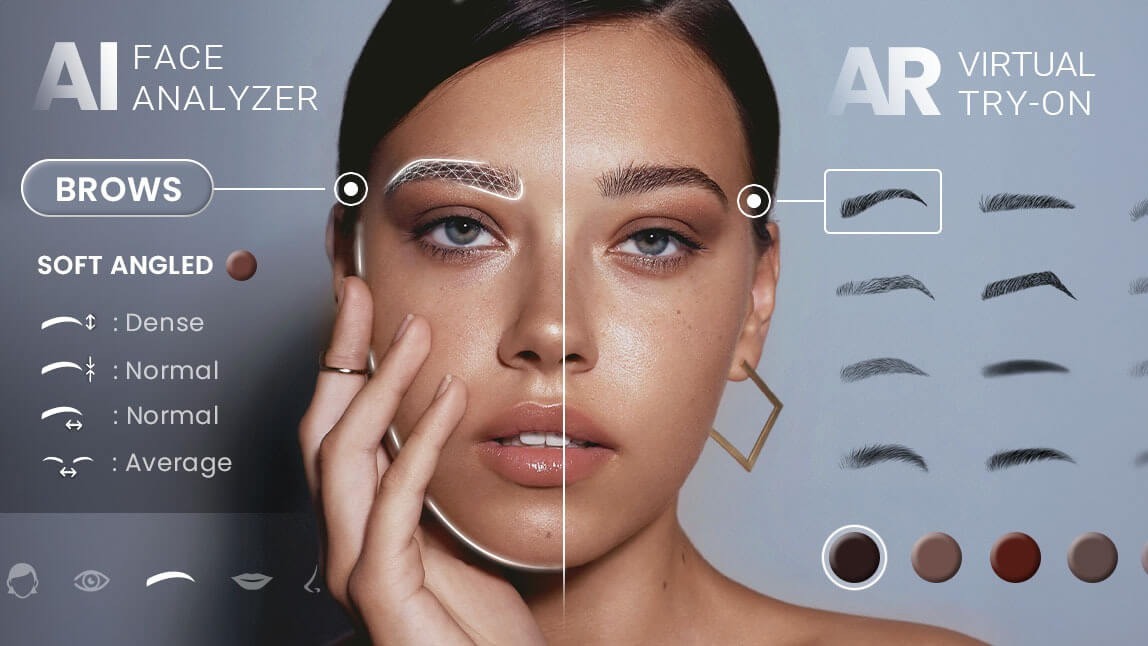
Over the last decade, digital technology has changed the way people view themselves and interact with their own appearance. From virtual try-on features in shopping apps to AI-generated makeup recommendations, facial analysis tools have become widespread and accessible. Among the most popular of these tools are pretty scale systems and the face shape detector. Although they often appear simple on the surface, they are built on complex algorithms that attempt to analyze facial structure in mathematical terms. Understanding how these tools work, why people use them, and how to interpret the results responsibly can help users navigate this growing digital landscape with clarity and confidence.
What Exactly Is a Pretty Scale Tool?
A pretty scale tool is an online or app-based system that evaluates a person’s facial attractiveness by analyzing a photograph. The concept is rooted in the long-standing idea that beauty can be measured through mathematical principles such as symmetry, proportion, and balance. In these tools, the user uploads a clear image of their face, and the algorithm assesses key distances and ratios. These measurements are then compared to a predefined set of “ideal” proportions inspired by the golden ratio and other aesthetic theories. When the analysis is complete, the tool generates a numerical score meant to reflect how closely the user aligns with common standards of facial harmony.
Although the idea may seem modern, its foundation goes back centuries. Scholars in ancient Greece and Renaissance Europe believed that beauty followed precise geometric patterns. Modern pretty scale tools simply automate those concepts using artificial intelligence. The software identifies points such as eye alignment, nose length, mouth width, cheekbone height, and chin shape. Once the points are mapped, the system computes ratios between them and determines how far they deviate from its stored templates. The final score is not a universal measurement of attractiveness, but rather a rating based on one specific interpretation of symmetry and proportional balance.
The popularity of pretty scale tools comes from their simplicity and the curiosity they evoke. People often seek reassurance, explore novelty, or simply want to see how an algorithm interprets their appearance. However, these systems should not be taken as authoritative statements about beauty. The tools are limited by their programming, their cultural assumptions, and their inability to evaluate qualities such as expression, character, and individuality.
Understanding Face Shape Detectors
A face shape detector is different from a pretty scale tool, although both rely on facial analysis algorithms. Instead of scoring attractiveness, a face shape detector categorizes the overall geometry of the face into a specific shape such as oval, round, long, square, heart, or diamond. These categories are widely recognized in the beauty and fashion industries and are used to guide styling decisions. Determining a face shape helps individuals choose hairstyles, makeup techniques, hat designs, beard styles, or eyeglasses that complement their natural structure.
Face shape detection works by identifying the width of the forehead, the width of the cheekbones, the contour of the jawline, and the length of the face from forehead to chin. By comparing these measurements, the system identifies structural patterns. A round face may be nearly equal in width and height with softer contours, while a square face may have a stronger jawline and equal width across the forehead and jaw. An oval face often appears longer than it is wide, with gently tapering lines.
Unlike pretty scale tools, face shape detectors do not attempt to evaluate beauty or provide judgment. Instead, they offer practical information that can help users make style choices aligned with their features. Many professionals—barbers, stylists, makeup artists, and opticians—use face shape analysis as part of their work. The digital version of this process makes it widely accessible.
How These Tools Analyze Facial Features
Both pretty scale tools and face shape detectors rely heavily on the same underlying technology: facial landmark detection. This technique identifies specific points on a person’s face and uses them as reference markers for calculations. Most modern tools use machine learning models trained on large datasets of facial images. By learning patterns across thousands or millions of diverse examples, the systems become more accurate at detecting facial features, even in varying lighting or camera angles.
After the landmarks are placed, the tools compute distances, angles, and proportions. For a pretty scale system, the emphasis is on symmetry, ratio comparisons between the eyes and nose, distances from the eyes to the lips, and the relationship between the width of the face and the height of the forehead or chin. The tool checks how closely the user matches mathematical ideals defined by the model’s creators.
For a face shape detector, the analysis is more focused on overall structure. The key question is which geometric pattern the measurements resemble most closely. If the face is longer than it is wide, the model may classify it as oval or oblong. If the jawline is the widest part, it may classify it as square or triangle. These categories are simplified, but they are useful guidelines that communicate much about a person’s structural features.
Because this analysis is sensitive to visual input, the quality of the photograph matters greatly. Poor lighting, extreme angles, heavy makeup, shadows, or partially covered features can lead to inaccurate results.
How to Use a Pretty Scale Tool Responsibly
Using a pretty scale tool typically involves uploading or capturing a clear, forward-facing photograph. To ensure the algorithm can detect landmarks accurately, it is best to use an image where the face is fully visible and well lit. The system processes the image and presents the score along with observations about symmetry or proportionality.
While the instructions are simple, the emotional interpretation requires caution. Pretty scale scores can be intriguing or amusing, but they should never be taken as a direct reflection of personal value. Beauty differs across cultures, history, and personal taste. What the tool measures is only a narrow form of geometric symmetry, not the full spectrum of what makes a person appealing.
Users should also pay attention to privacy policies. Some platforms store uploaded photos for training purposes, while others delete them immediately after analysis. Choosing systems that respect user privacy is essential, especially when dealing with biometric data.
How to Use a Face Shape Detector for Styling Decisions
Face shape detectors are typically more practical and less emotionally charged. To use one effectively, the user should take a photo with the hair pulled back so the jawline, forehead, and cheekbones are visible. Natural lighting helps the algorithm identify contours more accurately. After the detector analyzes the image, it assigns a shape.
Knowing your face shape can be particularly helpful when making styling decisions. For example, an oval shape can suit many hairstyles, while a square face might benefit from softer layers to balance sharp angles. A heart-shaped face often suits hairstyles that add volume near the jawline, while those with a round face may choose glasses that create contrast with the softness of the cheeks. The same logic applies to beard trimming, makeup contouring, and accessory selection.
It is important to remember that face shape categories are generalizations. Many people fall between two or more shapes. The results should be used as a guide rather than a strict rule.
The Cultural and Psychological Side of Facial Analysis Tools
The rapid spread of facial analysis tools demonstrates society’s fascination with appearance and self-evaluation. Pretty scale tools, in particular, can influence self-perception, especially among younger users who may interpret scores too literally. When an algorithm assigns a number to attractiveness, it risks creating unnecessary comparison or insecurity.
However, understanding that these tools operate purely through mathematical rules can reduce the emotional impact. They cannot measure personality, confidence, kindness, or charisma—qualities that contribute enormously to beauty and interpersonal connection. The healthiest way to use them is as a light-hearted experiment rather than a serious judgment.
Face shape detectors, on the other hand, typically empower users rather than challenge their self-esteem. By giving individuals a better understanding of their natural structure, they help people make style choices that enhance their features. Still, even here it is important not to fall into the mindset that certain shapes are superior or inferior. Each shape has its own strengths, and beauty is far more diverse than any category list.
The Future of Facial Analysis Technology
As artificial intelligence continues to evolve, facial analysis tools will likely become more sophisticated. Future systems may incorporate more nuanced factors, such as expression, aging patterns, and cultural variation. Pretty scale tools might shift away from simplistic scoring models toward more personalized and constructive feedback that avoids reinforcing narrow beauty standards. Developers are increasingly aware of the ethical concerns surrounding these systems, which may drive healthier design choices.
Face shape detection will likely play an even bigger role in virtual retail experiences. From glasses to jewelry to haircuts, personal styling systems may integrate face shape analysis to offer customized recommendations. As augmented reality becomes more common, facial analysis may become a seamless part of everyday shopping and self-care.
Final Thoughts
Pretty scale tools and face shape detectors represent two branches of facial analysis technology that serve different purposes. Pretty scale tools attempt to measure attractiveness through symmetry and proportion, while face shape detectors classify the geometry of the face to assist with styling choices. Both rely on advanced algorithms and facial landmark detection to interpret visual data.
Used wisely, these tools can be entertaining, informative, and even empowering. But they require awareness of their limitations. A pretty scale score does not define beauty, and a face shape category does not capture the full complexity of an individual’s features. By understanding what these tools actually measure—and what they cannot—users can engage with them in a balanced and healthy way.