문제

접근 방법
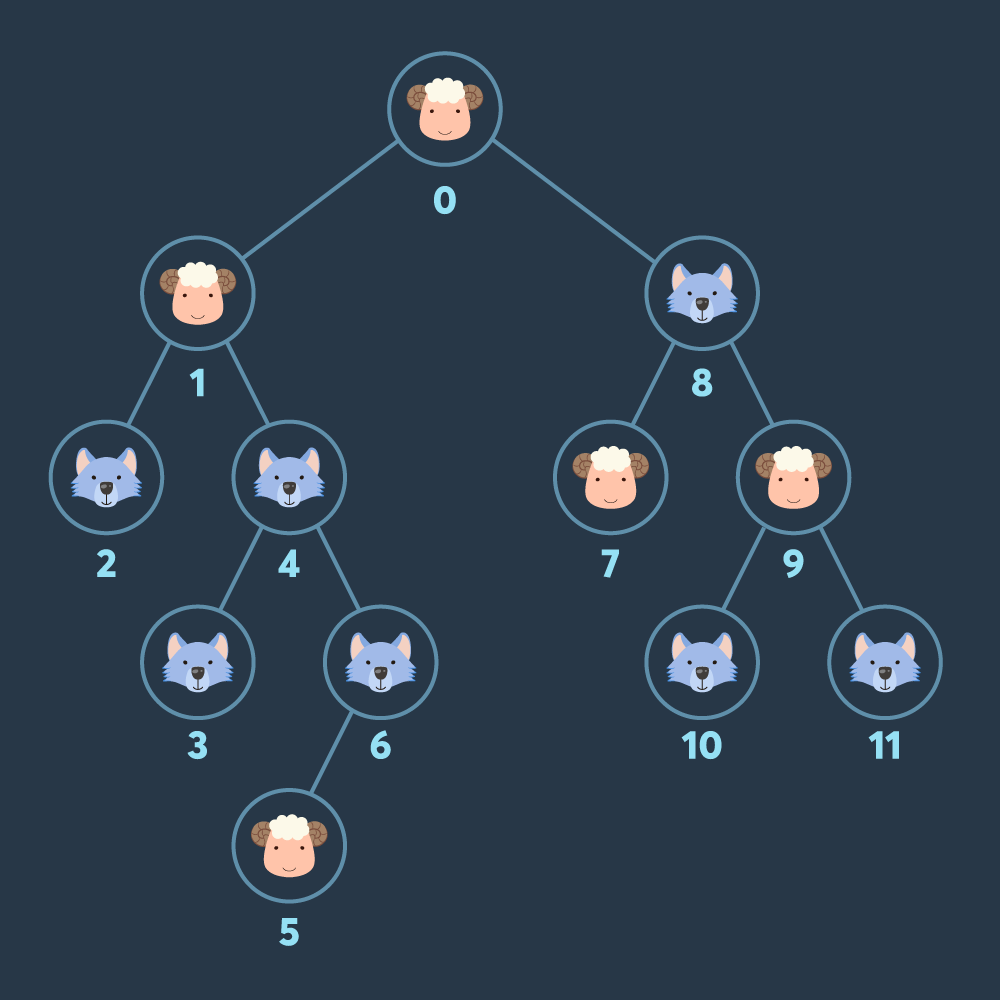
처음에는 각각의 양까지 만나는 늑대의 수만 기록하고 낮은 순대로 차례대로 합해가면 되지 않을까 싶었다.
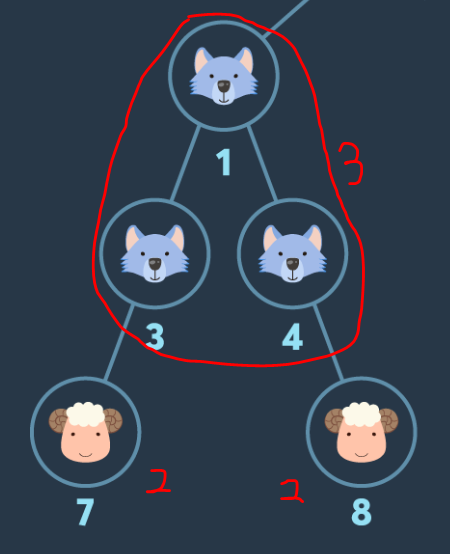
하지만 문제가 있었다. 각각 2개의 늑대를 지나치면 되지만 실제로는 3개의 늑대를 지나쳐야 2개 다 가질 수 있던 것이다.
생각하다 보니 '막히면 다른 곳으로 가는 건 어떨까?'라는 생각이 들었다. 갈 수 있는 경로를 저장하고 가는 것이다.
코드
#include <string>
#include <vector>
#include <queue>
using namespace std;
int ret = 0;
vector<vector<int>> map;
void dfs(int idx, int sheep, int wolf, vector<int> &info, queue<int> path)
{
    if (info[idx])
        ++wolf;
    else
    {
        ++sheep;
        ret = (ret > sheep) ? ret : sheep;
    }
    if (wolf >= sheep)
        return;
    for (int m : map[idx])
        path.push(m);
    for (int i = 0; i < path.size(); ++i)
    {
        int next = path.front();
        path.pop();
        dfs(next, sheep, wolf, info, path);
        path.push(next);
    }
}
int solution(vector<int> info, vector<vector<int>> edges)
{
    map = vector<vector<int>>(info.size(), vector<int>());
    for (auto edge : edges)
    {
        map[edge[0]].push_back(edge[1]);
    }
    dfs(0, 0, 0, info, {});
    return ret;
}
풀이
원래 vector로 풀려 했는데 삭제하고 다시 추가하는 과정이 매끄럽지 못할 것 같아서 큐로 작성했다. 이동할 수 있는 모든 경로를 추가해주고 현재 가는 경로를 제거해주는 방식으로 DFS를 돌면 된다.

연락 : publicminsu@naver.com