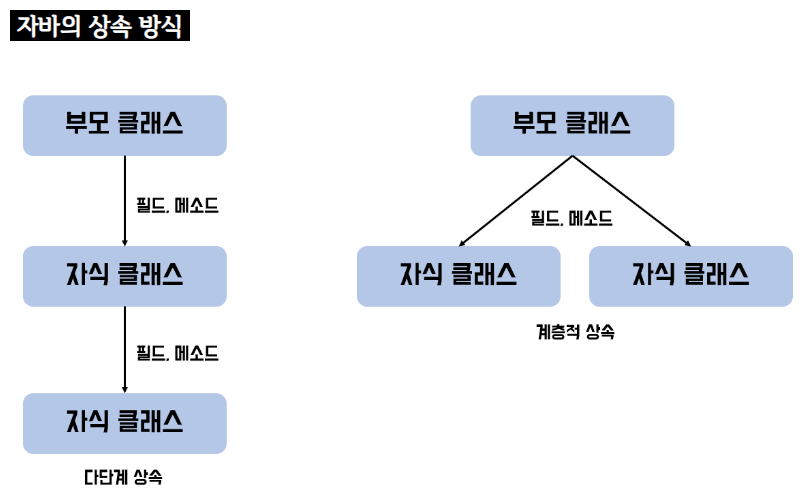
extends (상속)
- 다중상속 불가!
class People{
    //필드(Feild)
    String name; //이름
    int age; //나이

    //메소드(Method)
    public void printMyself(){
        System.out.println("이름 : " + name);
        System.out.println("나이 : " + age);
    }
}

class Student extends People{
    //필드(Field)
    int korean_scroe; //국어성적
    int math_score; //수학성적
    int english_score; //영어성적

    //생성자(Constrouct)
    Student(String name, int age, int kor_score, int mat_score, int eng_score){
        super.name = name; //부모 필드
        super.age = age; //부모 필드
        this.korean_scroe = kor_score;
        this.math_score = mat_score;
        this.english_score = eng_score;
    }

    //메소드(Method)
    public void printScore() {
        System.out.println("국어성적 : " + korean_scroe);
        System.out.println("수학성적 : " + math_score);
        System.out.println("영어성적 : " + english_score);
    }
}

public class Main {
    public static void main(String[] args) {
        Student student = new Student("홍길동", 18, 100, 90, 80);
        student.printMyself(); //부모 메소드 호출
        student.printScore(); //자식 메소드 호출
    }
}- super 키워드
super 키워드는 자식 클래스에서 부모 클래스를 가리킬 때 사용하는 키워드입니다. 주로 부모 클래스의 필드에 접근, 메소드를 호출할 때 사용합니다.
abstract 추상클래스,추상 메서드를 만드는 키워드=>쓰는 의도 건드리지마(버튼용이니까)
-
추상 클래스는 인스턴스, 즉 객체를 만들 수 없다. 즉, new를 사용할 수 없다.
-
추상 메서드는 하위 클래스에게 메서드의 구현을 강제한다. (오버 라이딩이 강제된다.)
-
추상 메서드를 포함하는 클래스는 반드시 추상 클래스여야 한다.
-
순도100% 추상 메서드만 가지는 추상 클래스는 interface interface는 다중 구현이 가능

:)