백준 1260번: DFS와 BFS

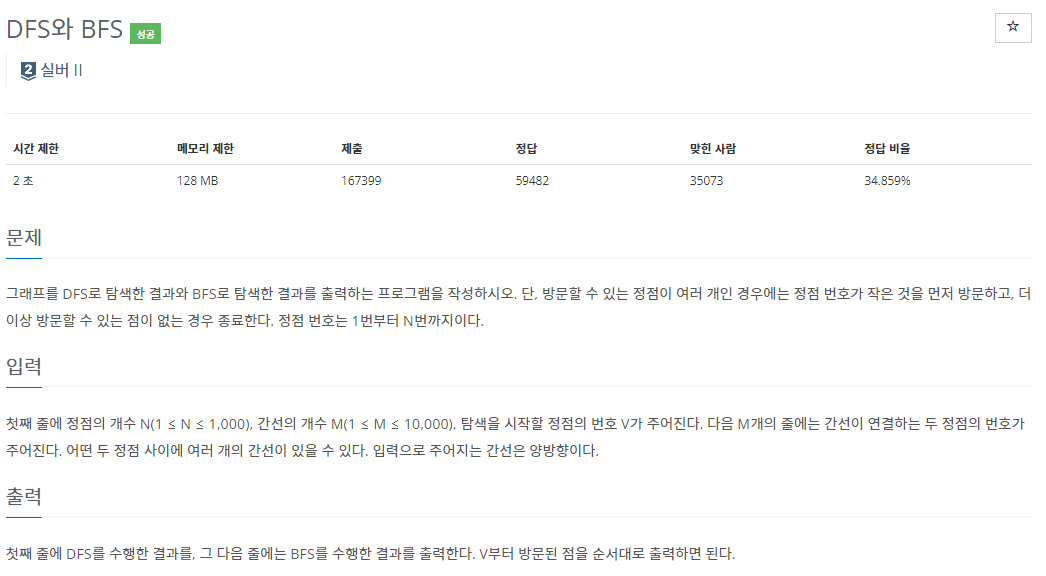
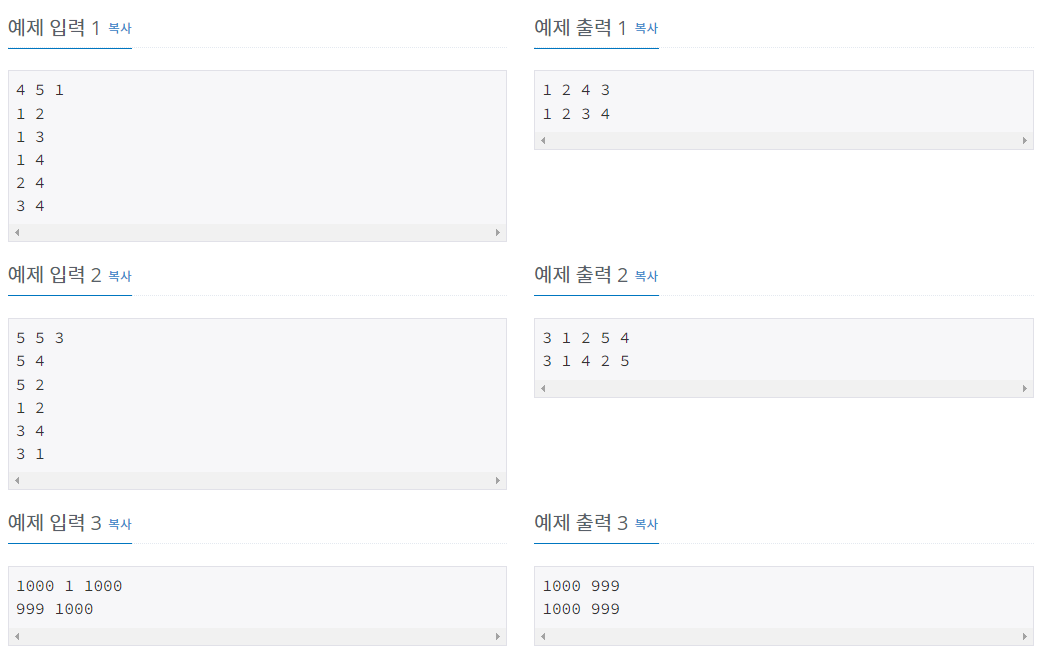
문제 설명
- DFS와 BFS를 구현하는 문제입니다.
접근법
- 인접리스트로 데이터를 받았습니다.
- Map에 key로 int값을, value로 list값을 활용했습니다.
- 번호가 낮은 정점부터 방문하기 위해 value인 list를 오름차순 정렬했습니다.
- 재귀호출 방식으로 DFS를 구현했습니다.
- Queue를 활용해 BFS를 구현했습니다.
정답
import java.io.*;
import java.util.*;

public class Main{
	static int N;
	static int M;
	static StringBuilder sb;
	public static void main(String[] args) throws IOException {
		sb = new StringBuilder();
		BufferedReader br = new BufferedReader(new InputStreamReader(System.in));
		StringTokenizer st = new StringTokenizer(br.readLine());
		N = Integer.parseInt(st.nextToken());
		M = Integer.parseInt(st.nextToken());
		int V = Integer.parseInt(st.nextToken());
		HashMap<Integer,List> graph = new HashMap<Integer,List>();
		for (int i = 0; i < M; i++) {
			st = new StringTokenizer(br.readLine());
			int key = Integer.parseInt(st.nextToken());
			int val = Integer.parseInt(st.nextToken());
			if(graph.keySet().contains(key)) {
				graph.get(key).add(val);
			}else {
				List<Integer>temp = new LinkedList<Integer>();
				temp.add(val);
				graph.put(key, temp);
			}
			//양방향이라서
			if(graph.keySet().contains(val)) {
				graph.get(val).add(key);
			}else {
				List<Integer>temp = new LinkedList<Integer>();
				temp.add(key);
				graph.put(val, temp);
			}
		}

		//숫자가 작은 정점부터 방문하기 위해 오름차순 정렬했습니다.
		for (List<Integer> g: graph.values()) {
			Collections.sort(g);
		}


		//System.out.println(graph.toString());
		if(M==0) {//예외1. 아무런 연결이 없을 때
			return;
		}else if(graph.get(V)==null) {//예외2. 시작점에서 연결된 노드가 없을 때
			System.out.println(V);
			System.out.println(V);
		}else{
			DFS(V,new boolean[N+1],graph);
			sb.append("\n");
			BFS(V,graph);
			System.out.println(sb.toString());
		}
	}

	public static void DFS(int V,boolean[] v,HashMap<Integer,List>graph) {
		v[V] = true;
		sb.append(V+" ");

		List<Integer> lst = graph.get(V);
		for (int i = 0; i < lst.size(); i++) {
			if(!v[lst.get(i)]) {
				DFS(lst.get(i),v,graph);
			}
		}
	}

	public static void BFS(int V,HashMap<Integer,List>graph) {
		boolean[] v = new boolean[N+1];
		Queue<Integer> q = new LinkedList<Integer>();
		v[V] = true;
		q.add(V);
		while(!q.isEmpty()) {
			int current = q.poll();
			sb.append(current+" ");
			List<Integer> lst = graph.get(current);
			for (int i = 0; i < lst.size(); i++) {
				if(!v[lst.get(i)]) {
					q.add(lst.get(i));
					v[lst.get(i)] = true;
				}
			}
		}
	}
}
기타
- 처음 틀렸을 때 반례를 직접 찾지 못해 검색을 통해 반례를 찾았습니다.
- 실제 문제였다면 틀렸을 거라는 얘기 -> 조금 더 반례찾는걸 연습하자
- 일반적인 DFS와 BFS가 실행되지 않는 두 가지 예외상황(시작지점에서 갈 수 있는 곳이 없음, 간선이 존재하지 않음)을 if-else로 처리했습니다.
- DFS와 BFS를 잘짜면 예외처리 없이 문제를 통과할 수 있는지 궁금합니다.

기록하고 정리하는 걸 좋아하는 백엔드 개발자입니다.