Formal and Informal Letter Writing MCQs: A Complete Guide for Better Exam Preparation Formal and Informal Letter Writing MCQs
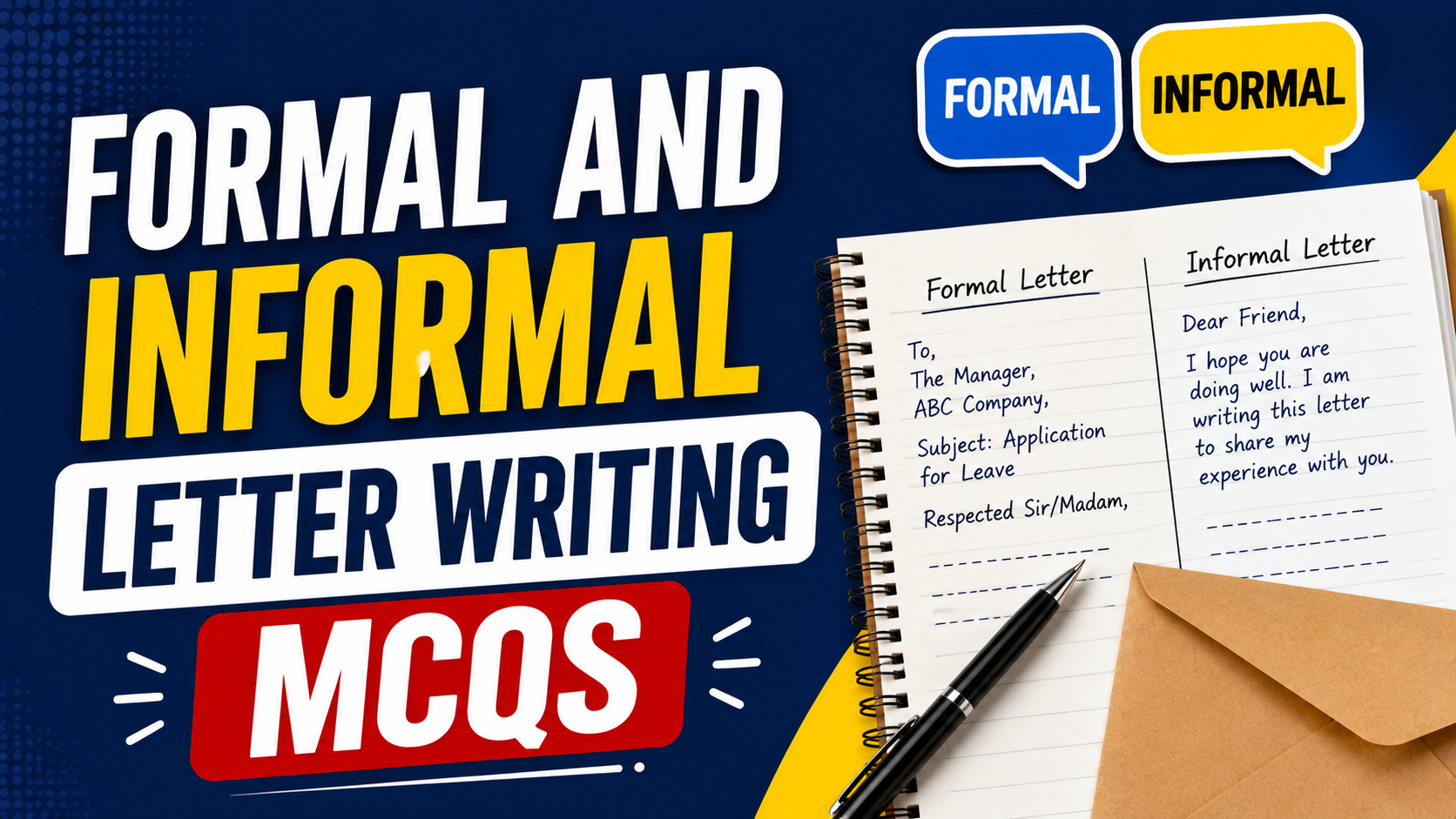
Letter writing is an essential part of English language learning and is frequently included in school, college, and competitive examinations. Practicing Formal and informal Letter writing MCQs helps students understand the differences between various letter formats, improve grammar, and strengthen their writing skills. Multiple-choice questions provide an effective way to revise important concepts, identify common mistakes, and build confidence before appearing for examinations.
Understanding Formal and Informal Letters
Before attempting MCQs, it is important to know the purpose and structure of both types of letters.
What Is a Formal Letter?
A formal letter is written for official or professional communication. It follows a standard format and uses polite, respectful, and professional language. Formal letters are commonly written for job applications, complaints, inquiries, requests, business communication, and applications to schools or government offices.
Key features include:
- Proper sender's and receiver's addresses
- Date
- Subject line (where applicable)
- Formal salutation
- Well-organized paragraphs
- Polite closing
- Signature
What Is an Informal Letter?
An informal letter is written to family members, relatives, or friends. It uses a friendly and conversational tone while maintaining clarity and proper grammar.
Common purposes include:
- Sharing personal experiences
- Inviting someone to an event
- Congratulating friends
- Expressing gratitude
- Giving advice
- Describing holidays or memorable events
Why Practice Formal and Informal Letter Writing MCQs?
Practicing Formal and informal Letter writing MCQs offers several advantages for students preparing for examinations. Multiple-choice questions test conceptual understanding rather than lengthy writing, allowing learners to revise many topics within a short period.
These MCQs help students:
- Recognize the correct letter format
- Choose appropriate salutations and closings
- Improve vocabulary usage
- Understand tone and style
- Avoid common grammatical mistakes
- Build confidence for written examinations
Regular practice also improves accuracy and speed during exams.
Common Topics Covered in MCQs
Letter writing MCQs generally focus on the most important elements of writing. Students may encounter questions related to:
Letter Format
Questions may ask about the correct order of addresses, date, greeting, body, closing, and signature.
Appropriate Salutations
Students should know when to use greetings such as "Dear Sir/Madam," "Dear Principal," or "Dear Friend."
Purpose of the Letter
Some MCQs require identifying whether a letter is formal or informal based on its content and intended audience.
Tone and Language
Formal letters require professional language, while informal letters allow a friendly and relaxed tone.
Grammar and Vocabulary
Many questions assess proper sentence structure, punctuation, spelling, and word choice suitable for each type of letter.
Effective Strategies for Scoring Well
Success in letter writing MCQs depends on understanding the concepts instead of memorizing answers.
Learn Standard Formats
Memorize the basic structure of both formal and informal letters. Knowing the sequence of each section makes answering format-based questions much easier.
Read Carefully
Pay close attention to the question and all answer choices before selecting the correct option.
Practice Regularly
Solve sample papers, previous examination questions, and online quizzes to become familiar with different question patterns.
Revise Common Mistakes
Review frequently confused topics such as salutations, complimentary closes, and differences in writing style.
Benefits of Using Formal and Informal Letter Writing MCQs
Students preparing for academic or competitive examinations can significantly improve their performance through Formal and informal Letter writing MCQs. They offer quick revision, immediate feedback, and better conceptual clarity. Teachers also use MCQs as an efficient assessment tool to evaluate students' understanding of letter writing rules.
Moreover, practicing objective questions reduces exam anxiety and helps learners recognize recurring patterns that often appear in language examinations.
Conclusion
Consistent practice with Formal and informal Letter writing MCQs is an excellent way to strengthen English writing skills and prepare for examinations. By understanding the differences between formal and informal letters, learning the correct formats, and regularly solving MCQs, students can improve both accuracy and confidence. Whether preparing for school exams, board examinations, or competitive tests, mastering these concepts provides a strong foundation for effective written communication and long-term academic success.
