1. AOP (Aspect-Oriented Programming) 개념
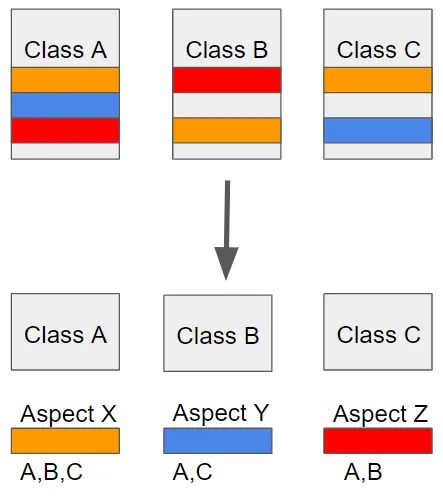
1.1 AOP의 개념 및 필요성
- AOP란?
- 관점 지향 프로그래밍(Aspect-Oriented Programming)의 약자.
- 횡단 관심사(Cross-Cutting Concern)를 모듈화하여 핵심 비즈니스 로직과 분리하는 프로그래밍 패러다임.
- 횡단 관심사 예: 로깅, 트랜잭션 관리, 보안 검증 등.
- AOP의 필요성
- 비즈니스 로직과 반복적인 로직(횡단 관심사)을 분리하여 코드 가독성과 유지보수성을 높임.
- 중복 코드 제거로 생산성 향상.
1.2 AOP 주요 개념 설명
1. Aspect
-
Aspect는 횡단 관심사를 모듈화한 클래스입니다.
-
로깅, 트랜잭션 관리, 보안 검증과 같은 공통된 기능을 별도의 모듈로 분리하여 핵심 비즈니스 로직에 영향을 주지 않도록 설계합니다.
-
특징:
- 여러 클래스나 메서드에 공통적으로 적용될 기능을 한 곳에 모아 재사용성을 높입니다.
- Spring AOP에서는@Aspect어노테이션을 사용해 Aspect 클래스를 정의합니다.@Aspect @Component public class LoggingAspect { @Before("execution(* com.aop.domain..*(..))") public void logBefore() { log.info("메서드 실행 전 로그"); } }
2. Advice
- Advice는 Aspect에 포함된 특정 작업(기능)을 정의한 메서드입니다.
- 언제(메서드 실행 전, 후, 혹은 실행 중) Advice가 실행될지 결정됩니다.
- Advice 종류:
1. @Before:
- 메서드 실행 전에 실행.
- 보안 검증, 데이터 유효성 검사 등에 활용.
2. @After:
- 메서드 실행 후에 실행.
- 로깅, 리소스 정리 등에 활용.
3. @AfterReturning:
- 메서드가 정상적으로 반환된 이후에 실행.
- 반환 값을 활용한 후처리에 사용.
4. @AfterThrowing:
- 메서드에서 예외가 발생한 경우에 실행.
- 예외 로깅이나 알림 처리에 사용.
5. @Around:
- 메서드 실행 전후로 실행.
- 실행 시간 측정, 트랜잭션 관리 등 복잡한 처리에 활용.@Before("execution(* com.aop.domain..*(..))") public void logBefore() { log.info("메서드 실행 전 로그"); }
3. JoinPoint
-
JoinPoint는 AOP가 적용될 수 있는 지점을 의미합니다.
-
Spring AOP에서는 메서드 호출, 객체 생성 등이 JoinPoint에 해당합니다.
-
특징:
-
JoinPoint를 활용하면 메서드 실행 시점에서 메서드 이름, 파라미터, 반환 값 등의 정보를 가져올 수 있습니다.
-
Spring AOP는 메서드 호출에만 JoinPoint를 지원합니다.
@Before("execution(* com.aop.domain..*(..))") public void logMethodDetails(JoinPoint joinPoint) { log.info("실행된 메서드 이름: {}", joinPoint.getSignature().getName()); Object[] args = joinPoint.getArgs(); if (args != null && args.length > 0) { for (int i = 0; i < args.length; i++) { log.info("전달된 파라미터 [{}]: {}", i, args[i]); } } } -
joinPoint.getSignature().getName()으로 호출된 메서드의 이름을 가져옵니다. -
joinPoint.getArgs()를 통해 전달된 파라미터를 확인할 수 있습니다.
-
4. Pointcut
-
Pointcut은 Advice를 적용할 JoinPoint를 정의하는 표현식입니다.
-
특정 패키지, 클래스, 메서드에만 Advice를 적용하거나 제외할 수 있습니다.
-
Pointcut 표현식:
-
execution: 메서드 실행을 기준으로 Pointcut 정의.
- 예:execution(* com.example.service..*(..))→com.example.service패키지의 모든 클래스의 모든 메서드.@Before("execution(* com.aop.domain..api..*(..))") public void logBeforeExecution() { log.info("[execution] 메서드 실행 전 로그"); } -
리턴 타입 지정 :
*모든 리턴 타입을 의미합니다. -
패키지 지정 :
com.aop.domain메서드가 속한 클래스가 이 패키지 또는 그 하위 패키지에 있어야 한다는 조건을 지정합니다. -
하위 패키지 포함 :
..는 0개 이상의 하위 패키지를 의미합니다. -
클래스 이름의 와일드카드 : 클래스 이름이 무엇이든 상관없이 모든 클래스의 메서드를 대상으로 합니다.
-
메서드 이름과 파라미터 지정 :
*는 메서드 이름을 지정하는 부분입니다. 여기서*는 모든 이름의 메서드를 의미합니다.(..)는 메서드의 파라미터 지정과 0개 이상의 모든 파라미터를 허용합니다.
-
-
within: 특정 클래스 또는 패키지 내의 모든 메서드에 적용.
-
예:
within(com.example.service..*)→com.example.service패키지와 하위 패키지의 모든 메서드.@Before("within(com.aop.domain..*)") public void logBeforeWithin() { log.info("[within] 메서드 실행 전 로그"); }
-
-
@annotation: 특정 어노테이션이 붙은 메서드에만 적용.
-
예:
@annotation(com.example.annotation.Loggable).@Retention(RetentionPolicy.RUNTIME) @Target(ElementType.METHOD) public @interface Loggable { }@Before("@annotation(com.aop.common.annotation.Loggable)") public void logBeforeAnnotation() { log.info("[annotation] 메서드 실행 전 로그"); }package com.example.service; import com.example.annotation.Loggable; public class UserService { @Loggable public void getUser() { // 이 메서드에만 logAnnotatedMethod 적용 } }표현식 적용 대상 주요 사용 사례 execution 특정 메서드 실행 시점을 기준으로 AOP 적용 특정 패키지/메서드의 실행 시점에 대한 공통 로직 적용. within 특정 클래스/패키지 내의 모든 메서드에 AOP 적용 특정 영역 내 모든 메서드에 대해 포괄적인 동작 정의. @annotation 특정 어노테이션이 붙은 메서드에만 AOP 적용 메서드에 맞춤형 동작(예: 로깅, 검증, 보안 등) 적용.
-
2. Spring AOP 설정 및 적용
2.1 AOP 예제 코드
- LoggingAspect 클래스
@Slf4j
@Aspect
@Component
public class LoggingAspect {
@Before("execution(* com.aop.domain..api..*(..))")
public void logBeforeExecution() {
  log.info("[execution] 메서드 실행 전 로그");
}
@Before("within(com.aop.domain..*)")
public void logBeforeWithin() {
  log.info("[within] 메서드 실행 전 로그");
}
@Before("@annotation(com.aop.common.annotation.Loggable)")
public void logBeforeAnnotation() {
  log.info("[annotation] 메서드 실행 전 로그");
}
@Before("execution(* com.aop.domain..*(..))")
public void logMethodDetails(JoinPoint joinPoint) {
Object[] args = joinPoint.getArgs();
if (args != null && args.length > 0) {
for (int i = 0; i < args.length; i++) {
log.info("전달된 파라미터 [{}]: {}", i, args[i]);
}
}
log.info("실행된 메서드 이름: {}", joinPoint.getSignature().getName());
}
}- Service 클래스
@Slf4j
@Service
@RequiredArgsConstructor
public class ProductService {

  private final ProductRepository productRepository;
  private final CategoryRepository categoryRepository;
  private final ProductQueryRepository productQueryRepository;

  @Loggable
  public List<ProductResponse> getAll() {
    ...
  }
}- 결과 로그
[execution] 메서드 실행 전 로그
[within] 메서드 실행 전 로그
실행된 메서드 이름: findAll

[annotation] 메서드 실행 전 로그
[within] 메서드 실행 전 로그
실행된 메서드 이름: getAll
3. AOP를 활용한 예외 처리와 로깅, 실행 시간 측정
3.1 예외 로깅
- AOP를 활용하면 애플리케이션 전반에서 발생하는 예외를 중앙에서 처리하고 로깅할 수 있습니다.
- Spring AOP의
@AfterThrowing어노테이션은 특정 메서드에서 예외가 발생했을 때 동작하는 Advice를 정의할 수 있습니다. - 이를 통해 중복 없이 예외 처리를 일관되게 관리할 수 있습니다.
작동 원리
- Pointcut을 사용해 예외 로깅이 필요한 메서드를 정의합니다.
- 예외 발생 시
throwing속성에 지정된 변수로 예외 정보를 전달받아 로그를 출력하거나 알림 시스템과 연동합니다.
@Slf4j
@Aspect
@Component
public class ExceptionLoggingAspect {

  @Pointcut("execution(* com.aop.domain..service..*(..))")
  public void serviceMethods() {
  }

  @AfterThrowing(pointcut = "serviceMethods()", throwing = "exception")
  public void logException(ServiceException exception) {
    log.error("AfterThrowing : [{}] {}", exception.getCode(), exception.getMessage());
  }
}- Pointcut 정의:
within(com.aop.domain..*)는com.aop.domain패키지의 모든 클래스에 포함된 메서드를 대상으로 설정.
throwing속성:throwing = "exception"을 통해 발생한 예외 객체를 Advice로 전달받습니다.
- 로깅 출력:
log.error로 예외 메시지와 스택 트레이스를 기록하여 디버깅 및 문제 분석에 활용.
결과 로그 예시
AfterThrowing : [NOT_FOUND_USER] User를 찾을 수 없습니다.3.2 실행 시간 측정
- Spring AOP의
@Around어노테이션은 메서드 실행 전후에 특정 로직을 실행할 수 있는 Advice를 정의합니다. - 이를 활용하여 메서드 실행 시간 측정이 가능합니다.
- 실행 시간 정보를 통해 성능 병목 구간을 찾아 최적화할 수 있습니다.
작동 원리
@Around는 Pointcut에 정의된 메서드 호출을 가로채고, 실행 전후의 시점을 제어합니다.ProceedingJoinPoint를 사용하여 실제 메서드를 호출하고, 실행 결과를 반환받습니다.- 메서드 실행 전후의 시간을 기록하여 로그로 출력합니다.
@Slf4j
@Aspect
@Component
public class ExecutionTimeAspect {

  @Pointcut("execution(* com.aop.domain..service..*(..))")
  public void serviceMethods() {
  }

  @Around("serviceMethods()")
  public Object measureExecutionTime(ProceedingJoinPoint joinPoint) throws Throwable {
    long startTime = System.currentTimeMillis();

    Object result = joinPoint.proceed();

    long endTime = System.currentTimeMillis();
    log.info("{} 메서드 실행 시간: {} ms", joinPoint.getSignature(), (endTime - startTime));

    return result;
  }

}- Pointcut 정의:
- 서비스 계층의 모든 메서드 실행에 대해 실행 시간 측정을 적용.
ProceedingJoinPoint:proceed()를 호출하여 실제 메서드를 실행하고 결과를 반환.- 메서드 실행 전후로 시간을 측정 가능.
- 로깅 출력:
- 실행된 메서드 이름(
ProductService.getById())과 실행 시간(endTime - startTime)을 로그로 출력.
- 실행된 메서드 이름(
결과로그 예시
ProductResponse com.aop.domain.product.service.ProductService.getById(Long) 메서드 실행 시간: 32 ms