
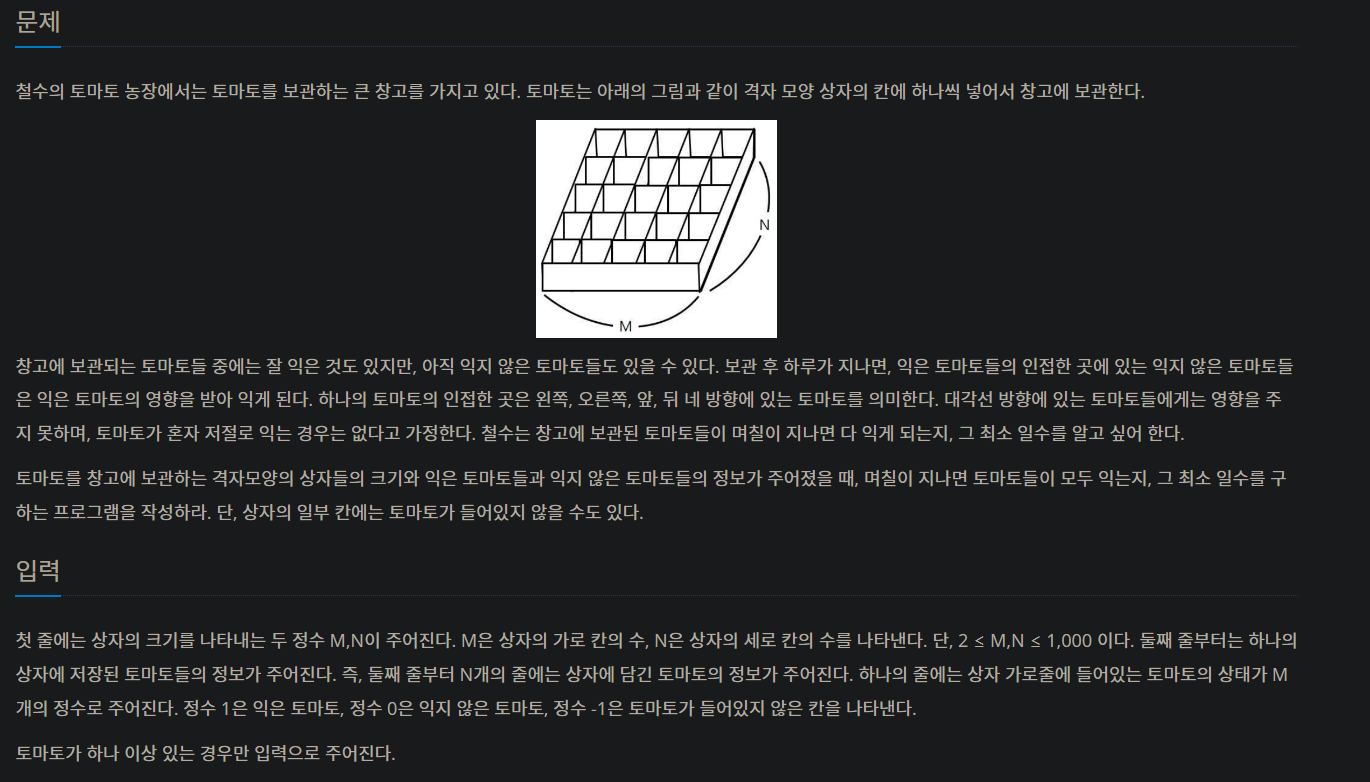
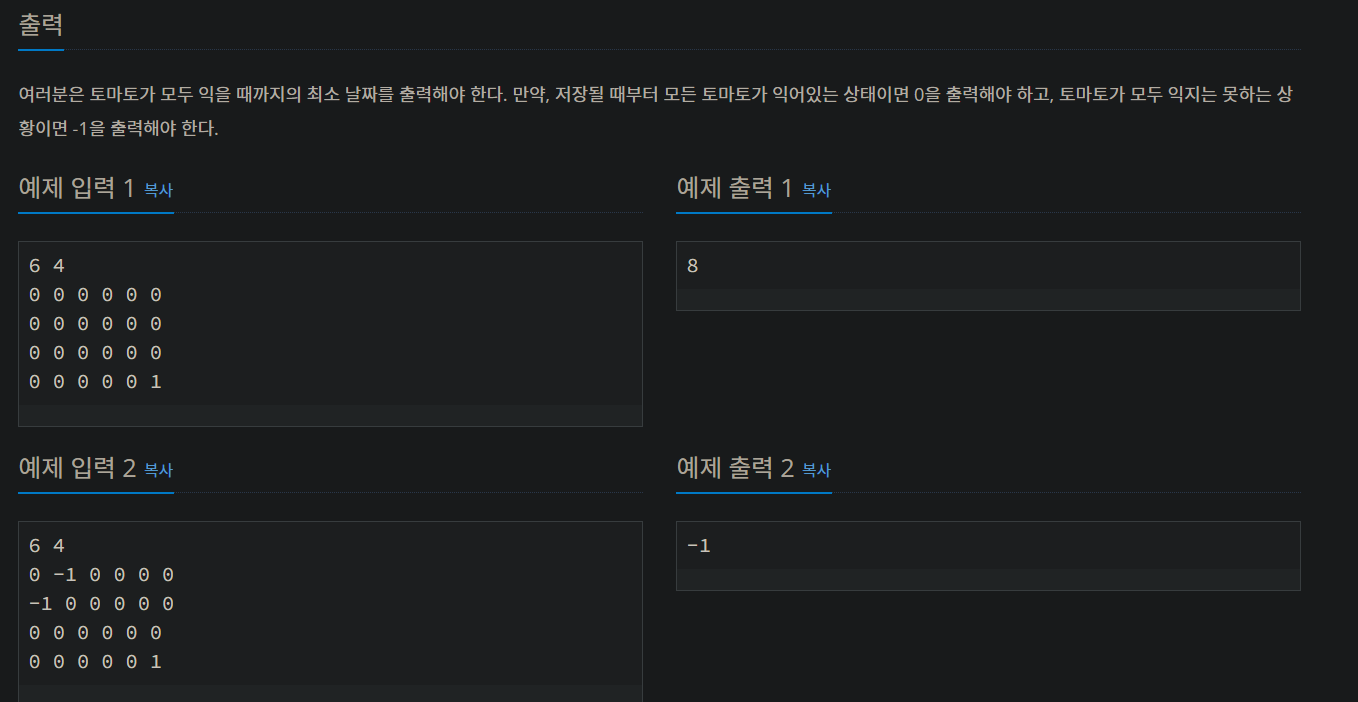
풀이 코드
from collections import deque

m, n = map(int, input().split())  # n은 행, m은 열
graph = [list(map(int, input().split())) for _ in range(n)]
dx = [-1, 1, 0, 0]  # 상 하 좌 우 이동했을때
dy = [0, 0, -1, 1]
q = deque([])  # 좌표를 넣을거기 때문에 []로
result = 0  # 정답을 담을 변수

for i in range(n):
    for j in range(m):
        if graph[i][j] == 1:
            q.append([i, j])


def bfs():
    while q:
        x, y = q.popleft()
        for d in range(4):
            nx = dx[d] + x
            ny = dy[d] + y
            if 0 <= nx < n and 0 <= ny < m:
                if graph[nx][ny] == 0:
                    graph[nx][ny] = graph[x][y] + 1
                    q.append([nx, ny])


bfs()
for i in graph:
    for j in i:
        if j == 0:  # 익히지 못한 토마토가 있다면
            print(-1)
            exit()
    result = max(result, max(i))

print(result - 1)
bfs를 이용해서 문제를 풀어봤다! 공식?느낌으로 queue를 사용할려고 하였고 deque를 안쓰면 시간복잡도 때문에 문제를 해결하지 못할 거 같았다.
2차원 배열에 입력값들을 전부 넣어주고 익힌 토마토가 있는 좌표를 queue에 넣고 popleft로 graph에 값들을 움직인 값만큼 바꿔주었다.
마지막에는 전부 토마토를 익혔다면 -1해주어서 출력했다.
회고
bfs 문제에서는 우선 deque모듈을 사용해서 popleft로 하나씩 꺼내면서 queue에 아무것도 없을 때까지 반복!!

능동적으로 개발 지식을 찾아다니는 백엔드 개발자입니다 😊 작성된 글에 대한 질문들 및 피드백은 언제나 환영입니다 :) 👌