While 문
- 반복할 코드가 한줄이라면 중괄호 생략가능
초기식
while (조건식) // ← 루프 선언문(loop statement)
{
    반복할 코드
    변화식
}
// ↑ 루프 본체(loop body) 및 변화식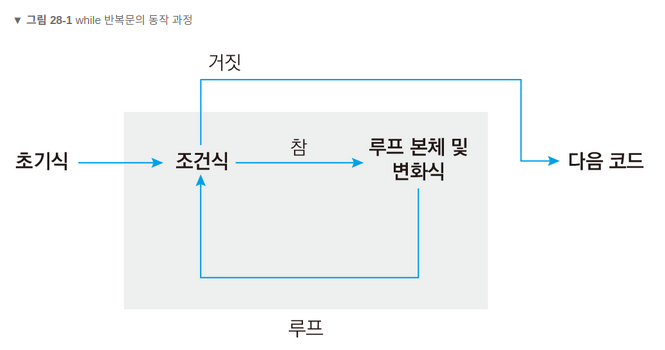
# define _CRT_SECURE_NO_WANINGS
# include<stdio.h>

int main(void)
{
    int n;
    printf("약수를 출력할 1 이상의 정수 한 개를 입력하세요: ");
    scanf("%d", &n);

    if (n>=1){
        int divisor = 1;
        while(divisor <= n){
            if (n % divisor == 0){
                printf("%d\n", divisor);
            }
            divisor++;
        }
    }
    else{
        printf("1미만의 정수가 입력되었습니다. 프로그램을 종료합니다\n");
    }
    return 0;
}
// 알파벳 입력받는 코드
# define _CRT_SECURE_NO_WANINGS // 컴파일러 경고 억제
# include<stdio.h> // 표준 입출력 포함된 헫 파일

int main(void){ // 메인함수

    char ch; // 입력한 문자 저장 변수
    char newlinchar; // 입력 버퍼에 남아 있는 개행 문자 저장 변수
    printf("영문 알파벳 문자 한 개를 입력하세요: ");
    scanf("%c", &ch);
    scanf("%c", &newlinchar);
    while((ch<'A'|| ch>'Z')&&(ch<'a'||ch>'z'))
    {
        printf("알파벳 아닌 문자가 입력되었습니다. 다시 입력하세요: ");
        scanf("%c", &ch);
        scanf("%c", &newlinchar);
    }

} #define _CRT_SECURE_NO_WARNINGS
#include<stdio.h>
int main(void) {
char ch;
printf("영문 알파벳 문자 한 개를 입력하세요: ");
scanf("%c", &ch);
while ((ch < 'A' || (ch > 'Z' && ch < 'a') || ch > 'z')) {
while (getchar() != '\n'); // 버퍼에 남아 있는 개행 문자 제거
printf("알파벳 아닌 문자가 입력되었습니다. 다시 입력하세요: ");
scanf("%c", &ch);
}
return 0;
}- 랜덤 숫자 생성
#include <stdio.h>
#include <stdlib.h>    // srand, rand 함수가 선언된 헤더 파일
#include <time.h>      // time 함수가 선언된 헤더 파일

int main()
{
    srand(time(NULL));    // 현재 시간값으로 시드 설정

    int i = 0;
    while (i != 3)         // 3이 아닐 때 계속 반복
    {
        i = rand() % 10;   // rand 함수를 사용하여 무작위로 정수를 생성한 뒤 10 미만의 숫자로 만듦
        printf("%d\n", i);
    }

    return 0;
}
do-while문
초기식
do // ↓ 루프 본체(loop body) 및 변화식
{
    반복할 코드
    변화식
} while (조건식);
//   ↑ 루프 선언문(loop statement)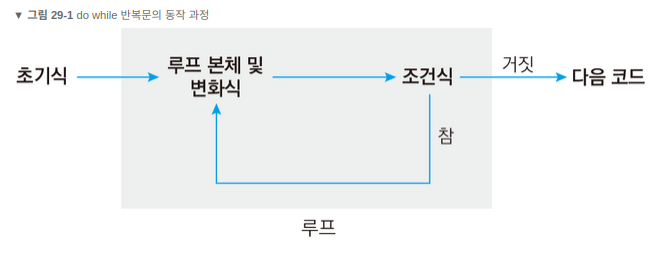
#define _CRT_SECURE_NO_WARNINGS
#include <stdio.h>

int main(void) {
    char ch;
    char newlinchar;

    do {
        printf("영문 알파벳 문자 한 개를 입력하세요: ");
        scanf("%c", &ch);
        scanf("%c", &newlinchar);

        if ((ch<'A' || ch>'Z') && (ch<'a' || ch>'z')) {
            printf("알파벳 아닌 문자가 입력되었습니다. 다시 입력하세요: ");
        }
    } while ((ch<'A' || ch>'Z') && (ch<'a' || ch>'z'));

    printf("ch=%c\n", ch);
    return 0;
}
for 반복문
for (초기식; 조건식; 변화식) // ← 루프 선언문(loop statement)
{
    반복할 코드
}
// ↑ 루프 본체(loop body)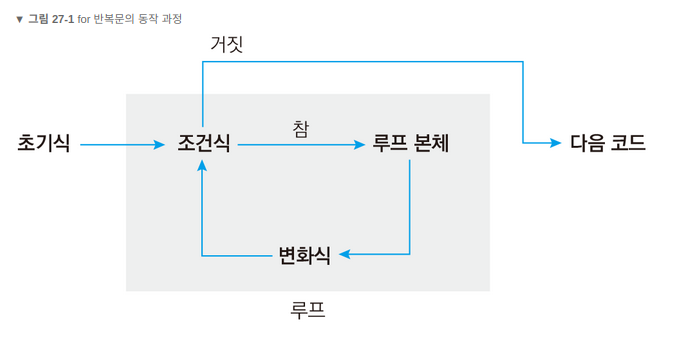
반복문 특징
- while문
- 조건식의 결과에 따라 반복문의 실행 여부를 결정하는 경우에 적합
- 그 중에서도 조건에 따라 코드를 실행하지 않을 수도 있는 경우에 사용
- do-while문
- while문과는 달리 최소한 한 번은 실행시켜야 하는 코드가 있을 때 적합한 반복문
- for문
- 주로 정해진 회수 또는 정해진 개수의 요소들을 각각 처리할 때 자주 사용
- while이나 do-while보다 for문이 반복 관련 코드를 보다 일목요연하게 보여줄 수 있음
break, continue
-
break문
- 반복문의 실행 흐름을 멈추고, 반복문 다음문장을 실행시키도록 하는 명령
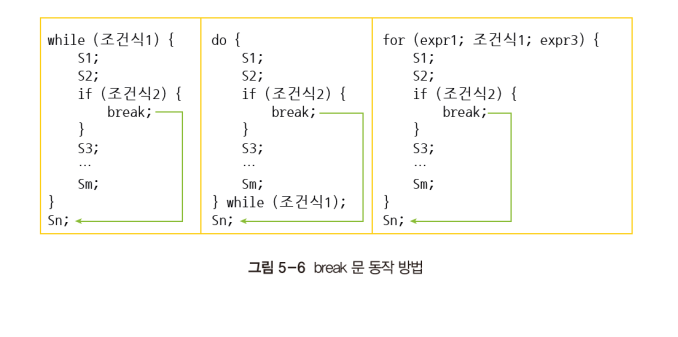
- 반복문의 실행 흐름을 멈추고, 반복문 다음문장을 실행시키도록 하는 명령
-
continue문
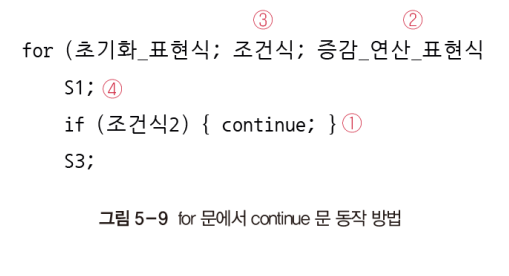
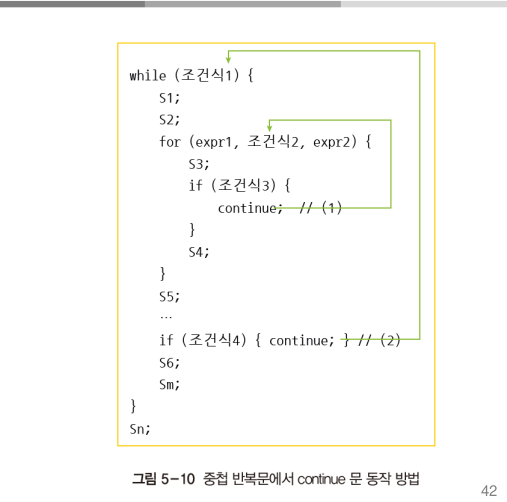
# define _CRT_SECURE_NO_WANINGS
# include<stdio.h>

int main(void)
{
    int n;
    int numOfDivisors = 0;
    printf("약수를 출력할 1 이상의 정수 한 개를 입력하세요: ");
    scanf("%d", &n);
    if (n>=1)
    {
        for(int divisor =1; divisor <=n; divisor ++)
        {
            if (n%divisor ==0)
            {
                if (divisor % 2 ==0){continue;}
                printf("%d\n", divisor);
            }
        }
    }
    else
    {
    printf("1미만의 정수가 입력되었습니다. 프로그램 종료\n");
    }
    return 0;
}
함수
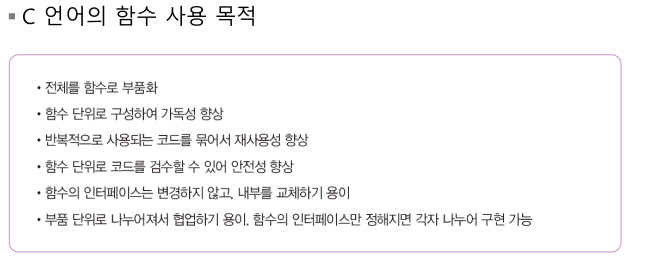
- 캡슐화: 내부동작 원리 및 구조를 밖에 드러내지 않고 사용하는데 필요한 인터페이스만 제공하는 것
- 재사용성: 재사용성을 높이기 위해 함수는 단순화시키고 일반화해서 작성
- 함수를 정의하는 방법
반환값자료형 함수이름(매개변수_목록)
{
    명령문
}- return문
- 함수 몸체 중간에서 실행 종료 가능
- 값을 반환할 수 있음
return 표현식;
return ;- c언어의 값 전달 방식 특징
- 인자에 표현식을 사용가능(변수나 리터럴 상수도 표현식 중 한가지)
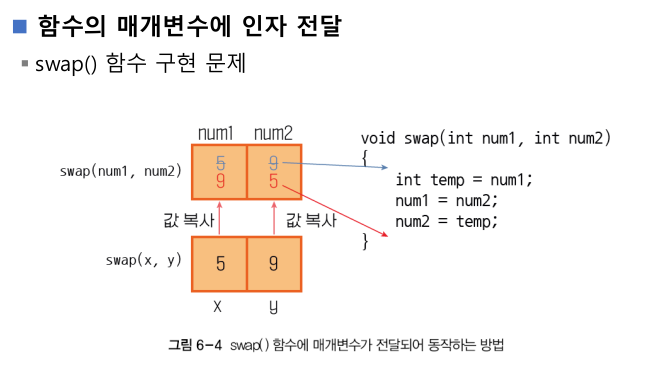
- 함수에서 매개변수의 값을 변경해도 함수 바깥에 영향을 주지 않음
//주어진 시간을 1분 증가시켜 변경되는 시간 정보를 출력하는
프로그램을 만들자
#define _CRT_SECURE_NO_WARNINGS
#include <stdio.h>

int addOneMinute(int hour, int minute)
{
    minute++;
    if (minute == 60)
    {
        minute = 0;
        hour ++;
        if (hour ==24)
        {
            hour = 0;
        }
    }
    return hour*100+minute;
}

int main()
{
    int hour, minute, time;

    printf("시간과 분 입력: ");
    scanf("%d %d", &hour, &minute);
    time = addOneMinute(hour, minute);
    printf("변경된 시간은 %02d:%02d \n", time/100, time%100);
    return 0;
}
#define _CRT_SECURE_NO_WARNINGS
#include <stdio.h>

void swap(int num1, int num2)
{
    int temp = num1;
    num1=num2;
    num2=temp;
}

int main()
{
    int x = 5;
    int y = 9;
    swap(x,y);
    printf("x=%d, y=%d\n", x,y);
    return 0;
}
변수의 유효범위와 생존 기간
- 유효 범위(scope)
c언어 코드를 변수들이 선언된 위치를 통해 그 변수가 어디서 사용할 수 있는지 확인하는 것- 전역/ 지역/ 코드블록/ for문/ 파일
- 지역변수: 함수 내부에서 선언되고 그 함수에서만 사용할 수 있는 변수
- 매개 변수도 지역변수로 함수 내에서 동일한 명칭으로 변수 선언 불가
// 지역변수 사용
#define _CRT_SECURE_NO_WARNINGS
#include <stdio.h>
#include <math.h>

void printQuadEqnSoln(int a, int b, int c)
{
    double r = sqrt(b*b-4*a*c);
    double x1 = (-b+r)/(2*a);
    double x2 = (-b-r)/(2*a);
    printf("x1=%f, x2 = %f\n", x1, x2);
}


int main(void) {
    printQuadEqnSoln(1, -5, 6);
    printQuadEqnSoln(1, 5, -6);
    return 0;
}- 전역변수: 함수 밖에 선언하고 프로그램의 모든 함수에서 사용할 수 있는 변수
- 프로그램 전체에 영향을 미치기 때문에 동일한 이름의 변수 선언 불가
//전역변수 사용 코드
#define _CRT_SECURE_NO_WARNINGS
#include <stdio.h>
#include<math.h>
double x1;
double x2;

void calcQuadEqn(int a, int b, int c)
{
    double r = sqrt(b*b-4*a*c);
    x1 = (-b+r)/(2*a);
    x2 = (-b-r)/(2*a);
}

int main(void) {
    calcQuadEqn(1, -5, 6);
    printf("x1 = %f, x2 = %f\n", x1,x2);
    calcQuadEqn(1,5,-6);
    printf("x1 = %f, x2 = %f\n", x1,x2);
    return 0;
}
// 난수 생성
#define _CRT_SECURE_NO_WARNINGS
#include <stdio.h>
unsigned seed = 17;
void setseed(unsigned s)
{
seed = s;
}
unsigned random()
{
seed = (seed*seed)+(13*seed) +19;
//if (seed>RAND_MAX) {seed %= RAND_MAX;}
return seed;
}
int main(void) {
setseed(50);
for (int i = 0; i<=10; i++)
{
printf("%u\n", random());
}
return 0;
}- 전역변수와 지역변수의 이름 충돌과 유효범위
- 같은 이름의 변수들을 다른 함수들에 사용하는 것은 괜찮다
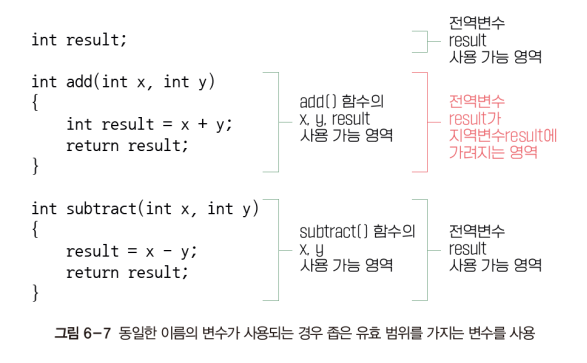
- 같은 이름의 변수들을 다른 함수들에 사용하는 것은 괜찮다
#define _CRT_SECURE_NO_WARNINGS
#include <stdio.h>

int x=1; // 전역변수 x를 선언하고 1로 초기화

void func1(int x) // func1 함수에 지역변수 x를 선언
{
    printf("func1: x = %d\n", x); // func1()의 지역변수 x의 값을 화면에 출력
}

void func2(int n)
{
    x=n; // 아직 func2의 지역변수 x가 선언되기 전이므로 전역변수 x에 n을 저장
    printf("func2-1: x = %d\n", x); // 전역변수 출력
    int x = 5; // func2의 지역변수 x를 선언 및 초기화
    printf("func2-2: x = %d\n", x); // func2의 지역변수 x값을 추력
}

int main(void)
{
    printf("main: = x =%d\n", x); // 전역변수 x의 값을 출력
    func1(3);
    func2(7);
}
- 코드 불록과 for문 유효 범위
- 코드블록은 자신만의 유효 범위를 가짐
#define _CRT_SECURE_NO_WARNINGS
#include <stdio.h>

int x = 5;

int main(void) {

    printf("x = %d\n", x); // 5
    int x = 7;
    printf("x = %d\n", x); // 7
    {
        printf("x = %d\n", x); // 7
        int x = 9;
        printf("x = %d\n", x); // 9
    }
    for (int x = 0; x <2; x++)
    {
        printf("x = %d\n", x); // 0, 1
    }
    printf("x = %d\n", x); //7
}
- 정적 지역변수
- 유효범위는 지역변수와 동일
- 생존 기간은 전역변수와 일치하는 변수
- 함수가 종료되어도 정적 지역변수가 사용하는 메모리 공간은 변함없이 존재
*특징- 함수가 여러번 호출되더라도 초기화 코드는 실행되지 않음
- 정적 지역변수를 초기화하는 것은 상수로만 가능
#define _CRT_SECURE_NO_WARNINGS
#include <stdio.h>

void printCallCount()
{
    static int count = 0; //정적 지역변수 count를 선언한고 0으로 초기화
    int localCount = 0; // 지역변수 localCount를 선언하고 0으로 초기화, 일반 지역변수는 함수가 호출될때마다 초기화됨
    count++;
    localCount++;
    printf("count = %d\n", count); // 이전 호출때 사용한 값이 저장
    printf("localCount = %d\n", localCount); // 함수 호출과 함께 이전 값은 사라짐
}

int main()
{
    printCallCount(); //count = 1, localcount = 1
    printCallCount(); // count =2, localcount = 1
    printCallCount(); // count =3, localcount = 1
}- typeof와 유효 범위
- 유효범위 :
함수 밖에 선언된 자료형 이름은 현재 선언된소스 파일 안에서 유효,
함수 안에서 선언된 이름은 함수에서 유효
코드 블록 안에서 선언된 자료형 이름은 코드 블록 안에서 유효
- 유효범위 :
월을 나타내는 enum 자료형을 만들고 사용자로부터 정수를 입력받아 eunm 값으로 반환하는 함수 코드
#define _CRT_SECURE_NO_WARNINGS
#include <stdio.h>

// enum 자료형을 선언
typedef enum {JAN = 1, FEB, MAR, APR, MAY, JUN, JUL, AUG, SEP, OCT, NOV, DEC} MONTH;

MONTH getMonth()
{
    MONTH month; // int month; 도 가능
    printf("1~12 사이의 정수를 입력하세요: ");
    scanf("%d", &month); // enum도 int와 동일하게 %d로 입력받음
    return month;
}

int main(void) {

    MONTH m = getMonth();
    printf("month = %d\n", m);
    return 0;
}
- const 변수
- 초기화가 된 후에는 값을 변경할 수 없다
 #define _CRT_SECURE_NO_WARNINGS
#include <stdio.h>

void func(int n)
{
    const int m = n;
    const int v = 3;
    printf("m = %d\n", m);
}

int main(void)
{
    func(50);
    return 0;
}
함수 선언
- 함수 선언은 반드시 함수의 머리 부분에 세미 콜론을 붙여서 문장 생성

공부하는 거북이