
코드컨벤션과 Git hub
배열과 리스트
Chapter .1 오정호 튜터님 코드컨벤션과 Git hub 특강
Content .1 코드컨벤션의 목적
- 내 코드를 다른 사람이 쉽게 이해할 수 있도록
- 오랜 시간 뒤에 내가 내 코드를 알아보기 위해서
- 취직하기 위해서
- 가독성
Contnet .2 코드컨벤션의 종류
- camelCase / 소문자로 시작, 띄어쓰기 생략, 대문자로 구분
- PascalCase / 대문자로 시작, 띄어쓰기 생략, 대문자로 구분
- snakecase / 소문자만 사용, 띄어쓰기 대신 사용
- kebab-case / 소문자만 사용, 띄어쓰기 대신 - 사용
Content .3 Unity에서 권장하는 코드컨벤션
- Unity에서는 PascalCase
- 덩치가 크거나 public이면 PascalCase
- Non public이면 _camelCase
- 함수 내부에서 쓰이는 것들은 camelCase
- 이름 정할 땐 누가봐도 알 수 있도록
Content .4 Git hub 사용 중 충돌 발생 시
- Undo / Revert
- 소통해서 충돌 해결
- 아예 터졌다면 로컬 저장소 그냥 삭제 후 원격 저장소 다시 clone
Chapter .2 이성언 튜터님 배열과 리스트 특강
Content .1 List 와 Array의 차이점
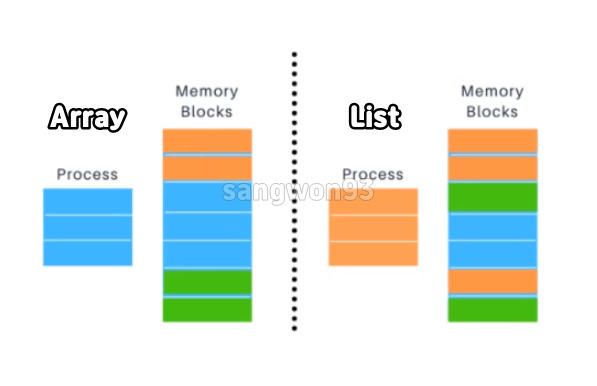
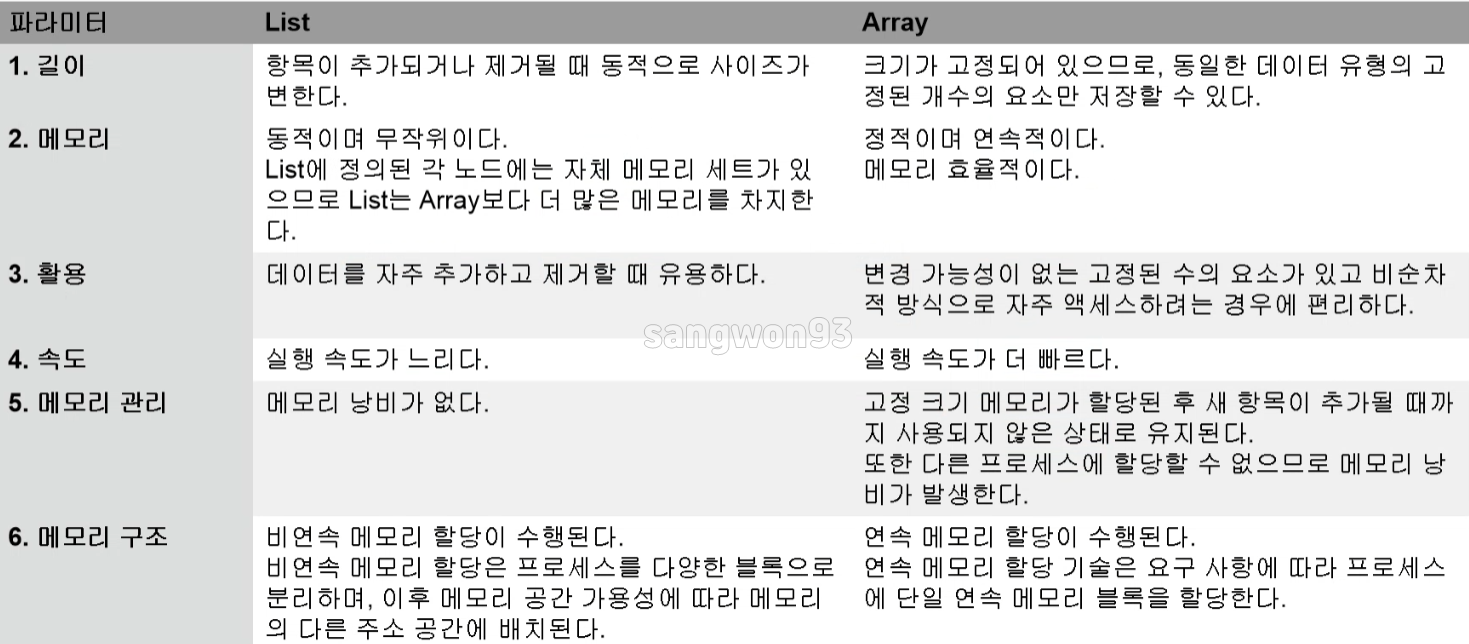
- List의 특징
- 크기 지정을 하지 않아도 됨 (동적(가변) 배열)
- <자료형> 으로 표현
- 비연속적으로 할당
- Array의 특징
- 크기를 지정해줘야 함 (정적 배열)
- 자료형[] 으로 표현
- 연속적으로 할당
Content .2 Array
int score1;
int score2;
int score3;
int score4;
int score5;
int score6;
int score7;
int score8;
int score9;
int score10;

// 위와 같이 쓸 경우 찾기도 어려움
// 수가 많아지면 모든 수에 대한 선언을 해야하는 문제 점이 있음
// 조건문을 넣기 위해서는 변수의 개수만큼 조건문도 필요함int[] scores = new int [10];
// 위와 같이 표현하면 변수를 통일시키기 편함
// 풀어쓰게 되면 아래와 같이 변함
// scores[0] = 0;
// scores[1] = 0;
// scores[2] = 0;
// scores[3] = 0;
// scores[4] = 0;
// scores[5] = 0;
// scores[6] = 0;
// scores[7] = 0;
// scores[8] = 0;
// scores[9] = 0;
int input = 2;
int[] scores = new int[10]
scores[input]++;
// 배열의 크기가 달라져도 조건문이 변하지 않고 사용할 수 있음Content .3 배열의 진화
- Array 사용으로 데이터 간소화
- Struct를 통해 자료형이 다른 데이터를 합침 (구조체)
- Class로 메서드까지 포함시키며, 상속도 할 수 있게 됨
Content .4 List
List<int> scores = new List<int>();

// List는 <> 안에 자료형이 존재

int[] scores = new int[10];

// Array는 자료형이 밖에 존재
※ 단, C#에서의 List는 큰 Array
Content .5 Enum
enum MyColor
{
    Red,
    Blue,
    Green,
    Yellow
}

// Red = 0, Blue = 1, Green = 2, Yellow = 3 로 값이 할당됨
enum MyColor
{
Red = 1,
Blue = 2,
Green = 4,
Yellow = 8
}
// 위와 같이 값을 할당하여 비트연산자 자리수 할당도 가능배열과 리스트는 따로 공부를 하고 특강을 들어도 이해가 잘 되지 않고 있어서
이것이 C#이다 책과 해당 유튜브 강의로 복습 진행 중
'내일의 내가 오늘의 나보다 조금이라도 더 나아지길 바라며'

게임은 재미와 기능!