인증 정보 객체
- Spring Security에서 인증된 사용자를 다룰 때 Authenticaiton, Principal, UserDetails가 있음
1. Authentication
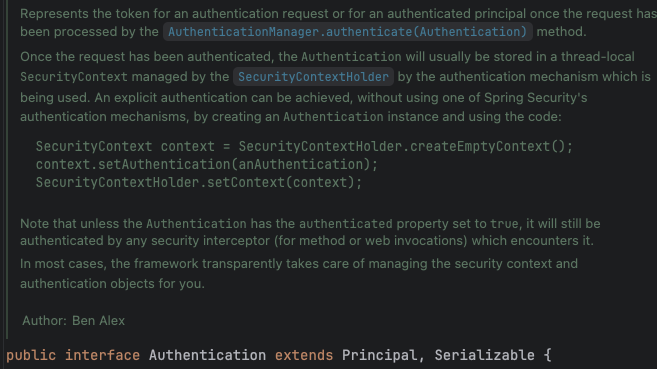
- Spring Security에서 현재 인증 상태 전체를 표현하는 객체
구성 요소
principal: 사용자 식별 정보credentials: 비밀번호 / JWT 토큰authorities: ROLE, 권한authenticated: 인증 성공 여부details: IP, 세션 정보 등
사용하는 곳
SecurityContextHolder.getContext().setAuthentication(authentication);- Spring Security Filter 내부
- 권한 거맛(@PreAuthorize)
- 컨트롤러에서 현재 로그인 유저 접근
2. Principal
- 요청의 주체를 나타내는 최소 단위 인터페이스
- Java 표준 인터페이스
- 사용자 식별용 (username, email, id)
- 권한 정보는 없음
사용하는 곳
- 컨트롤러 메서드 파라미터
@AuthenticationPrinciapl이전 단계 개념
단점
- 사용자 상세 정보 없음
- 권한, 상태 정보 없음
3. UserDetails
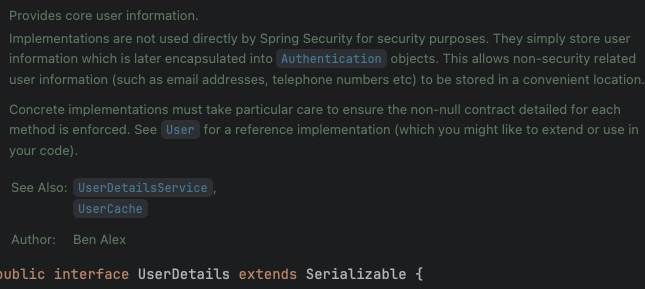
- Spring Security가 사용자 정보를 저장하기 위해 만든 표준 인터페이스
Authentication의principal에 들어가는 실제 사용자 객체
역할
- DB의 User Entity를 Security 전용 모델로 감싸는 역할
- 인증&인가 판단 기준 제공
사용하는 곳
UserDetailsService.loadUserByUsername()Authentication의principal- 권한 검사 시 사용
정리
[ HTTP 요청 ]
     ↓
Authentication
 ├── principal → UserDetails (또는 String / CustomPrincipal)
 ├── credentials → 비밀번호 / JWT
├── authorities → ROLE_USER, ROLE_ADMIN| 객체 | 역할 |
|---|---|
| Authentication | 인증 전체 정보 |
| Principal | 사용자 식별자 |
| UserDetails | 사용자 상세 정보 |
사용 예시
//JWT 토큰에서 값을 가져오기
Long userId = jwtUtil.extractUserId(token);
String username = jwtUtil.extractUsername(token);
UserRole role = jwtUtil.extractUserRole(token);

//사용자 상세 정보에 담기
CustomUserDetails userDetails = new CustomUserDetails(userId, username, role);

UsernamePasswordAuthenticationToken authentication = new UsernamePasswordAuthenticationToken(userDetails, null, userDetails.getAuthorities());

SecurityContextHolder.getContext().setAuthentication(authentication);- Jwt Filter에서 토큰 검증
- 사용자 정보를
Authentication생성 SecurityContextHolder에 저장Controller에서 사용
Controller에서 사용
- 모두 사용
@PutMapping("/{id}")
public ... update(@AuthenticationPrincipal UserinfoDetails userDetails,
									@PathVariable Long id,
                  @RequestBody @Valid ... request) {

        ....
}- 권한
@PreAuthorize("hasRole('ADMIN')")
@PostMapping
public ... create(~~~ request) {
	...
}
Authentication은 인터페이스
- 구현체 예
- UsernamePasswordAuthenticationToken
- JwtAuthenticationToken
- AnonymousAuthenticationToken
principal은 UserDetails 아니어도 됨
List<SimpleGrantedAuthority> authorities =
					List.of(new SimpleGrantedAuthority(role.name()));

UsernamePasswordAuthenticationToken authentication =
			new UsernamePasswordAuthenticationToken(userId, null, >authorities);

Allons-y