어댑터패턴
- 어댑터패턴이란?
: 호환되지 않는 인터페이스를 가진 객처들이 헙업할 수 있도록 하는 구조적 디자인패턴
어댑터는 한 객체의 인터페이스를 다른 객체가 이해할 수 있도록 변환하는 개체
어댑터는 변환의 복잡성을 숨기기 위하여 객체 중 하나를 래핑하여 래핑된 객체는 어댑터를 인식하지도 못하게 구현한다.
- ex) 미터 및 킬로미터 단위로 작동하는 객체를 모든 데이터를 피트 및 마일과 같은 영국식 단위로 변환하는 어댑터로 래핑
어댑터는 데이터를 다양한 형식으로 변환할 수 있을 뿐만 아니라 다른 인터페이스를 가진 객체들이 협업하는 데에도 도움을 줄 수 있으며, 다음과 같이 작동함
- 어댑터는 기존에 있던 객체 중 하나와 호환되는 인터페이스를 상속
- 상속받은 인터페이스를 사용하면 기존 객체는 어댑터의 메서드들을 안전하게 호출가능함
- 호출을 수신하면 어댑터는 이 요청을 두 번째 객체에 해당 객체가 예상하는 형식과 순서대로 전달
- 때로는 양방향으로 호출을 변환할 수 있는 양방향 어댑터를 만드는 것도 가능
- ex) XML데이터를 Json데이터로 변환하여 라이브러리를 사용할 수 있게 만드는 어댑터패턴의 구조
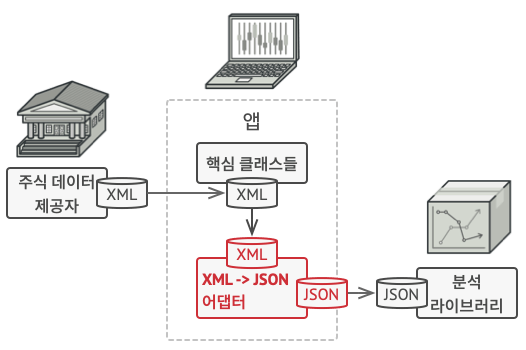
어댑터패턴 구현방식
- 객체 어댑터
이 구현은 객체 합성 원칙을 사용합니다. 어댑터는 한 객체의 인터페이스를 구현하고 다른 객체는 래핑합니다. 위 합성은 모든 인기 있는 프로그래밍 언어로 구현할 수 있습니다.
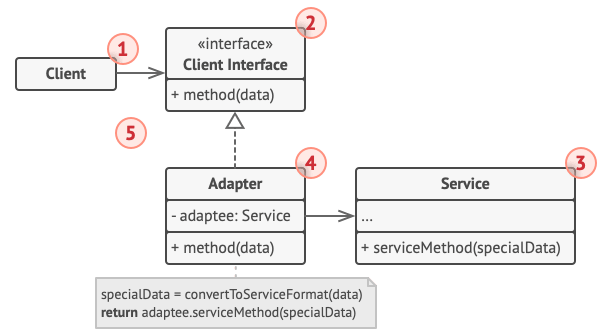
1) 클라이언트는 프로그램의 기존 비즈니스 로직을 포함하는 클래스입니다.
2) 클라이언트 인터페이스는 다른 클래스들이 클라이언트 코드와 공동 작업할 수 있도록 따라야 하는 프로토콜을 뜻합니다.
3) 서비스는 일반적으로 타사 또는 레거시의 유용한 클래스를 뜻합니다. 클라이언트는 서비스 클래스를 직접 사용할 수 없습니다.
왜냐하면 서비스 클래스는 호환되지 않는 인터페이스를 가지고 있기 때문입니다.
4) 어댑터는 클라이언트와 서비스 양쪽에서 작동할 수 있는 클래스로, 서비스 객체를 래핑하는 동안 클라이언트 인터페이스를 구현합니다. 어댑터는 어댑터 인터페이스를 통해 클라이언트로부터 호출들을 수신한 후 이 호출을 래핑된 서비스 객체가 이해할 수 있는 형식의 호출들로 변환합니다.
5) 클라이언트 코드는 클라이언트 인터페이스를 통해 어댑터와 작동하는 한 구상 어댑터 클래스와 결합하지 않습니다. 덕분에 기존 클라이언트 코드를 손상하지 않고 새로운 유형의 어댑터들을 프로그램에 도입할 수 있습니다. 이것은 서비스 클래스의 인터페이스가 변경되거나 교체될 때 유용할 수 있습니다: 클라이언트 코드를 변경하지 않은 채 새 어댑터 클래스를 생성할 수 있으니까요.
- 예제코드
/**
 * The Target defines the domain-specific interface used by the client code.
 */
class Target {
 public:
  virtual ~Target() = default;

  virtual std::string Request() const {
    return "Target: The default target's behavior.";
  }
};

/**
 * The Adaptee contains some useful behavior, but its interface is incompatible
 * with the existing client code. The Adaptee needs some adaptation before the
 * client code can use it.
 */
class Adaptee {
 public:
  std::string SpecificRequest() const {
    return ".eetpadA eht fo roivaheb laicepS";
  }
};

/**
 * The Adapter makes the Adaptee's interface compatible with the Target's
 * interface.
 */
class Adapter : public Target {
 private:
  Adaptee *adaptee_;

 public:
  Adapter(Adaptee *adaptee) : adaptee_(adaptee) {}
  std::string Request() const override {
    std::string to_reverse = this->adaptee_->SpecificRequest();
    std::reverse(to_reverse.begin(), to_reverse.end());
    return "Adapter: (TRANSLATED) " + to_reverse;
  }
};

/**
 * The client code supports all classes that follow the Target interface.
 */
void ClientCode(const Target *target) {
  std::cout << target->Request();
}

int main() {
  std::cout << "Client: I can work just fine with the Target objects:\n";
  Target *target = new Target;
  ClientCode(target);
  std::cout << "\n\n";
  Adaptee *adaptee = new Adaptee;
  std::cout << "Client: The Adaptee class has a weird interface. See, I don't understand it:\n";
  std::cout << "Adaptee: " << adaptee->SpecificRequest();
  std::cout << "\n\n";
  std::cout << "Client: But I can work with it via the Adapter:\n";
  Adapter *adapter = new Adapter(adaptee);
  ClientCode(adapter);
  std::cout << "\n";

  delete target;
  delete adaptee;
  delete adapter;

  return 0;
}
실행결과
Client: I can work just fine with the Target objects:
Target: The default target's behavior.
Client: The Adaptee class has a weird interface. See, I don't understand it:
Adaptee: .eetpadA eht fo roivaheb laicepS
Client: But I can work with it via the Adapter:
Adapter: (TRANSLATED) Special behavior of the Adaptee.
- 클래스 어댑터
이 구현은 상속을 사용하며, 어댑터는 동시에 두 객체의 인터페이스를 상속합니다. 이 방식은 C++ 와 같이 다중 상속을 지원하는 프로그래밍 언어에서만 구현할 수 있습니다.
클래스 어댑터는 객체를 래핑할 필요가 없습니다. 그 이유는 클라이언트와 서비스 양쪽에서 행동들을 상속받기 때문입니다. 위의 어댑테이션(적용)은 오버라이딩된 메서드 내에서 발생합니다. 위 어댑터는 기존 클라이언트 클래스 대신 사용할 수 있습니다.
- 예제코드
/**
 * The Target defines the domain-specific interface used by the client code.
 */
class Target {
 public:
  virtual ~Target() = default;
  virtual std::string Request() const {
    return "Target: The default target's behavior.";
  }
};

/**
 * The Adaptee contains some useful behavior, but its interface is incompatible
 * with the existing client code. The Adaptee needs some adaptation before the
 * client code can use it.
 */
class Adaptee {
 public:
  std::string SpecificRequest() const {
    return ".eetpadA eht fo roivaheb laicepS";
  }
};

/**
 * The Adapter makes the Adaptee's interface compatible with the Target's
 * interface using multiple inheritance.
 */
class Adapter : public Target, public Adaptee {
 public:
  Adapter() {}
  std::string Request() const override {
    std::string to_reverse = SpecificRequest();
    std::reverse(to_reverse.begin(), to_reverse.end());
    return "Adapter: (TRANSLATED) " + to_reverse;
  }
};

/**
 * The client code supports all classes that follow the Target interface.
 */
void ClientCode(const Target *target) {
  std::cout << target->Request();
}

int main() {
  std::cout << "Client: I can work just fine with the Target objects:\n";
  Target *target = new Target;
  ClientCode(target);
  std::cout << "\n\n";
  Adaptee *adaptee = new Adaptee;
  std::cout << "Client: The Adaptee class has a weird interface. See, I don't understand it:\n";
  std::cout << "Adaptee: " << adaptee->SpecificRequest();
  std::cout << "\n\n";
  std::cout << "Client: But I can work with it via the Adapter:\n";
  Adapter *adapter = new Adapter;
  ClientCode(adapter);
  std::cout << "\n";

  delete target;
  delete adaptee;
  delete adapter;

  return 0;
}
실행결과
Client: I can work just fine with the Target objects:
Target: The default target's behavior.
Client: The Adaptee class has a weird interface. See, I don't understand it:
Adaptee: .eetpadA eht fo roivaheb laicepS
Client: But I can work with it via the Adapter:
Adapter: (TRANSLATED) Special behavior of the Adaptee.