Flexi Bollards Explained: Why Flexible Traffic Posts Are a Smart Investment
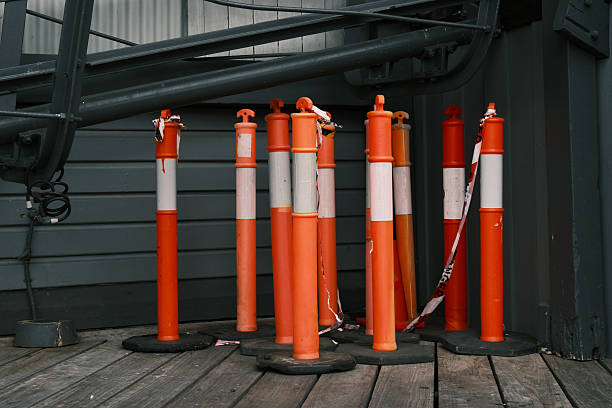
If you manage traffic flow, parking areas, or industrial sites, you already know this problem: traditional markers don’t last. They get hit, bend, crack, or disappear entirely. That’s where flexi bollards come in.
Flexible traffic posts are designed to absorb impact and return to their original position, making them one of the most practical and cost-effective upgrades in modern traffic control.
Instead of replacing damaged equipment, you install a solution that is built to withstand real-world conditions.
What Are Flexible Bollards?
Flexible bollards—also called rebound bollards—are vertical traffic posts made from materials like polyurethane or flexible polymers.
Their defining feature is simple but powerful: they bend under pressure and recover without permanent damage.
Unlike rigid posts, which fail when struck, flexi bollards are designed as impact-resistant posts. This makes them ideal for environments where contact with vehicles is not just possible, but expected.
Why Traditional Traffic Posts Fail
Rigid bollards and markers work well in controlled environments. But in high-traffic or tight spaces, they often become a liability.
From experience, the most common issues include:
-
Cracking or breaking after minor impacts
-
Becoming dislodged and creating hazards
-
Requiring constant replacement
- Causing damage to vehicles on contact
Over time, these issues increase both cost and risk. What seems like a cheaper solution upfront often becomes expensive to maintain.
How Rebound Bollards Solve the Problem
Rebound bollards are designed for resilience. When a vehicle hits them, they flex rather than resist. Once the pressure is removed, they return to their original upright position.
This behaviour delivers three key advantages:
-
Durability – They survive repeated impacts without breaking
-
Safety – They reduce damage to vehicles and infrastructure
- Consistency – They remain in place and continue to perform their function
In practical terms, they turn a high-maintenance problem into a low-maintenance solution.
Where Flexible Traffic Posts Deliver the Most Value
Flexi bollards are not just a niche product. They are widely used across environments where durability and visibility are essential.
You’ll commonly find them in:
-
Parking lots and parking bays
-
Warehouses and logistics facilities
-
Urban roads and lane separation zones
-
Shopping centres and retail spaces
- Industrial sites with heavy vehicle movement
In these settings, they act as durable traffic markers that guide movement without constant intervention.
Improving Safety Without Creating Hazards
One of the biggest advantages of flexible bollards is how they interact with vehicles.
Rigid posts can cause damage during even minor contact. Flexible posts, on the other hand, absorb the impact. This reduces the risk of:
-
Vehicle damage
-
Injury in low-speed environments
- Secondary hazards from broken equipment
According to the Federal Highway Administration, forgiving roadside design elements—those that reduce the severity of impact—play a critical role in improving overall road safety.
Flexi bollards fit directly into this principle.
Case Study: Reducing Maintenance in a Busy Parking Facility
Challenge
A commercial parking facility faced constant issues with damaged lane markers. Rigid posts were frequently hit and required replacement every few weeks.
Action
We replaced the existing markers with flexible bollards designed for repeated impact.
Result
Maintenance requirements dropped significantly. The posts remained intact despite frequent contact, and overall site safety improved.
Key insight: In high-contact environments, flexibility is more valuable than strength.
Pro Tip: Flexibility Is About Behaviour, Not Just Durability
Most buyers focus on how long a product lasts.
But here’s the overlooked insight:
Flexible bollards don’t just survive impact—they change driver behaviour.
When drivers see consistent, upright markers that don’t disappear after impact, they are more likely to follow the intended path. Broken or missing markers, on the other hand, reduce compliance over time.
Durability supports discipline.
Low-Maintenance Safety Solutions in Practice
One of the biggest selling points of flexi bollards is that they are low-maintenance safety solutions.
Because they:
-
Don’t crack or shatter easily
-
Stay anchored after impact
-
Require fewer replacements
- Maintain visibility over time
They reduce both direct costs (replacement) and indirect costs (labour, downtime, risk).
For businesses managing multiple sites, this adds up quickly.
Flexible Bollards vs Rigid Bollards
The difference between flexible and rigid posts is not just material—it’s performance under pressure.
Rigid bollards are designed to stop vehicles. Flexible bollards are designed to guide them.
If your goal is security or high-impact protection, rigid bollards are still necessary. But if your goal is traffic flow, lane guidance, or visual separation, flexible bollards are often the better choice.
Understanding this distinction prevents costly mistakes.
Common Mistakes When Using Flexible Bollards
Even with the right product, poor implementation can reduce effectiveness.
A common issue is using flexible bollards in environments that require full vehicle stopping power. They are not designed to replace heavy-duty security barriers.
Another mistake is poor spacing. If bollards are placed too far apart, they lose their ability to guide movement effectively.
The key is to match the product to the purpose and design the layout carefully.
The Long-Term Value of Durable Traffic Markers
When evaluating cost, it’s important to look beyond the purchase price.
Durable traffic markers like flexi bollards deliver value over time through reduced maintenance, improved safety, and consistent performance.
In high-use environments, this often makes them the more economical choice—even if the upfront cost is higher.
Key Takeaways
-
Flexible bollards bend on impact and return to shape
-
They are ideal for high-traffic, high-contact environments
-
They reduce maintenance and replacement costs
-
They improve safety by absorbing impact
- They are best used for guidance, not heavy-duty protection
People Also Ask (FAQ)
What are flexible bollards used for?
Flexible bollards are used to guide traffic, separate lanes, and improve safety in areas where vehicles may come into contact with markers.
Are rebound bollards durable?
Yes. Rebound bollards are designed to withstand repeated impacts and return to their original position, making them highly durable in high-traffic environments.