DI container 생성 시 빈 등록 과정
- Bean 객체 생성
- 의존 관계 주입
- 초기화
의존 관계 주입과 초기화는 서로 다른 과정
이후 @PostConstruct 부분이 진행된다.
이때 스프링은 하기 scope에 다음과 같이 지원
- Singletontype
- 스프링 컨테이너의 시작과 종료까지 유지되며 스프링이 관리
- Prototype
- 스프링 컨테이너는 생성, 의존 관계 주입, 초기화까 지원. 이후 관리는 클라이언트가 직접
PrototypeBean with SingletonBean
-
SingtonBean에서 PrototypeBean을 의존 관계 주입 받아 함께 사용할 때 PrototypeBean 재생성되지 않고 기존에 생성된 객체가 재사용되는 문제가 발생
-
singtonBean과 prototypeBean을 함께 사용할 때도 prototypeBean을 계속 초기화하며 사용하기 위해서는 Dependency Lookup(DL) 개념이 필요
- 의존 관계를 외부에서 주입 받는것이 아니라 직접 필요한 의존 관계를 찾자!
-
전체 코드
public class PrototypeProviderTest {
     @Test
     void providerTest() {
         AnnotationConfigApplicationContext ac = new
 AnnotationConfigApplicationContext(ClientBean.class, PrototypeBean.class);
         ClientBean clientBean1 = ac.getBean(ClientBean.class);
         int count1 = clientBean1.logic();
         assertThat(count1).isEqualTo(1);
         ClientBean clientBean2 = ac.getBean(ClientBean.class);
         int count2 = clientBean2.logic();
         assertThat(count2).isEqualTo(1);
     }
     static class ClientBean {

          @Autowired
         private ApplicationContext ac;
         public int logic() {
             PrototypeBean prototypeBean = ac.getBean(PrototypeBean.class);
             prototypeBean.addCount();
             int count = prototypeBean.getCount();
             return count;
} }
     @Scope("prototype")
     static class PrototypeBean {
         private int count = 0;
         public void addCount() {
             count++;
}
         public int getCount() {
             return count;
}
         @PostConstruct
         public void init() {
             System.out.println("PrototypeBean.init " + this);
         }
         @PreDestroy
         public void destroy() {
             System.out.println("PrototypeBean.destroy");
         }
} }
-
핵심 코드
-
@Autowired private ApplicationContext ac; public int logic() { PrototypeBean prototypeBean = ac.getBean(PrototypeBean.class); prototypeBean.addCount(); int count = prototypeBean.getCount(); return count; -
어떻게 ac 가 prototypebean.class를 등록하지도 않고 찾을 수 있을까?
-
ac는 @Autowired를 통해 앞에서 만들어놓은 ClientBean.class, PrototypeBean.class를 등록한 DI 컨테이너를 주입 받음
void providerTest() { AnnotationConfigApplicationContext ac = new AnnotationConfigApplicationContext(ClientBean.class, PrototypeBean.class); -
이때 등론된 PrototypeBean.class의 scope는 "prototype"
-
prototype은 bean 객체를 조회 할 때 생성된 bean 객체를 가져오는 것이 아닌 조회 후 가져온다.
- Singleton
- ac.getBean(singleton.class)
- 의존 관계 주입이 끝나고 DI Container에 등록된 bean 객체를 잡아온다.
- ac.getBean(singleton.class)
- prototype
- ac.getBean(prototype.class)
- singletoneBean을 호출할 때 새로 생성된 DI Container에서 등록된 prototypeBean 객체를 잡아온다.
- ac.getBean(prototype.class)
- Singleton
-
문제점
-
스프링 컨테이너에 매우 의존적
-
이로 인해 단위 테스트가 힘들어짐
- 새로 컨테이너를 만드는 것 대신 ObjectProvider를 사용하자
- 코드 수정
 @Autowired
 // 기존
 // private ApplicationContext ac;

 // 수정
 @Autowired
 private ObjectProvider<PrototypeBean> prototypeBeanProvider;

 public int logic() {
     PrototypeBean prototypeBean = ac.getBean(PrototypeBean.class);
     prototypeBean.addCount();
     int count = prototypeBean.getCount();
     return count;
-
-
-
Request scope
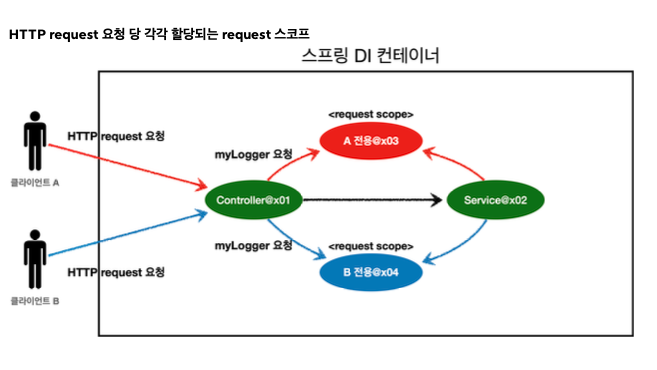
- http 요청이 오면 각 client마다 다른 응답을 주어야함.
- 이를 위해 protypeScope를 가진 bean 생성이 필요
- 하지만 protypeScope는 생성 + 의존 관계 주입 + 초기화 후에 클라이언트에게 던져지고 스프링에서는 관리하지 않음
- 이럴 경우 요청이 끝날 때까지 해당 클라이언트에게 처음 응답한 protypeBean을 관리해주는 것이 매우 어려움
- 이를 위해서 request요청이 오고 끝날 때까지 관리할 수 있는 request scope가 필요.

문송 개발자