배열
동일한 타입의 데이터를 연속된 공간에 나열하고, 각 데이터에 인덱스를 부여하여 하나의 변수에 저장해 관리할 수 있는 자료 구조
필요성
- 변수 하나로 여러 값을 효율적으로 관리
- 데이터의 양이 많을 때 유용
특징
-
Java에서 배열은 객체 번지를 참조하는 참조 타입으로 간주된다. 따라서 객체의 특성을 가지며 객체로서 다룰 수 있다.
- 배열은
new연산자의 동작으로 생성된다. Object클래스로부터 상속받는 메서드들을 사용할 수 있다(equals(), hashCode(), toString()).length속성을 가진다.- 동적으로 메모리 공간을 할당받으며 이는
new연산자를 통해 배열의 크기를 지정할 때 드러난다.
- 배열은
-
배열의 길이는 불변하지만, 배열 내부의 요소 값은 가변적이다.
생성하기
- 참조 변수를 선언
int[] myArray; Book[] book; - 선언된 배열에 실제 값을 저장할 수 있는 공간을 만들기 위해서는
new연산자를 사용하며, 배열의 크기를 지정해야 한다.
배열이 생성되면, 각 요소들은 타입에 따라 기본값으로 저장된다.myArray = new int[10]; book = new Book[3]; System.out.println(myArray.length); // 10 System.out.println(book.length); // 3
배열에 값 할당하기
myArray[0] = 3;
// ...
myArray[9] = 10;

// myArray[10] = 9; -> IndexOutOfBoundsException
배열 초기화하기
int[] myArrayFirst = new int[]{1, 2, 3};

int[] myArraySecond;
myArraySecond = new int[]{1, 2, 3};

int[] myArrayThird = {1, 2, 3};

int[] myArrayFourth;
// myArrayFourth = {1, 2, 3};는 안 됨. 한 줄에 쓰는 것만 가능
2차원 배열
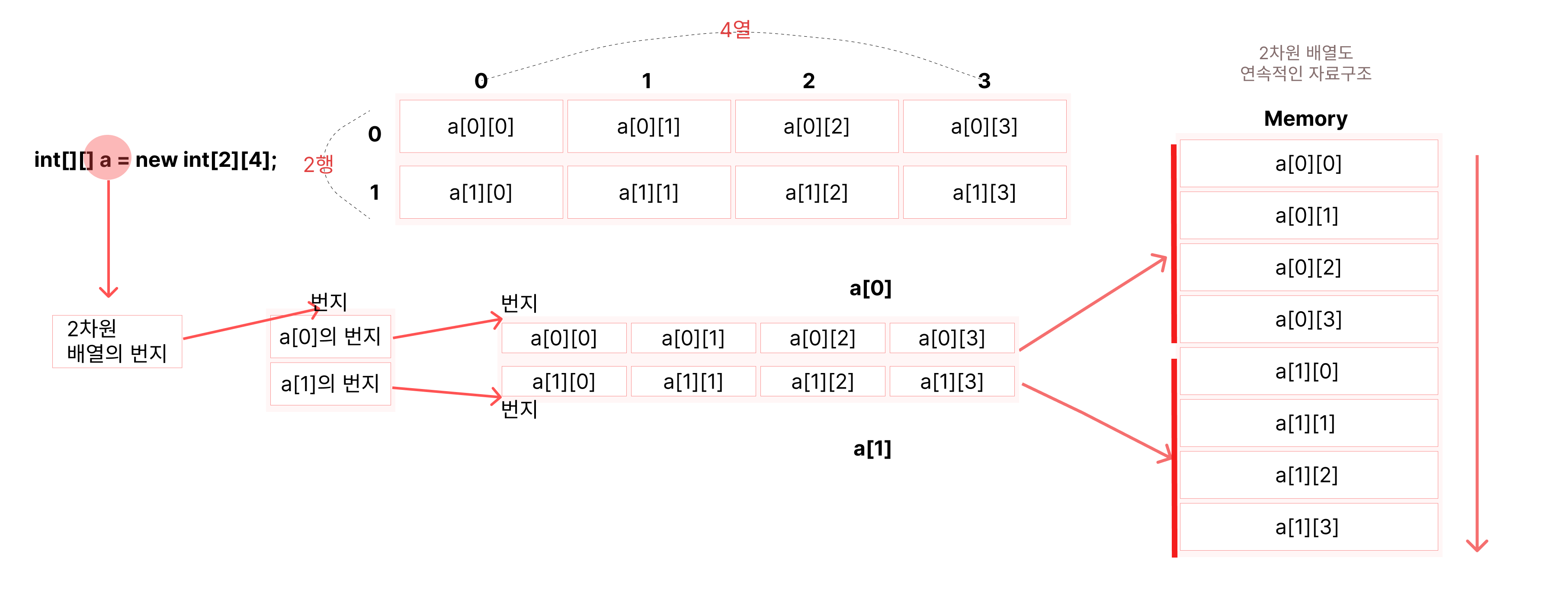
a.length; // 2
a[0].length; //4
a[2].length; //4

System.out.println(a); // [[I@5a61f5df
System.out.println(a[0]); // [I@3551a94
System.out.println(a[1]); // [I@531be3c5- 2차원 배열도 메모리에서 행이 우선되어 연속적으로 되어 있는 구조다.
생성과 동시에 초기화 하기
int[][] b = {
    {1,2,3},
    {4,5,6},
    {7,8,9},
}
각 행의 요소의 수가 다른 2차원 배열 만들기
int[][] c = new int[3][]; // 열의 개수 비워두기

c[0] = new int[2];
c[1] = new int[1];
c[2] = new int[5];

char[][] df = new char[5][];

for(int i = 0; i < df.length; i++){
    df[i] = new char[i+1];
    for(int j = 0; j < df[i].length; j++){
        df[i][j] = '*';
        System.out.print(df[i][j]);
    }
    System.out.println();
}
/*
*
**
***
****
*****
*/