1 스택이란
- 자료(data element)를 보관할 수 있는 (선형) 구조
- 단, 넣을 때는 한쪽 끝에서 밀어 넣어야 하고 꺼낼 때는 같은 쪽에서 뽑아 꺼내야 하는 제약이 있다
- push, pop
- 후입선물(LIFO - Last-in First-Out)
2 스택의 동작
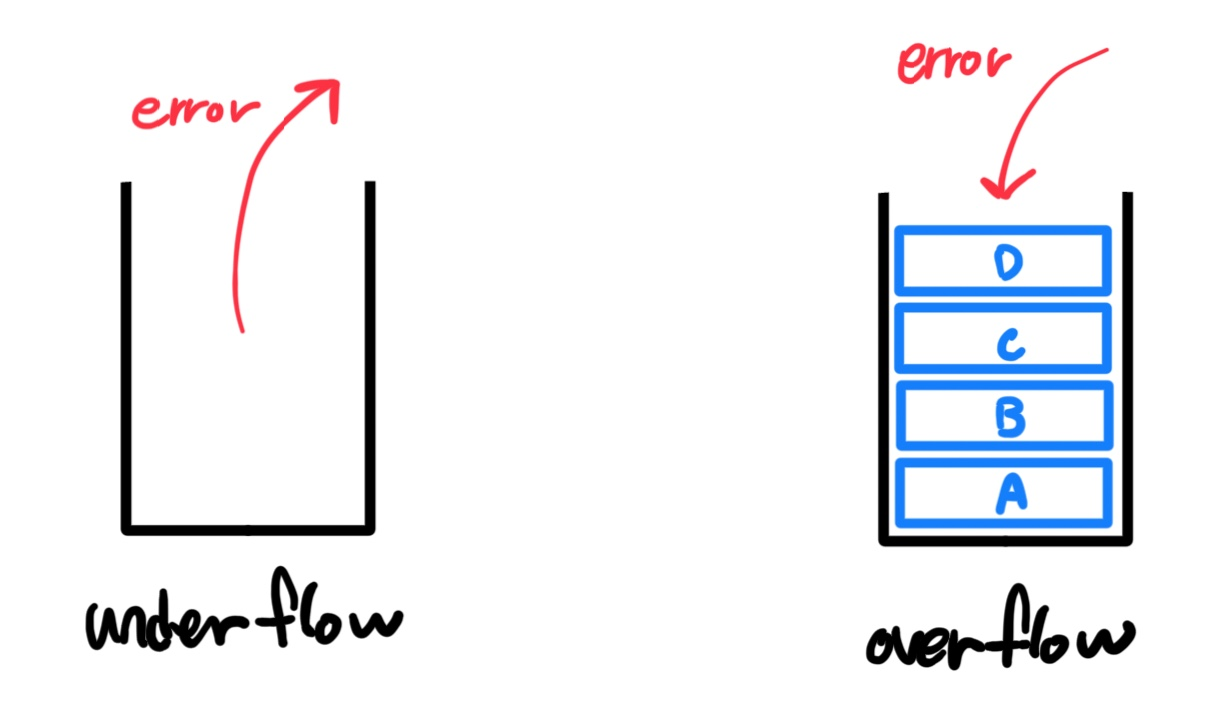
- 초기 상태: 비어 있는 스택(empty stack)
- S = Stack()
- 데이터 원소 A를 스택에 추가
- S.push(A)
- 데이터 원소 B를 스택에 추가
- S.push(B)
- 데이터 원소 꺼내기
- r1 = S.pop()
- 데이터 원소 또 꺼내기
- r2 = S.pop()
3 스택에서 발생하는 오류
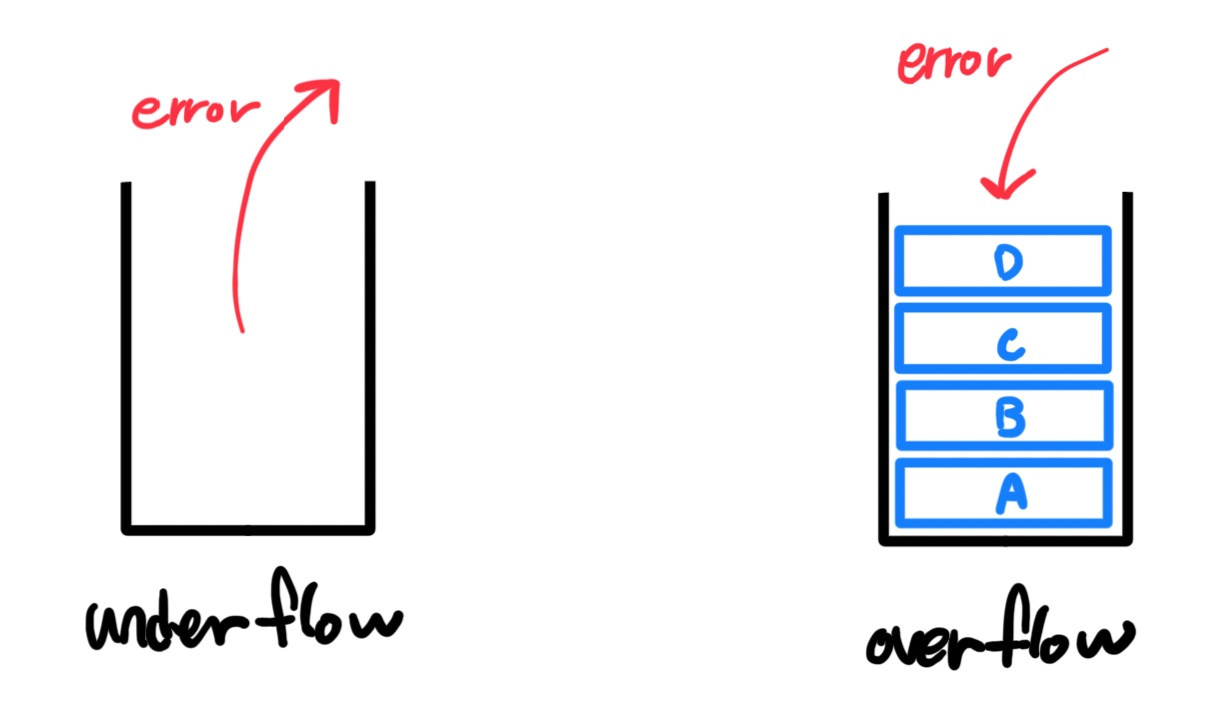
- 비어 있는 스택에서 데이터 원소를 꺼내려 할 때 → 스택 언더플로우(stack underflow)
- 꽉 찬 스택에 데이터 원소를 넣으려 할 때 → 스택 오버플로우(stack overflow)
4 스택 자료구조 구현
- 배열(array)을 이용하여 구현
- python 리스트와 메소드들을 이용
- 연결 리스트(linked list)를 이용하여 구현
- 지난 강의에서 마련한 양방향 연결리스트 이용
- 파이썬 라이브러리로 구현
from pythonds.basic.stack import Stack
5 연산 정의
- size(): 현재 스택에 들어 있는 데이터 원소의 수를 구한다
- isEmpty(): 현재 스택이 비어있는지를 판단
- push(x): 데이터 원소 x를 스택에 추가
- pop(): 스택의 맨 위에 저장된 데이터 원소를 제거 (또한, 반환)
- peek(): 스택의 맨 위에 저장된 데이터 원소를 반환 (제거하지 않음)
6 배열로 구현한 스택
class ArrayStack:

	def __init__(self):
		self.data = []

	def size(self):
		return len(self.data)

	def isEmpty(self):
		return self.size() == 0

	def push(self, item):
		self.data.append(item)

	def pop(self):
		return self.data.pop()

	def peek(self):
		return self.data[-1]
7 연결 리스트로 구현한 스택
from doublylinkedlist import Node
from doublylinkedlist import DoublyLinkedList

class LinkedListStack:

	def __init__(self):
		self.data = DoublyLinkedList()

	def size(self):
		return self.data.getLength()

	def isEmpty(self):
		return self.size() == 0

	def push(self, item):
		node = Node(item)
		self.data.insertAt(self.size() + 1, node)

	def pop(self):
		return self.data.popAt(self.size())

	def peek(self):
		return self.data.getAt(self.size()).data
8 스택의 응용(1) - 수식의 괄호 유효성 검사
- 올바른 수식
- (A + B)
- {(A + B) * C)}
- [(A + B) * (C + D)]
- 올바르지 않은 수식
- (A + B
- A + B)
- {A (B C})
- [(A + B) * (C + D)}
9 스택의 응용(2) - 수식의 후위 표기법
- 중위 표기법(infix notation): 연산자가 피연산자들의 사이에 위치
- (A + B) * (C + D)
- 괄호 > *, / > + - 의 우선순위를 갖는다
- 후위 표기법(postfix notation): 연산자가 피연산자들의 뒤에 위치
- A B + C D + *
- 앞에 나오는 연산자부터 차례대로 계산
- 괄호를 사용할 필요가 없다
9.1 변환 예시
- A B + C → A B C +
- A + B C → A B C +
- A + B + C → A B + C +
- (A + B) C → A B + C
- A (B + C) → A B C +
- (A + (B - C)) D → A B C - + D
- A (B - (C + D)) → A B C D + -
9.2 알고리즘의 설계
- 연산자의 우선순위 설계
- 중위 표현식을 왼쪽부터 한 글자씩 읽어서
- 피연산자면 그냥 출력
- 여는 괄호면 스택에 push
- 닫는 괄호면 매칭되는 여는 괄호가 나올 때까지 pop, 출력
- 연산자이면 스택에서 이보다 높거나 같은 우선순위 것들을 pop, 출력
- 스택에 남아 있는 연산자는 모두 pop, 출력
- 힌트(*)
- 스택의 peek()
- while not op.Stack.isEmpty()
- 남아 있는 연산자 모두 pop하는 순환문
왜인지 특정 케이스를 통과 못하는 중…
class ArrayStack:

    def __init__(self):
        self.data = []

    def size(self):
        return len(self.data)

    def isEmpty(self):
        return self.size() == 0

    def push(self, item):
        self.data.append(item)

    def pop(self):
        return self.data.pop()

    def peek(self):
        return self.data[-1]

prec = {
    '*': 3, '/': 3,
    '+': 2, '-': 2,
    '(': 1
}

def solution(S):
    opStack = ArrayStack()
    answer = ''

    for c in S:
        # 여는 괄호일 때 -> push
        if c == '(':
            opStack.push(c)

        # 닫는 괄호일 때 -> (가 top에 올 때까지 pop
        elif c == ')':
            while opStack.peek() != '(':
                answer += opStack.pop()
            # '(' pop
            opStack.pop()

        # 피연산자일 때 -> 출력
        elif c not in prec.keys():
            answer += c

        # 연산자일 때, 우선순위가 top이 높을 경우 pop, c push
        elif not (opStack.isEmpty()) and prec[opStack.peek()] >= prec[c]:
            answer += opStack.pop()
            opStack.push(c)

        # 그 외 -> push()
        else:
            opStack.push(c)

    # 남은 연산자 pop
    while not opStack.isEmpty():
        answer += opStack.pop()

    return answer
10 스택의 응용(3) - 후위 표기 수식 계산
- A B + C D + → (A + B) (C + D)
10.1 알고리즘의 설계
- 후위 표현식을 왼쪽부터 한 글자씩 읽어서
- 피연산자이면 스택에 push
- 연산자를 만나면 스택에서 pop → (1), 또 pop → (2) (2) 연산 (1) 을 계산 후 결과를 스택에 push
- 수식의 끝에 도달하면 스택에서 pop → 계산 결과 출력
class ArrayStack:

    def __init__(self):
        self.data = []

    def size(self):
        return len(self.data)

    def isEmpty(self):
        return self.size() == 0

    def push(self, item):
        self.data.append(item)

    def pop(self):
        return self.data.pop()

    def peek(self):
        return self.data[-1]

def splitTokens(exprStr):
    tokens = []
    val = 0
    valProcessing = False
    for c in exprStr:
        if c == ' ':
            continue
        if c in '0123456789':
            val = val * 10 + int(c)
            valProcessing = True
        else:
            if valProcessing:
                tokens.append(val)
                val = 0
            valProcessing = False
            tokens.append(c)
    if valProcessing:
        tokens.append(val)

    return tokens

def infixToPostfix(tokenList):
    prec = {
        '*': 3,
        '/': 3,
        '+': 2,
        '-': 2,
        '(': 1,
    }

    opStack = ArrayStack()
    postfixList = []

    for c in tokenList:
        # 여는 괄호일 때 -> push
        if c == '(':
            opStack.push(c)

        # 닫는 괄호일 때 -> (가 top에 올 때까지 pop
        elif c == ')':
            while opStack.peek() != '(':
                postfixList.append(opStack.pop())
            # '(' pop
            opStack.pop()

        # 피연산자일 때 -> 출력
        elif c not in prec.keys():
            postfixList.append(c)

        # 연산자일 때, 우선순위가 top이 높을 경우 pop, c push
        elif not (opStack.isEmpty()) and prec[opStack.peek()] >= prec[c]:
            postfixList.append(opStack.pop())
            opStack.push(c)

        # 그 외 -> push()
        else:
            opStack.push(c)

    # 남은 연산자 pop
    while not opStack.isEmpty():
        postfixList.append(opStack.pop())

    return postfixList

# 후위 표현식 계산
def postfixEval(tokenList):
    stack = ArrayStack()

    for c in tokenList:
        # 피연산자(int)면 push
        if type(c) == int:
            stack.push(c)
        else:
            a, b = stack.pop(), stack.pop()

            if c == '+':
                stack.push(b+a)
            elif c == '-':
                stack.push(b-a)
            elif c == '*':
                stack.push(b*a)
            else:
                stack.push(b/a)

    return stack.pop()


def solution(expr):
    tokens = splitTokens(expr)
    postfix = infixToPostfix(tokens)
    val = postfixEval(postfix)
    return val
가보자고! 🔥