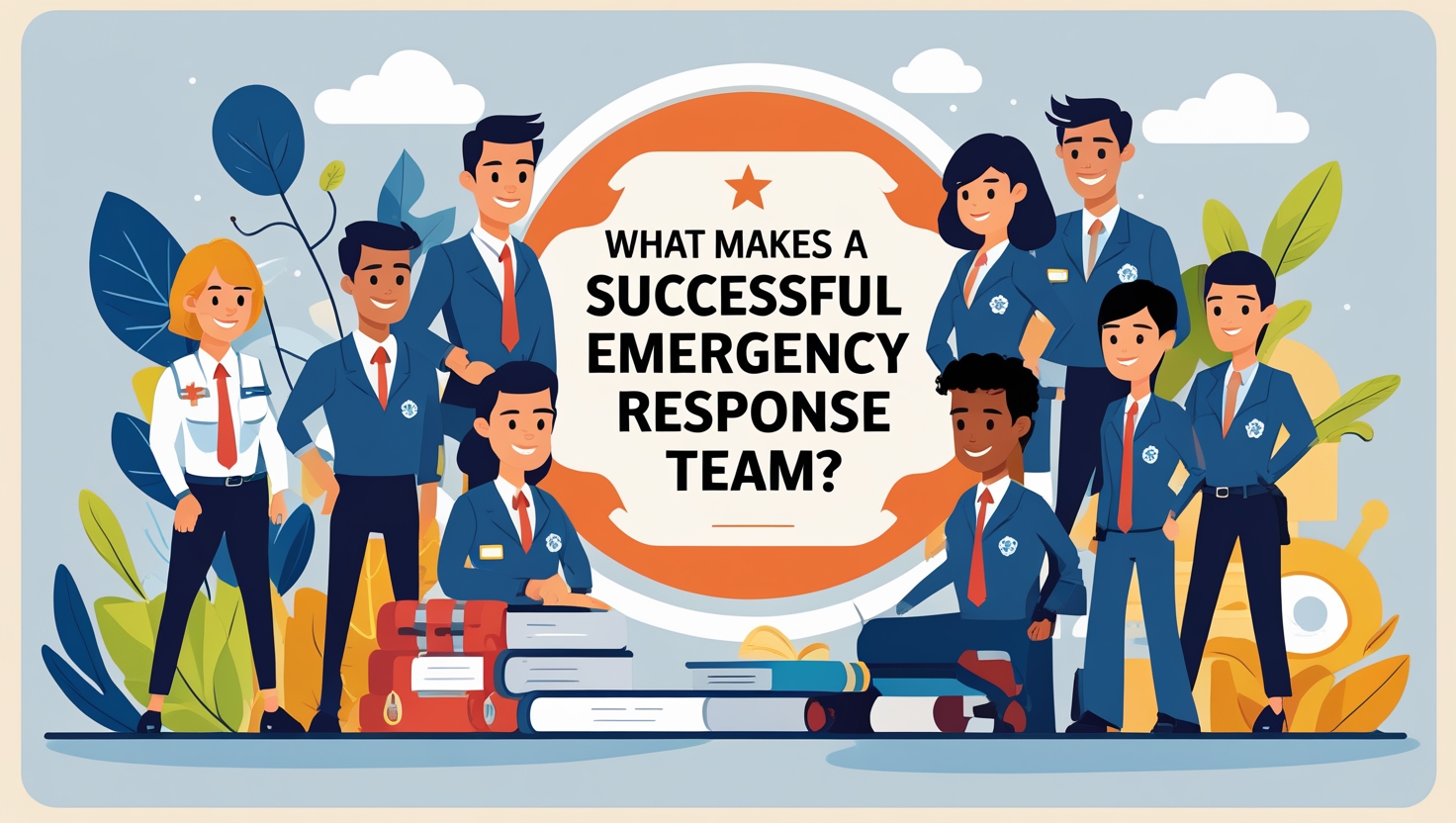
What Makes a Successful Emergency Response Team?
Introduction
In critical moments when lives are at stake, the efficiency and effectiveness of an Emergency Response Team (ERT) can determine the outcome. Whether responding to natural disasters, industrial accidents, or medical emergencies, a successful ERT must be prepared, well-coordinated, and trained to handle high-pressure situations.
This blog explores the essential characteristics, skills, and organizational principles that contribute to the success of an Emergency Response Team. Structured in both paragraph and point formats, this guide will offer a comprehensive understanding of what makes these teams capable of protecting people and property in times of crisis.
1. Strong Leadership and Clear Chain of Command
Effective leadership is the backbone of any successful emergency response team. A team with a clear chain of command ensures that roles are understood and decisions are made quickly and confidently.
Key Points:
- Leaders must make critical decisions under pressure.
- Chain of command prevents confusion and overlapping responsibilities.
- A command structure supports accountability and efficiency.
Strong leadership helps avoid delays in response, especially in chaotic environments where time is of the essence.
2. Comprehensive and Ongoing Training
An ERT cannot rely on instinct alone. Proper training ensures each team member knows what to do, when to do it, and how to do it safely.
Key Points:
- Teams must train for various emergencies: fire, chemical spills, earthquakes, etc.
- Simulations and drills enhance preparedness.
- Training must be updated regularly to reflect new technologies and procedures.
Consistent training keeps skills sharp and minimizes hesitation during real-world emergencies.
3. Effective Communication Skills
Clear and concise communication can prevent misunderstandings and ensure rapid response. In emergencies, the ability to relay information accurately can save lives.
Key Points:
- Communication tools (radios, public address systems) must be reliable.
- Teams should use standardized communication protocols.
- Active listening is as important as speaking clearly.
Communication breakdowns can lead to duplicated efforts or missed hazards.
4. Team Cohesion and Collaboration
ERTs function best when members trust and understand each other. Team cohesion improves morale, decision-making, and operational effectiveness.
Key Points:
- Trust and camaraderie foster cooperation during stressful situations.
- Regular team-building exercises strengthen interpersonal relationships.
- Each member should respect the role of others.
A well-bonded team is more adaptable and resilient under pressure.
5. Specialized Skills and Expertise
A successful ERT includes professionals with diverse and complementary skills. From paramedics to hazardous material technicians, specialization is crucial.
Key Points:
- Members may specialize in first aid, fire suppression, technical rescue, etc.
- Cross-training ensures team members can fill in when needed.
- Having a range of expertise increases the team's flexibility.
The right mix of skills allows the team to respond to a variety of emergencies.
6. Proper Equipment and Resources
No matter how skilled a team is, they are ineffective without the right tools. High-quality, well-maintained equipment is critical.
Key Points:
- Teams must have access to personal protective equipment (PPE), tools, and medical supplies.
- Regular maintenance and inventory checks are essential.
- Backup systems should be in place for equipment failure.
Having reliable equipment reduces risk and improves response time.
7. Preparedness and Risk Assessment
Preparedness starts long before a crisis occurs. ERTs must proactively assess risks and plan accordingly.
Key Points:
- Risk assessments identify potential hazards.
- Emergency response plans (ERP) are developed and tested regularly.
- Pre-incident planning minimizes confusion during emergencies.
The more prepared the team is, the faster and more effectively they can respond.
8. Situational Awareness
Successful emergency responders are constantly aware of their surroundings and potential changes in the situation.
Key Points:
- Situational awareness allows for adaptive decision-making.
- It helps anticipate potential threats or complications.
- Training and experience enhance awareness skills.
Staying alert ensures team members can respond swiftly to evolving conditions.
9. Emotional Resilience and Stress Management
ERTs often deal with high-stress, traumatic events. Emotional strength is vital for sustained performance.
Key Points:
- Mental health support should be available to all team members.
- Training in stress management techniques can prevent burnout.
- Peer support systems improve morale and reduce psychological strain.
Resilience ensures that team members can continue to perform under pressure.
10. Coordination with External Agencies
Emergency response often involves multiple organizations working together, such as fire departments, police, and medical services.
Key Points:
- Regular joint drills with local agencies improve collaboration.
- Establishing communication channels in advance prevents delays.
- Shared resources enhance the overall response.
Inter-agency coordination avoids duplication and enhances efficiency.
11. Documentation and Post-Incident Review
Learning from past experiences is a critical part of improvement.
Key Points:
- Incident reports should be detailed and objective.
- Debriefing helps identify what worked and what didn’t.
- Lessons learned should be incorporated into future training.
Post-incident analysis transforms mistakes into opportunities for growth.
12. Community Awareness and Public Engagement
The public is often the first to respond in emergencies. A well-informed community supports emergency efforts.
Key Points:
- Public awareness campaigns teach basic safety protocols.
- Community drills help citizens understand emergency roles.
- Transparency builds trust between ERTs and the public.
An informed public enhances the overall safety ecosystem.
13. Compliance with Legal and Safety Standards
ERTs must operate within the framework of regulations and standards.
Key Points:
- Adhering to OSHA, NFPA, and local safety regulations is essential.
- Compliance reduces legal liability.
- Standards provide benchmarks for performance and safety.
Regulatory compliance also ensures funding and institutional support.
14. Use of Modern Technology
Modern tools improve response efficiency and accuracy.
Key Points:
- Drones, thermal imaging, and GIS mapping help in search and rescue.
- Wearable tech can monitor responder vitals.
- Apps and digital checklists streamline coordination.
Technology enhances capabilities and reduces manual errors.
15. Continuous Improvement and Adaptability
The best ERTs are always learning and improving. They adapt to new threats and environments.
Key Points:
- Continuous education ensures relevance.
- Feedback from exercises and incidents is used to refine strategies.
- Openness to innovation drives progress.
Adaptability is key in a world where new risks emerge regularly.
Conclusion
A successful Emergency Response Team is not defined by one attribute but by a combination of factors: leadership, training, communication, equipment, emotional strength, and adaptability. These elements work together to ensure that when disaster strikes, the team is ready to respond swiftly and effectively.
By fostering a culture of preparedness, investing in skills and technology, and continuously learning from past experiences, ERTs can save lives, reduce harm, and restore normalcy during the most challenging times. Whether in an industrial setting, urban environment, or remote area, a well-prepared Emergency Response Team is a community’s most valuable asset in a crisis.
FAQs
Q1: What is the primary role of an Emergency Response Team?
The primary role of an ERT is to respond swiftly and effectively to emergencies such as fires, medical incidents, natural disasters, and industrial accidents to protect lives, property, and the environment.
Q2: How often should Emergency Response Teams train?
ERTs should conduct regular drills—monthly or quarterly—and comprehensive training sessions at least annually. Frequent training ensures readiness and updates knowledge on new protocols.
Q3: What qualifications are needed to be on an Emergency Response Team?
Qualifications vary depending on the role but often include certifications in first aid, CPR, firefighting, confined space entry, hazardous material handling, and emergency management.
Q4: How do ERTs handle emotional stress and trauma?
Successful teams incorporate mental health support through counseling, stress management training, and peer support systems to maintain psychological well-being.
Q5: What technologies do Emergency Response Teams use?
ERTs use drones, GPS, communication devices, thermal imaging cameras, wearable monitors, and software apps to enhance coordination, situational awareness, and overall efficiency.
Building an effective team requires the right mix of skills, experience, and flexibility. For companies looking to scale quickly or fill specialized roles, partnering with a staff augmentation company in USA can be a smart strategy. These companies provide access to skilled professionals who can seamlessly integrate into existing teams, helping businesses meet project deadlines, maintain quality, and stay agile in a competitive market. You can learn more here: https://www.cleveroad.com/blog/it-staff-augmentation-companies-in-usa/