Van Orden, K. A., Witte, T. K., Cukrowicz, K. C., Braithwaite, S. R., Selby, E. A., & Joiner, T. E., Jr (2010). The interpersonal theory of suicide. Psychological review, 117(2), 575–600. https://doi.org/10.1037/a0018697
Summary
- The Interpersonal Theory of suicide proposes that the most dangerous form of suicidal behavior is caused by the simultaneous presence of two interpersonal constructs - thwarted belongingness and perceived burdensomeness (and hopelessness about these states)—and further that the capability to engage in suicidal behavior is separate from the desire to engage in suicidal behavior.
Key Takeaways
IPTS (Interpersonal theory of suicide)
-
The interpersonal theory of suicide proposes that the most dangerous form of suicide desire is caused by the simultaneous presence of two interpersonal constructs - thwarted belongingness and perceived burdensomeness (and hopelessness about these states). Three constructs are central to this theory: thwarted belongingness, perceived burdensomeness, and acquired capability for suicide.
-
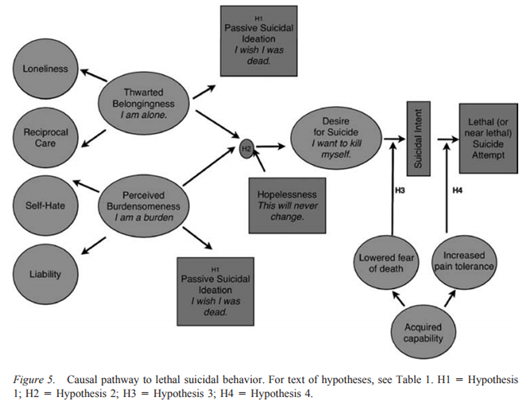
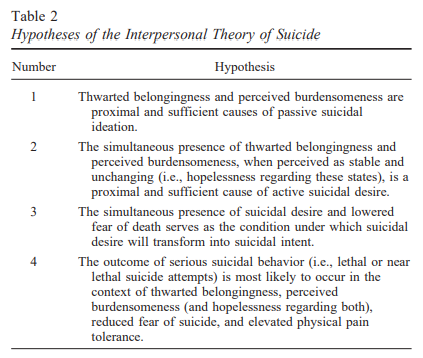
Constructs of the IPTS
-
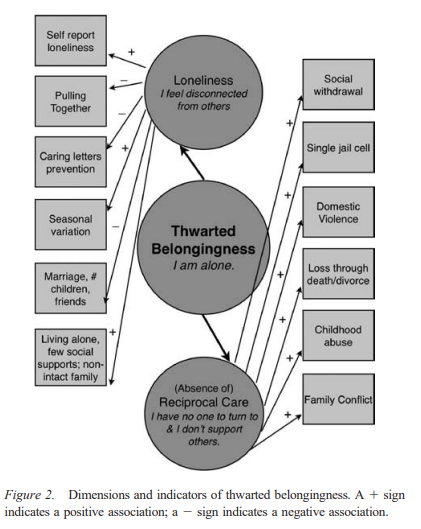
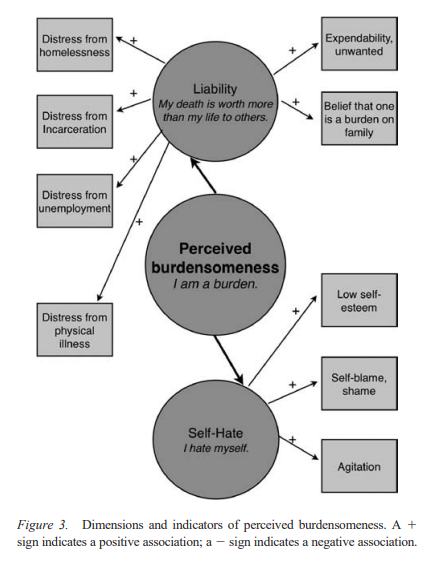
The figures depict components of the constructs, as well as relations with the empirically demonstrated risk factors. Latent variables are denoted by circular shapes and observable variables are denoted by rectangles.
-
Dimensions and indicators of thwarted belongingness:
-
Dimensions and indicators of perceived burdensomeness:
-
Risk Factors related to TB and PB
- Child maltreatment and mental disorders are risk factors for both TB and PB.
