나의 풀이
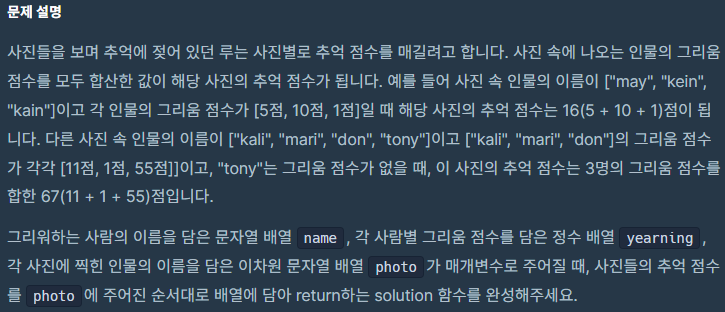
class Solution {
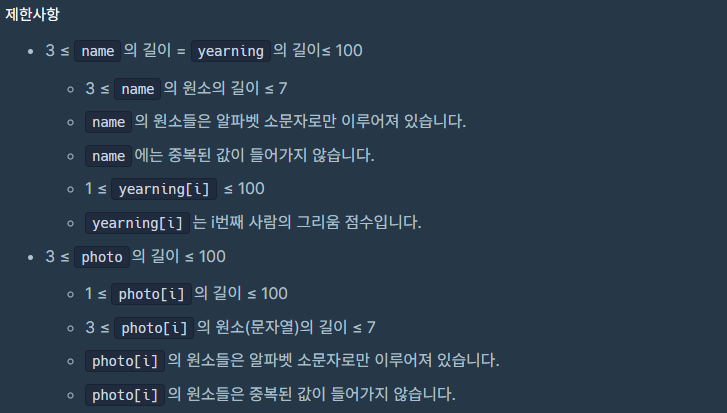
    public int[] solution(String[] name, int[] yearning, String[][] photo) {
        int[] answer = new int[photo.length];

        for (int i = 0; i < photo.length; i++) { // 1
            for (int j = 0; j < photo[i].length; j++) { // 2
                for (int k = 0; k < name.length; k++) { // 3
                    if (photo[i][j].equals(name[k])) { // 4
                        answer[i] += yearning[k]; // 5
                    }
                }
            }
        }

        return answer;
    }
}
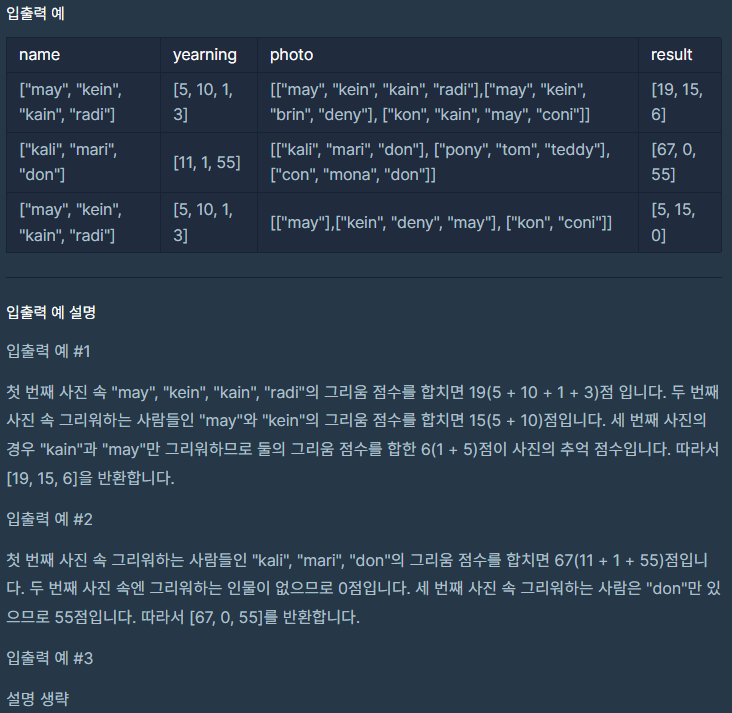
과정
- photo 배열의 행 탐색(사진을 의미)
- photo 배열의 열 탐색(사진 안에 담겨있는 사람을 의미)
- name 배열의 길이 탐색(그리워 하는 사람의 배열)
- photo 배열의 i행 j열이 name의 k번째와 같다면(사진 i에 사람 k가 있다면)
- answer 배열의 i번째에 yearning 배열의 k번째를 더해준다
다른 사람 풀이
import java.util.*;
import java.util.stream.*;

class Solution {
    public int[] solution(String[] name, int[] yearning, String[][] photo) {
        Map<String, Integer> map = IntStream.range(0, name.length).mapToObj(operand -> Map.entry(name[operand], yearning[operand])).collect(Collectors.toSet()).stream().collect(Collectors.toMap(Map.Entry::getKey, Map.Entry::getValue));
        return Arrays.stream(photo).mapToInt(strings -> Arrays.stream(strings).mapToInt(value -> map.getOrDefault(value, 0)).sum()).toArray();
    }
}- 가독성은 떨어지지만 배열의 크기에 따라서는 더 높은 성능을 보여줄 수 있을 것 같다

study