🧡 인증
- 인증(authentication)은 사용자가 누구인지 확인하는 단계를 의미한다.
- 인증의 대표적인 예로 로그인이 있다.
- 로그인에 성공하면 애플리케이션 서버는 응답으로 사용자에게 토큰을 전달한다.
- 로그인에 실패한 사용자는 토큰을 전달받지 못해 원하는 리소스에 접근할 수 없게 된다.
💛 인가
- 인가(authorization)는 앞에서 설명한 인증을 통해 검증된 사용자가 애플리케이션 내부의 리소스에 접근할 때 사용자가 해당 리소스에 접근할 권리가 있는지를 확이하는 과정을 의미한다.
- 예를 들어 로그인한 사용자가 특정 게시판에 접근해서 글을 보려고 하는 경우 게시판 접근 등급을 확인해 접근을 허가하거나 거부하는 것이 대표적인 인가의 사례이다.
- 일반적으로 사용자가 인증 단계에서 발급받은 토큰은 인가 내용을 포함하고 있으며, 사용자가 리소스에 접근하면서 토큰을 함께 전달하면 애플리케이션 서버는 토큰을 통해 권한 유무 등을 확인해 인가를 수행한다.
💚 접근 주체
- 접근 주체(principal)는 말 그대로 애플리케이션의 기능을 사용하는 주체를 의미한다.
- 접근 주체는 사용자가 될 수도 있고, 디바이스, 시스템이 될 수도 있다.
- 애플리케이션은 앞서 소개한 인증 과정을 통해 접근 주체가 신뢰할 수 있는지 확인하고, 인가 과정을 통해 접근 주체에게 부여된 권한을 확인하는 과정 등을 거친다.
Spring Security
🧡 스프링 시큐리티의 동작 구조
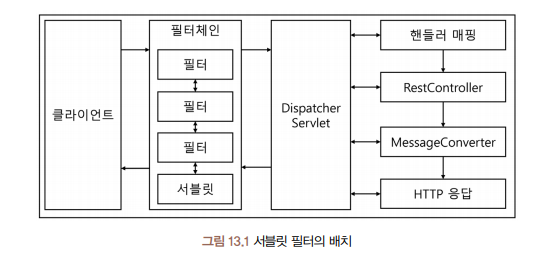
- 위 그림의 필터체인(FilterChain)은 서블릿 컨테이너에서 관리하는
ApplicationFilterChain을 의미한다. - 클라이언트에서 애플리케이션으로 요청을 보내면 서블릿 컨테이너는 URI를 확인해서 필터와 서블릿을 매핑한다.
- 사용하고자 하는 필터체인을 서블릿 컨테이너의 필터 사이에서 동작시키기 위해 아래와 같이
DelegatingFilterProxy를 사용한다.
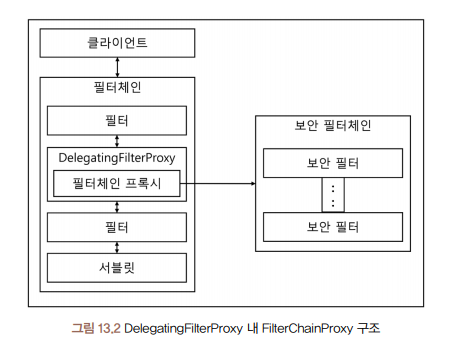
DelegatingFilterProxy는 서블릿 컨테이너의 생명주기와 스프링 애플리케이션 컨텍스트(ApplicationContext) 사이에서 다리 역할을 수행하는 필터 구현체이다.- 표준 서블릿 필터를 구현하고 있으며, 역할을 위임할 필터체인 프록시(
FilterChainProxy)를 내부에 가지고 있다. 필터체인 프록시는 스프링 부트 자동 설정에 의해 자동 생성된다. - 필터체인 프록시는 스프링 시큐리티에서 제공하는 필터로서 보안 필터체인(
SecurityFilterChain)을 통해 많은 보안 필터를 사용할 수 있다.
별도의 설정이 없다면 스프링 시큐리티에서는 아래와 같이 SecurityFilterChain에서 사용하는 필터 중 UsernamePasswordAuthenteicationFilter를 통해 인증을 처리한다.
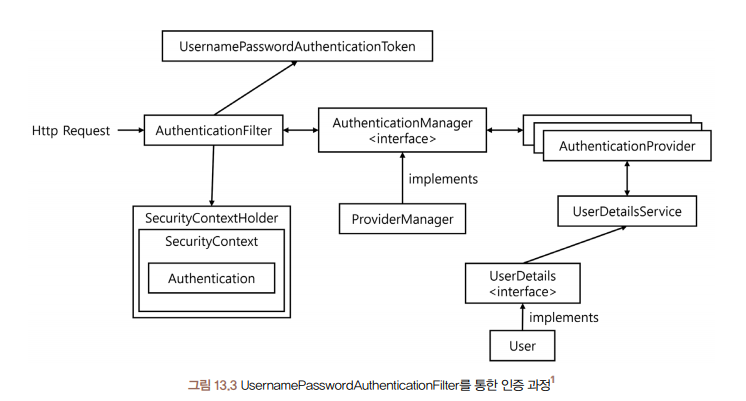
위 그림의 인증 수행 과정은 다음과 같다.
- 클라이언트로부터 요청을 받으면 서블릿 필터에서
SecurityFilterhain으로 작업이 위임되고 그중UsernamePasswordAuthenticationFilter(위 그림에서AuthenticationFilter에 해당)에서 인증을 처리한다. AuthenticationFilter는 요청 객체(HttpServletRequest)에서username과password를 추출해서 토큰을 생성한다.- 그러고 나서
AuthenticationManager에게 토큰을 전달한다.AuthenticationManager는 인터페이스이며, 일반적으로 사용되는 구현체는ProviderManager이다. ProviderManager는 인증을 위해AuthenticationProvider로 토큰을 전달한다.AuthenticationProvider는 토큰의 정보를UserDetailsService에 전달한다.UserDetailsService는 전달받은 정보를 통해 데이터베이스에서 일치하는 사용자를 찾아UserDetails객체를 생성한다.- 생성된
UserDetails객체는AuthenticationProvider로 전달되며, 해당Provider에서 인증을 수행하고 성공하게 되면ProviderManager로 권한을 담은 토큰을 전달한다. ProviderManager는 검증된 토큰을AuthenticationFilter로 전달한다.AuthenticationFilter는 검증된 토큰을SecuritycontextHolder에 있는SecurityContext에 저장한다.
JWT
https://velog.io/@sunlake123/JWT
🧡
UserDetails와UserDetailsService구현
public interface UserDetails extends Serializable {

    Collection<? extends GrantedAuthority> getAuthorities();

    String getUsername();

    String getPassword();

    boolean isAccountNonExpired();

    boolean isAccountNonLocked();

    boolean isCredentialsNonExpired();

    boolean isEnabled();
}getAuthorities(): 계정이 가지고 있는 권한 목록을 리턴.getPassword(): 계정의 비밀번호를 리턴.getUsername(): 계정의 이름을 리턴한다. 일반적으로 아이디를 리턴.isAccountNonExpired(): 계정이 만료됐는지 리턴.true는 만료되지 않았다는 의미.isAccountNonLocked(): 계정이 잠겨있는지 리턴.true는 잠기지 않았다는 의미.isCredentialsNonExpired(): 비밀번호가 만료됐는지 리턴한다.true는 만료되지 않았다는 의미.isEnabled(): 계정이 활성화돼 있는지 리턴한다.true는 활성화 상태를 의미.

개발자를 향해