ORM (Object Relational Mapping)
ORM
- ORM
- 객체 지향 프로그래밍 언어의 객체(Object)와 데이터베이스의 데이터를 매핑(Mapping)하는 기술
- ORM의 역할
- Django는 Python 언어를 사용하지만 데이터베이스는 SQL 언어를 사용함
- ORM은 Django와 데이터베이스 사이에서 언어 번역자 역할을 수행
- ORM은 Django 개발자를 위해 ‘QuerySet API’라는 특별한 도구를 제공함
- QuerySet API는 ORM의 기능을 개발자가 Python 코드 안에서 객체 지향적이고 직관적인 방식으로 데이터베이스를 조작할 수 있도록 제공하는 인터페이스
QuerySet API
- 데이터베이스의 복잡한 SQL 쿼리문을, 직관적인 Python 코드로 다룰 수 있게 해주는 강력한 번역기
- 개발자는 SQL을 직접 작성하지 않고도,
.filter(),.exclude(),.order_by()등 파이썬다운 메서드를 사용하여 원하는 데이터를 손쉽게 생성, 조회, 수정, 삭제할 수 있다. - QuerySet API는 코드의 가독성을 높이고, 개발 생산성을 극대화하는 Django ORM의 핵심 기능이다.
- 개발자는 SQL을 직접 작성하지 않고도,
- QuerySet API와 ORM의 동작 방식
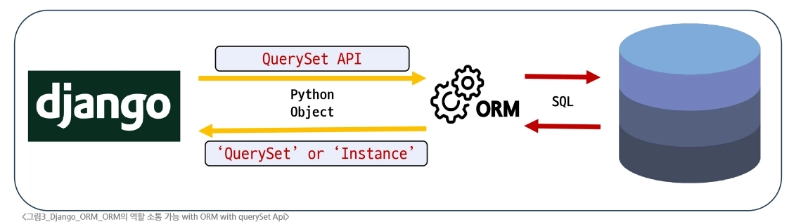
Django → DB: Django(QuerySet API)에서 ORM을 통해 데이터베이스로 정보를 요청할 때- SQL 쿼리로 변환되어 데이터베이스로 전달됨
DB → Django: 데이터베이스가 요청에 대한 응답을 보낼 때,- ORM은 이 SQL 결과를 다시 파이썬이 이해할 수 있는 Python Object
- QuerySet 또는 Instance 형태로 변환하여 Django로 반환
- QuerySet API 구문 기본 구조

Article(모델 클래스)- 역할: 데이터베이스 테이블에 대한 Python 클래스 표현
- articles_article 테이블의 스키마(필드, 데이터 타입 등)를 정의하며, Django ORM이 데이터베이스와 상호작용할 때 사용하는 기본적인 구조체
.objects(매니저, manager)- 역할: 데이터베이스 조회(Query) 작업을 위한 기본 인터페이스
- 모델 클래스가 데이터베이스 쿼리 작업을 수행할 수 있도록 하는 진입점
- Django는 모든 모델에 objects라는 이름의 매니저를 자동으로 추가하며, 이 매니저를 통해
.all(),.filter()등의 쿼리 메서드를 호출
.all()(QuerySet API 메서드)- 역할: 특정 데이터베이스 작업을 수행하는 명령
- 매니저를 통해 호출되는 메서드로, 해당 모델과 연결된 테이블의 모든 레코드(rows)를 조회하라는 SQL 쿼리를 생성하고 실행
- Query란?
- 데이터베이스에 특정한 데이터를 보여 달라는 요청
- “쿼리문을 작성한다.”
- 원하는 데이터를 얻기 위해 데이터베이스에 요청을 보낼 코드를 작성한다.
- Django에서 Query가 처리되는 과정 정리
- 파이썬 코드 → ORM: 개발자의 QuerySet API(파이썬 코드)가 ORM으로 전달
- ORM → SQL 변환: ORM이 이를 데이터베이스용 SQL 쿼리로 변환하여 데이터베이스에 전달
- DB 응답 → ORM: 데이터베이스가 SQL 쿼리를 처리하고 결과 데이터를 ORM에 반환
- ORM → QuerySet 변환: ORM이 데이터베이스의 결과를 QuerySet (파이썬 객체) 형태로 변환하여 우리에게 전달
- QuerySet이란?
- 데이터베이스에 전달받은 객체 목록(데이터 모음)
- 순회 가능한 데이터로 1개 이상 데이터를 불러와 사용 가능함
- Django ORM을 통해 만들어진 자료형
- 단, 데이터베이스가 단일 객체를 반환할 때는 QuerySet이 아닌 모델(Class)의 인스턴스로 반환됨
QuerySet API 실습
- QuerySet API 실습 사전 준비
- 외부 라이브러리 설치 및 의존성 기록
pip install ipython pip freeze > requirements.txt- ipython은 일반 파이썬 셸(명령창)보다 자동 완성 등 편리한 파이썬 작업 환경을 만들어주는 도구
- Django Shell 접속하기
python manage.py shell- Django Sell이란 Django 프로젝트의 코드를 명령창에서 바로 실행하고 테스트하는 특별한 파이썬 환경
- Django 환경 내에서 실행되기 때문에 입력하는 QuerySet API 구문이 Django 프로젝트에 영향을 미침
- 외부 라이브러리 설치 및 의존성 기록
CRUD
대부분의 소프트웨어가 가지는 기본적인 데이터 처리 기능인 생성(Create), 조회(Read), 수정(Upadate), 삭제(Delete)를 묶어 이르는 말
Create
- 데이터 객체를 만드는(생성하는) 3가지 방법
-
빈 객체 생성 후 값 할당 및 저장
article = Article() article.title = 'first' article.content = 'django!' article.save() -
초기 값과 함께 객체 생성 및 저장
article = Article(title='second', content='django!') article.save() -
create()메서드로 한 번에 생성 및 저장Article.objects.create(title='third', content='django!')
-
Read
- QuerySet 반환 메서드
all(): 전체 데이터 조회filter(): 주어진 매개변수와 일치하는 객체를 포함하는 QuerySet 반환
- QuerySet을 반환하지 않는 메서드
get(): 주어진 매개변수와 일치하는 객체를 반환 (Only one)- 객체를 찾을 수 없으면 DoseNotExist 예외를 발생시키고, 둘 이상의 객체를 찾으면 MultipleObjectsReturned 예외를 발생시킴
- 위와 같은 특징을 가지고 있기 때문에 primary key와 같이 고유성(uniqueness)을 보장하는 조회에서 사용해야 함
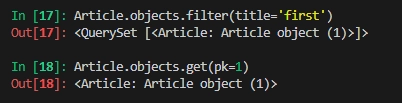
filter(): QuerySet으로 반환 → iterableget(): 인스턴스로 반환
Update
- 데이터 수정 방법
- 인스턴스 변수를 변경 후 save 메서드 호출
# 수정할 인스턴스 조회 (주로 1개씩 수정 → get() 사용)
article = Article.objects.get(pk=1)

# 인스턴스 변수를 변경
article.title = 'byebye'

# 저장
article.save()
- 인스턴스 변수를 변경 후 save 메서드 호출
Delete
- 데이터 삭제 방법
- 삭제하려는 데이터 조회 후 delete 메서드 호출
# 삭제할 인스턴스 조회
article = Article.objects.get(pk=1)

# delete 메서드 호출
article.delete()

# 삭제한 데이터는 더이상 조회할 수 없음
Article.objects.get(pk=1)  # DoesNotExist: Article matching query does not exist.
- 삭제하려는 데이터 조회 후 delete 메서드 호출
ORM with view
- View 함수에서 QuerySet API 활용하기
- 웹 페이지에 보여줄 데이터를 DB에서 가져올 때 사용함
- 사용자가 입력한 새로운 데이터를 DB에 저장할 때 사용함
Read
전체 게시글 조회
- config/urls.py
from django.urls import path, include urlpatterns = [ path('admin/', admin.site.urls), path('articles/', include('articles.urls')), ] - articles/urls.py
from django.urls import path from . import views urlpatterns = [ path('', views.index, name='index'), ] - articles/views.py
from .models import Article def index(request): articles = Article.objects.all() context = { 'articles': articles, } return render(request, 'articles/index.html', context) - templates/articles/index.html
<h1>Articles</h1>
<hr>
{% for article in articles %}
	<div>
		<p>글 번호: {{ article.pk }}</p>
		<p>글 제목: {{ article.title }}</p>
		<p>글 내용: {{ article.content }}</p>
	</div>
	<hr>
{% endfor %}
단일 게시글 조회
- articles/urls.py
from django.urls import path from . import views urlpatterns = [ ..., path('<int:pk>/' views.detail, name='detail'), ] - articles/views.py
from .models import Article def detail(request, pk): article = Article.objects.get(pk=pk) context = { 'article': article, } return render(request, 'articles/detail.html', context) - 단일 게시글 조회
- templates/articles/detail.html
<h2>Detail</h2>
<h3>{{ article.pk }} 번째 글</h3>
<hr>
<p>제목: {{ article.title }}</p>
<p>내용: {{ article.content }}</p>
<p>작성일: {{ article.created_at }}</p>
<p>수정일: {{ article.updated_at }}</p>
<hr>
<a href="{% url 'articles:index' %}">[back]</a>
- templates/articles/detail.html
- 단일 게시글 이동 페이지 링크 구현
- templates/articles/index.html
{% for article in articles %}
	<div>
		<p>글 번호: {{ article.pk }}</p>
		<p>
			글 제목: <a href="{% url "articles:detail" article.pk %}">{{ article.title }}</a>
		</p>
		<p>글 내용: {{ article.content }}</p>
	</div>
	<hr>
{% endfor %}
- templates/articles/index.html
Create
- Create 로직 구현에는 두 개의 view 함수가 필요함
- new: 사용자 입력 데이터를 받을 페이지를 렌더링
- create: 사용자가 입력한 요청 데이터를 받아 DB에 저장
- 페이지 렌더링 기능 구현 (new)
- 게시글 생성 페이지 구현
- articles/urls.py
urlpatterns = [ ..., path('new/', views.new, name='new'), ] - articles/views.py
def new(request): return render(request, 'articles/new.html') - templates/articles/new.html
<h1>NEW</h1>
<form action="#" method="POST">
  <div>
    <label for="title">Title: </label>
    <input type="text" name="title" id="title">
  </div>
  <div>
    <label for="context">Content: </label>
    <textarea name="content" id="content"></textarea>
  </div>
  <input type="submit">
</form>
<hr>
<a href="{% url 'articles:index' %}">[back]</a>
- articles/urls.py
- Index 페이지에 new 페이지로 이동할 수 있는 하이퍼링크 작성
- templates/articles/index.html
<h1>Articles</h1>
<a href="{% url 'articles:new' %}">NEW</a>
<hr>
...
- templates/articles/index.html
- 게시글 생성 페이지 구현
- 데이터 저장 기능 구현 (create)
- articles/urls.py
urlpatterns = [ ..., path('create/', views.create, name='create'), ] - articles/views.py
def create(request): title = request.POST.get('title') content = request.POST.get('content') article = Article(title=title, content=content) article.save() return render(request, 'articles/create.html') - templates/articles/create.html
<h1>게시글이 작성되었습니다.</h1> - templates/articles/new.html
<h1>NEW</h1>
<form action="{% url 'articles:create' %}" method="POST">
  <div>
    <label for="title">Title: </label>
    <input type="text" name="title" id="title">
  </div>
  <div>
    <label for="context">Content: </label>
    <textarea name="content" id="content"></textarea>
  </div>
  <input type="submit">
</form>
<hr>
<a href="{% url 'articles:index' %}">[back]</a>
- articles/urls.py
HTTP request methods
- HTTP란 네트워크 상에서 데이터(리소스)를 주고 받기 위한 약속
- HTTP request methods란 데이터에 대해 수행을 원하는 작업(행동)을 나타내는 것
- 서버에게 원하는 작업의 종류를 알려주는 역할
- 대표적인 메서드
- GET: 리소스 조회 (URL에 데이터가 노출됨)
- POST: 데이터 생성/전송 (데이터 노출 없음)
- GET 메서드
- 서버로부터 데이터를 요청하고 받아오는 데(조회) 사용 (DB 변경 X)
- GET 메서드는 주로 검색 쿼리 전송, 웹 페이지 요청, 그리고 API에서 데이터를 조회하는 것과 같이 서버로부터 데이터를 요청하고 받아오는 데 사용된다.
- POST 메서드
- 서버에 데이터를 제출하여 리소스를 변경(생성, 수정, 삭제)하는 데 사용
- POST 메서드는 주로 로그인 정보 제출, 파일 업로드, 새 데이터 생성(예: 새 게시글 작성), 그리고 API에서 데이터 변경을 요청하는 것과 같이 클라이언트가 서버로 데이터를 전송하여 서버의 상태를 변경할 때 사용된다.
- GET과 POST는 각각의 특성에 맞게 적절히 사용해야 함
C → POST
R → GET
U → POST
D → POST
HTTP response status code
- 서버가 클라이언트의 요청에 대한 처리 결과를 나타내는 3자리 숫자
- 클라이언트는 이 코드를 통해 요청이 성공했는지, 실패했는지, 아니면 추가적인 조치가 필요한지 즉시 파악할 수 있음
- CSRF (사이트 간 요청 위조, cross site request forgery)
- 사용자가 자신의 의지와는 무관하게 공격자가 의도한 행동(글쓰기, 정보 수정, 송금 등)을 특정 웹사이트에 요청하게 만드는 해킹 방식
- Django는 이러한 공격을 막기 위해 CSRF 토큰이라는 안전장치를 사용
- DTL의 csrf_token 태그를 사용해 손쉽게 사용자에게 토큰 값을 부여
- templates/articles/new.html
<h1>NEW</h1> <form action="{% url 'articles:create' %}" method="POST"> {% csrf_token %}- 요청 데이터 + 인증 토큰 → 게시글 작성
- templates/articles/new.html
- 요청 시 CSRF Token을 함께 보내야 하는 이유
- Django 서버는 해당 요청이 DB에 데이터를 하나 생성하는 요청에 대해 “Django가 직접 제공한 페이지에서 데이터를 작성하고 있는 것인지”에 대한 확인 수단이 필요한 것
- 겉모습이 똑같은 위조 사이트나 정상적이지 않은 요청에 대한 방어 수단
- 왜 POST일 때만 Token을 확인할까?
- POST는 단순 조회(GET)와 달리 리소스의 변경(생성, 수정, 삭제)을 요청하는 의미와 기술적 특성을 지님
- DB에 조작을 가하는 요청은 반드시 인증 수단이 필요
- 데이터베이스에 대한 변경사항을 만드는 요청이기 때문에 토큰을 사용해 최소한의 신원 확인을 하는 것
Redirect
- 게시글 작성 성공 후 적절한 응답 방법
- 서버는 데이터 저장 후 페이지를 응답하는 것이 아닌 사용자를 적절한 기존 페이지로 보내야 한다.
- 사용자를 보낸다 → 사용자가 GET 요청을 한 번 더 보내도록 해야 한다.
- 실제로 서버가 클라이언트를 직접 다른 페이지로 보내는 것이 아닌 클라이언트가 GET 요청을 한 번 더 보내도록 응답하는 것
- 서버는 데이터 저장 후 페이지를 응답하는 것이 아닌 사용자를 적절한 기존 페이지로 보내야 한다.
redirect(): 클라이언트가 인자에 작성된 주소로 다시 요청을 보내도록 하는 함수- articles/views.py
def create(request): title = request.POST.get('title') content = request.POST.get('content') article = Article(title=title, content=content) article.save() return redirect('articles:detail', article.pk) - redirect 동작 원리
- redirect 응답을 받은 클라이언트는 detail url로 다시 요청을 보내게 됨
- 결과적으로 detail view 함수가 호출되어 detail view 함수의 반환 결과인 detail 페이지를 응답 받게 되는 것
- 결국 사용자는 게시글 작성 후 작성된 게시글의 detail 페이지로 이동하는 것으로 느끼게 됨
- articles/views.py
- render vs. redirect
- render는 출력(파일이 필요함/예: 'articles/new.html')
- redirect는 경로를 재요청하는 기능을 담당함(url 주소가 필요함/예: 'articles:detail')
Delete
- articles/urls.py
from django.urls import path from . import views urlpatterns = [ ..., path('<int:pk>/delete' views.delete, name='delete'), ] - articles/views.py
def delete(request, pk): article = Article.objects.get(pk=pk) article.delete() return redirect('articles:index') - templates/articles/detail.html
<h2>Detail</h2>
...
<hr>
<form action="{% url 'articles:delete' article.pk %}" method="POST">
	{% csrf_token %}
	<input type="submit" value="DELETE">
</form>
<a href="{% url 'articles:index' %}">[back]</a>
Update
- Update 로직 구현에는 두 개의 view 함수가 필요함
- edit: 사용자 입력 데이터를 받을 페이지를 렌더링
- update: 사용자가 입력한 요청 데이터를 받아 DB에 저장
- edit 기능 구현
- articles/urls.py
urlpatterns = [ ..., path('<int:pk>/edit/', views.edit, name='edit'), ] - articles/views.py
def edit(request, pk): article = Article.objects.get(pk=pk) context = { 'article': article,, } return render(request, 'articles/edit.html', context) - templates/articles/edit.html → 수정 시 이전 데이터가 출력될 수 있도록 작성하기
<h1>EDIT</h1> <form action="#" method="POST"> {% csrf_token %} <div> <label for="title">Title: </label> <input type="text" name="title" id="title" value="{{ article.title }}"> </div> <div> <label for="context">Content: </label> <textarea name="content" id="content">{{ article.content }}</textarea> </div> <input type="submit"> </form> <hr> <a href="{% url 'articles:index' %}">[back]</a>- input 요소(한 줄 텍스트): value 속성으로 기존 데이터 입력
- textareat(여러 줄 텍스트): value 속성이 없고 태그 여닫는 사이에 값을 넣음
- templates/articles/detail.html → edit 페이지로 이동할 수 있는 하이퍼링크 작성
...
<a href="{% url 'articles:edit' article.pk %}">EDIT</a><br>
<form action="{% url 'articles:delete' article.pk %}" method="POST">
	{% csrf_token %}
	<input type="submit" value="DELETE">
</form>
<a href="{% url 'articles:index' %}">[back]</a>
- articles/urls.py
- update 기능 구현
- articles/urls.py
urlpatterns = [ ..., path('<int:pk>/update/', views.update, name='update'), ] - articles/views.py
def update(request, pk): article = Article.objects.get(pk=pk) article.title = request.POST.get('title') article.content = request.POST.get('content') article.save() return redirect('articles:detail', article.pk) - templates/articles/edit.html
<h1>EDIT</h1>
<form action="{% url 'articles:update' article.pk %}" method="POST">
	{% csrf_token %}
  <div>
    <label for="title">Title: </label>
    <input type="text" name="title" id="title" value="{{ article.title }}">
  </div>
  <div>
    <label for="context">Content: </label>
    <textarea name="content" id="content">{{ article.content }}</textarea>
  </div>
  <input type="submit">
</form>
<hr>
<a href="{% url 'articles:index' %}">[back]</a>
- articles/urls.py

🌱 🐜